In echtem Maßstab anzeigen
 Versenden als Grußkarte
 Teilen
 Details anzeigen
 Leitfaden öffnen

 Herunterladen
 Ähnliche Objekte
 Röntgenaufnahme
 Diashow
 Besucherstatistiken
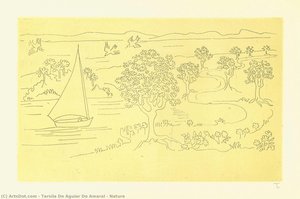
Landscape VII


 Mehr anzeigen
Die auf dieser Seite dargestellten Kunstwerke sind urheberrechtlich geschützt, was bedeutet, dass wir keine identische Reproduktion rechtmäßig erstellen oder verkaufen dürfen. Dieser Schutz wird durch internationale Abkommen wie die Berner Übereinkunft und durch nationale Gesetze, einschließlich derer, die von den ... festgelegt wurden US-Urheberrecht – Titel 17.
Als respektvolle und rechtlich einwandfreie Alternative bieten wir individuelle, handgemalte Kunstwerke an, die vom Original inspiriert sind. Unsere geschickten und professionellen Künstler studieren sorgfältig den Stil, die Stimmung und das künstlerische Wesen des Originals, um ein neues, einzigartiges Werk zu schaffen, das dasselbe Gefühl hervorruft – während es zugleich eine eigenständige Originalschöpfung bleibt.
Diese Methode entspricht vollumfänglich den Urheberrechtsbestimmungen, da sie keine Kopie oder Vervielfältigung des geschützten Kunstwerks darstellt. Stattdessen handelt es sich um eine kreative Neuinterpretation – ein neues Gemälde, das vom Original inspiriert, aber nicht identisch mit ihm ist.
Handgefertigte Ölreproduktion
Handgemaltes Ölgemälde auf Leinwand in Ihrer Wunschgröße und mit Rahmen, auf Bestellung von unseren Künstlern angefertigt. ( Zum Druck wechseln Zum digitalen Bild wechseln)




P118B €10

P118H €10

P118W €10

P438Z €10

P508JH €12

P508YH €12

P805H €10

P805Z €10

P919BZ €10

P919G €10

P919XJ €10

P959ZH €10

P968JZ €12

W106C €8

W218G €10

W218JH €8

W218Y €10

W307PJ €10

W316G €10

W316PJ €8

W316Y €10

W398PJ €8

W4111J €10

W500HY €15

W500JH €15

W692G €12

W849H €8

W940BG €15

W953PJ €8




Wählen Sie aus unseren vordefinierten Formaten, die den ursprünglichen Proportionen des Kunstwerks entsprechen.

Geben Sie die Breite und die Höhe an, die Sie für Ihren Rahmen oder Ihre Wand benötigen. Da dieses Werk handgemalt ist, kann der Künstler bei einer anderen Form etwas mehr um das Bild herum malen oder etwas abschneiden – Sie entscheiden. Wir senden Ihnen ein digitales Mockup zur Freigabe, bevor mit dem Malen begonnen wird. Das auf dieser Seite gezeigte Bild stellt nicht das tatsächliche Ergebnis dar – dies tut nur das Mockup.
Nach der Bestellung wird das OriginalUniqueArt.com-Team dem Kunden Anweisungen per E-Mail zusenden und eine Mockup-Vorschau bereitstellen.
Weltweiter Versand () in nur 3 bis 4 Wochen statt der üblichen 5 Wochen. (23 Oktober). Keine Kompromisse bei der Qualität.

Kostenloser weltweiter Expressversand

Hochwertige Leinenleinwand

Vollständiger Versicherungsschutz beim Versand

Zollgebühren-Rückerstattungsgarantie

Garantie für exakte Farbtreue

100-tägiges Rückgaberecht (nur bei Mängeln)

100% Geld-zurück-Garantie

Angebot für Mengenrabatt
 Die Glasoption ist nur für Größen unter 110 cm verfügbar.

Landscape VII
Reproduktionsmedium
Format der Reproduktion
-


Gesamtpreis
€ 264
A Dreamscape of Brazilian Serenity
In the quiet corners of art history, few works capture the essence of pastoral tranquility as tenderly as Tarsila do Amaral’s Landscape VII. Created in 1971, toward the twilight of the artist's illustrious career, this piece serves as a window into a world where time seems to slow down. The painting presents a breathtakingly serene landscape, depicting a small, nestled village cradled by rolling hills and the gentle presence of water. It is an invitation to step away from the chaos of modernity and enter a realm of soft light and rhythmic simplicity. Through her masterful use of pastel shades—delicate pinks, ethereal blues, and lush greens—Amaral crafts a dreamlike atmosphere that feels both intimately familiar and otherworldly.
The composition is a masterclass in balanced, horizontal layering. The viewer’s eye is led through a series of soft bands: a verdant foreground suggesting cool water or thick vegetation, a central stage featuring quaint architecture and a striking rock formation, and finally, a background of pink-hued hills that melt into the horizon. There is a charming, almost naive quality to the perspective; by eschewing harsh linear recession in favor of a flatter, more two-dimensional arrangement, the artist emphasizes the decorative beauty of the scene. This approach allows the shapes—the rounded contours of the hills and the organic forms of the trees—to dance across the canvas with a rhythmic, folk-art grace.
Technique and the Texture of Memory
To behold Landscape VII is to witness the tactile power of oil on canvas. Amaral employs a technique characterized by visible, expressive brushstrokes that lend the work a vibrant, living energy. The application of paint is particularly noteworthy in the central rock formation and the surfaces of the buildings, where thick impasto creates a physical texture you can almost feel with your eyes. This ruggedness provides a beautiful counterpoint to the soft, diffused lighting that permeates the scene, suggesting the gentle glow of an overcast afternoon. Every stroke feels intentional, contributing to a surface that is as much about the physical presence of the medium as it is about the subject matter itself.
For the discerning collector or interior designer, this piece offers a unique opportunity to introduce a sense of calm and sophisticated nostalgia into a space. The artwork does not merely decorate a wall; it transforms an environment. Its soft palette and organic shapes make it an ideal centerpiece for rooms designed for relaxation, such as a master suite or a quiet reading nook. Because the style leans toward the Antropofagia movement's roots while embracing a more mature, simplified aesthetic, it bridges the gap between avant-garde history and timeless decorative elegance.
A Legacy of Peace and Identity
Beyond its visual splendor, Landscape VII carries a profound symbolic weight. As a pivotal figure in Brazilian Modernism, Tarsila do Amaral spent her life distilling the soul of her nation into bold, innovative forms. In this later work, that mission evolves into an exploration of harmony and peace. The village scene acts as a symbol of a life lived in equilibrium with nature, where human habitation and the earth exist in a seamless, unconflicted embrace. It evokes a sense of nostalgia for a simpler era, making it deeply resonant for anyone seeking to surround themselves with art that promotes emotional well-being.
Owning a high-quality reproduction of this masterpiece allows one to possess a fragment of Brazilian cultural identity. Whether you are an art historian captivated by her evolution from Cubist influences to folk-inspired simplicity, or a decorator looking for a piece that breathes tranquility into a contemporary setting, Landscape VII stands as a testament to the enduring power of the landscape to soothe the human spirit. It is more than a painting; it is a quiet sanctuary captured in pigment.
Fragen & Antworten
Welche Emotion vermittelt das Werk der Modernism „Landscape VII“?
Innerhalb der Modernism-Strömung ist „Landscape VII“ mit einem Tranquil Ton festgehalten.
Wie kann ich einen Druck von "Landscape VII" von Tarsila do Amaral erwerben?
Um einen Druck von "Landscape VII" von Tarsila do Amaral zu erhalten, bestellen Sie ihn einfach auf der Seite Kunstdruck: ein Fine Art Print auf Baumwollkanvas oder Archiv-Leinwandpapier.
Inwiefern lässt sich der Stil von "Landscape VII" mit der Epoche seines Schöpfers in Verbindung bringen?
In "Landscape VII" von Tarsila do Amaral trifft die Modernism-Strömung auf die Ära der Moderne.
Biografie des Künstlers
Frühe Jahre und Ausbildung
Tarsila do Amaral, geboren am 1. September 1886 in Fazenda São Bernardo, Capivari, Bundesstaat São Paulo, war eine brasilianische Malerin und Schlüsselfigur der Anthropophagie-Bewegung. Ihre vollständiger Name lautete Tarsila de Aguiar do Amaral. Sie stammte aus einer wohlhabenden Familie von Kaffeebauern und genoss eine privilegierte Erziehung. Bereits in ihrer Jugend zeigte sie künstlerisches Talent, das von ihrer Familie gefördert wurde. Sie besuchte das Colégio Sion in São Paulo und später das Colégio Sacré-Coeur in Barcelona. Nach ihrer Rückkehr nach Brasilien studierte sie ab 1918 Privatunterricht bei Pedro Alexandrino Borges (1864–1942). Von 1920 bis 1922 absolvierte sie Studien an der Académie Julian und der Académie Moderne in Paris, wo sie von Künstlern wie Fernand Léger, Albert Gleizes und André Lhôte beeinflusst wurde.Die Grupo dos Cinco und ihre Bedeutung für den brasilianischen Modernismus
Nach ihrer Rückkehr nach São Paulo im Juni 1922 lernte Tarsila do Amaral durch die befreundete Malerin Anita Malfatti, ebenfalls Schülerin von Georg Fischer-Elpons, den Schriftsteller Oswald de Andrade (den sie 1926 heiratete), seinen Freund und Autor Mário de Andrade sowie den Maler und Journalisten Menotti Del Picchia kennen. Diese Künstler bildeten die sogenannte „Grupo dos Cinco“ (Gruppe der Fünf). Die Gruppe spielte eine zentrale Rolle in der brasilianischen Moderne, insbesondere durch die Organisation der Semana de Arte Moderna („Woche der modernen Kunst“) im Februar 1922, die als Wegbereiter des Modernismus in Brasilien gilt. Tarsila do Amaral war somit maßgeblich an der Definition und Etablierung einer neuen brasilianischen künstlerischen Identität beteiligt.Anthropophagie: Eine radikale Bewegung
Eines ihrer bekanntesten Werke, Abaporu (1928), wurde zu einem Symbol der Anthropophagie-Bewegung. Der Begriff „Abaporu“ bedeutet in der Tupí-Sprache so viel wie „Menschenfresser“. Die Anthropophagie-Bewegung war eine künstlerische und intellektuelle Reaktion auf den Eurozentrismus und versuchte, die brasilianische Kultur durch die bewusste Aneignung und Umdeutung europäischer Einflüsse neu zu definieren. Tarsila do Amaral und ihre Kollegen griffen dabei Stereotypen und Zuschreibungen über indigene Kulturen auf, um diese zu dekonstruieren und eine neue Form der brasilianischen Identität zu schaffen. Das Gemälde Abaporu, das sich heute im Museu de Arte Latino-Americana in Buenos Aires (MALBA) befindet, wurde für 1,5 Millionen Dollar erworben und gilt als eines ihrer wichtigsten Werke.Künstlerischer Stil und Entwicklung
Tarsila do Amarals künstlerischer Stil entwickelte sich im Laufe ihrer Karriere stetig weiter. In ihren frühen Werken, wie A Negra (1923), zeigt sie bereits Einflüsse des Kubismus und des Futurismus. Später wandte sie sich verstärkt brasilianischen Themen zu, insbesondere der Darstellung von Landschaften und dem Alltag der Bevölkerung. Ihre Farbpalette war oft leuchtend und expressiv, was ihren Werken eine besondere Lebendigkeit verleiht. Neben Abaporu sind auch Werke wie Morro da Favela (Favela-Hügel) bemerkenswert, die ihre Auseinandersetzung mit sozialen Realitäten Brasiliens zeigen.Vermächtnis und Bedeutung
Tarsila do Amaral gilt als eine der bedeutendsten brasilianischen Künstlerinnen des 20. Jahrhunderts. Ihre Werke haben nicht nur die Entwicklung der brasilianischen Moderne maßgeblich beeinflusst, sondern auch dazu beigetragen, das Bild Brasiliens in der Welt zu prägen. Sie war eine Pionierin, die mit ihrem innovativen Stil und ihrer kritischen Auseinandersetzung mit kulturellen Stereotypen neue Wege für die brasilianische Kunst ebnete. Ihre Bedeutung wird heute international anerkannt, und ihre Werke sind in zahlreichen Museen und Sammlungen auf der ganzen Welt zu sehen.- Museu de Valores do Banco Central do Brasil (Brasília, Brazil): beherbergt mehrere ihrer Arbeiten, darunter Antropofagic Landscape with Ox und eine Studie einer nackten Figur.
- Museu de Arte do Rio Grande do Sul Ado Malagoli (Porto Alegre, Brazil): repräsentiert den breiteren Kontext der brasilianischen Kunst.

Tarsila do Amaral
1886 - 1973 , Brasilien
Eckdaten zum Künstler
- Beeinflusste Künstler:
- Fernand Léger
- Albert Gleizes
- André Lhôte
- Bemerkenswerte Werke:
- Abaporu (1928)
- A Negra (1923)
- Morro da Favela
- Geburtsdatum: 01. September 1886
- Geburtsort: Cachoeira do Sul, Brasilien
- Künstlerische Bewegung: Brasilianischer Modernismus
- Nationalität: Brasilianisch
- Todatum: 17. Januar 1973
- Vollständiger Name: Tarsila do Amaral
- Von Künstlern Beeinflusst: ['Pedro Alexandrino Borges']
Verwandte Artikel

Romantische Landschaften: Die 10 Meisterwerke, die eine Epoche prägten | OriginalUniqueArt
Entdecken Sie die 10 Meisterwerke der Romantischen Landschaftsmalerei! Von Caspar David Friedrich bis Turner – erleben Sie die Kunst, Emotion & Natur. Hochwertige Reproduktionen auf OriginalUniqueArt.com
Benedito Calixto: A Brazilian Modernist's Landscape of Memory & National Identity
Explore the captivating world of Benedito Calixto, a pivotal Brazilian Modernist painter. Discover his iconic landscapes, the story behind the famous Bandeirante portrait, and his lasting impact on Brazilian national identity. Learn more at OriginalUniqueArt.

John Constable: Die 25 Meisterwerke des englischen Landschaftsgenies – OriginalUniqueArt
Entdecken Sie die 25 Meisterwerke von John Constable! Erleben Sie englische Landschaftsmalerei vom Hay Wain bis zur Stour Valley. Hochwertige Reproduktionen & Kunst für Ihr Zuhause auf OriginalUniqueArt.com.

Evocations of Place: A Historical Journey Through Landscape Art
Explore the rich history of landscape art with OriginalUniqueArt. Discover renowned artists, movements like Impressionism & Romanticism, and expert guidance for collecting timeless pieces. Find your perfect serene escape today!

Die Subtilität der Pastelltechnik: Geschichte, Anwendung und emotionale Resonanz
Entdecken Sie die faszinierende Welt der Pastellmalerei! Erfahren Sie mehr über Technik, Geschichte und berühmte Künstler. Hochwertige Reproduktionen bei OriginalUniqueArt.