In echtem Maßstab anzeigen
 Versenden als Grußkarte
 Teilen
 Details anzeigen
 Leitfaden

 Herunterladen
 Ähnliche Objekte
 Röntgenaufnahme
 Diashow
 Besucherstatistiken
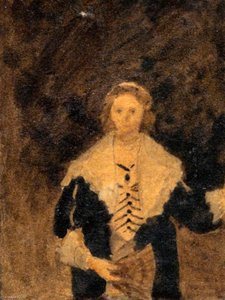
Thomas Hamilton (1784–1858), RSA
 Oil On Canvas
- WallArt
- 19th-century British Portraiture
 76.0 x 63.0 cm
 Royal Scottish Academy of Art – Architektur
 Mehr anzeigen
Giclée / Kunstdruck
Giclée- oder Leinwanddruck in Museumsqualität mit schneller Produktion und flexiblen Veredelungsoptionen. ( Handgemalte Reproduktion kaufen Zum digitalen Bild wechseln)




P118B $10

P118H $10

P118W $10

P438Z $10

P508JH $12

P508YH $12

P805H $10

P805Z $10

P919BZ $10

P919G $10

P919XJ $10

P959ZH $10

P968JZ $12

W106C $8

W218G $10

W218JH $8

W218Y $10

W307PJ $10

W316G $10

W316PJ $8

W316Y $10

W398PJ $8

W4111J $10

W500HY $15

W500JH $15

W692G $12

W849H $8

W940BG $15

W953PJ $8




Wählen Sie aus unseren vordefinierten Formaten, die den ursprünglichen Proportionen des Kunstwerks entsprechen.

Sie können Ihre eigenen Maße eingeben, um ein bestimmtes Format oder einen speziellen Platz einzupassen. Wenn das von Ihnen gewählte Format nicht den Proportionen des Originalbildes entspricht, werden wir das Kunstwerk entweder beschneiden oder das Bild mit einem gespiegelten oder einfarbigen Rand erweitern. Ein digitaler Entwurf wird Ihnen zur Genehmigung zugesandt, bevor die Produktion beginnt.
Bitte beachten Sie, dass die Vorschau auf dem Bildschirm nicht den tatsächlichen Zuschnitt oder die Erweiterung widerspiegelt. Nur der Entwurf zeigt die endgültige Komposition präzise an.
Obwohl Sondermaße verfügbar sind, empfehlen wir die Auswahl eines Maßes aus der vordefinierten Liste, um die ursprünglichen Proportionen zu bewahren.
Weltweiter Versand () innerhalb von 2 Wochen statt der üblichen 4/5 Wochen. (20 September)

Kostenloser weltweiter Expressversand

Hochwertige Leinenleinwand

Vollständiger Versicherungsschutz beim Versand

Zollgebühren-Rückerstattungsgarantie

Garantie für exakte Farbtreue

100-tägiges Rückgaberecht (nur bei Mängeln)

100% Geld-zurück-Garantie

Angebot für Mengenrabatt
 Die Glasoption ist nur für Größen unter 110 cm verfügbar.

Thomas Hamilton (1784–1858), RSA
Giclée / Kunstdruck
Format der Reproduktion
-


Gesamtpreis
$ 80
Thomas Hamilton (1784–1858), RSA – A Portrait of Dignified Authority
Sir William Nicholson’s “Thomas Hamilton (1784–1858), RSA” is more than a mere likeness; it's a carefully constructed tableau of 19th-century British identity, imbued with the quiet strength and measured intellect of its subject. Painted in 1863, this three-quarter portrait captures Thomas Hamilton, a prominent figure in Scottish society – a judge, advocate, and respected member of the Royal Society of Edinburgh – presenting an image of established authority and understated elegance. Nicholson’s masterful handling of light, shadow, and texture elevates the painting beyond a simple representation, transforming it into a compelling study of character and social standing.
The composition immediately draws the eye to Hamilton's face, rendered with remarkable sensitivity. Nicholson skillfully employs subtle gradations of tone – from the warm flesh tones of his neck and hands to the darker hues of his hair and clothing – creating a sense of depth and volume that breathes life into the portrait. The arrangement is deliberately formal, echoing the conventions of official portraits of the era, yet infused with a touch of intimacy through the direct gaze exchanged with the viewer. The slightly off-center positioning subtly directs attention to Hamilton’s face while simultaneously providing context for his social role.
A Palette of Restraint and Distinction
Nicholson's color palette is deliberately restrained, dominated by deep browns, grays, and blacks – a hallmark of the mid-19th century British artistic tradition. These somber tones are expertly contrasted with the warmer hues of Hamilton’s skin and clothing, creating a visual harmony that speaks to both his status and his inherent dignity. The crisp white collar provides a striking focal point, acting as a beacon against the darker background and emphasizing the formality of the occasion. The careful layering of paint—evident in the smooth transitions between tones—demonstrates Nicholson’s refined technique and commitment to realism.
The use of lines is equally deliberate. Sharp outlines define Hamilton's features, clothing, and hair, lending a sense of structure and clarity to the composition. However, these lines are softened through subtle blending and shading, preventing the portrait from feeling overly rigid or artificial. The waistcoat’s structured form contrasts with the softer curves of his face and neck, creating an interesting interplay between order and organic form.
Historical Context and Artistic Influences
“Thomas Hamilton (1784–1858), RSA” is firmly rooted in the artistic conventions of Victorian Britain. Nicholson’s work reflects a broader trend towards realism and psychological depth, moving away from the idealized representations of earlier eras. The portrait draws inspiration from the works of Sir Joshua Reynolds, whose emphasis on capturing likeness and conveying character profoundly influenced Nicholson's approach. Furthermore, the painting aligns with the Royal Scottish Academy’s commitment to portraying prominent figures in Scottish society – a tradition that celebrated both individual achievement and national identity.
Interestingly, this portrait emerged during a period of significant social and political change in Britain. The Industrial Revolution was transforming the country's economy and society, leading to new forms of wealth and power. Hamilton’s position as a judge and advocate reflects the growing importance of law and order in this rapidly changing world. The painting can be interpreted as a visual testament to the enduring values of tradition, integrity, and social responsibility.
Symbolism and Emotional Resonance
While outwardly formal, “Thomas Hamilton (1784–1858), RSA” subtly conveys a sense of quiet confidence and intellectual depth. Hamilton’s composed expression – his direct gaze and slightly raised eyebrows – suggests both intelligence and authority. The portrait speaks to the dignity of his position and the weight of responsibility he carried as a judge and advocate. The painting's subdued palette and carefully controlled composition contribute to its overall sense of gravitas, inviting viewers to contemplate the complexities of Hamilton’s character and the broader social context in which he lived.
Ultimately, Nicholson’s portrait is not merely a depiction of a man; it’s an exploration of identity, status, and the enduring values of Victorian Britain. A high-quality reproduction captures this essence beautifully, offering a timeless glimpse into a pivotal moment in Scottish history and artistic achievement.
Biografie des Künstlers
Frühe Jahre und Ausbildung
Sir William Newzam Prior Nicholson, ein renommierter britischer Maler, wurde am 5. Februar 1872 in Newark-on-Trent geboren. Er war der jüngste Sohn von William Newzam Nicholson, einem Industriellen und konservativen Parlamentsabgeordneten, und seiner Frau Annie Elizabeth Prior. Ab dem neunten Lebensjahr besuchte er die Magnus Grammar School, wo er Malunterricht bei William Cubley erhielt, einem Maler und Politiker.Künstlerische Karriere
Nicholsons künstlerische Karriere lässt sich in mehrere Phasen unterteilen, die jeweils durch einen einzigartigen Stil und ein Medium gekennzeichnet sind. In seinen frühen Zwanzigern arbeitete er mit seinem Schwager James Pryde zusammen an Plakatentwürfen und grafischen Arbeiten und schuf innovative Plakate, die ihre Kühnheit der Umrisse und Einfachheit der Behandlung zeigten:- Die Beggarstaff-Partnerschaft (1893–1898): Nicholsons Zusammenarbeit mit James Pryde führte zu einer Reihe revolutionärer Plakate, darunter Don Quixote (1895) und Harpers Magazine (1895).
- Holzschnitt und Holzschnitttechnik (1900er Jahre): Nicholson entwickelte sich aus den Plakaten heraus und verfeinerte seinen persönlichen Stil durch Holzschnitt- und Holzschnitttechniken.
- Malerei (1910er Jahre): Er konzentrierte sich auf die Malerei, ermutigt von Whistler, und stellte erstmals als Maler in der International Society aus.
Wichtige Werke und Ausstellungen
Zu Nicholsons wichtigsten Werken gehören:- Lady in Furs, Mme. P. (ca. 1907), ein Porträt, das seine Beherrschung des Wesens seiner Motive einfängt.
- The Lowestoft Bowl (1911), eine Stilllebenmalerei, die seine Liebe zum Detail und seinen Einsatz von Farbe demonstriert.
- Study for 'Plaza de Toros, Malaga' (1935), eine Landschaft, die seine Fähigkeit hervorhebt, die Atmosphäre eines Ortes einzufangen.
Einflüsse und Entwicklung
Whistler spielte eine entscheidende Rolle in Nicholsons künstlerischer Entwicklung. Er ermutigte Nicholson, sich der Malerei zu widmen, was zu einer Verlagerung von grafischen Arbeiten hin zur Ölmalerei führte. Nicholsons Stil wurde durch den Impressionismus und den Ästhetizismus beeinflusst, wobei er Wert auf formale Elemente wie Komposition, Farbe und Licht legte. Seine frühen Werke zeigten einen starken Einfluss des Jugendstils, während seine späteren Gemälde eine größere Einfachheit und Klarheit aufwiesen.Historische Bedeutung
Sir William Nicholson trug wesentlich zur Entwicklung der britischen Kunst des späten 19. und frühen 20. Jahrhunderts bei. Seine innovativen Plakatentwürfe revolutionierten die grafische Gestaltung und beeinflussten die Entwicklung des Sachplakats in Deutschland. Seine Gemälde zeugen von seinem Talent, das Alltägliche mit Eleganz und Raffinesse darzustellen. Nicholson hinterließ ein bedeutendes künstlerisches Erbe, das weiterhin bewundert und studiert wird.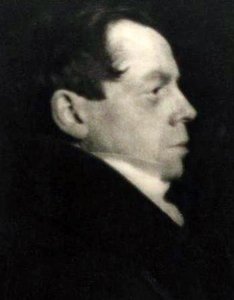
Sir William Nicholson
1872 - 1949 , Vereinigtes Königreich
Eckdaten zum Künstler
- Beeinflusste Künstler/Bewegungen: ['Beggarstaff Brothers']
- Bemerkenswerte Werke:
- Lady in Furs, Mme. P.
- The Lowestoft Bowl
- Study for 'Plaza de Toros'
- Einflussreiche Künstler: ['Whistler']
- Geburtsdatum: 5. Februar 1872
- Geburtsort: Newark-on-Trent, Vereinigtes Königreich
- Künstlerische Richtung: Porträtmalerei, Stillleben, Holzschnitt
- Nationalität: Britisch
- Sterbedatum: 16. Mai 1949
- Vollständiger Name: Sir William Newzam Prior Nicholson
Verwandte Artikel
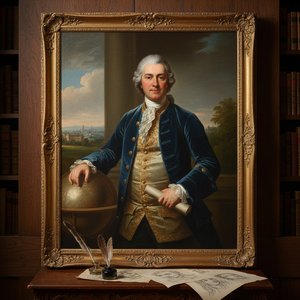
Thomas Hudson: A Study in 18th-Century Portraiture & British Artistic Identity
Explore the life & work of Thomas Hudson, a leading 18th-century British portraitist. Discover his mastery of the 'Grand Manner,' influential style, and lasting impact on British art. Learn about his notable portraits like Judge William Noel & Alexander Van Aken.
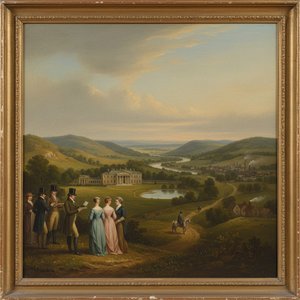
Thomas Barker of Bath: Landscape Painting & Societal Reflection in Early 19th-Century England
Explore the life & work of Thomas Barker of Bath, a key figure in 19th-century English Romanticism. Discover his Parisian success, iconic paintings like 'The Bride of Death', and lasting artistic legacy. Learn more at OriginalUniqueArt.
Thomas Daniell: Navigating Light, Landscape & Cultural Exchange in Early 19th-Century India
Explore the captivating landscapes of Thomas Daniell, a pioneering artist who documented India's beauty in the 19th century. Discover his 'Oriental Scenery,' aquatint technique & lasting legacy. Hand-painted reproductions available at OriginalUniqueArt.
Sir William Nicholson: Ein Meister des postimpressionistischen Porträts und der dekorativen Moderne
Entdecken Sie das Werk von Sir William Nicholson – ein Pionier des postimpressionistischen Porträts und der dekorativen Moderne. Erfahren Sie mehr über seine künstlerische Entwicklung, den Einfluss seiner Werke und seine Bedeutung für die britische Kunstgeschichte.

Meisterwerke des 19. Jahrhunderts: Kunst für Ihr Zuhause | OriginalUniqueArt
Entdecken Sie die 10 bedeutendsten Kunstwerke des 19. Jahrhunderts! Von Impressionismus bis Realismus – erleben Sie die Geschichten berühmter Maler und ihre Meisterwerke. Hochwertige Reproduktionen für Ihr Zuhause auf OriginalUniqueArt.com.