In echtem Maßstab anzeigen
 Versenden als Grußkarte
 Teilen
 Details anzeigen
 Leitfaden öffnen

 Herunterladen
 Ähnliche Objekte
 Röntgenaufnahme
 Diashow
 Besucherstatistiken
George IV
 Oil On Canvas
- WallArt
- Regency Portraiture
 1822
1822- 19th Century
 271.0 x 179.0 cm
 Wallace Collection
 Mehr anzeigen
Handgefertigte Ölreproduktion
Handgemaltes Ölgemälde auf Leinwand in Ihrer Wunschgröße und mit Rahmen, auf Bestellung von unseren Künstlern angefertigt. ( Zum Druck wechseln Zum digitalen Bild wechseln)




P118B €10

P118H €10

P118W €10

P438Z €10

P508JH €12

P508YH €12

P805H €10

P805Z €10

P919BZ €10

P919G €10

P919XJ €10

P959ZH €10

P968JZ €12

W106C €8

W218G €10

W218JH €8

W218Y €10

W307PJ €10

W316G €10

W316PJ €8

W316Y €10

W398PJ €8

W4111J €10

W500HY €15

W500JH €15

W692G €12

W849H €8

W940BG €15

W953PJ €8




Wählen Sie aus unseren vordefinierten Formaten, die den ursprünglichen Proportionen des Kunstwerks entsprechen.

Sie können Ihre eigenen Maße eingeben, um einen bestimmten Rahmen oder Platz auszufüllen. Wenn die gewählte Größe nicht den Proportionen des Originalbildes entspricht, werden wir das Kunstwerk entweder beschneiden oder das Gemälde durch zusätzliche, handgemalte Elemente erweitern. Ein digitales Mockup wird Ihnen zur Genehmigung zugesandt, bevor die Produktion beginnt.
Bitte beachten Sie, dass die Bildschirmvorschau nicht die tatsächliche Beschneidung oder Erweiterung widerspiegelt. Nur das Mockup zeigt die endgültige Komposition exakt an.
Obwohl Sondermaße verfügbar sind, empfehlen wir, eine Größe aus der vordefinierten Liste zu wählen, um die ursprünglichen Proportionen beizubehalten.
Nach der Bestellung wird das OriginalUniqueArt.com-Team dem Kunden Anweisungen per E-Mail zusenden und eine Mockup-Vorschau bereitstellen.
Weltweiter Versand () in nur 3 bis 4 Wochen statt der üblichen 5 Wochen. (11 Oktober). Keine Kompromisse bei der Qualität.

Kostenloser weltweiter Expressversand

Hochwertige Leinenleinwand

Vollständiger Versicherungsschutz beim Versand

Zollgebühren-Rückerstattungsgarantie

Garantie für exakte Farbtreue

100-tägiges Rückgaberecht (nur bei Mängeln)

100% Geld-zurück-Garantie

Angebot für Mengenrabatt
 Die Glasoption ist nur für Größen unter 110 cm verfügbar.

George IV
Reproduktionsmedium
Format der Reproduktion
-


Gesamtpreis
€ 259
A Vision of Regency Majesty
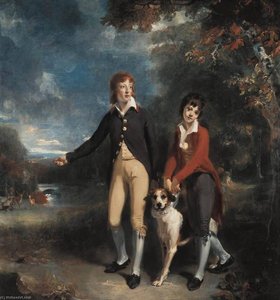
To stand before Sir Thomas Lawrence’s “George IV” is to be transported directly into the opulent drawing rooms of early nineteenth-century England, where every brushstroke whispers of a bygone era of unparalleled grandeur. Painted in 1822, this monumental portrait is far more than a mere likeness of a monarch; it is a carefully constructed tableau vivant designed to evoke the very essence of royal authority and aristocratic refinement. Lawrence, a master of the Regency period, captures King George IV not just as a man, but as a symbol of stability and prestige during a time of profound political transformation. The portrait radiates an aura of confidence, inviting the viewer to witness the zenith of the British monarchy through a lens of idealized splendor.
The subject himself, known for his flamboyant tastes and theatrical presence, is presented with a commanding dignity that belies the complexities of his reign. Lawrence utilizes a formal composition, mirroring the grand traditions of royal portraiture, yet infuses it with a Romantic vitality that feels strikingly modern. The King stands as a pillar of power against a backdrop of deep, crimson drapery—a bold choice that serves as both a visual anchor and a symbolic representation of imperial dominion. This rich, heavy curtain frames the monarch, creating a sense of theatrical intimacy that draws the eye toward the intricate details of his royal attire.
The Mastery of Light and Texture
What truly distinguishes this work is Lawrence’s extraordinary technical prowess, particularly his use of the glazing technique. By applying thin, translucent washes of color over successive layers, the artist achieved a luminous quality in the skin tones that seems to glow from within. This meticulous process allows for subtle gradations of light and shadow, sculpting the planes of the King's face with an almost ethereal softness. The interplay of light is nothing short of masterful; it catches the gleam of gold ornaments and highlights the crispness of fine lace, creating a tactile experience for the observer.
For the discerning collector or interior designer, the painting offers a feast of textures that can elevate any space. One can almost feel the weight of the velvet, the smoothness of the silk, and the intricate embroidery of the royal sash. Lawrence’s ability to render these varying surfaces—from the matte finish of skin to the reflective sheen of polished regalia—demonstrates an observational acuity that was unparalleled in his time. This attention to detail ensures that a high-quality reproduction of this piece retains its profound depth, making it a breathtaking focal point for a sophisticated gallery or a stately home.
An Enduring Legacy of Elegance
Beyond the technical brilliance, the emotional impact of “George IV” lies in its ability to evoke nostalgia for an age of elegance and unashamed luxury. The portrait serves as a window into the Regency era, a period defined by both social reform and an unapologetic embrace of beauty. There is a palpable sense of drama in the composition, a tension between the rigid formality of the pose and the vibrant, swirling energy of the surrounding fabrics. It is a piece that commands attention, demanding that the viewer acknowledge the weight of history and the enduring allure of royal iconography.
Incorporating such a masterpiece into a contemporary interior provides more than just decoration; it introduces a narrative of heritage and prestige. Whether placed in a library filled with leather-bound volumes or as a centerpiece in a modern, minimalist hall, the portrait brings a sense of historical gravity and artistic soul. It remains an essential acquisition for those who appreciate art that does not merely decorate a room but transforms its very atmosphere into one of timeless sophistication.
Fragen & Antworten
Sind die Farben von "George IV" von Sir Thomas Lawrence gesättigt oder gedämpft?
Die Farben von "George IV" von Sir Thomas Lawrence weisen eine Subtle Color Sättigung auf. Die Sättigung beschreibt, wie lebhaft oder gedämpft die Farben sind.
Wie alt war Sir Thomas Lawrence, als „George IV“ geschaffen wurde?
Sir Thomas Lawrence war 53 Jahre alt, als George IV im Jahr 1822 geschaffen wurde. Das Alter berechnet sich aus dem Geburtsjahr des Künstlers, 1769.
Wann wurde "George IV" geschaffen und welcher Stilrichtung lässt es sich zuordnen?
"George IV" entstand im Jahr 1822 innerhalb der Regency Portraiture-Bewegung.
In welcher Technik wurde "George IV" von Sir Thomas Lawrence ausgeführt?
"George IV" wurde in Oil On Canvas ausgeführt.
Wie verbinden sich Medium und Bewegung in "George IV"?
"George IV" von Sir Thomas Lawrence verbindet die Technik der Oil On Canvas mit dem Stil der Regency Portraiture. Technik und Stil beschreiben die Herstellung sowie die künstlerische Ausrichtung des Werkes.
Welchem Künstler wird "George IV" zugeschrieben?
"George IV" wird Sir Thomas Lawrence zugeschrieben.
Was ist das Entstehungsdatum von "George IV" von Sir Thomas Lawrence?
"George IV" stammt aus dem Jahr 1822. Dieses Datum ordnet das Werk in die Schaffensperiode von Sir Thomas Lawrence sowie in dessen Epoche ein.
Biografie des Künstlers
Frühes Leben und Ausbildung
- Geboren: Bristol, Vereinigtes Königreich, 13. April 1769
- Gestorben: London, 7. Januar 1830
- Eltern: Thomas Lawrence (Zollbeamter) und Lucy Read.
- Frühes Talent: Zeigte von jungem Alter an ein prodigiöses künstlerisches Talent und begann um das zehnte Lebensjahr zu zeichnen.
- Autodidakt: War weitgehend Autodidakt, obwohl er einige Anweisungen in Französisch und Latein erhielt.
- Familienunterstützung: Unterstützte seine Familie zunächst durch Pastellporträts während seines Aufenthalts in Bath.
- Umzug nach London: Zog im Alter von 18 Jahren nach London und etablierte sich schnell als Porträtmaler.
Karriere und künstlerische Entwicklung
- Frühe Aufträge: Erhielt 1789 seine erste königliche Auftragsarbeit, ein Porträt von Königin Charlotte.
- Mitgliedschaft in der Royal Academy: Wurde 1791 Associate und 1794 Vollmitglied der Royal Academy.
- Präsident der Royal Academy: War ab 1820 Präsident der Royal Academy.
- Porträts für die Waterloo-Kammer: Beauftragt, Porträts der alliierten Staats- und Regierungschefs für die Waterloo-Kammer im Windsor Castle zu malen, was seine Fähigkeiten demonstrierte und internationale Anerkennung erlangte.
- Stil & Technik: Bekannt für seine Fähigkeit, Gesichtszüge einzufangen und seine Virtuosität im Umgang mit Farbe. Beeinflusst von Sir Joshua Reynolds. Sein Stil entwickelte sich während seiner Karriere kaum weiter.
- Themenwahl: Konzentrierte sich hauptsächlich auf Porträts und porträtierte Adelige, Könige und prominente Persönlichkeiten der Regency-Ära.
Wichtige Errungenschaften und Anerkennung
- Modischster Porträtmaler: Galt zu seiner Zeit als einer der modischsten Porträtmaler Europas.
- Königliche Förderung: Genoss großzügige Unterstützung vom Prince Regent (später König Georg IV.).
- Internationale Anerkennung: Seine Arbeiten wurden 1824 im Pariser Salon ausgestellt und ernteten die Bewunderung französischer Künstler wie Delacroix.
- Beteiligung an der National Gallery: Spielte eine Rolle bei der Gründung der National Gallery und der Sicherung der Elgin-Marmorstatuen für Großbritannien.
- Auszeichnungen: 1815 zum Sir ernannt.
Einflüsse und Vermächtnis
- Sir Joshua Reynolds: Ein bedeutender Einfluss auf Lawrences frühe Entwicklung als Porträtmaler.
- Alte Meister: Studierte umfangreich Zeichnungen alter Meister, insbesondere von Michelangelo und Raffael.
- Romantik: Seine Arbeit spiegelte den Glanz der Regency-Ära wider und entsprach romantischen künstlerischen Idealen.
- Rückgang in der viktorianischen Ära: Lawrences Ruf ließ während der viktorianischen Zeit nach, wurde aber seitdem teilweise wiederhergestellt.
- Bleibender Einfluss: Bleibt eine wichtige Figur in der britischen Kunstgeschichte und wird für seine Fähigkeiten, seinen Charme und seine Fähigkeit gefeiert, das Wesen seiner Motive einzufangen.
Kontroversen und Privatleben
- Finanzielle Schwierigkeiten: Trotz seines Erfolgs hatte Lawrence einen Großteil seines Lebens mit Schulden zu kämpfen.
- Komplexe Beziehungen: Hatte schwierige Beziehungen zu Sally und Maria Siddons.
- Beziehungen der Sitter: Seine Sitter gehörten sowohl Sklavenbesitzern als auch Abolitionisten an, was die komplexe soziale Landschaft seiner Zeit widerspiegelt.

Sir Thomas Lawrence
1769 - 1830 , Vereinigtes Königreich
Eckdaten zum Künstler
- Beeinflusste Künstler: ['Sir Joshua Reynolds']
- Bemerkenswerte Werke:
- Portrait von Königin Charlotte
- Waterloo-Chamber-Porträts
- Geburtsdatum: 13. April 1769
- Geburtsort: Bristol, Vereinigtes Königreich
- Künstlerische Bewegung: Regency-Porträtmalerei
- Nationalität: Britisch
- Sterbedatum: 7. Januar 1830
- Vollständiger Name: Sir Thomas Lawrence
Verwandte Artikel

Thomas Phillips: Porträtmalerei, Mäzenatentum und der Aufstieg der viktorianischen Gesellschaftskunst
Entdecken Sie das Leben und Werk von Thomas Phillips – einem Schlüsselkünstler des viktorianischen Zeitalters. Erfahren Sie mehr über seine Porträtmalerei, sein Mäzenatentum und seinen Einfluss auf die Kunstgeschichte Englands.

Thomas Lawrence: Porträtkunst, Macht und Ästhetik der Regency-Gesellschaft
Entdecken Sie das Werk von Thomas Lawrence, dem führenden Porträtmaler der Regency-Zeit. Analysieren Sie Machtinszenierung, innovative Technik und seinen Einfluss auf die britische Kunstgeschichte. Für Kenner und Sammler.
Thomas George Webster: Navigating Genre Boundaries & American Identity in 19th-Century Landscape Painting
Explore the captivating genre scenes of Thomas George Webster, a Victorian painter bridging British traditions with American themes. Discover his style, influences & legacy in 19th-century art history.

Georges Seurat: Die 25 Meisterwerke des Pointillismus für Ihr Zuhause | OriginalUniqueArt
Entdecken Sie die 25 ikonischsten Meisterwerke von Georges Seurat! Tauchen Sie ein in die Welt des Pointillismus, der Farbtheorie und des Impressionismus. Hochwertige Kunst reproduzieren für Ihr Zuhause – jetzt auf OriginalUniqueArt.com!

Georges Braque: Die 25 Meisterwerke des Kubismus für Ihr Zuhause | OriginalUniqueArt
Entdecken Sie die 25 bedeutendsten Kunstwerke von Georges Braque – vom Kubismus bis zum Fauvismus. Erfahren Sie die Geschichten hinter den Meisterwerken und finden Sie hochwertige Reproduktionen für Ihr Zuhause auf OriginalUniqueArt.com.