

 In echtem Maßstab anzeigen
 Versenden als Grußkarte
 Teilen
 Details anzeigen
 Leitfaden öffnen

 Herunterladen
 Ähnliche Objekte
 Röntgenaufnahme
 Diashow
 Besucherstatistiken
Potter at Work
 Acrylic On Canvas
- WallArt
- Scottish Impressionism
 1888
1888- 19th Century
 Kelvingrove Art Gallery und Museum
 Mehr anzeigen
Giclée / Kunstdruck
Giclée- oder Leinwanddruck in Museumsqualität mit schneller Produktion und flexiblen Veredelungsoptionen. ( Handgemalte Reproduktion kaufen Zum digitalen Bild wechseln)




P118B €10

P118H €10

P118W €10

P438Z €10

P508JH €12

P508YH €12

P805H €10

P805Z €10

P919BZ €10

P919G €10

P919XJ €10

P959ZH €10

P968JZ €12

W106C €8

W218G €10

W218JH €8

W218Y €10

W307PJ €10

W316G €10

W316PJ €8

W316Y €10

W398PJ €8

W4111J €10

W500HY €15

W500JH €15

W692G €12

W849H €8

W940BG €15

W953PJ €8




Wählen Sie aus unseren vordefinierten Formaten, die den ursprünglichen Proportionen des Kunstwerks entsprechen.

Geben Sie die Breite und die Höhe an, die Sie benötigen, damit der Druck perfekt in Ihren Rahmen oder an Ihre Wand passt. Ein Druck kann nur beschnitten werden und niemals größer als das Originalbild gemacht werden; daher verliert ein Format mit einer anderen Proportion einen Teil des Bildes. Wir senden Ihnen ein digitales Mockup zur Freigabe, bevor wir den Druck ausführen. Das auf dieser Seite gezeigte Bild zeigt nicht den tatsächlichen Beschnitt – dies ist nur im Mockup ersichtlich.
Weltweiter Versand () innerhalb von 2 Wochen statt der üblichen 4/5 Wochen. (24 Oktober)

Kostenloser weltweiter Expressversand

Hochwertige Leinenleinwand

Vollständiger Versicherungsschutz beim Versand

Zollgebühren-Rückerstattungsgarantie

Garantie für exakte Farbtreue

100-tägiges Rückgaberecht (nur bei Mängeln)

100% Geld-zurück-Garantie

Angebot für Mengenrabatt
 Die Glasoption ist nur für Größen unter 110 cm verfügbar.

Potter at Work
Giclée / Kunstdruck
Format der Reproduktion
-


Gesamtpreis
€ 70
Potter at Work: A Portrait of Quiet Reflection Amidst Decorative Splendor
Sir John Lavery’s “Potter at Work” transcends mere depiction; it's a masterful distillation of Edwardian England – a snapshot frozen in time, capturing not just an individual but also the ethos of a burgeoning artistic movement. Painted in 1888, this portrait presents us with a man seated at a table laden with vases and utensils, absorbed in reading. The scene exudes understated elegance, reflecting Lavery’s fascination with Whistlerian Impressionism and his keen observation of societal nuances. The artist skillfully employs loose brushstrokes and muted tonal palettes characteristic of the Scottish School, prioritizing light and atmosphere over meticulous detail. This technique lends an ethereal quality to the composition, mirroring the contemplative mood conveyed by the subject's posture and gaze. Notice how Lavery captures the subtle interplay of light on the porcelain surfaces – a deliberate choice that underscores the importance of visual perception within the artistic framework. The inclusion of vases isn’t merely decorative; they serve as symbols of refinement and domestic tranquility, aligning perfectly with the values prevalent during Lavery's era. Beyond its aesthetic merits, “Potter at Work” speaks to broader themes of intellectual curiosity and mindful engagement with one’s surroundings. It invites viewers to consider the quiet dignity of scholarly pursuits alongside the beauty inherent in everyday objects – a juxtaposition that encapsulates Lavery’s artistic vision. The man’s attire—a formal tie—further reinforces this sense of social propriety, grounding the scene within its historical context.Artist Biography: John Kyffin Williams - Echoes of Welsh Landscape
Like many artists of his generation, Sir John Lavery drew inspiration from fellow Impressionists such as Whistler and John Kyffin Williams, whose exploration of light and color profoundly influenced Lavery’s artistic sensibilities. Williams' distinctive style—characterized by bold impasto technique—captures the rugged grandeur of Welsh landscapes with breathtaking immediacy. This shared commitment to capturing fleeting moments and conveying emotional resonance demonstrates the interconnectedness of artistic movements and underscores Lavery’s dedication to portraying the human condition against a backdrop of natural beauty.Historical Context: Edwardian Society & The Pursuit of Aesthetic Ideal
“Potter at Work” emerges from the opulent Edwardian period, a time marked by rapid industrialization alongside a fervent embrace of artistic innovation. Lavery’s oeuvre reflects this duality – portraying both aristocratic portraits and scenes depicting rural life with equal sensitivity. The Victorian influence lingered, yet Impressionism championed spontaneity and subjective experience, challenging traditional conventions and redefining notions of beauty. This artwork embodies the spirit of its time, capturing not only visual splendor but also a deeper yearning for intellectual stimulation and harmonious connection with the natural world.Symbolic Resonance: Vessels & Reflection – A Meditation on Domestic Tranquility
The vases adorning the table hold significant symbolic weight within “Potter at Work.” They represent more than just decorative elements; they symbolize refinement, hospitality, and a cultivated appreciation for art—values highly esteemed during Lavery’s lifetime. Simultaneously, the man's absorbed reading posture symbolizes intellectual contemplation and inner peace – an invitation to viewers to pause and consider the profound beauty found in quiet moments of reflection. Lavery skillfully utilizes these visual cues to elevate the portrait beyond mere representation, transforming it into a meditation on human experience and artistic aspiration.Fragen & Antworten
Worum geht es in "Potter at Work" und welche Atmosphäre vermittelt es?
"Potter at Work" von Sir John Lavery verbindet portraiture, edwardian era, reading room, decorative arts, vase arrangement, formal attire, irish painter mit einer Elegant Atmosphäre.
Worum geht es in "Potter at Work"?
"Potter at Work" von Sir John Lavery zeigt: portraiture, edwardian era, reading room, decorative arts, vase arrangement, formal attire, irish painter.
Gibt es einen Leitfaden für "Potter at Work" von Sir John Lavery?
Der Leitfaden zu „Potter at Work“ ist die Leitfaden-Seite des Kunstwerks – ein druckbares Infoblatt, das das Kunstwerk mit seiner Bildunterschrift, dem Urhebervermerk und einer Identifikationstabelle (Künstler, Daten, Medium, Originalgröße, Sammlung) zeigt.
Biografie des Künstlers
Sir John Lavery: Ein Leben in Porträts und Gesellschaft
- Geboren: Belfast, Irland (1856)
- Gestorben: 1941
Sir John Lavery RA war ein hoch angesehener irischer Maler, der für seine fesselnden Porträts und eindringlichen Darstellungen von Kriegsszenen bekannt ist. Geboren in Belfast, zeigte er früh künstlerisches Talent, besuchte die Haldane Academy in Glasgow in den 1870er Jahren und verbesserte seine Fähigkeiten weiter an der Académie Julian in Paris in den frühen 1880er Jahren.
Frühe Karriere & Einflüsse
Nach seiner Rückkehr nach Glasgow wurde Lavery mit den Künstlern der einflussreichen Glasgow School assoziiert. Ein entscheidender Moment kam 1888, als er den Auftrag erhielt, den Besuch von Königin Victoria bei der Internationalen Ausstellung in Glasgow zu malen. Dieser prestigeträchtige Auftrag startete seine Karriere als gefragter Gesellschaftsmaler und veranlasste ihn kurz darauf, nach London umzuziehen.
- Frühe Einflüsse: Lavery wurde deutlich von James McNeill Whistler beeinflusst, was sich in seinem künstlerischen Stil und seiner Herangehensweise an Porträts widerspiegelt.
- Glasgow School Assoziation: Seine Zeit mit der Glasgow School förderte eine ausgeprägte ästhetische Sensibilität, die seine späteren Werke prägte.
Kriegsdarstellungen & Offizielle Anerkennung
Wie William Orpen wurde Lavery während des Ersten Weltkriegs zum offiziellen Kriegskünstler ernannt. Aufgrund anhaltender gesundheitlicher Probleme und eines schweren Autounfalls infolge eines Zeppelin-Bombenangriffs konnte er jedoch nicht an der Westfront dienen. Stattdessen konzentrierte er sich darauf, Kriegsszenen innerhalb Großbritanniens festzuhalten und fing Boote, Flugzeuge und Luftschiffe ein.
- Offizieller Kriegskünstler: Trotz Einschränkungen leisteten Lavery’s Beiträge als offizieller Kriegskünstler wertvolle visuelle Aufzeichnungen eines Landes im Krieg.
- Bemerkenswerte Kriegswerke: Seine Serie umfasste "War Room – zeigt die Kapitulation der Hochseeflotte 1918", "Munitions, Newcastle, 1917" und “A Coast Defence – eine 18-Pfund-Flakkanone, Tyneside, 1917.”
Späteres Leben & Vermächtnis
Nach dem Krieg wurde Lavery zum Sir erhoben und 1921 in die Royal Academy aufgenommen. Sein persönliches Leben war eng mit bedeutenden historischen Ereignissen verbunden; er und seine Frau Hazel spielten eine diskrete Rolle im Irischen Unabhängigkeitskrieg und Bürgerkrieg, indem sie ihr Londoner Haus für irische Verhandlungsführer zur Verfügung stellten. Er verewigte Michael Collins mit seinem Gemälde "Michael Collins, Love of Ireland", das sich heute in der Hugh Lane Municipal Gallery befindet.
- Anglo-Irische Beziehungen: Die Beteiligung der Lavery’s spiegelte eine komplexe Beziehung zwischen Großbritannien und Irland während einer Zeit intensiver politischer Umwälzungen wider.
- Hazels Einfluss: Hazel Lavery, seine Frau, wurde häufig in seinen Gemälden abgebildet und diente von 1928 bis 1975 als allegorische Figur "Irland" auf irischen Banknoten.
- Großzügige Förderung: Lavery spendete großzügig Werke an das Ulster Museum und die Hugh Lane Municipal Gallery, was sein Vermächtnis in der irischen Kunst festigte.
Künstlerischer Stil & Hauptwerke
Laverys künstlerischer Stil vereinte Elemente des Impressionismus mit einem scharfen Auge für die Erfassung von Persönlichkeit und Atmosphäre. Seine Porträts werden für ihren Realismus, ihre Eleganz und ihre aufschlussreiche Darstellung des Charakters gefeiert. Er war auch ein begabter Landschafts- und Alltagsszenenmaler.
- Hauptwerke: "Die Eröffnung der Modern Foreign and Sargent Galleries in der Tate Gallery, 26. Juni 1926," “On the Loing: An Afternoon Chat (auch bekannt als Unter der Kirschbaum),” "A Visitor to the Studio," "Eileen, Her First Communion."
- Wiederkehrende Themen: Porträts von prominenten Persönlichkeiten, Szenen des britischen Gesellschaftslebens und Darstellungen von Kriegserfahrungen standen im Mittelpunkt seines Werkes.

Sir John Lavery
1856 - 1941 , Irland
Eckdaten zum Künstler
- Beeinflusste Künstler: ['James McNeill Whistler']
- Bemerkenswerte Werke:
- Michael Collins, Love of Ireland
- Sommer am Fluss
- Kriegsraum – Kapitulation
- Lady Lavery
- Der Künstlers Atelier
- Ein Besucher im Studio
- Am Loing: Nachmittagsgespräch
- Geburtsdatum: 1856
- Geburtsort: Belfast, Irland
- Künstlerische Richtung: Impressionismus
- Nationalität: Irisch
- Sterbedatum: 1941
- Vollständiger Name: Sir John Lavery
Verwandte Artikel

John Constable: Die 25 Meisterwerke des englischen Landschaftsgenies – OriginalUniqueArt
Entdecken Sie die 25 Meisterwerke von John Constable! Erleben Sie englische Landschaftsmalerei vom Hay Wain bis zur Stour Valley. Hochwertige Reproduktionen & Kunst für Ihr Zuhause auf OriginalUniqueArt.com.
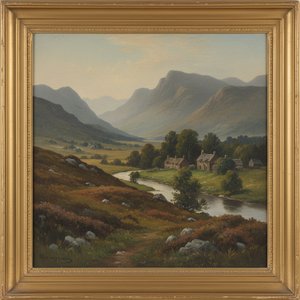
Sir John Watson Gordon: A Study in Scottish Landscape Painting & Tonal Impressionism
Explore the captivating portraits of Sir John Watson Gordon, a leading Scottish master. Discover his evolution from neoclassical style to atmospheric Tonalism and influence on 19th-century British art. Learn about his iconic sitters & legacy.

John Wilson Carmichael: Evoking Scottish Identity Through Dramatic Marine Painting
Explore the dramatic marine paintings of John Wilson Carmichael (1800-1868), a Victorian master renowned for his realistic seascapes and historical naval scenes. Discover his life, style & available hand-painted reproductions at OriginalUniqueArt.

John Singer Sargent: Die 25 Meisterwerke des Porträts – Kunst für Ihr Zuhause | OriginalUniqueArt
Entdecken Sie die 25 Meisterwerke von John Singer Sargent! Tauchen Sie ein in die Welt der Porträtmalerei, des Impressionismus & der Belle Époque. Hochwertige Kunstdrucke & Reproduktionen für Ihr Zuhause – jetzt auf OriginalUniqueArt.com!
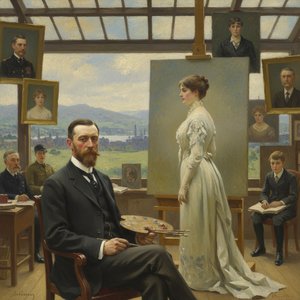
Sir John Lavery: A Study in Scottish Impressionism & the Portraiture of a Generation
Explore the life & art of Sir John Lavery, a master of Scottish Impressionism and renowned portraitist. Discover his captivating works, Irish heritage, and lasting legacy with OriginalUniqueArt.


