Textgröße

() ·

Ein Gemälde, von Hand für Sie geschaffen

Munitions, Newcastle

Handgefertigte Ölreproduktion

Handgemaltes Ölgemälde auf Leinwand in Ihrer Wunschgröße und mit Rahmen, auf Bestellung von unseren Künstlern angefertigt. ( Zum Druck wechseln Zum digitalen Bild wechseln)

Beschreibung des Sammlerstücks

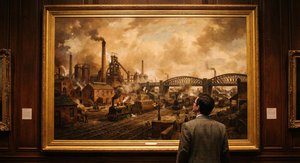
Sir John Lavery's "Munitions, Newcastle" (1917) captures the industrial heart of wartime Britain – a bustling munitions factory scene brimming with activity and raw determination.

Künstlerbiografie

Sir John Lavery (1856-1941): Irischer Maler, berühmt für elegante Porträts & eindrucksvolle Kriegsdarstellungen. Ein Meister des Impressionismus!

ab ·

Kapitel 1

Welche Größe soll es haben?

Wischen Sie, um die Größe zu ändern; das Bild auf der linken Seite zeigt den Rahmen in seiner tatsächlichen Breite. Die Proportionen des Originals bleiben erhalten.

Standardformat
individuell anpassbar
CM
INCH

Wählen Sie aus unseren vordefinierten Formaten, die den ursprünglichen Proportionen des Kunstwerks entsprechen.

Breite
Höhe

Geben Sie die Breite und die Höhe an, die Sie für Ihren Rahmen oder Ihre Wand benötigen. Da dieses Werk handgemalt ist, kann der Künstler bei einer anderen Form etwas mehr um das Bild herum malen oder etwas abschneiden – Sie entscheiden. Wir senden Ihnen ein digitales Mockup zur Freigabe, bevor mit dem Malen begonnen wird. Das auf dieser Seite gezeigte Bild stellt nicht das tatsächliche Ergebnis dar – dies tut nur das Mockup.

Kapitel 2

Wie soll es geliefert werden?

Wählen Sie die Kanten der Leinwand aus

Wählen Sie Ihren Rahmen

Corner sample of the WhiteWrap canvas edge finish, stretched on Massivholz bars
Weißer Rand €1
Corner sample of the BlurSideWrap canvas edge finish, stretched on Massivholz bars
verlaufende Kanten €1
Corner sample of the ExtendedWrap canvas edge finish, stretched on Massivholz bars
Umrandung €1
Corner sample of the P118B picture frame: formgepresstes Polystyrol, 5 cm wide and 3 cm thick
P118B €10
Corner sample of the P118H picture frame: formgepresstes Polystyrol, 5 cm wide and 3 cm thick
P118H €10
Corner sample of the P118W picture frame: formgepresstes Polystyrol, 5 cm wide and 3 cm thick
P118W €10
Corner sample of the P438Z picture frame: formgepresstes Polystyrol, 5.5 cm wide and 3.5 cm thick
P438Z €10
Corner sample of the P508JH picture frame: formgepresstes Polystyrol, 7 cm wide and 3.5 cm thick
P508JH €12
Corner sample of the P508YH picture frame: formgepresstes Polystyrol, 7 cm wide and 3.5 cm thick
P508YH €12
Corner sample of the P805H picture frame: formgepresstes Polystyrol, 5 cm wide and 3.5 cm thick
P805H €10
Corner sample of the P805Z picture frame: formgepresstes Polystyrol, 5 cm wide and 3.5 cm thick
P805Z €10
Corner sample of the P919BZ picture frame: formgepresstes Polystyrol, 7 cm wide and 3.5 cm thick
P919BZ €10
Corner sample of the P919G picture frame: formgepresstes Polystyrol, 7 cm wide and 3.5 cm thick
P919G €10
Corner sample of the P919XJ picture frame: formgepresstes Polystyrol, 7 cm wide and 3.5 cm thick
P919XJ €10
Corner sample of the P959ZH picture frame: formgepresstes Polystyrol, 5 cm wide and 3 cm thick
P959ZH €10
Corner sample of the P968JZ picture frame: formgepresstes Polystyrol, 6 cm wide and 4 cm thick
P968JZ €12
Corner sample of the W106C picture frame: Massivholz, 5 cm wide and 3 cm thick
W106C €8
Corner sample of the W218G picture frame: Massivholz, 5 cm wide and 3 cm thick
W218G €10
Corner sample of the W218JH picture frame: Massivholz, 5 cm wide and 3 cm thick
W218JH €8
Corner sample of the W218Y picture frame: Massivholz, 5 cm wide and 3 cm thick
W218Y €10
Corner sample of the W307PJ picture frame: Massivholz, 6 cm wide and 3 cm thick
W307PJ €10
Corner sample of the W316G picture frame: Massivholz, 6 cm wide and 3 cm thick
W316G €10
Corner sample of the W316PJ picture frame: Massivholz, 6 cm wide and 3 cm thick
W316PJ €8
Corner sample of the W316Y picture frame: Massivholz, 6 cm wide and 3 cm thick
W316Y €10
Corner sample of the W398PJ picture frame: Massivholz, 5 cm wide and 3 cm thick
W398PJ €8
Corner sample of the W4111J picture frame: Massivholz, 6.5 cm wide and 3.5 cm thick
W4111J €10
Corner sample of the W500HY picture frame: Massivholz, 7 cm wide and 5 cm thick
W500HY €15
Corner sample of the W500JH picture frame: Massivholz, 7 cm wide and 5 cm thick
W500JH €15
Corner sample of the W692G picture frame: Massivholz, 8 cm wide and 4 cm thick
W692G €12
Corner sample of the W849H picture frame: Massivholz, 5 cm wide and 3 cm thick
W849H €8
Corner sample of the W940BG picture frame: Massivholz, 7.5 cm wide and 4.5 cm thick
W940BG €15
Corner sample of the W953PJ picture frame: Massivholz, 6 cm wide and 3.5 cm thick
W953PJ €8
Corner sample of the H24-GOLD picture frame: geschnitztes Holz mit Gesso, 10 cm wide and 6 cm thick
H24-GOLD €30
Corner sample of the H24-SILVER picture frame: geschnitztes Holz mit Gesso, 10 cm wide and 6 cm thick
H24-SILVER €30
Corner sample of the H36-GOLD picture frame: geschnitztes Holz mit Gesso, 15 cm wide and 6.5 cm thick
H36-GOLD €45
Corner sample of the H36-SILVER picture frame: geschnitztes Holz mit Gesso, 15 cm wide and 6.5 cm thick
H36-SILVER €45

Profil: . Gesamtgröße mit Rahmen: .

Kapitel 3

Wer malt es, und sollte etwas geändert werden?

Beispiele für Anpassungsmöglichkeiten: Gesicht durch Kundenfoto ersetzen; Haustier hinzufügen (z. B. Katze durch Hund ersetzen); Versteckte Botschaft im Hintergrund einfügen; Hintergrundlandschaft oder Elemente ändern.
Nach der Bestellung wird das Team von OriginalUniqueArt.com den Kunden per E-Mail kontaktieren, um Anweisungen einzuholen und eine Vorschau des Entwurfs bereitzustellen

Weltweiter Versand () in nur 3 bis 4 Wochen statt der üblichen 5 Wochen. (4 November). Keine Kompromisse bei der Qualität.

Kapitel 4

Der letzte Schliff

Ein Namensschild, wie im Museum?

Details der gravierten Bronzetafel

This elegant plaque features the artist's name and the title of the artwork, finely engraved for a timeless presentation.

It is made from bronze with a refined, elegant finish. The text is precisely laser-engraved for a sharp and permanent result. Measuring 9x2 cm, the plaque is compact yet easy to read. It's built to be durable and scratch-resistant, offering a professional, museum-quality look. Mounting is simple thanks to the included adhesive backing.

Details zur Acrylglas-Plakette (transparent)

The plaque includes essential engraved details such as the artist's name, the title of the artwork, the date it was created, the type of media used-like oil on canvas or watercolor-a brief description of the piece, and a QR code that links to the complete artwork information.

It is crafted from clear acrylic, offering a sleek, modern appearance. The text is UV-engraved in black to ensure strong visual contrast. With a size of 10x15 cm, it ensures optimal readability. It comes equipped with two metal hooks for secure wall mounting. The plaque is designed to be weather-resistant, making it suitable for various environments, and it includes interactive features that work seamlessly with smartphone scanning.

Details zur schwarzen Acryltafel

This elegant plaque includes engraved information such as the artist's name, the title of the artwork, the date it was created, the type of media used (like oil on canvas or watercolor), a short description of the artwork, and a QR code for quick access to more information.

The plaque itself is made from refined black acrylic with a premium finish. The text is laser-engraved in white for high contrast and readability. Its size is 10x15 cm, designed to be easy to read. It comes with two metal hooks for professional mounting. The design is sleek and fits any interior style. It is also weather-resistant and durable, with built-in digital integration for mobile compatibility.

Ein Schutzlack?

Bis wann benötigen Sie es?

Kapitel 5

Ihr Gemälde, wie von Ihnen bestellt

Munitions, Newcastle

Art der Reproduktion

Format der Reproduktion

-

Erstklassige Meisterkünstler

Mehr Detailtiefe, Raffinesse und zusätzliche Produktionszeit

-

Rahmen für Reproduktionen

-

-

Bei Kunstwerken oder Reproduktionen, die an einer Seite größer als 105 cm (ca. 41 Zoll) sind, wird der Rahmen zerlegt als Bausatz geliefert. Diese Methode gewährleistet eine sichere Zustellung und verhindert Schäden während des Transports.

Professionelle Montage erforderlich – dies ist kein DIY-Produkt.
Der Bausatz muss von einem erfahrenen professionellen Rahmenmacher zusammengebaut und die Leinwand gespannt werden. Hierfür werden Holzleim (nicht im Lieferumfang enthalten), eine Leinwandspannzange sowie Klemmen benötigt, um die Keilleisten während des Trocknungsvorgangs rechtwinklig zu halten. Eine unsachgemäße Montage oder eine ungleichmäßige Spannung der Leinwand kann das Kunstwerk dauerhaft beschädigen und ist nicht durch unsere Garantie abgedeckt.

  • Alle Vollholzkomponenten sind enthalten, präzise auf Maß zugeschnitten.

  • Der Zusammenbau erfolgt mit den mitgelieferten Schrauben sowie Holzkleber für die Eckverbindungen, der nicht im Lieferumfang enthalten ist und vom Rahmenbauer selbst beschafft werden muss.

  • Professionelles Werkzeug ist erforderlich und nicht im Lieferumfang enthalten: eine Keilrahmenzange (Spannwerkzeug) sowie Klammern, um die Leisten während der Trocknungszeit des Klebers rechtwinklig zu fixieren.

Wichtiger Hinweis:
Für die Eckverbindungen wird Holzleim benötigt, die Leisten müssen mit Zwingen fixiert werden, bis der Leim vollständig getrocknet ist, und das Spannen der Leinwand auf dem fertigen Rahmen erfordert eine Keilrahmen-Zange. Keines dieser Utensilien ist im Set enthalten. Bitte stellen Sie sicher, dass ein erfahrener Rahmenmacher zur Verfügung steht, bevor Sie diese Größe bestellen.

Beschriftung

-

-

Schutzlackierung

Glanzlack (verstärkt die Farben, schützt vor Licht und Feuchtigkeit)

-

Mein Kunstwerk personalisieren

Beispiele für Anpassungsmöglichkeiten: Gesicht durch Kundenfoto ersetzen; Haustier hinzufügen (z. B. Katze durch Hund ersetzen); Versteckte Nachricht im Hintergrund einfügen; Hintergrundlandschaft oder -elemente ändern.

-

Eilt sehr

Weltweiter Versand () in nur 3 bis 4 Wochen statt der üblichen 5 Wochen. (4 November). Keine Kompromisse bei der Qualität.

-

Expressversand

Weltweiter Versand () innerhalb von 5 Wochen. (11 November).

Inklusive Versand

Endpreis

€ 267

Gesamtpreis € 267

Die Glasoption ist nur für Größen unter 110 cm verfügbar.

In jeder Bestellung enthalten

  • Kostenloser weltweiter Expressversand
  • Hochwertige Leinenleinwand
  • Umfassender Versicherungsschutz beim Versand
  • Zollgebühren-Rückerstattungsgarantie
  • Garantie für exakte Farbtreue
  • 100 Tage Rückgaberecht (nur bei Mängeln)
  • 100% Geld-zurück-Garantie
  • Mengenrabatt verfügbar

A Chronicle of Industry and Resilience: Lavery’s “Munitions, Newcastle”

Sir John Lavery's "Munitions, Newcastle," painted in 1917, is far more than a depiction of a factory floor; it’s a poignant snapshot of Britain’s wartime spirit, a testament to the tireless efforts of its workforce, and a masterful example of the artist’s evolving Impressionistic style. The painting immediately draws the eye into a vast, echoing space – an industrial heart beating with the rhythm of production during World War I. Lavery doesn't shy away from the gritty reality of the scene; instead, he embraces it, capturing the scale and intensity of the munitions factory in Newcastle with remarkable detail and emotional resonance. The composition is deliberately powerful, utilizing a strong horizontal axis defined by the towering overhead cranes that dominate the upper portion of the canvas. These aren’t merely mechanical structures; they become symbols of industry's relentless drive, reaching upwards towards an unseen goal – fueling the war effort.

Impressionistic Detail and Atmospheric Depth

Lavery’s brushwork is immediately striking, a hallmark of his Impressionistic approach. Loose, visible strokes create a sense of movement and immediacy, as if we are standing within this bustling factory ourselves. The artist skillfully employs light and shadow to build depth and atmosphere, bathing the scene in a warm, artificial glow emanating from the furnaces and strategically placed lamps. This isn’t a romanticized view; it's a deliberately realistic portrayal of an industrial environment, yet Lavery imbues it with a remarkable sense of drama. The muted palette – dominated by browns, grays, and ochres – reflects the utilitarian nature of the setting, while subtle hints of blue and white punctuate the scene, drawing attention to machinery and equipment, adding visual interest without overwhelming the overall mood. The figures themselves are rendered with sensitivity, capturing their focused expressions and purposeful movements as they navigate the complex network of operations.

A Window into Wartime Britain

“Munitions, Newcastle” offers a crucial glimpse into the lives of ordinary Britons during World War I. The painting’s creation coincided with a period of immense national mobilization, as factories across the country were retooled to produce weapons and supplies for the war effort. Lavery's decision to depict this specific factory – one involved in munitions production – highlights the vital role played by industrial workers in sustaining the Allied cause. The image speaks volumes about the sacrifices made by these individuals, who worked long hours under demanding conditions to contribute to a national endeavor. It’s a powerful reminder of the human cost of conflict and the collective effort required to overcome adversity. Further research reveals that Lavery was commissioned by William Burrell, a wealthy shipowner, to paint this scene, highlighting the significant patronage that supported British artists during wartime.

Symbolism and Emotional Resonance

Beyond its documentary value, “Munitions, Newcastle” is rich in symbolism. The sheer scale of the factory – dwarfing the human figures within it – underscores the overwhelming power of industrial production. The cranes, reaching towards the heavens, can be interpreted as symbols of ambition, progress, and the relentless pursuit of victory. The faces of the workers, etched with concentration and determination, embody the spirit of resilience and patriotism that characterized Britain during the war years. Lavery’s masterful use of light and shadow evokes a sense of urgency and drama, mirroring the anxieties and uncertainties of wartime. The painting ultimately serves as a poignant meditation on industry, sacrifice, and the enduring strength of the human spirit in the face of adversity – a timeless message rendered with remarkable skill and sensitivity by one of Britain's most celebrated portraitists.

Fragen & Antworten

Welche emotionale Stimmung vermittelt "Munitions, Newcastle" von Sir John Lavery?

„Munitions, Newcastle“ vermittelt ein Somber Gefühl. Der emotionale Ton beschreibt den Eindruck, den das Werk hinterlässt.

Welche Technik wurde für "Munitions, Newcastle" von Sir John Lavery verwendet?

Sir John Lavery verwendete die Technik der Oil On Canvas für „Munitions, Newcastle“. Die Technik bestimmt die materielle Beschaffenheit des Originalwerks.

Ist "Munitions, Newcastle" von Sir John Lavery im Hoch-, Quer- oder Quadratformat angeordnet?

"Munitions, Newcastle" von Sir John Lavery hat ein Portrait-Format. Das Format beschreibt die Proportionen der Komposition.

Mehr über dieses Gemälde

Vorschau anzeigen In AR ansehen Zum Druck wechseln Zum digitalen Bild wechseln Versenden
Details anzeigen Leitfaden Zu Favoriten hinzufügen Herunterladen Ähnliche Objekte Röntgenaufnahme Diashow Fragen & Antworten Statistiken

In Zahlen

  • 1917das Jahr der Entstehung
  • 29Rahmen zur Auswahl
  • Standardformate, in ihren eigenen Proportionen
  • 5Wochen für die Bemalung und Lieferung
Sir John Lavery

Sir John Lavery

1856 - 1941, Irland

Kurzinfos zu Sir John Lavery

  • Beeinflusste Künstler: ['James McNeill Whistler']
  • Bemerkenswerte Werke:
    • Michael Collins, Love of Ireland
    • Sommer am Fluss
    • Kriegsraum – Kapitulation
    • Lady Lavery
    • Der Künstlers Atelier
    • Ein Besucher im Studio
    • Am Loing: Nachmittagsgespräch
  • Geburtsdatum: 1856
  • Geburtsort: Belfast, Irland
  • Künstlerische Richtung: Impressionismus
  • Nationalität: Irisch
  • Sterbedatum: 1941
  • Vollständiger Name: Sir John Lavery

Künstlerbiografie

Sir John Lavery: Ein Leben in Porträts und Gesellschaft

  • Geboren: Belfast, Irland (1856)
  • Gestorben: 1941

Sir John Lavery RA war ein hoch angesehener irischer Maler, der für seine fesselnden Porträts und eindringlichen Darstellungen von Kriegsszenen bekannt ist. Geboren in Belfast, zeigte er früh künstlerisches Talent, besuchte die Haldane Academy in Glasgow in den 1870er Jahren und verbesserte seine Fähigkeiten weiter an der Académie Julian in Paris in den frühen 1880er Jahren.

Frühe Karriere & Einflüsse

Nach seiner Rückkehr nach Glasgow wurde Lavery mit den Künstlern der einflussreichen Glasgow School assoziiert. Ein entscheidender Moment kam 1888, als er den Auftrag erhielt, den Besuch von Königin Victoria bei der Internationalen Ausstellung in Glasgow zu malen. Dieser prestigeträchtige Auftrag startete seine Karriere als gefragter Gesellschaftsmaler und veranlasste ihn kurz darauf, nach London umzuziehen.

  • Frühe Einflüsse: Lavery wurde deutlich von James McNeill Whistler beeinflusst, was sich in seinem künstlerischen Stil und seiner Herangehensweise an Porträts widerspiegelt.
  • Glasgow School Assoziation: Seine Zeit mit der Glasgow School förderte eine ausgeprägte ästhetische Sensibilität, die seine späteren Werke prägte.

Kriegsdarstellungen & Offizielle Anerkennung

Wie William Orpen wurde Lavery während des Ersten Weltkriegs zum offiziellen Kriegskünstler ernannt. Aufgrund anhaltender gesundheitlicher Probleme und eines schweren Autounfalls infolge eines Zeppelin-Bombenangriffs konnte er jedoch nicht an der Westfront dienen. Stattdessen konzentrierte er sich darauf, Kriegsszenen innerhalb Großbritanniens festzuhalten und fing Boote, Flugzeuge und Luftschiffe ein.

  • Offizieller Kriegskünstler: Trotz Einschränkungen leisteten Lavery’s Beiträge als offizieller Kriegskünstler wertvolle visuelle Aufzeichnungen eines Landes im Krieg.
  • Bemerkenswerte Kriegswerke: Seine Serie umfasste "War Room – zeigt die Kapitulation der Hochseeflotte 1918", "Munitions, Newcastle, 1917" und “A Coast Defence – eine 18-Pfund-Flakkanone, Tyneside, 1917.”

Späteres Leben & Vermächtnis

Nach dem Krieg wurde Lavery zum Sir erhoben und 1921 in die Royal Academy aufgenommen. Sein persönliches Leben war eng mit bedeutenden historischen Ereignissen verbunden; er und seine Frau Hazel spielten eine diskrete Rolle im Irischen Unabhängigkeitskrieg und Bürgerkrieg, indem sie ihr Londoner Haus für irische Verhandlungsführer zur Verfügung stellten. Er verewigte Michael Collins mit seinem Gemälde "Michael Collins, Love of Ireland", das sich heute in der Hugh Lane Municipal Gallery befindet.

  • Anglo-Irische Beziehungen: Die Beteiligung der Lavery’s spiegelte eine komplexe Beziehung zwischen Großbritannien und Irland während einer Zeit intensiver politischer Umwälzungen wider.
  • Hazels Einfluss: Hazel Lavery, seine Frau, wurde häufig in seinen Gemälden abgebildet und diente von 1928 bis 1975 als allegorische Figur "Irland" auf irischen Banknoten.
  • Großzügige Förderung: Lavery spendete großzügig Werke an das Ulster Museum und die Hugh Lane Municipal Gallery, was sein Vermächtnis in der irischen Kunst festigte.

Künstlerischer Stil & Hauptwerke

Laverys künstlerischer Stil vereinte Elemente des Impressionismus mit einem scharfen Auge für die Erfassung von Persönlichkeit und Atmosphäre. Seine Porträts werden für ihren Realismus, ihre Eleganz und ihre aufschlussreiche Darstellung des Charakters gefeiert. Er war auch ein begabter Landschafts- und Alltagsszenenmaler.

  • Hauptwerke: "Die Eröffnung der Modern Foreign and Sargent Galleries in der Tate Gallery, 26. Juni 1926," “On the Loing: An Afternoon Chat (auch bekannt als Unter der Kirschbaum),” "A Visitor to the Studio," "Eileen, Her First Communion."
  • Wiederkehrende Themen: Porträts von prominenten Persönlichkeiten, Szenen des britischen Gesellschaftslebens und Darstellungen von Kriegserfahrungen standen im Mittelpunkt seines Werkes.

Eckdaten

  • Movement: Scottish Impressionism
  • Location: Imperial War Museum
  • Medium: Oil on canvas
  • Artist: Sir John Lavery
  • Year: 1917
  • Dimensions: 63.5 x 76.2 cm

Kunst-Quiz

Jede Frage hat nur eine richtige Antwort.

Frage 1:
What is the primary subject depicted in John Lavery’s ‘Munitions, Newcastle’?
Frage 2:
The painting ‘Munitions, Newcastle’ is primarily executed in which style?
Frage 3:
What architectural element dominates the upper portion of ‘Munitions, Newcastle’?
Frage 4:
In what year was ‘Munitions, Newcastle’ painted?
Frage 5:
What does the painting ‘Munitions, Newcastle’ primarily aim to convey about World War I?