

 In echtem Maßstab anzeigen
 Versenden als Grußkarte
 Teilen
 Details anzeigen
 Leitfaden öffnen

 Herunterladen
 Ähnliche Objekte
 Röntgenaufnahme
 Diashow
 Besucherstatistiken
A Quiet Day in the Studio


 Mehr anzeigen
Giclée / Kunstdruck
Giclée- oder Leinwanddruck in Museumsqualität mit schneller Produktion und flexiblen Veredelungsoptionen. ( Handgemalte Reproduktion kaufen Zum digitalen Bild wechseln)




P118B $10

P118H $10

P118W $10

P438Z $10

P508JH $12

P508YH $12

P805H $10

P805Z $10

P919BZ $10

P919G $10

P919XJ $10

P959ZH $10

P968JZ $12

W106C $8

W218G $10

W218JH $8

W218Y $10

W307PJ $10

W316G $10

W316PJ $8

W316Y $10

W398PJ $8

W4111J $10

W500HY $15

W500JH $15

W692G $12

W849H $8

W940BG $15

W953PJ $8




Wählen Sie aus unseren vordefinierten Formaten, die den ursprünglichen Proportionen des Kunstwerks entsprechen.

Sie können Ihre eigenen Maße eingeben, um ein bestimmtes Format oder einen speziellen Platz einzupassen. Wenn das von Ihnen gewählte Format nicht den Proportionen des Originalbildes entspricht, werden wir das Kunstwerk entweder beschneiden oder das Bild mit einem gespiegelten oder einfarbigen Rand erweitern. Ein digitaler Entwurf wird Ihnen zur Genehmigung zugesandt, bevor die Produktion beginnt.
Bitte beachten Sie, dass die Vorschau auf dem Bildschirm nicht den tatsächlichen Zuschnitt oder die Erweiterung widerspiegelt. Nur der Entwurf zeigt die endgültige Komposition präzise an.
Obwohl Sondermaße verfügbar sind, empfehlen wir die Auswahl eines Maßes aus der vordefinierten Liste, um die ursprünglichen Proportionen zu bewahren.
Weltweiter Versand () innerhalb von 2 Wochen statt der üblichen 4/5 Wochen. (25 September)

Kostenloser weltweiter Expressversand

Hochwertige Leinenleinwand

Vollständiger Versicherungsschutz beim Versand

Zollgebühren-Rückerstattungsgarantie

Garantie für exakte Farbtreue

100-tägiges Rückgaberecht (nur bei Mängeln)

100% Geld-zurück-Garantie

Angebot für Mengenrabatt
 Die Glasoption ist nur für Größen unter 110 cm verfügbar.

A Quiet Day in the Studio
Giclée / Kunstdruck
Format der Reproduktion
-


Gesamtpreis
$ 80
A Portrait of Quietude: Sir John Lavery’s “A Quiet Day in the Studio”
Sir John Lavery's "A Quiet Day in the Studio," painted in 1883, isn’t merely a depiction of a woman reading; it’s a meticulously crafted tableau of domesticity and artistic contemplation, imbued with the subtle social currents of Edwardian Britain. The painting immediately draws the viewer into a space of profound tranquility – a cozy sanctuary centered around a crackling fireplace and bathed in the warm glow of afternoon light. Lavery masterfully employs a muted palette of browns, creams, and ochres, creating an atmosphere of understated elegance and intimacy. This deliberate restraint is characteristic of his style, particularly during this period, where he moved away from the overtly flamboyant styles prevalent in earlier portraiture to embrace a more nuanced and psychologically perceptive approach.
Lavery’s technique reveals a keen eye for detail and a sophisticated understanding of light and shadow. Notice how he renders the textures – the rough weave of the armchair, the flickering flames of the fire, the delicate folds of the woman's dress. He achieves this through short, broken brushstrokes, building up layers of color to create a sense of depth and realism. The composition is carefully balanced; the figure occupies the central space, while the surrounding elements – the books, vases, clock, and painting on the wall – contribute to a harmonious whole. The inclusion of these objects isn’t arbitrary; they speak volumes about the subject's intellectual life and her connection to the world of art itself.
The Social Portraiture of an Era
"A Quiet Day in the Studio" exemplifies Lavery’s role as a leading portraitist of his time. He wasn’t simply capturing likenesses; he was documenting the social fabric of Edwardian society, particularly the lives of women within the domestic sphere. Lavery skillfully navigated the complexities of Victorian and Edwardian conventions, portraying subjects with both respect and a subtle awareness of their position in society. His portraits were commissioned by wealthy industrialists, prominent politicians, and members of the aristocracy – individuals who sought to project an image of success, refinement, and social standing.
The painting’s setting itself is significant. The fireplace, a central element, represents warmth, comfort, and domesticity—values highly prized in Edwardian society. The presence of books suggests intellectual pursuits and a cultivated mind. The vase arrangement speaks to an appreciation for beauty and refinement, reflecting the prevailing aesthetic sensibilities of the era. Even the clock subtly reinforces the importance of time and order within the home.
Symbolism and Emotional Resonance
Beyond its surface details, “A Quiet Day in the Studio” resonates with a deeper emotional resonance. The woman’s posture – seated comfortably, absorbed in her reading – conveys a sense of peace and contentment. Her gaze is directed downwards, suggesting introspection and a quiet engagement with the world of ideas. This isn't a portrait of grandiosity or dramatic pose; it’s a portrayal of a moment of serene contemplation—a rare and precious commodity in a rapidly changing society.
The painting also subtly alludes to Lavery’s own artistic practice. The painting hanging on the wall, likely one of his own works, serves as a visual reminder of his profession and his connection to the broader art world. It's a meta-commentary on the role of the artist within society – an observer, a recorder, and ultimately, a creator of beauty.
A Reproduction for Your Space
OriginalUniqueArt offers meticulously crafted hand-painted reproductions of “A Quiet Day in the Studio,” allowing you to bring this evocative portrait into your home or office. Our skilled artists replicate Lavery’s nuanced technique and atmospheric palette with exceptional accuracy, ensuring that every detail is faithfully reproduced. Whether you're an art collector, a design enthusiast, or simply someone seeking a piece of timeless beauty, our reproduction captures the essence of this remarkable painting – a testament to Sir John Lavery’s artistic genius and a poignant reflection on the quiet pleasures of domestic life.
Biografie des Künstlers
Sir John Lavery: Ein Leben in Porträts und Gesellschaft
- Geboren: Belfast, Irland (1856)
- Gestorben: 1941
Sir John Lavery RA war ein hoch angesehener irischer Maler, der für seine fesselnden Porträts und eindringlichen Darstellungen von Kriegsszenen bekannt ist. Geboren in Belfast, zeigte er früh künstlerisches Talent, besuchte die Haldane Academy in Glasgow in den 1870er Jahren und verbesserte seine Fähigkeiten weiter an der Académie Julian in Paris in den frühen 1880er Jahren.
Frühe Karriere & Einflüsse
Nach seiner Rückkehr nach Glasgow wurde Lavery mit den Künstlern der einflussreichen Glasgow School assoziiert. Ein entscheidender Moment kam 1888, als er den Auftrag erhielt, den Besuch von Königin Victoria bei der Internationalen Ausstellung in Glasgow zu malen. Dieser prestigeträchtige Auftrag startete seine Karriere als gefragter Gesellschaftsmaler und veranlasste ihn kurz darauf, nach London umzuziehen.
- Frühe Einflüsse: Lavery wurde deutlich von James McNeill Whistler beeinflusst, was sich in seinem künstlerischen Stil und seiner Herangehensweise an Porträts widerspiegelt.
- Glasgow School Assoziation: Seine Zeit mit der Glasgow School förderte eine ausgeprägte ästhetische Sensibilität, die seine späteren Werke prägte.
Kriegsdarstellungen & Offizielle Anerkennung
Wie William Orpen wurde Lavery während des Ersten Weltkriegs zum offiziellen Kriegskünstler ernannt. Aufgrund anhaltender gesundheitlicher Probleme und eines schweren Autounfalls infolge eines Zeppelin-Bombenangriffs konnte er jedoch nicht an der Westfront dienen. Stattdessen konzentrierte er sich darauf, Kriegsszenen innerhalb Großbritanniens festzuhalten und fing Boote, Flugzeuge und Luftschiffe ein.
- Offizieller Kriegskünstler: Trotz Einschränkungen leisteten Lavery’s Beiträge als offizieller Kriegskünstler wertvolle visuelle Aufzeichnungen eines Landes im Krieg.
- Bemerkenswerte Kriegswerke: Seine Serie umfasste "War Room – zeigt die Kapitulation der Hochseeflotte 1918", "Munitions, Newcastle, 1917" und “A Coast Defence – eine 18-Pfund-Flakkanone, Tyneside, 1917.”
Späteres Leben & Vermächtnis
Nach dem Krieg wurde Lavery zum Sir erhoben und 1921 in die Royal Academy aufgenommen. Sein persönliches Leben war eng mit bedeutenden historischen Ereignissen verbunden; er und seine Frau Hazel spielten eine diskrete Rolle im Irischen Unabhängigkeitskrieg und Bürgerkrieg, indem sie ihr Londoner Haus für irische Verhandlungsführer zur Verfügung stellten. Er verewigte Michael Collins mit seinem Gemälde "Michael Collins, Love of Ireland", das sich heute in der Hugh Lane Municipal Gallery befindet.
- Anglo-Irische Beziehungen: Die Beteiligung der Lavery’s spiegelte eine komplexe Beziehung zwischen Großbritannien und Irland während einer Zeit intensiver politischer Umwälzungen wider.
- Hazels Einfluss: Hazel Lavery, seine Frau, wurde häufig in seinen Gemälden abgebildet und diente von 1928 bis 1975 als allegorische Figur "Irland" auf irischen Banknoten.
- Großzügige Förderung: Lavery spendete großzügig Werke an das Ulster Museum und die Hugh Lane Municipal Gallery, was sein Vermächtnis in der irischen Kunst festigte.
Künstlerischer Stil & Hauptwerke
Laverys künstlerischer Stil vereinte Elemente des Impressionismus mit einem scharfen Auge für die Erfassung von Persönlichkeit und Atmosphäre. Seine Porträts werden für ihren Realismus, ihre Eleganz und ihre aufschlussreiche Darstellung des Charakters gefeiert. Er war auch ein begabter Landschafts- und Alltagsszenenmaler.
- Hauptwerke: "Die Eröffnung der Modern Foreign and Sargent Galleries in der Tate Gallery, 26. Juni 1926," “On the Loing: An Afternoon Chat (auch bekannt als Unter der Kirschbaum),” "A Visitor to the Studio," "Eileen, Her First Communion."
- Wiederkehrende Themen: Porträts von prominenten Persönlichkeiten, Szenen des britischen Gesellschaftslebens und Darstellungen von Kriegserfahrungen standen im Mittelpunkt seines Werkes.

Sir John Lavery
1856 - 1941 , Irland
Eckdaten zum Künstler
- Beeinflusste Künstler: ['James McNeill Whistler']
- Bemerkenswerte Werke:
- Michael Collins, Love of Ireland
- Sommer am Fluss
- Kriegsraum – Kapitulation
- Lady Lavery
- Der Künstlers Atelier
- Ein Besucher im Studio
- Am Loing: Nachmittagsgespräch
- Geburtsdatum: 1856
- Geburtsort: Belfast, Irland
- Künstlerische Richtung: Impressionismus
- Nationalität: Irisch
- Sterbedatum: 1941
- Vollständiger Name: Sir John Lavery
Verwandte Artikel
Harmonie der Gegensätze: Die Integration zeitgenössischer Kunst in klassische Interieurs für eine zeitlose Ästhetik
Harmonische Integration zeitgenössischer Kunst in klassische Interieurs – Expertenratgeber für stilvolle Wohndekoration. Entdecken Sie, wie Sie mit hochwertiger Kunst Ihr Zuhause veredeln! Jetzt lesen.
Sir Francis Grant: Portraiture, Patronage & Victorian Society
Explore the life & work of Sir Francis Grant, a leading Victorian portraitist. Discover his aristocratic clientele, role at the Royal Academy, and enduring artistic legacy. Learn about art patronage in 19th-century Britain.
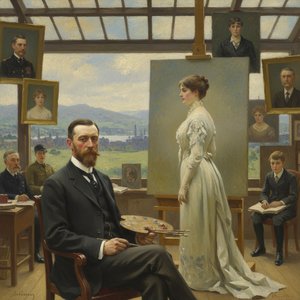
Sir John Lavery: A Study in Scottish Impressionism & the Portraiture of a Generation
Explore the life & art of Sir John Lavery, a master of Scottish Impressionism and renowned portraitist. Discover his captivating works, Irish heritage, and lasting legacy with OriginalUniqueArt.

Henry William Pickersgill: Narrative, Reform und das viktorianische bürgerliche Interieur
Entdecken Sie das Werk von Henry William Pickersgill! Analysieren Sie seine Narrative Malerei, die Darstellung des viktorianischen bürgerlichen Interieurs und seinen Beitrag zu sozialen Reformen. Expertenwissen zur englischen Kunst des 19. Jahrhunderts.
Victorian Botanical Art: A Professional Guide to Sourcing Timeless Floral Reproductions for Luxury Hotel Interiors
Elevate hospitality interiors with premium Victorian botanical art reproductions. A professional guide for hotel designers on sourcing hand-painted oils and large-scale murals, featuring expert procurement advice, bulk ordering, and reliable global logistics for luxury spaces.


