
 Vorschau anzeigen
 Versenden
 Teilen
 Details anzeigen
 Leitfaden

 Herunterladen
 Ähnliche Objekte
 Röntgenaufnahme
 Diashow
 Fragen & Antworten
 Statistiken
L'Enfant du Regiment

- 45.0 x 61.0 cm


 Weiterlesen
Giclée / Kunstdruck
Giclée- oder Leinwanddruck in Museumsqualität mit schneller Produktion und flexiblen Veredelungsoptionen. ( Handgemalte Reproduktion bestellen Zum digitalen Bild wechseln)




P118B €10

P118H €10

P118W €10

P438Z €10

P508JH €12

P508YH €12

P805H €10

P805Z €10

P919BZ €10

P919G €10

P919XJ €10

P959ZH €10

P968JZ €12

W106C €8

W218G €10

W218JH €8

W218Y €10

W307PJ €10

W316G €10

W316PJ €8

W316Y €10

W398PJ €8

W4111J €10

W500HY €15

W500JH €15

W692G €12

W849H €8

W940BG €15

W953PJ €8




Wählen Sie aus unseren vordefinierten Formaten, die den ursprünglichen Proportionen des Kunstwerks entsprechen.

Geben Sie die benötigte Breite und Höhe an, damit der Druck perfekt in Ihren Rahmen oder an Ihre Wand passt. Ein Druck kann nur beschnitten, aber niemals größer als das Originalbild angefertigt werden; daher verliert ein Format mit anderen Proportionen einen Teil des Bildes. Wir senden Ihnen ein digitales Mockup zur Freigabe, bevor wir den Druck ausführen. Das auf dieser Seite gezeigte Bild zeigt nicht den tatsächlichen Beschnitt – dies ist nur im Mockup ersichtlich.
Weltweiter Versand () innerhalb von 2 Wochen statt der üblichen 4/5 Wochen. (4 November)

Kostenloser weltweiter Expressversand

Hochwertige Leinenleinwand

Umfassender Versicherungsschutz beim Versand

Zollgebühren-Rückerstattungsgarantie

Garantie für exakte Farbtreue

100 Tage Rückgaberecht (nur bei Mängeln)

100% Geld-zurück-Garantie

Mengenrabatt verfügbar
 Die Glasoption ist nur für Größen unter 110 cm verfügbar.

L'Enfant du Regiment
Giclée / Kunstdruck
Format der Reproduktion
-


Endpreis
€ 72
A Vision of Medieval Grief and Romantic Idealism: Exploring Millais’s L'Enfant du Régiment
Sir John Everett Millais’s “L’Enfant du Régiment,” completed in 1855, stands as a cornerstone of the Pre-Raphaelite Brotherhood’s artistic vision—a movement that irrevocably altered the landscape of Victorian art. More than just a portrait; it's an immersive tableau capturing not merely appearance but profound emotion and symbolic resonance, cementing Millais’s place among Britain’s most celebrated painters. The painting depicts Marie Spartacus Beton, wife of a French officer serving in Algeria, asleep on an ancient Roman monument—a deliberate juxtaposition designed to evoke contemplation on mortality and the enduring power of memory.The Pre-Raphaelite Aesthetic: Rejecting Academic Convention
The Pre-Raphaelites vehemently opposed the prevailing artistic trends of their time, rejecting the idealized forms and theatrical compositions favored by the Royal Academy. Influenced by Dante Gabriel Rossetti and William Holman Hunt, Millais championed a return to the stylistic principles of Renaissance artists before Raphael—a commitment to meticulous observation, vibrant color palettes derived from nature, and narratives rooted in literature and mythology. This rejection wasn’t merely aesthetic; it represented a broader intellectual rebellion against materialism and dogma, prioritizing spiritual contemplation alongside artistic excellence.Detailed Observation and Artistic Technique: Recreating Reality
Millais's mastery of technique is evident in the painting's astonishing realism. He painstakingly recreated the monument—a crumbling Roman tomb—using photographic studies to ensure accuracy. The artist employed a layering method known as *grisaille*, applying thin washes of monochrome paint beneath the final color layers, establishing tonal values and creating depth with remarkable precision. Brushwork is delicate yet purposeful, capturing the textures of stone, fabric, and skin with breathtaking subtlety. The muted earth tones—browns, ochres, creams—are punctuated by splashes of crimson and azure—colors chosen to convey both passion and solemnity.Symbolism Embedded in Composition: Grief, Remembrance, and Medieval Romance
The painting’s symbolism is multilayered and profoundly evocative. Marie Beton's pose—sleeping peacefully on the monument—represents death or profound slumber, mirroring the biblical image of Jesus sleeping in his mother’s arms. The Roman monument symbolizes antiquity and timelessness, contrasting with the immediacy of Marie’s grief—represented by her bandaged arm and the draped soldier’s jacket. This juxtaposition speaks to the enduring themes of loss, remembrance, and the idealized beauty of medieval romance—themes central to Rossetti's poem “The Soul Awakened,” which inspired Millais’s artistic endeavor. The monument itself serves as a reminder of past glories and the inevitable passage of time.Emotional Impact: A Masterpiece of Romantic Sentiment
“L’Enfant du Régiment” transcends mere visual representation; it achieves an unparalleled emotional impact. Millais skillfully captures the melancholic beauty of grief—the quiet dignity of sorrow—transforming a simple scene into a profound meditation on human experience. The painting compels viewers to confront mortality, yet simultaneously celebrates the enduring power of love and memory. Its luminous colors and meticulous detail convey not just what is seen but what is felt—a testament to Millais’s artistic genius and his unwavering commitment to conveying the deepest recesses of the human soul. It remains a powerfully moving artwork that continues to inspire admiration and contemplation centuries after its creation.Fragen & Antworten
Wie spiegeln sich Stilrichtung und Epoche in "L'Enfant du Regiment" von Sir John Everett Millais wider?
"L'Enfant du Regiment" gehört der Strömung des Pre-Raphaelite an, und sein Schöpfer war in der Ära der – 19. Jahrhundert tätig.
Kann ich "L'Enfant du Regiment" genauer untersuchen?
„L'Enfant du Regiment“ kann auf der Röntgenblick-Seite des Kunstwerks Schicht für Schicht untersucht werden – ein Viewer, inspiriert von der Leuchttisch eines Restaurators, mit elf optischen Ebenen des Bildes.
Wo kann ich Kunstwerke finden, die "L'Enfant du Regiment" von Sir John Everett Millais ähneln?
Ähnliche Kunstwerke zu "L'Enfant du Regiment" von Sir John Everett Millais finden Sie auf der Seite Ähnliche Werke des Kunstwerks.
Künstlerbiografie
Frühes Leben und Ausbildung
Sir John Everett Millais, ein renommierter englischer Maler und Illustrator, wurde am 8. Juni 1829 in Southampton, England, geboren. Als Wunderkind wurde er bereits im Alter von elf Jahren zum jüngsten Schüler der Royal Academy Schools zugelassen.Gründung der Präraffaeliten
Im September 1848 gründeten Sir John Everett Millais, zusammen mit William Holman Hunt und Dante Gabriel Rossetti, die Präraffaeliten in seinem Familiendomizil in Gower Street, London. Diese Bewegung strebte danach, den Stil der frühen italienischen Renaissance wiederzubeleben.Bedeutende Werke
Zu Sir John Everett Millais' bedeutendsten Werken zählen:- Christ in der Werkstatt seines Vaters (1849-1850), ein höchst kontroverses Werk, das seine realistische Darstellung einer Arbeiterfamilie als Heilige Familie zeigte.
- Ein hugenottisches Paar (1851-1852), das ein junges Paar darstellt, das aufgrund religiöser Konflikte voneinander getrennt werden soll.
- Ophelia (1851-1852), ein Gemälde, das seine dichten und elaborierten bildlichen Oberflächen demonstrierte, oft konzentriert auf die Schönheit und Komplexität der Naturwelt.
- Mariana (1850-1851), basierend auf dem Stück "Was ihr wollt" von William Shakespeare und dem Gedicht gleichen Namens von Alfred Lord Tennyson.
Einfluss und Spätere Werke
Sir John Everett Millais' spätere Werke wurden von seiner Frau Effie beeinflusst, die zuvor mit dem Kritiker John Ruskin verheiratet war. Sein Stil entwickelte sich zu einer breiteren Form des Realismus, der zunächst von Ruskin kritisiert wurde, aber später als bedeutender Beitrag zur Kunstwelt anerkannt wurde.Museen und Sammlungen
Werke Sir John Everett Millais' finden sich in verschiedenen Museen, darunter:- Die Tate Britain in London, die The Order of Release (1853) und Ophelia (1852) zeigt.
- Das Ashmolean Museum in Oxford, das The Return of the Dove to the Ark (1851) ausstellt.
Vermächtnis
Sir John Everett Millais' Vermächtnis geht über seine Kunst hinaus. Er war ein Pionier der Präraffaelitenbewegung und eine bedeutende Figur in der Entwicklung der britischen Kunst.- Erfahren Sie mehr über Sir John Everett Millais auf OriginalUniqueArt.com.
- Erkunden Sie die Präraffaelitenbewegung und ihren Einfluss auf die britische Kunst bei Wikipedia.

Sir John Everett Millais
1829 - 1896 , Vereinigtes Königreich
Kurzinfos
- Beeinflusste Künstler: ['Dante Gabriel Rossetti']
- Bemerkenswerte Werke:
- Christ in der Elternhaus
- Ein hugenottisches Paar
- Ophelia
- Mariana
- Einflüsse: ['Frührenaissance Italien']
- Geburtsdatum: 8. Juni 1829
- Geburtsort: Southampton, Vereinigtes Königreich
- Künstlerische Bewegung: Präraffaeliten
- Nationalität: Britisch
- Todatum: 13. August 1896
- Vollständiger Name: Sir John Everett Millais
Ähnliche Artikel

Sir John Everett Millais: Präraffaelitische Revolution und viktorianische Erzählkunst
Entdecken Sie das Leben und Werk von Sir John Everett Millais, einem Pionier der Präraffaeliten! Detaillierte Analysen seiner Gemälde, Einblicke in die viktorianische Kunstszene und seine bleibende Bedeutung. Jetzt lesen!

25 Meisterwerke von Dante Gabriel Rossetti: Die Seele der Präraffaeliten
Entdecke 25 Meisterwerke von Dante Gabriel Rossetti und die Preraffaeliten. Erlebe zeitlose Kunst auf OriginalUniqueArt.com.

The Pre-Raphaelite Brotherhood: Rediscovering Beauty, Romance, and Medieval Magic in Victorian Art
Embark on a journey through the Pre-Raphaelite Brotherhood. Discover the romantic symbolism, medieval magic, and radical beauty of Rossetti and Burne-Jones in this expert exploration of Victorian art history.
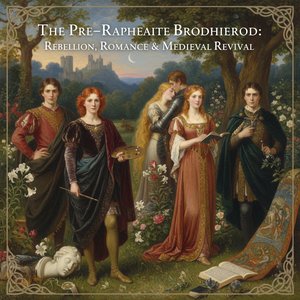
The Pre-Raphaelite Brotherhood: Rebellion, Romance & Medieval Revival
Explore the captivating world of the Pre-Raphaelite Brotherhood! Discover their rebellious spirit, iconic masterpieces & lasting influence on art history. Learn about Rossetti, Millais & more.

The Pre-Raphaelite Brotherhood: Rediscovering Romanticism, Mythological Depth, and Vivid Detail in Victorian Art
Explore the breathtaking world of the Pre-Raphaelite Brotherhood. Discover how this movement redefined Victorian art through vivid detail, mythological depth, and romanticism. An expert guide for classic art enthusiasts seeking to rediscover these timeless masterpieces.


