
 Vorschau anzeigen
 Versenden
 Teilen
 Details anzeigen
 Leitfaden

 Herunterladen
 Ähnliche Objekte
 Röntgenaufnahme
 Diashow
 Fragen & Antworten
 Statistiken
In the villa

- 48.0 x 68.0 cm


 Weiterlesen
Giclée / Kunstdruck
Giclée- oder Leinwanddruck in Museumsqualität mit schneller Produktion und flexiblen Veredelungsoptionen. ( Handgemalte Reproduktion bestellen Zum digitalen Bild wechseln)




P118B €10

P118H €10

P118W €10

P438Z €10

P508JH €12

P508YH €12

P805H €10

P805Z €10

P919BZ €10

P919G €10

P919XJ €10

P959ZH €10

P968JZ €12

W106C €8

W218G €10

W218JH €8

W218Y €10

W307PJ €10

W316G €10

W316PJ €8

W316Y €10

W398PJ €8

W4111J €10

W500HY €15

W500JH €15

W692G €12

W849H €8

W940BG €15

W953PJ €8




Wählen Sie aus unseren vordefinierten Formaten, die den ursprünglichen Proportionen des Kunstwerks entsprechen.

Geben Sie die benötigte Breite und Höhe an, damit der Druck perfekt in Ihren Rahmen oder an Ihre Wand passt. Ein Druck kann nur beschnitten, aber niemals größer als das Originalbild angefertigt werden; daher verliert ein Format mit anderen Proportionen einen Teil des Bildes. Wir senden Ihnen ein digitales Mockup zur Freigabe, bevor wir den Druck ausführen. Das auf dieser Seite gezeigte Bild zeigt nicht den tatsächlichen Beschnitt – dies ist nur im Mockup ersichtlich.
Weltweiter Versand () innerhalb von 2 Wochen statt der üblichen 4/5 Wochen. (5 November)

Kostenloser weltweiter Expressversand

Hochwertige Leinenleinwand

Umfassender Versicherungsschutz beim Versand

Zollgebühren-Rückerstattungsgarantie

Garantie für exakte Farbtreue

100 Tage Rückgaberecht (nur bei Mängeln)

100% Geld-zurück-Garantie

Mengenrabatt verfügbar
 Die Glasoption ist nur für Größen unter 110 cm verfügbar.

In the villa
Giclée / Kunstdruck
Format der Reproduktion
-


Endpreis
€ 72
A Moment Frozen in Tuscan Tranquility
In the quiet corners of art history, few works capture the essence of peaceful companionship as tenderly as Silvestro Lega’s 1880 masterpiece, “In the Villa.” The painting invites the viewer into a serene tableau, where a man and a woman sit closely together on a bench, nestled beneath the dappled shade of mature, protective trees. This is not merely a depiction of a garden scene; it is an intimate study of connection. Lega meticulously arranges his subjects against a lush backdrop of foliage, creating a harmonious balance that draws the eye inward, toward the silent, shared language between the two figures. The atmosphere is one of profound stillness, as if the very air of the Tuscan landscape has paused to honor this private moment of togetherness.
The technical brilliance of the piece lies in Lega’s mastery of the Macchiaioli technique. Moving away from the polished, often artificial perfection of academic idealism, Lega embraced the concept of “macchia”—the use of distinct spots or patches of color to build form and light. Rather than relying on smooth, seamless transitions, he applied pigment in irregular, textured strokes that capture the flickering interplay of sunlight and shadow. This method lends an incredible immediacy to the work, making the textures of the leaves and the soft light filtering through the canopy feel palpable. For the discerning collector or interior designer, this technique provides a rich, tactile quality that brings a sense of organic life and movement to any space.
Symbolism and the Spirit of the Belle Époque
Beyond its surface beauty, “In the Villa” is layered with subtle symbolic resonances that elevate it from a simple genre painting to a work of deep contemplation. The sturdy trees framing the couple serve as metaphors for stability and longevity, mirroring the enduring nature of the bond they share. Even a small detail, such as a bird soaring in the distant sky, adds a layer of poetic aspiration and freedom to the composition. Through a palette of muted greens, earthy browns, and soft ochres, Lega achieves a tonal harmony that evokes a sense of timelessness, grounding the fleeting moment in something much more permanent.
Historically, this work emerged during the Belle Époque, a period of significant cultural and political transformation in Italy. As a leading figure of the Macchiaioli movement, Lega’s art was deeply rooted in social realism and a commitment to observing the truth of everyday life. His involvement in the political currents of his era—including his support for Italian unification—infused his landscapes with a sense of grounded reality and emotional honesty. To possess a reproduction of this work is to hold a piece of Italian heritage, capturing a period where art sought to find beauty in the authentic, unadorned moments of human existence.
For those looking to infuse their homes or galleries with a sense of calm and sophistication, “In the Villa” offers an unparalleled emotional impact. It is a painting that does not demand attention through loud colors or dramatic action, but rather earns it through its quiet, soulful presence. Whether placed in a sunlit study or a contemporary living space, this work serves as a window into a world of grace, reminding us of the beauty found in simplicity and the enduring strength of human connection.
Fragen & Antworten
Wann wurde "In the villa" geschaffen?
"In the villa" stammt aus dem Jahr 1880. Dieses Datum ordnet das Werk in die Schaffensperiode von Silvestro Lega sowie in dessen Epoche ein.
Welche Maße hat das Originalwerk "In the villa" von Silvestro Lega?
Die Maße von "In the villa" von Silvestro Lega betragen 48 x 68 cm. Reproduktionen können in anderen Größen bestellt werden, wobei die Proportionen beibehalten werden.
Wie harmonieren die Farben von "In the villa" miteinander?
Die Farben von "In the villa" von Silvestro Lega weisen eine Strong Color Unity Harmonie auf. Harmonie beschreibt das Zusammenspiel der Farben untereinander.
Künstlerbiografie
Silvestro Lega: Ein Leben im Italienischen Realismus
- Geboren: Modignan, Italien (1826)
- Gestorben: 1895
Silvestro Lega war eine bedeutende Figur in der italienischen Kunst des 19. Jahrhunderts und gilt als einer der führenden Künstler innerhalb der Macchiaioli-Bewegung. Seine Werke verkörpern ein Engagement für Realismus und die Beobachtung des täglichen Lebens, verbunden mit seiner Beteiligung an den politischen Strömungen seiner Zeit.
Frühes Leben und künstlerische Ausbildung
- Familienhintergrund: Lega wurde in eine wohlhabende Familie in Modigliana, nahe Forlì, geboren.
- Ausbildung: Ab 1838 besuchte er das Piaristenkolleg, wo seine Zeichenkünste deutlich wurden. Von 1843 bis 1847 studierte er an der Accademia di Belle Arti in Florenz, zunächst unter Benedetto Servolini und Tommaso Gazzarini für Zeichnen, kurzzeitig Malerei mit Giuseppe Bezzuoli.
- Einfluss von Luigi Mussini: Legas Ausbildung setzte sich unter Luigi Mussini fort, der die Prinzipien des florentinischen Zeichnens und der Konstruktion des 15. Jahrhunderts betonte. Diese Grundlage prägte seinen frühen künstlerischen Ansatz.
- Militärdienst & Risorgimento: Als Garibaldianer Freiwilliger nahm Lega an den militärischen Kampagnen für die italienische Unabhängigkeit (1848–49) teil und demonstrierte damit sein Engagement im Risorgimento.
- Weitere Studien: Er studierte später unter Antonio Ciseri.
Die Macchiaioli-Bewegung und künstlerische Entwicklung
- Anfänglicher akademischer Stil: Anfangs blieb Legas Stil weitgehend akademisch, wie von seinem Zeitgenossen Diego Martelli bemerkt, der seine seltene Teilnahme an den lebhaften künstlerischen Diskussionen im Caffè Michelangelo, einem Treffpunkt für junge Maler, feststellte.
- Übergang zum Realismus: Ab 1859 begann sich Legas Werk hin zum Realismus zu entwickeln und löste sich vom puristischen Ansatz Mussinis. Diese Entwicklung wird in den Lunetten deutlich, die er zwischen 1858 und 1863 für das Oratorium der Madonna del Cantone in Modigliana malte.
- En Plein Air Malerei: Lega schloss sich seinen Macchiaioli-Kollegen – Odoardo Borrani, Giuseppe Abbati, Telemaco Signorini und Raffaello Sernesi – an und widmete sich der en plein air Malerei, wobei er die Landschaft direkt beobachtete und ihre Nuancen einzufangen versuchte.
- Die Batelli-Familienperiode (1861–1870): Eine bedeutende Zeit in Legas Leben verbrachte er bei der Familie Batelli am Fluss Affrico. Diese Zeit beeinflusste seine Kunst maßgeblich, da er ihre Kinder und Frauen in zahlreichen Gemälden darstellte und ein Gefühl von häuslicher Ruhe widerspiegelte.
Wichtige Werke und künstlerischer Stil
- Bemerkenswerte Gemälde: Zu Legas bekanntesten Werken gehören “Ein Spaziergang im Garten” (1870), "Il Pergolato" (auch bekannt als "Il dopopranzo") (1864), “Das Haus von Don Giovanni Veritá” (1885), “Im Garten” (1883) und “Garten in Bellariva” (1884).
- Stilistische Merkmale: Legas Stil zeichnet sich durch ein sorgfältiges Gleichgewicht zwischen traditioneller Komposition und zeitgenössischer Farbgebung aus, die auf direkter Beobachtung beruht. Er verwendete sorgfältig definierte Formen und stellte die Atmosphäre mit transparenter Farbe dar. Seine späteren Werke zeigen einen impressionistischen Einfluss.
- Thematischer Fokus: Seine Gemälde stellen oft Szenen des Landlebens, Familienversammlungen und Porträts dar und spiegeln den Schwerpunkt auf die alltäglichen Erfahrungen gewöhnlicher Menschen wider.
Spätere Jahre und Vermächtnis
- Persönliche Tragödie: Der Verlust von Virginia Batelli (seiner Begleiterin) sowie drei Brüder stürzte Lega 1870 in tiefe Trauer und Depression. Diese Zeit führte zu einer vierjährigen Malpause (1874-1878).
- Künstlerische Erkundung & Impressionismus: Trotz seiner persönlichen Schwierigkeiten blieb Lega mit der Kunstwelt verbunden. Er bewunderte die Werke von Camille Pissarro und gründete mit Odoardo Borrani eine Galerie in Florenz, obwohl sie kurzlebig war.
- Letzte Jahre: In seinen späteren Jahren wurde er Tutor für die Söhne der Familie Tommasi und fand so neue Stabilität und künstlerische Inspiration. Seine letzten Werke, wie “Die Gabbarigiane”, demonstrieren ein kontinuierliches Engagement für den Realismus trotz seines schwindenden Sehvermögens.
- Historische Bedeutung: Legas Beitrag liegt in seiner Fähigkeit, traditionelle kompositorische Techniken mit der aufkommenden realistischen Ästhetik der Macchiaioli-Bewegung zu synthetisieren. Er fing das Wesen des italienischen Lebens mit Sensibilität und Geschick ein und hinterließ einen Werkkörper, der bis heute bei den Zuschauern Anklang findet. Sein Fokus auf alltägliche Themen erhob sie in künstlerische Bedeutung und trug so zur umfassenderen Verschiebung hin zum Realismus in der europäischen Kunst des 19. Jahrhunderts bei.

Silvestro Lega
1826 - 1895 , Italien
Kurzinfos
- Beeinflusste Künstler: ['Impressionismus']
- Bemerkenswerte Werke:
- Ein Spaziergang im Garten
- Il Pergolato
- Das Haus von Don Giovanni
- Im Garten
- Garten in Bellariva
- Geburtsdatum: 8. Dezember 1826
- Geburtsort: Modigliana, Italien
- Künstlerische Bewegung: Realismus, Macchiaioli
- Künstlerische Einflüsse:
- Luigi Mussini
- Antonio Ciseri
- Nationalität: Italienisch
- Sterbedatum: 21. September 1895
- Vollständiger Name: Silvestro Lega
Ähnliche Artikel

Romantische Landschaften: Die 10 Meisterwerke, die eine Epoche prägten | OriginalUniqueArt
Entdecken Sie die 10 Meisterwerke der Romantischen Landschaftsmalerei! Von Caspar David Friedrich bis Turner – erleben Sie die Kunst, Emotion & Natur. Hochwertige Reproduktionen auf OriginalUniqueArt.com

Giovanni Fattori: Realismus, Identität und die toskanische Landschaft – Ein Meister der Macchiaioli
Entdecken Sie Giovanni Fattori und die Macchiaioli! Erfahren Sie mehr über den italienischen Realismus, seine historischen Wurzeln und die einzigartige Darstellung der toskanischen Landschaft. Expertenwissen für Kunstliebhaber.

Evocations of Place: A Historical Journey Through Landscape Art
Explore the rich history of landscape art with OriginalUniqueArt. Discover renowned artists, movements like Impressionism & Romanticism, and expert guidance for collecting timeless pieces. Find your perfect serene escape today!
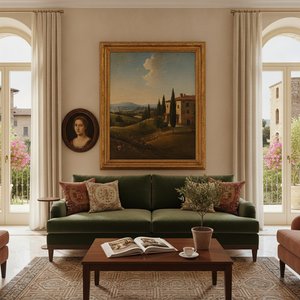
The Art of Italian Living: Transform Your Home with Timeless Landscapes and Renaissance Masterpieces
Elevate your home with the timeless romance of Italy. Discover expert-curated, hand-painted Italian landscapes and Renaissance-inspired masterpieces. From bespoke oil reproductions to custom portraits from photos, transform your space with elegance and artistic passion.

10 Meisterwerke des Romantischen Realismus: Wenn Emotion auf Wahrheit trifft
Entdecken Sie 10 Meisterwerke des Romantischen Realismus. Erleben Sie die emotionale Tiefe von Künstlern wie Constable und Friedrich – perfekt als Inspiration für Ihre Kunstsammlung oder Wandgestaltung. Finden Sie museale Reproduktionen auf OriginalUniqueArt.com.


