- Startseite

- Ölgemälde-Reproduktion
- Sébastien Bourdon
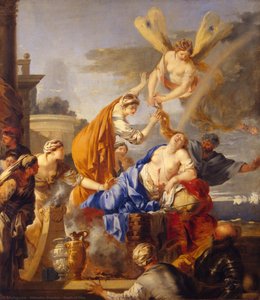
- Les mendiants

 Druck bestellen Bild kaufen
 Versenden
 Teilen
 Details anzeigen
 Zu Favoriten hinzufügen

 Herunterladen
 Ähnliche Objekte
 Röntgenaufnahme
 Diashow anzeigen
Les mendiants


 Weiterlesen
Handgefertigte Öl-Reproduktion
Handgemaltes Ölgemälde auf Leinwand in Ihrer Wunschgröße und mit Rahmen, auf Bestellung von unseren Künstlern angefertigt.




P118B $10

P118H $10

P118W $10

P438Z $10

P508JH $12

P508YH $12

P805H $10

P805Z $10

P919BZ $10

P919G $10

P919XJ $10

P959ZH $10

P968JZ $12

W106C $8

W218G $10

W218JH $8

W218Y $10

W307PJ $10

W316G $10

W316PJ $8

W316Y $10

W398PJ $8

W4111J $10

W500HY $15

W500JH $15

W692G $12

W849H $8

W940BG $15

W953PJ $8




Wählen Sie aus unseren vordefinierten Größen, die den ursprünglichen Proportionen des Kunstwerks entsprechen.

Sie können Ihre eigenen Maße eingeben, um einen bestimmten Rahmen oder Platz auszufüllen. Wenn die gewählte Größe nicht den Proportionen des Originalbildes entspricht, werden wir das Kunstwerk entweder beschneiden oder das Gemälde durch zusätzliche, handgemalte Elemente erweitern. Ein digitales Mockup wird Ihnen zur Genehmigung zugesandt, bevor die Produktion beginnt.
Bitte beachten Sie, dass die Bildschirmvorschau nicht die tatsächliche Beschneidung oder Erweiterung widerspiegelt. Nur das Mockup zeigt die endgültige Komposition exakt an.
Obwohl Sondermaße verfügbar sind, empfehlen wir, eine Größe aus der vordefinierten Liste zu wählen, um die ursprünglichen Proportionen beizubehalten.
Nach der Bestellung wird das OriginalUniqueArt.com-Team dem Kunden Anweisungen per E-Mail zusenden und eine Mockup-Vorschau bereitstellen.
Weltweiter Versand () in nur 3 bis 4 Wochen statt der üblichen 5 Wochen. (22 Juli). Keine Kompromisse bei der Qualität.

Kostenloser weltweiter Expressversand

Hochwertige Leinenleinwand

Umfassender Versicherungsschutz beim Versand

Zollsteuer-Rückerstattungsgarantie

Garantie für echte Farbtreue

60-Tage-Rückgaberecht (nur bei Mängeln)

100% Geld-zurück-Garantie

Mengenrabatt verfügbar
 Die Glasoption ist nur in Größen unter 110 cm verfügbar.

Les mendiants
Art der Reproduktion
Größe der Reproduktion
-


Endpreis aller Optionen
-
Beschreibung des Kunstwerks
A Window into 17th-Century France: The Stark Realism of *Les Mendiants*
Sébastien Bourdon’s *Les Mendiants*, painted around 1645, isn't merely a depiction of beggars; it’s a meticulously crafted tableau that plunges the viewer directly into the heart of 17th-century France – a nation grappling with poverty, social injustice, and the lingering scars of war. This genre painting, housed within the hallowed halls of the Louvre Museum in Paris, transcends simple observation to become a poignant commentary on humanity’s vulnerability and the complexities of charity. Bourdon, deeply influenced by the artistic currents flowing from Rome – particularly the dramatic lighting and emotive storytelling championed by Caravaggio – masterfully utilizes composition, color, and line to evoke a powerful sense of empathy and social critique.
The scene unfolds within the ruins of an ancient structure, a deliberate choice that immediately establishes a mood of decay and transience. A group of mendicants—men, women, and children – are rendered with remarkable realism, their faces etched with hardship and desperation. They’re not idealized figures; Bourdon presents them as individuals, each bearing the marks of poverty and suffering. A subtle yet crucial element is introduced by a wheelbarrow positioned strategically in the foreground, hinting at labor, perhaps scavenging for scraps or transporting meager possessions – a visual representation of their struggle for survival. The composition itself is carefully balanced, drawing the eye towards the central archway that frames the crumbling backdrop, creating a sense of immediacy and inviting the viewer to contemplate the scene’s gravity.
The Language of Light and Shadow: Bourdon's Baroque Technique
Bourdon’s technical prowess is immediately apparent in his masterful manipulation of light and shadow. The painting is dominated by a diffused, natural light emanating from the left side, casting soft shadows that sculpt the figures and highlight certain areas of the ruins. This chiaroscuro effect – a hallmark of Baroque art – not only adds depth and volume but also intensifies the emotional impact of the scene. The muted earth tones—browns, grays, and creams—are skillfully blended to create a sense of atmospheric perspective, with distant elements appearing paler and less distinct. The brushstrokes are relatively smooth, contributing to a realistic representation of textures – from the rough fabrics of the beggars’ clothing to the weathered surfaces of the stone.
- Oil on Canvas: Bourdon's choice of medium—oil paint on canvas—allowed for rich color saturation and subtle gradations in tone, essential for achieving the painting’s nuanced realism.
- Linear Perspective: The use of linear perspective creates a convincing illusion of depth, drawing the viewer into the scene and emphasizing the vastness of the ruined landscape.
- Atmospheric Perspective: The subtle blurring of distant elements reinforces the sense of spatial recession and adds to the painting’s overall atmosphere.
Symbolism and Social Commentary
Beyond its technical brilliance, *Les Mendiants* is laden with symbolic meaning. The ruins themselves represent decay, loss, and the passage of time – a potent metaphor for the fragility of human existence. The mendicants, as figures soliciting alms, evoke feelings of pity, compassion, and social concern. Their presence serves as a stark reminder of the inequalities inherent in society and the responsibility of the wealthy to care for the less fortunate. The inclusion of the wheelbarrow subtly suggests the cycle of poverty and the constant struggle for survival. The painting’s overall mood is somber but not overtly tragic; it invites reflection rather than despair, prompting viewers to consider their own role in addressing social injustice.
A Legacy of Dramatic Realism
Bourdon's *Les Mendiants* stands as a pivotal work within the tradition of 17th-century Dutch genre painting and a significant precursor to later artistic movements. Its influence can be seen in works by Francisco Goya, who was known to have owned a copy of this painting. The scene’s stark realism, coupled with its powerful emotional resonance, cemented Bourdon's reputation as one of the most accomplished artists of his time – an artist capable of capturing not only the outward appearance of reality but also the underlying complexities of human experience.
Biografie des Künstlers
Sébastien Bourdon: Ein Meister des dramatischen Lichts und der Emotion
Sébastien Bourdon (1616 – 1671) steht als zentrale Figur im aufblühenden künstlerischen Gefüge des XVII. Jahrhunderts Frankreichs und verkörpert die Pracht und emotionale Intensität, die für das Barocktypisch sind. Geboren in Montpellier, Frankreich, stammt er aus einer Familie, die tief verwurzelt ist in künstlerischer Tradition – sein Vater war Glasmaler –, und erhielt eine frühe Bildung, die ihm eine ausgeprägte Wertschätzung für Erzählkunst vermittelte. Bourdons frühe Jahre waren geprägt von Ausbildungszeit unter Jean Baptiste Tourneyn, einem Pariser Maler, der ihn mit den stilistischen Konventionen seiner Zeit konfrontierte. Entscheidend dafür war diese Ausbildung, die eine Verbindung zum künstlerischen Strom aus Rom förderte, wo er 1636 eine transformative Reise machte. Inspiriert von Persönlichkeiten wie Nicolas Poussin, Claude Lorrain und Caravaggio – Künstlern, deren Meisterhaftigkeit Bourdons Vorstellungskraft fesselte –, perfektionierte er seine Fähigkeiten inmitten des intellektuellen Enthusiasmus des päpstlichen Hofes. Bourdons künstlerischer Stil zeichnet sich durch außergewöhnliche Vielseitigkeit und Anpassungsfähigkeit aus. Während er sich hervorragend in der Porträtkunst zeigte, indem er Figuren mit Sensibilität und Nuancen einfing – oft unter Verwendung eines Rubensschen Ansatzes oder indem er eine intime Brustbildhaltung gegen gedämpfte Hintergründe bevorzugte –, bewies er ebenso Können in monumentalen Leinwänden, die mit Barockdrama durchdrungen waren. Sein berühmtester Erfolg blieb „Die Kreuzigung des Apostel Petrus“, eine Auftragsarbeit für den Dom von Notre Dame und ein Meisterwerk, das Bourdons meisterhafte Beherrschung von Chiaroscuro und seine Fähigkeit zur Übertragung tief empfundener religiöser Emotionen demonstrierte. Weitere bedeutende Werke sind „Die Absetzung“, die Bourdons sorgfältige Aufmerksamkeit zum Detail und seine Fähigkeit zeigt, Szenen darzustellen, die mit deutlicher Trauer erfüllt sind. Sein künstlerisches Werk erstreckte sich über religiöse Aufträge hinaus; Er schuf beeindruckende Landschaften, die den Glanz der italienischen Landschaft widerspiegelten und damit eine umfassendere Beschäftigung mit humanistischen Idealen zum Ausdruck brachte. Bourdon wurde von Jean Baptiste Tourneyn ausgebildet und arbeitete später für einen Maler in Paris. Sein Einfluss erstreckte sich über Frankreich hinaus und etablierte ihn als Gründer der Académie royale de peinture et de sculpture in Paris und wurde damit zu einem wichtigen Vertreter seiner Zeit. Er förderte eine umfangreiche Werkstatt und unterstützte die Karriere zahlreicher Schüler, die sein künstlerisches Erbe weitergetragen haben. Bourdons Hingabe an Handwerk und unerschütterliche Suche nach Exzellenz sicherten ihm einen Platz als einer der bedeutendsten Maler seiner Epoche. Seine Gemälde inspirieren bis heute Bewunderung für ihre technische Brillanz und emotionale Tiefe und bestätigen Bourdon's Stellung als Eckpfeiler der französischen Kunstgeschichte.
Sébastien Bourdon
1616 - 1671 , Frankreich
Kurzinfos
- Artistic Movement Or Style: Barock
- Artists Or Movements Influenced By This Artist: ['Französische Barockkunst']
- Artists Who Influenced This Artist:
- Nicolas Poussin
- Claude Lorrain
- Caravaggio
- Date Of Birth: 2 Februar 1616
- Date Of Death: 8 Mai 1671
- Full Name: Sébastien Bourdon
- Nationality: Französisch
- Notable Artworks: ['Die Kreuzigung des Petrus']
- Place Of Birth: Montpellier, Frankreich
Ähnliche Artikel

Golden Age Reflections: Dutch Baroque Painting & Cultural Innovation
Explore the Dutch Golden Age of painting! Discover key artists like Vermeer & ter Borch, their innovative techniques, and the rich cultural context behind these Baroque masterpieces. Learn about collecting & appreciating this iconic art period.
Jan Steen: Meister der niederländischen Genremalerei und Spiegelbild des Goldenen Zeitalters
Entdecken Sie Jan Steen, den Meister der niederländischen Genremalerei! Erfahren Sie mehr über sein Leben, seine Werke und den historischen Kontext des Goldenen Zeitalters. Kunstexperten-Analyse & hochwertige Reproduktionen.
David Teniers der Jüngere: Genremalerei und Gesellschaftskritik im Barock-Flandern
Entdecken Sie das Werk von David Teniers der Jüngere! Erfahren Sie mehr über den Meister des flämischen Barock, seine Genremalerei und die subtile Gesellschaftskritik in seinen Bildern. Expertenwissen auf OriginalUniqueArt.
Genre Painting: A Window into Daily Life & Societal Values of the Dutch Golden Age
Explore the captivating world of Dutch Golden Age genre painting! Discover realistic depictions of daily life, masterful artists like Ostade & Metsu, and hidden symbolism. Learn about this influential art movement with OriginalUniqueArt.
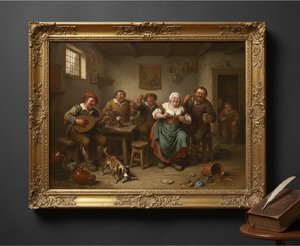
Adriaen van Ostade: A Master of Dutch Genre Painting & Social Commentary
Explore the life & work of Adriaen van Ostade, a leading Dutch Golden Age painter. Discover his realistic genre scenes, social commentary, and lasting influence on art history. Learn more at OriginalUniqueArt.