Vorschau anzeigen
 Versenden
 Teilen
 Details anzeigen
 Leitfaden

 Herunterladen
 Ähnliche Objekte
 Röntgenaufnahme
 Diashow
 Q&A
Q&A Statistiken
Polyphemus


 Weiterlesen
Giclée / Kunstdruck
Giclée- oder Leinwanddruck in Museumsqualität mit schneller Produktion und flexiblen Veredelungsoptionen. ( Handgemalte Reproduktion bestellen Zum digitalen Bild wechseln)




P118B €10

P118H €10

P118W €10

P438Z €10

P508JH €12

P508YH €12

P805H €10

P805Z €10

P919BZ €10

P919G €10

P919XJ €10

P959ZH €10

P968JZ €12

W106C €8

W218G €10

W218JH €8

W218Y €10

W307PJ €10

W316G €10

W316PJ €8

W316Y €10

W398PJ €8

W4111J €10

W500HY €15

W500JH €15

W692G €12

W849H €8

W940BG €15

W953PJ €8




Wählen Sie aus unseren vordefinierten Formaten, die den ursprünglichen Proportionen des Kunstwerks entsprechen.

Geben Sie die benötigte Breite und Höhe an, damit der Druck perfekt in Ihren Rahmen oder an Ihre Wand passt. Ein Druck kann nur beschnitten, aber niemals größer als das Originalbild angefertigt werden; daher verliert ein Format mit anderen Proportionen einen Teil des Bildes. Wir senden Ihnen ein digitales Mockup zur Freigabe, bevor wir den Druck ausführen. Das auf dieser Seite gezeigte Bild zeigt nicht den tatsächlichen Beschnitt – dies ist nur im Mockup ersichtlich.
Weltweiter Versand () innerhalb von 2 Wochen statt der üblichen 4/5 Wochen. (2 November)

Kostenloser weltweiter Expressversand

Hochwertige Leinenleinwand

Umfassender Versicherungsschutz beim Versand

Zollgebühren-Rückerstattungsgarantie

Garantie für exakte Farbtreue

100 Tage Rückgaberecht (nur bei Mängeln)

100% Geld-zurück-Garantie

Mengenrabatt verfügbar
 Die Glasoption ist nur für Größen unter 110 cm verfügbar.

Polyphemus
Giclée / Kunstdruck
Format der Reproduktion
-


Endpreis
€ 71
A Venetian Vision in Roman Marble
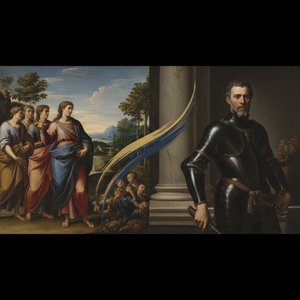
The Villa Farnesina’s courtyard holds more than just architectural grandeur; it cradles one of the most poignant emblems of Renaissance artistic evolution – Sebastiano del Piombo's *Polyphemus*. Painted in 1512, this fresco isn’t merely a depiction of Homeric myth; it’s a testament to how Venetian colorism wrestled with Roman sculptural idealism, resulting in an image that transcends its formal constraints and speaks directly to the viewer’s soul.- The Myth Revisited: Del Piombo reimagines Polyphemus, the Cyclops of Odysseus's epic voyage, not as a monstrous brute but as a figure of contemplative repose. Unlike earlier portrayals emphasizing brute force, Sebastiano presents him seated upon a rocky outcrop, leaning heavily on a staff—a gesture imbued with both physical vulnerability and intellectual solemnity.
- Roman Influence: The villa itself is a deliberate echo of Roman architectural principles, designed to rival the grandeur of imperial palaces. This context underscores Del Piombo’s ambition to elevate Venetian painting beyond its regional traditions, aligning it with the monumental scale and clarity of Roman art.
Technique & Material: Oil Paint on Panel – A Delicate Balance
Del Piombo's mastery lies in his meticulous application of oil paint onto a panel—a medium notoriously difficult to control. The artist skillfully employs layering and glazing techniques, creating subtle gradations of color that imbue the scene with an ethereal luminescence. Careful observation reveals the painstaking detail invested in capturing textures – from the rough surface of the stone to the smooth skin tones of Polyphemus – demonstrating a profound understanding of visual perception.- Atmospheric Perspective: Del Piombo expertly utilizes atmospheric perspective, drawing inspiration from Leonardo da Vinci’s pioneering explorations into optical illusion. Distant hills and trees fade into hazy blues and greens, conveying depth and creating an immersive experience for the viewer.
- Color Harmony: The palette is dominated by warm earth tones—ochre, browns, and muted reds—harmoniously blended to evoke a sense of tranquility and contemplation. These colors are juxtaposed against cooler blues and greens in the landscape, reinforcing the painting’s overall mood.
Symbolism & Emotional Resonance: Beyond Mythic Narrative
Beyond its retelling of Odysseus's encounter with Polyphemus, *Polyphemus* resonates deeply with broader symbolic concerns. The staff symbolizes authority and guidance—a subtle nod to the humanist ideals that underpinned Renaissance thought—while the sack represents burdens or responsibilities—perhaps reflecting Del Piombo’s own personal reflections on artistic endeavor. The painting's stillness invites introspection, prompting viewers to consider themes of resilience, wisdom, and the enduring power of myth to illuminate human experience. Its luminous palette and masterful technique elevate it beyond mere representation, transforming it into a conduit for emotional contemplation—a timeless masterpiece that continues to captivate audiences centuries after its creation.Villa Farnesina: A Legacy of Artistic Patronage
Located in Rome’s elegant Farnesina district, the villa itself stands as a testament to papal patronage and artistic ambition. It houses an impressive collection of Renaissance paintings—including works by Raphael and Carracci—further enriching its cultural significance. Visiting Villa Farnesina offers a unique opportunity to immerse oneself in the splendor of Italian High Renaissance art and to appreciate Del Piombo’s contribution to this pivotal moment in Western artistic history.Fragen & Antworten
Für welche Verwendung wird "Polyphemus" von Sebastiano del Piombo empfohlen?
Die empfohlene Verwendung eines Drucks von „Polyphemus“ ist Accent.
Ist "Polyphemus" als Kunstdruck erhältlich?
Einen Druck von "Polyphemus" von Sebastiano del Piombo können Sie ganz einfach auf der Seite Kunstdruck in Premiumqualität bestellen: ein Fine Art Print auf Baumwollkanvas oder Archiv-Leinwandpapier.
In welcher Phase der Karriere von Sebastiano del Piombo lässt sich „Polyphemus“ angesichts seines Entstehungsdatums einordnen?
"Polyphemus", entstanden im Jahr 1512, stammt aus der Mature Renaissance von Sebastiano del Piombo.
Künstlerbiografie
Frühes Leben und Ausbildung
Sebastiano del Piombo, ein italienischer Maler der Hochrenaissance, hinterließ mit seiner einzigartigen Verbindung aus venezianischer Farbe und römischen monumentalen Formen einen bleibenden Eindruck in der Kunstwelt. Geboren um 1485 in Venedig, ist Sebastianos frühes Leben von Geheimnissen umgeben, aber es ist bekannt, dass er erst spät im Leben mit dem Malen begann und Schüler Giorgiones (1477/78 oder 1473/74 – 1510) wurde, einem bedeutenden Maler der venezianischen Hochrenaissance.Aufstieg in Rom
Sebastianos Karriere gewann an Schwung, als er 1511 nach Rom zog, wo er zusammen mit Raffael arbeitete und schließlich zu den wenigen Malern gehörte, die eine gute Beziehung zu Michelangelo pflegten, der ihn ermutigte, gegen Raffael um Aufträge zu konkurrieren. Diese Erfahrung führte dazu, dass Sebastiano zum führenden Maler Roms nach Raffaels Tod im Jahr 1520 wurde.Wichtige Werke und Kooperationen
- Die drei Philosophen (Kunsthistorisches Museum, Wien, Österreich), eine Zusammenarbeit mit Giorgione, zeigt Sebastianos einzigartigen Stil.
- Moses empfängt die Gesetzestafeln (Detail) (Madonna dell'orto, Venedig, Italien) demonstriert seine Meisterschaft in Öl auf Leinwand.
Entwicklung und künstlerischer Stil
Sebastiano del Piombo vereinte Elemente des venezianischen Kolorits mit der monumentalen Stärke römischer Kunst. Sein Stil zeichnete sich durch eine kraftvolle Darstellung von Figuren aus, oft größer als das Leben, die er durch lebendige Farben und eindrucksvolle Lichteffekte ausglichen konnte. Er bevorzugte Ölfarben und schuf sowohl Porträts als auch religiöse Szenen. Obwohl er in seinen frühen Jahren in Venedig bereits einen eigenen Stil entwickelte, festigte er ihn in Rom unter dem Einfluss Michelangelos.Bedeutung und Vermächtnis
Trotz seiner Bedeutung zu Lebzeiten war Sebastiano del Piombos Einfluss auf andere Künstler begrenzt, da er wenige prominente Schüler hatte und seine Werke nur selten verbreitet wurden. Sein einzigartiger Stil, der venezianische Farbenreichtum mit römischer Monumentalität verbindet, inspiriert jedoch weiterhin Kunstliebhaber. Erkunden Sie weitere Werke von Giorgione auf OriginalUniqueArt, Vertiefen Sie sich in Sebastiano del Piombos Biografie auf Wikipedia, Entdecken Sie Sebastiano del Piombos Profil auf OriginalUniqueArt. Wichtige Daten: * Geboren: ca. 1485, Venedig * Gestorben: 21. Juni 1547 * Bemerkenswerte Zusammenarbeit: Die drei Philosophen, mit Giorgione (Kunsthistorisches Museum, Wien, Österreich)
Sebastiano del Piombo
1485 - 1547 , Italien
Kurzinfos
- Beeinflusste Künstler:
- Giorgione
- Raphael
- Michelangelo
- Bemerkenswerte Werke:
- Die drei Philosophen
- Moses empfängt die Tabellen
- Geburtsdatum: ca. 1485
- Geburtsort: Venedig, Italien
- Künstlerische Richtung: Hochrenaissance
- Nationalität: Italiener
- Todatum: 21. Juni 1547
- Vollständiger Name: Sebastiano del Piombo
Ähnliche Artikel
Cecco del Caravaggio: Rediscovering the Shadowy Genius of Francesco Buoneri
Explore the captivating world of Cecco del Caravaggio (Francesco Buoneri), a pivotal Baroque artist. Discover his dramatic realism, mysterious life, and lasting legacy with OriginalUniqueArt's expert analysis.
Andrea del Sarto: Florentinische Eleganz und die Meisterschaft der Renaissance
Entdecken Sie das Werk von Andrea del Sarto, einem Meister der Florentiner Renaissance. Erfahren Sie mehr über seine Fresken, seinen Stil und sein Vermächtnis in diesem umfassenden Artikel. Hochwertige Reproduktionen bei OriginalUniqueArt!

Echos der Azurküste: Strategien der Kunstauswahl für mediterrane Villeninterieure – Harmonisierung von Raum, Licht und Erbe
Expertenratgeber für die perfekte Kunstauswahl in mediterranen Villen! Harmonische Farbkonzepte, Lichtgestaltung & lokale Künstler – schaffen Sie ein Zuhause voller Seele. Jetzt lesen!

Fragmentierte Perspektiven, Vereinheitlichte Räume: Die Integration Kubismus-inspirierter Kunst in das moderne Villendesign – Eine Anleitung zu ästhetischer Innovation und rechtlichen Aspekten
Entdecken Sie die Integration kubistischer Kunst in luxuriösen Villen! Expertenrat zu Architektur, Materialien & Rechtlichem. Gestalten Sie einzigartige Räume mit OriginalUniqueArt.
Sebastiano del Piombo: Bridging Venetian Colorism & Roman Grand Manner Portraiture
Explore the captivating art of Sebastiano del Piombo, a Renaissance master bridging Venetian colorism & Roman grandeur. Discover his iconic portraits and lasting influence on art history. Learn more at OriginalUniqueArt.