Textgröße

() ·

Ein Gemälde, von Hand für Sie geschaffen

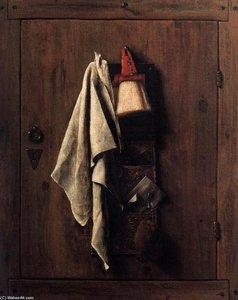
Ansicht eines Korridors

Handgefertigte Ölreproduktion

Handgemaltes Ölgemälde auf Leinwand in Ihrer Wunschgröße und mit Rahmen, auf Bestellung von unseren Künstlern angefertigt. ( Zum Druck wechseln Zum digitalen Bild wechseln)

Beschreibung des Sammlerstücks

Ein Meisterwerk der niederländischen Barockkunst! Samuel Dirksz van Hoogstratens 'Ansicht eines Korridors' beeindruckt durch Detailtreue und Lichtspiel – ein Blick in eine elegante Wohnstube des Goldenen Zeitalters.

Künstlerbiografie

Samuel Dirksz van Hoogstraten (1627-1678): Ein Meister der niederländischen Malerei und Kunsttheorie, bekannt für Trompe l'oeil und Perspektivenkästen – eine beeindruckende Figur des Goldenen Zeitalters.

ab ·

Kapitel 1

Welche Größe soll es haben?

Wischen Sie, um die Größe zu ändern; das Bild auf der linken Seite zeigt den Rahmen in seiner tatsächlichen Breite. Die Proportionen des Originals bleiben erhalten.

Standardformat
individuell anpassbar
CM
INCH

Wählen Sie aus unseren vordefinierten Formaten, die den ursprünglichen Proportionen des Kunstwerks entsprechen.

Breite
Höhe

Geben Sie die Breite und die Höhe an, die Sie für Ihren Rahmen oder Ihre Wand benötigen. Da dieses Werk handgemalt ist, kann der Künstler bei einer anderen Form etwas mehr um das Bild herum malen oder etwas abschneiden – Sie entscheiden. Wir senden Ihnen ein digitales Mockup zur Freigabe, bevor mit dem Malen begonnen wird. Das auf dieser Seite gezeigte Bild stellt nicht das tatsächliche Ergebnis dar – dies tut nur das Mockup.

Kapitel 2

Wie soll es geliefert werden?

Wählen Sie die Kanten der Leinwand aus

Wählen Sie Ihren Rahmen

Corner sample of the WhiteWrap canvas edge finish, stretched on Massivholz bars
Weißer Rand €1
Corner sample of the BlurSideWrap canvas edge finish, stretched on Massivholz bars
verlaufende Kanten €1
Corner sample of the ExtendedWrap canvas edge finish, stretched on Massivholz bars
Umrandung €1
Corner sample of the P118B picture frame: formgepresstes Polystyrol, 5 cm wide and 3 cm thick
P118B €10
Corner sample of the P118H picture frame: formgepresstes Polystyrol, 5 cm wide and 3 cm thick
P118H €10
Corner sample of the P118W picture frame: formgepresstes Polystyrol, 5 cm wide and 3 cm thick
P118W €10
Corner sample of the P438Z picture frame: formgepresstes Polystyrol, 5.5 cm wide and 3.5 cm thick
P438Z €10
Corner sample of the P508JH picture frame: formgepresstes Polystyrol, 7 cm wide and 3.5 cm thick
P508JH €12
Corner sample of the P508YH picture frame: formgepresstes Polystyrol, 7 cm wide and 3.5 cm thick
P508YH €12
Corner sample of the P805H picture frame: formgepresstes Polystyrol, 5 cm wide and 3.5 cm thick
P805H €10
Corner sample of the P805Z picture frame: formgepresstes Polystyrol, 5 cm wide and 3.5 cm thick
P805Z €10
Corner sample of the P919BZ picture frame: formgepresstes Polystyrol, 7 cm wide and 3.5 cm thick
P919BZ €10
Corner sample of the P919G picture frame: formgepresstes Polystyrol, 7 cm wide and 3.5 cm thick
P919G €10
Corner sample of the P919XJ picture frame: formgepresstes Polystyrol, 7 cm wide and 3.5 cm thick
P919XJ €10
Corner sample of the P959ZH picture frame: formgepresstes Polystyrol, 5 cm wide and 3 cm thick
P959ZH €10
Corner sample of the P968JZ picture frame: formgepresstes Polystyrol, 6 cm wide and 4 cm thick
P968JZ €12
Corner sample of the W106C picture frame: Massivholz, 5 cm wide and 3 cm thick
W106C €8
Corner sample of the W218G picture frame: Massivholz, 5 cm wide and 3 cm thick
W218G €10
Corner sample of the W218JH picture frame: Massivholz, 5 cm wide and 3 cm thick
W218JH €8
Corner sample of the W218Y picture frame: Massivholz, 5 cm wide and 3 cm thick
W218Y €10
Corner sample of the W307PJ picture frame: Massivholz, 6 cm wide and 3 cm thick
W307PJ €10
Corner sample of the W316G picture frame: Massivholz, 6 cm wide and 3 cm thick
W316G €10
Corner sample of the W316PJ picture frame: Massivholz, 6 cm wide and 3 cm thick
W316PJ €8
Corner sample of the W316Y picture frame: Massivholz, 6 cm wide and 3 cm thick
W316Y €10
Corner sample of the W398PJ picture frame: Massivholz, 5 cm wide and 3 cm thick
W398PJ €8
Corner sample of the W4111J picture frame: Massivholz, 6.5 cm wide and 3.5 cm thick
W4111J €10
Corner sample of the W500HY picture frame: Massivholz, 7 cm wide and 5 cm thick
W500HY €15
Corner sample of the W500JH picture frame: Massivholz, 7 cm wide and 5 cm thick
W500JH €15
Corner sample of the W692G picture frame: Massivholz, 8 cm wide and 4 cm thick
W692G €12
Corner sample of the W849H picture frame: Massivholz, 5 cm wide and 3 cm thick
W849H €8
Corner sample of the W940BG picture frame: Massivholz, 7.5 cm wide and 4.5 cm thick
W940BG €15
Corner sample of the W953PJ picture frame: Massivholz, 6 cm wide and 3.5 cm thick
W953PJ €8
Corner sample of the H24-GOLD picture frame: geschnitztes Holz mit Gesso, 10 cm wide and 6 cm thick
H24-GOLD €30
Corner sample of the H24-SILVER picture frame: geschnitztes Holz mit Gesso, 10 cm wide and 6 cm thick
H24-SILVER €30
Corner sample of the H36-GOLD picture frame: geschnitztes Holz mit Gesso, 15 cm wide and 6.5 cm thick
H36-GOLD €45
Corner sample of the H36-SILVER picture frame: geschnitztes Holz mit Gesso, 15 cm wide and 6.5 cm thick
H36-SILVER €45

Profil: . Gesamtgröße mit Rahmen: .

Kapitel 3

Wer malt es, und sollte etwas geändert werden?

Beispiele für Anpassungsmöglichkeiten: Gesicht durch Kundenfoto ersetzen; Haustier hinzufügen (z. B. Katze durch Hund ersetzen); Versteckte Botschaft im Hintergrund einfügen; Hintergrundlandschaft oder Elemente ändern.
Nach der Bestellung wird das Team von OriginalUniqueArt.com den Kunden per E-Mail kontaktieren, um Anweisungen einzuholen und eine Vorschau des Entwurfs bereitzustellen

Weltweiter Versand () in nur 3 bis 4 Wochen statt der üblichen 5 Wochen. (8 November). Keine Kompromisse bei der Qualität.

Kapitel 4

Der letzte Schliff

Ein Namensschild, wie im Museum?

Details der gravierten Bronzetafel

This elegant plaque features the artist's name and the title of the artwork, finely engraved for a timeless presentation.

It is made from bronze with a refined, elegant finish. The text is precisely laser-engraved for a sharp and permanent result. Measuring 9x2 cm, the plaque is compact yet easy to read. It's built to be durable and scratch-resistant, offering a professional, museum-quality look. Mounting is simple thanks to the included adhesive backing.

Details zur Acrylglas-Plakette (transparent)

The plaque includes essential engraved details such as the artist's name, the title of the artwork, the date it was created, the type of media used-like oil on canvas or watercolor-a brief description of the piece, and a QR code that links to the complete artwork information.

It is crafted from clear acrylic, offering a sleek, modern appearance. The text is UV-engraved in black to ensure strong visual contrast. With a size of 10x15 cm, it ensures optimal readability. It comes equipped with two metal hooks for secure wall mounting. The plaque is designed to be weather-resistant, making it suitable for various environments, and it includes interactive features that work seamlessly with smartphone scanning.

Details zur schwarzen Acryltafel

This elegant plaque includes engraved information such as the artist's name, the title of the artwork, the date it was created, the type of media used (like oil on canvas or watercolor), a short description of the artwork, and a QR code for quick access to more information.

The plaque itself is made from refined black acrylic with a premium finish. The text is laser-engraved in white for high contrast and readability. Its size is 10x15 cm, designed to be easy to read. It comes with two metal hooks for professional mounting. The design is sleek and fits any interior style. It is also weather-resistant and durable, with built-in digital integration for mobile compatibility.

Ein Schutzlack?

Bis wann benötigen Sie es?

Kapitel 5

Ihr Gemälde, wie von Ihnen bestellt

Ansicht eines Korridors

Art der Reproduktion

Format der Reproduktion

-

Erstklassige Meisterkünstler

Mehr Detailtiefe, Raffinesse und zusätzliche Produktionszeit

-

Rahmen für Reproduktionen

-

-

Bei Kunstwerken oder Reproduktionen, die an einer Seite größer als 105 cm (ca. 41 Zoll) sind, wird der Rahmen zerlegt als Bausatz geliefert. Diese Methode gewährleistet eine sichere Zustellung und verhindert Schäden während des Transports.

Professionelle Montage erforderlich – dies ist kein DIY-Produkt.
Der Bausatz muss von einem erfahrenen professionellen Rahmenmacher zusammengebaut und die Leinwand gespannt werden. Hierfür werden Holzleim (nicht im Lieferumfang enthalten), eine Leinwandspannzange sowie Klemmen benötigt, um die Keilleisten während des Trocknungsvorgangs rechtwinklig zu halten. Eine unsachgemäße Montage oder eine ungleichmäßige Spannung der Leinwand kann das Kunstwerk dauerhaft beschädigen und ist nicht durch unsere Garantie abgedeckt.

  • Alle Vollholzkomponenten sind enthalten, präzise auf Maß zugeschnitten.

  • Der Zusammenbau erfolgt mit den mitgelieferten Schrauben sowie Holzkleber für die Eckverbindungen, der nicht im Lieferumfang enthalten ist und vom Rahmenbauer selbst beschafft werden muss.

  • Professionelles Werkzeug ist erforderlich und nicht im Lieferumfang enthalten: eine Keilrahmenzange (Spannwerkzeug) sowie Klammern, um die Leisten während der Trocknungszeit des Klebers rechtwinklig zu fixieren.

Wichtiger Hinweis:
Für die Eckverbindungen wird Holzleim benötigt, die Leisten müssen mit Zwingen fixiert werden, bis der Leim vollständig getrocknet ist, und das Spannen der Leinwand auf dem fertigen Rahmen erfordert eine Keilrahmen-Zange. Keines dieser Utensilien ist im Set enthalten. Bitte stellen Sie sicher, dass ein erfahrener Rahmenmacher zur Verfügung steht, bevor Sie diese Größe bestellen.

Beschriftung

-

-

Schutzlackierung

Glanzlack (verstärkt die Farben, schützt vor Licht und Feuchtigkeit)

-

Mein Kunstwerk personalisieren

Beispiele für Anpassungsmöglichkeiten: Gesicht durch Kundenfoto ersetzen; Haustier hinzufügen (z. B. Katze durch Hund ersetzen); Versteckte Nachricht im Hintergrund einfügen; Hintergrundlandschaft oder -elemente ändern.

-

Eilt sehr

Weltweiter Versand () in nur 3 bis 4 Wochen statt der üblichen 5 Wochen. (8 November). Keine Kompromisse bei der Qualität.

-

Expressversand

Weltweiter Versand () innerhalb von 5 Wochen. (15 November).

Inklusive Versand

Endpreis

€ 268

Gesamtpreis € 268

Die Glasoption ist nur für Größen unter 110 cm verfügbar.

In jeder Bestellung enthalten

  • Kostenloser weltweiter Expressversand
  • Hochwertige Leinenleinwand
  • Umfassender Versicherungsschutz beim Versand
  • Zollgebühren-Rückerstattungsgarantie
  • Garantie für exakte Farbtreue
  • 100 Tage Rückgaberecht (nur bei Mängeln)
  • 100% Geld-zurück-Garantie
  • Mengenrabatt verfügbar

Ein Portal zum Goldenen Zeitalter der Niederlande

Sich vor Samuel Dirksz van Hoogstratens "Ansicht eines Korridors" zu stellen, bedeutet weit mehr, als nur ein Gemälde zu betrachten; es ist das Überschreiten einer Schwelle direkt in das Herz der niederländischen Seele des siebzehnten Jahrhunderts. Dieses im Jahr 1662, auf dem Höhepunkt des Goldenen Zeitalters der Niederlande, entstandene Meisterwerk dient als tiefgründige Meditation über Raum, Licht und die Kunst der Illusion. Die Komposition lädt den Blick des Betrachters durch einen dunklen Türrahmen aus Holz ein und führt das Auge entlang eines akribisch dargestellten Korridors, der förmlich mit der stillen Würde einer Ära zu atmen scheint, die von beispiellem Wohlstand und intellektuellem Erwachen geprägt war. In diesem häuslichen Interieur findet sich ein unmittelbares, spürbares Gefühl der Ruhe, in dem jeder Schatten und jeder Lichtpunkt so orchestriert wurde, dass ein Fenster in eine verlorene Welt der Raffinesse entsteht.

Die Brillanz Van Hoogstratens liegt in seiner Meisterschaft des Chiaroscuro, jenes dramatischen Zusammenspiels von Licht und Schatten, das die Luft innerhalb des Rahmens förmlich modelliert. Während natürliches Licht aus einer unsichtbaren Quelle auf der linken Seite einfällt, tanzt es über einen schwarz-weiß gefliesten Schachbrettboden und schafft ein rhythmisches geometrisches Muster, das die Komposition verankert. Diese Technik beleuchtet nicht nur die Szene; sie verleiht ihr eine architektonische Schwere und eine dreidimensionale Tiefe, die schlichtweg hypnotisch wirkt. Der sanfte Glanz hebt die Texturen eines einfachen Holzstuhls und eines Tisches hervor, der mit einem warmen gelben Tuch bedeckt ist, auf dem eine einzelne Kerze in ihrem Leuchter bereitsteht, um die heraufziehende Dämmerung zu durchbrechen. Durch diese geschickte Anwendung des Lichts verwandelt der Künstler ein statisches Interieur in eine lebendige, atmende Umgebung.

Symbolik und die Architektur der Ordnung

Jenseits seiner visuellen Pracht ist die "Ansicht eines Korridors" reich an der symbolischen Sprache, die im barocken Denken vorherrschte. Der Schachbrettboden, ein Motiv, das Van Hoogstraten häufig verwendete, dient als mehr als nur ein dekoratives Element; er repräsentiert den Triumph von Ordnung, Rationalität und mathematischer Präzision inmitten der Komplexität menschlicher Existenz. Diese Faszination für die Perspektive und das Trompe-l'œil – die Täuschung des Auges – war zentral für die Identität des Künstlers. Als Theoretiker und Schüler Rembrandts war Van Hoogstraten von den Grenzen zwischen Realität und Darstellung besessen. Die Art und Weise, wie der Korridor in die Ferne zurückweicht, deutet auf eine unendliche Fortsetzung hin und spiegelt die humanistische Neugier jener Zeit wider, die danach strebte, die Tiefen sowohl der physischen Welt als auch der menschlichen Psyche zu erforschen.

Für den anspruchsvollen Sammler oder Innenarchitekten bietet dieses Gemälde eine tiefe emotionale Resonanz, die über reine Dekoration hinausgeht. Es bringt eine Atmosphäre von stiller Eleganz und kontemplativer Ruhe mit sich und macht es zu einem idealen Mittelpunkt für Räume, die für Reflexion und Raffinesse geschaffen wurden. Die gedämpften Erdtöne und die ernste, würdevolle Farbpalette ermöglichen es dem Werk, sich nahtlos in luxuriöse, klassische Umgebungen einzufügen und gleichzeitig einen Fokuspunkt von immenser historischer Bedeutung zu setzen. Eine Reproduktion dieses Kalibers zu besitzen bedeutet, den Geist der niederländischen Meister in das eigene Heim einzuladen und eine Umgebung zu schaffen, in der Geschichte, Kunst und Schönheit in einem zeitlosen, stillen Dialog zusammenfinden.

Fragen & Antworten

Welche Farbe dominiert in "Ansicht eines Korridors" von Samuel van Hoogstraten?

Die dominante Farbe von "Ansicht eines Korridors" von Samuel van Hoogstraten ist Goldgelbe Farbtöne. Dieser Farbton bildet die Grundlage der Palette.

Was für ein Kunstwerk ist "Ansicht eines Korridors"?

"Ansicht eines Korridors" von Samuel van Hoogstraten wird als Wandkunst klassifiziert. Die Kategorie beschreibt die Art des Kunstwerks, um das es sich beim Original handelt.

Wo kann ich Kunstwerke finden, die "Ansicht eines Korridors" von Samuel van Hoogstraten ähneln?

Ähnliche Kunstwerke zu "Ansicht eines Korridors" von Samuel van Hoogstraten finden Sie auf der Seite Ähnliche Werke des Kunstwerks.

Mehr über dieses Gemälde

Vorschau anzeigen In AR ansehen Zum Druck wechseln Zum digitalen Bild wechseln Versenden
Details anzeigen Leitfaden Zu Favoriten hinzufügen Herunterladen Ähnliche Objekte Röntgenaufnahme Diashow Fragen & Antworten Statistiken

In Zahlen

  • 1670das Jahr der Entstehung
  • 29Rahmen zur Auswahl
  • Standardformate, in ihren eigenen Proportionen
  • 5Wochen für die Bemalung und Lieferung
Samuel van Hoogstraten

Samuel van Hoogstraten

1627 - 1678, Niederlande

Kurzinfos zu Samuel van Hoogstraten

  • Artistic Movement Or Style: Dutch Golden Age, Baroque
  • Artists Who Influenced This Artist:
    • Rembrandt
    • Dirk van Hoogstraten
  • Date Of Birth: August 2, 1627
  • Date Of Death: October 19, 1678
  • Full Name: Samuel Dirksz van Hoogstraten
  • Nationality: Dutch
  • Notable Artworks:
    • Portrait of Mathys van den Brouck
    • The Anemic Lady
    • View of a Corridor
    • Man at a Window
    • Vanitas
  • Place Of Birth: Dordrecht, Netherlands

Künstlerbiografie

Samuel Dirksz van Hoogstraten: A Master of Illusion and Intellect

Samuel Dirksz van Hoogstraten (1627-1678) stands as a towering figure in the annals of Dutch Golden Age art, an artist whose legacy extends far beyond his stunning visual creations. He wasn’t merely capturing scenes from his era; he was dissecting them, manipulating perception, and exploring the very essence of artistic representation—a pursuit that cemented his place as one of the most influential thinkers and practitioners of Baroque painting in Holland. Born in Dordrecht, Netherlands, into a family steeped in artisanal tradition – his father a silversmith and painter, his grandfather a guild member – Van Hoogstraten’s formative years instilled within him an appreciation for craftsmanship and a keen understanding of visual principles that would inform his entire artistic career.

Early Training and Rembrandt's Influence

His formal artistic education began under the tutelage of his father, Dirk van Hoogstraten, grounding him in the foundational techniques of painting before he embarked on his apprenticeship with Rembrandt Harmenszoon van Rijn around 1640. This association proved transformative, exposing Van Hoogstraten to Rembrandt’s groundbreaking approach to chiaroscuro—the dramatic interplay of light and shadow—a technique that would become a hallmark of his own style. Unlike many artists of his time who slavishly imitated their masters, Van Hoogstraten possessed an inquisitive mind and a restless spirit that propelled him beyond mere replication. He meticulously studied Rembrandt’s compositions, analyzing the subtleties of tonal gradation and exploring how light could convey emotion and create illusionistic depth. This dedication to Rembrandt's method is evident in his early portraits, where he skillfully employs chiaroscuro to sculpt form and imbue his subjects with psychological nuance.

A Journey Through Europe: Observation and Innovation

Driven by an unwavering desire for artistic advancement, Van Hoogstraten undertook extensive travels throughout Europe during the 1650s and early 1660s—a period marked by intellectual ferment and artistic experimentation. He visited Vienna, Rome, and London, immersing himself in diverse artistic traditions and absorbing influences from artists such as Johannes Vermeer and Pieter de Hooch. These journeys weren’t merely sightseeing expeditions; they were intensive studies of architecture, perspective, and the prevailing aesthetic sensibilities of each locale—observations that profoundly shaped his artistic vision. He meticulously documented his findings in notebooks filled with sketches and diagrams, demonstrating a commitment to scientific inquiry alongside artistic creativity. This meticulous attention to detail is particularly apparent in his architectural paintings, where he employs precise mathematical calculations to achieve breathtaking realism and convey spatial illusion.

The Triumph of Trompe-l’œil and Perspective Boxes

Perhaps Van Hoogstraten's most remarkable achievement was his mastery of trompe-l’œil—the art of deceiving the eye—a technique that he elevated to unprecedented heights. He skillfully crafted illusions within still lifes, creating seemingly three-dimensional representations of objects that defied conventional perspective. His celebrated “Peepshow with Views of the Interior of a Dutch House,” housed at the National Gallery in London, exemplifies this innovative approach, transporting viewers into miniature worlds rendered with astonishing accuracy and depth. Similarly, he constructed perspective boxes—elaborate architectural models designed to simulate realistic interiors when viewed through peepholes—demonstrating his profound understanding of spatial illusion and challenging viewers’ perceptions of reality. These creations weren't merely decorative objects; they were intellectual puzzles that demanded careful observation and contemplation.

A Theoretician's Legacy: Shaping Artistic Discourse

Beyond his artistic accomplishments, Van Hoogstraten was a prolific art theorist who sought to codify the principles of painting in his magnum opus, *Inleyding tot de hooge schoole der schilderkonst* (Introduction to the Academy of Painting), published in 1678. This ambitious treatise stands as one of the most comprehensive and intellectually rigorous explorations of art theory produced in the Dutch Republic during the Baroque era—a testament to his erudition and unwavering dedication to advancing artistic knowledge. Van Hoogstraten drew upon a vast range of sources, from classical philosophy to contemporary treatises on optics, analyzing issues of pictorial persuasion, illusionism, moral responsibility, and the relationship between painting and intellect. He built upon the foundations laid by Karel van Mander in his earlier work, *Het Schilder-Boeck*, aiming to establish a systematic framework for understanding and practicing the art of painting—a legacy that continues to inspire artists and scholars alike. His writings reflect both international influences gleaned from his travels and debates within Dutch artistic circles, securing his place as a pivotal figure in shaping the intellectual landscape of his time.

Eckdaten

  • Notable elements or techniques: Detailreiche Lichtführung und Schattenwurf
  • Title: Ansicht eines Korridors
  • Artistic style: Barockstil
  • Medium: Öl auf Leinwand
  • Location: Louvre Museum, Paris
  • Year: 1670

Kunst-Quiz

Jede Frage hat nur eine richtige Antwort.

Frage 1:
¿Cuál es el estilo artístico predominante en esta pintura?
Frage 2:
¿Dónde se encuentra actualmente esta obra maestra?
Frage 3:
¿Qué elemento arquitectónico destaca en el cuadro?
Frage 4:
¿Quién fue Samuel Dirksz van Hoogstraten?
Frage 5:
¿Qué técnica artística utilizó Van Hoogstraten para crear profundidad y realismo?