Vorschau anzeigen
 Versenden
 Teilen
 Details anzeigen
 Leitfaden

 Herunterladen
 Ähnliche Objekte
 Röntgenaufnahme
 Diashow
 Q&A
Q&A Statistiken
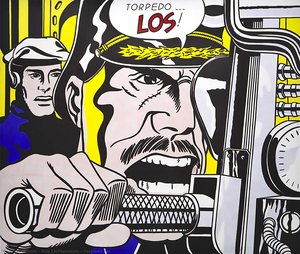
Modular Painting mit Vier Feldern Nr. 2


 Weiterlesen
Die auf dieser Seite dargestellten Kunstwerke sind urheberrechtlich geschützt, was bedeutet, dass wir keine identische Reproduktion rechtmäßig erstellen oder verkaufen dürfen. Dieser Schutz wird durch internationale Abkommen wie die Berner Übereinkunft und durch nationale Gesetze, einschließlich derer, die von den US-Urheberrecht – Titel 17.
Diese Methode entspricht vollumfänglich den Urheberrechtsbestimmungen, da sie keine Kopie oder Vervielfältigung des geschützten Kunstwerks darstellt. Stattdessen handelt es sich um eine kreative Neuinterpretation – ein neues Gemälde, das vom Original inspiriert, aber nicht identisch mit ihm ist.
Giclée / Kunstdruck
Giclée- oder Leinwanddruck in Museumsqualität mit schneller Produktion und flexiblen Veredelungsoptionen. ( Handgemalte Reproduktion bestellen Zum digitalen Bild wechseln)




P118B €10

P118H €10

P118W €10

P438Z €10

P508JH €12

P508YH €12

P805H €10

P805Z €10

P919BZ €10

P919G €10

P919XJ €10

P959ZH €10

P968JZ €12

W106C €8

W218G €10

W218JH €8

W218Y €10

W307PJ €10

W316G €10

W316PJ €8

W316Y €10

W398PJ €8

W4111J €10

W500HY €15

W500JH €15

W692G €12

W849H €8

W940BG €15

W953PJ €8




Wählen Sie aus unseren vordefinierten Formaten, die den ursprünglichen Proportionen des Kunstwerks entsprechen.

Geben Sie die benötigte Breite und Höhe an, damit der Druck perfekt in Ihren Rahmen oder an Ihre Wand passt. Ein Druck kann nur beschnitten, aber niemals größer als das Originalbild angefertigt werden; daher verliert ein Format mit anderen Proportionen einen Teil des Bildes. Wir senden Ihnen ein digitales Mockup zur Freigabe, bevor wir den Druck ausführen. Das auf dieser Seite gezeigte Bild zeigt nicht den tatsächlichen Beschnitt – dies ist nur im Mockup ersichtlich.
Weltweiter Versand () innerhalb von 2 Wochen statt der üblichen 4/5 Wochen. (3 November)

Kostenloser weltweiter Expressversand

Hochwertige Leinenleinwand

Umfassender Versicherungsschutz beim Versand

Zollgebühren-Rückerstattungsgarantie

Garantie für exakte Farbtreue

100 Tage Rückgaberecht (nur bei Mängeln)

100% Geld-zurück-Garantie

Mengenrabatt verfügbar
 Die Glasoption ist nur für Größen unter 110 cm verfügbar.

Modular Painting mit Vier Feldern Nr. 2
Giclée / Kunstdruck
Format der Reproduktion
-


Endpreis
€ 71
A Symphony of Form and Color: Deconstructing Lichtenstein’s ‘Modular Painting with Four Panels -1’
Roy Lichtenstein, born in Manhattan on October 27, 1923, irrevocably altered the trajectory of twentieth-century art. Emerging as a pivotal figure within the Pop Art movement—a reaction against Abstract Expressionism’s emotional intensity—he interrogated its conventions, transforming commonplace imagery into compelling artistic statements. His formative years were marked by exposure to museums and jazz music, fostering both an appreciation for visual aesthetics and a foundational understanding of musical composition. This early influence would permeate his subsequent work, informing his stylistic choices and conceptual explorations. Lichtenstein’s formal training commenced at the Art Students League in 1939 under Reginald Marsh, honing his drawing skills before pursuing studies at Ohio State University where he gained invaluable experience in studio art. His military service during World War II provided further impetus for artistic development, shaping his perspective on visual language and challenging him to synthesize disparate influences.- Early Influences: Lichtenstein’s initial fascination with Cubism—particularly Picasso’s Guernica—established a precedent for geometric abstraction and fragmented perspectives that would characterize much of his oeuvre.
- Comic Book Inspiration: The genesis of Lichtenstein's distinctive style can be traced back to the influence of comic books, specifically Ben-Day printing techniques used in advertising. He meticulously analyzed these visual elements, adopting their halftone dots as a core component of his paintings.
- The Hoyt L. Sherman Studio Art Center: Established in 1958 at Ohio State University, Lichtenstein’s studio fostered an environment conducive to experimentation and innovation, cementing his commitment to pushing artistic boundaries.
Modular Painting with Four Panels -1: A Study in Geometric Precision
“Modular Painting with Four Panels -1,” created in 1969, exemplifies Lichtenstein’s masterful distillation of complex ideas into strikingly simple forms. The piece comprises four distinct panels arranged in a square configuration—a deliberate nod to architectural principles and visual balance. Each panel presents a unique interplay of geometric shapes—primarily blue circles and yellow dots—executed with unwavering precision using oil and magna paint on canvas. This technique—characterized by smooth surfaces and crisp edges—became synonymous with Lichtenstein’s signature style, reflecting his desire for clarity and control over the artistic process. The use of magna paint—a relatively new medium at the time—contributed to the painting's vibrant colors and exceptional finish.- Technique: Lichtenstein’s meticulous application of magna paint ensured consistent color saturation across all panels, enhancing the visual impact of the composition.
- Color Palette: The dominant blue hue serves as a unifying force, juxtaposed against bursts of yellow circles that punctuate each panel—creating a dynamic tension and emphasizing geometric repetition.
- Surface Texture: The flawless surface achieved through magna paint contributes to the painting’s aesthetic quality, conveying a sense of polished elegance and understated sophistication.
Beyond Representation: Symbolism and Interpretation
While seemingly devoid of narrative content—a hallmark of Lichtenstein's approach—“Modular Painting with Four Panels -1” invites deeper contemplation regarding the fundamental elements of visual language. The modular arrangement—its division into interconnected squares—suggests a commentary on systems, structures, and the infinite possibilities inherent within defined parameters. The circles and squares themselves can be interpreted as symbolic representations of foundational forms—building blocks of artistic expression—reflecting Lichtenstein’s ongoing engagement with geometric abstraction. Furthermore, some art historians posit that the painting explores ideas related to architectural design and standardization—a reflection of the broader cultural preoccupation with prefabrication during the 1960s. Ultimately, Lichtenstein's work transcends mere visual depiction; it engages viewers in a dialogue about perception and interpretation—challenging them to consider how artistic forms communicate meaning beyond their surface appearance.An Enduring Legacy: Emotional Resonance and Contemporary Appeal
“Modular Painting with Four Panels -1” possesses a quiet power that transcends its minimalist aesthetic. It eschews overt emotional expression, prioritizing visual clarity and geometric precision—yet it resonates profoundly with audiences who appreciate refined design and abstract art. Its bold color palette evokes optimism and energy, while the meticulous execution conveys a sense of order and control. As a reproduction, this artwork embodies Lichtenstein’s legacy as an innovator—a pioneer who transformed popular imagery into compelling artistic statements. It serves as a reminder that beauty can reside in simplicity—and that even within abstraction, there exists a palpable emotional connection waiting to be discovered.Fragen & Antworten
Wie wirkt die Helligkeit von "Modular Painting mit Vier Feldern Nr. 2" von Roy Lichtenstein?
Was die wahrgenommene Helligkeit betrifft, so ist "Modular Painting mit Vier Feldern Nr. 2" von Roy Lichtenstein hell.
Ist "Modular Painting mit Vier Feldern Nr. 2" von Roy Lichtenstein ein helles oder ein dunkles Kunstwerk?
Die aufgezeichneten Werte für "Modular Painting mit Vier Feldern Nr. 2" von Roy Lichtenstein sind: hell Helligkeit, Gesamthelligkeit Luminanz.
Wie ist "Modular Painting mit Vier Feldern Nr. 2" kunsthistorisch einzuordnen?
"Modular Painting mit Vier Feldern Nr. 2" von Roy Lichtenstein lässt sich kunsthistorisch der Pop Art zuordnen, die aus der Epoche der Moderne stammt.
Künstlerbiografie
frühes Leben und Ausbildung
Roy Fox Lichtenstein, ein prominenter amerikanischer Pop-Künstler, wurde am 27. Oktober 1923 in New York City geboren. Er wuchs in einer wohlhabenden jüdischen Familie auf, mit seinem Vater als Immobilienmakler und seiner Mutter als Hausfrau. Lichtensteins Interesse an Kunst und Design begann während seiner Schulzeit als Hobby.Künstlerische Karriere
Nach Abschluss seiner Schulausbildung am Dwight School im Jahr 1940 besuchte Lichtenstein die Art Students League of New York unter der Anleitung von Reginald Marsh. Er studierte anschließend einen Abschluss in Fine Arts an der Ohio State University, der durch eine dreijährige Verlegung in das Militär während des Zweiten Weltkriegs unterbrochen wurde.- Look Mickey (1961, National Gallery of Art, Washington, D.C.), eines von Lichtensteins frühesten Pop-Kunstwerke, markierte den Beginn seiner einflussreichen Karriere.
- Seine Arbeit war stark von Werbe- und Comic-Stilen beeinflusst, darunter bedeutende Werke wie Wham!, Drowning Girl und Oh, Jeff...I Love You Too...But...
- Lichtensteins teuerstes Werk, Masterpiece, wurde im Januar 2017 für 165 Millionen Dollar verkauft.
Lehre und Einflüsse
Lichtenstein lehrte an verschiedenen Institutionen, darunter die State University of New York at Oswego und die Rutgers University. Seine Arbeit war von Allan Kaprow beeinflusst, einem Kollegen an der Rutgers University, der sein Interesse an proto-Pop-Bildern wiederbelebte. Bekannte Ausstellungen:- The Museum Chambre de Commerce (Toulouse, Frankreich), das verschiedene Kunstwerke aus der Pop-Art-Bewegung zeigte.
- Lichtensteins Werk wurde in der Leo Castelli Gallery in New York City ausgestellt, wobei seine erste Einzelausstellung 1962 vor der Eröffnung vollständig von einflussreichen Sammlern gekauft wurde.
Vermächtnis und Einfluss
Roy Lichtenstein starb am 29. September 1997 und hinterließ ein Vermächtnis als eine führende Figur in der Pop-Art-Bewegung. Seine Arbeit wird weiterhin für ihre innovative Verschmelzung von Hoch- und Populärkultur gefeiert, wodurch sie einem breiteren Publikum zugänglich gemacht wird.- Entdecken Sie mehr von Lichtensteins Kunstwerke auf OriginalUniqueArt.com
- Erfahren Sie die Welt der Pop-Art und ihrer einflussreichen Künstler auf Pop Art und darüber hinaus: Navigieren Sie mit OriginalUniqueArt.com durch zeitgenössische Stile
- Wikipedia: Roy Lichtenstein
- The Museum Chambre de Commerce (Toulouse, Frankreich) auf OriginalUniqueArt.com

Roy Lichtenstein
1923 - 1997 , Vereinigte Staaten von Amerika
Kurzinfos
- Beeinflusste Künstler:
- Reginald Marsh
- Allan Kaprow
- Bemerkenswerte Werke:
- Look Mickey
- Whaam!
- Drowning Girl
- Masterpiece
- Geburtsdatum: 27. Oktober 1923
- Geburtsort: Manhattan, USA
- Künstlerische Richtung: Pop Art
- Nationalität: Amerikanisch
- Todatum: 29. September 1997
- Vollständiger Name: Roy Lichtenstein
Ähnliche Artikel
Industrielle Ästhetik: Wie Siebdruck und Ben-Day-Dots die visuelle Sprache der Pop Art revolutionierten
Erfahren Sie alles über Lichtensteins Technik und die Revolution der Pop Art durch Ben-Day-Dots. Jetzt Kunstgeschichte tiefgreifend verstehen!

Farbe als Botschaft: Die psychologische Wirkung von Roy Lichtensteins Primärfarben
Erfahren Sie alles über die psychologische Wirkung von Lichtensteins Primärfarben und der Pop Art. Jetzt tiefere Einblicke gewinnen!

Jenseits der Rasterpunkte: Roy Lichtensteins Pop-Art-Revolution und bleibendes Erbe
Entdecken Sie Roy Lichtensteins revolutionäre Pop Art! Expertenanalyse, Investitionspotenziale & Hintergrundinformationen für Kunstsammler. Seit 2004 Ihr Partner für hochwertige Reproduktionen und individuelle Kunstberatung.

25 ikonische Meisterwerke von Roy Lichtenstein: Die Revolution der Pop Art
Entdecke 25 ikonische Pop-Art-Meisterwerke von Roy Lichtenstein. Erlebe die Magie der Ben-Day-Dots auf OriginalUniqueArt.com.
Die Psychologie der Farben: Roy Lichtensteins mutige Pop-Art-Farbtheorie entschlüsselt
Entschlüsseln Sie die psychologische Kraft von Lichtensteins Pop-Art-Farben durch Expertenwissen. Erfahren Sie jetzt mehr über seine Theorie.