

 In echtem Maßstab anzeigen
 Versenden als Grußkarte
 Teilen
 Details anzeigen
 Leitfaden öffnen

 Herunterladen
 Ähnliche Objekte
 Röntgenaufnahme
 Diashow
 Besucherstatistiken
Green Column/Figure


 Mehr anzeigen
Die auf dieser Seite dargestellten Kunstwerke sind urheberrechtlich geschützt, was bedeutet, dass wir keine identische Reproduktion rechtmäßig erstellen oder verkaufen dürfen. Dieser Schutz wird durch internationale Abkommen wie die Berner Übereinkunft und durch nationale Gesetze, einschließlich derer, die von den ... festgelegt wurden US-Urheberrecht – Titel 17.
Diese Methode entspricht vollumfänglich den Urheberrechtsbestimmungen, da sie keine Kopie oder Vervielfältigung des geschützten Kunstwerks darstellt. Stattdessen handelt es sich um eine kreative Neuinterpretation – ein neues Gemälde, das vom Original inspiriert, aber nicht identisch mit ihm ist.
Giclée / Kunstdruck
Giclée- oder Leinwanddruck in Museumsqualität mit schneller Produktion und flexiblen Veredelungsoptionen. ( Handgemalte Reproduktion kaufen Zum digitalen Bild wechseln)




P118B €10

P118H €10

P118W €10

P438Z €10

P508JH €12

P508YH €12

P805H €10

P805Z €10

P919BZ €10

P919G €10

P919XJ €10

P959ZH €10

P968JZ €12

W106C €8

W218G €10

W218JH €8

W218Y €10

W307PJ €10

W316G €10

W316PJ €8

W316Y €10

W398PJ €8

W4111J €10

W500HY €15

W500JH €15

W692G €12

W849H €8

W940BG €15

W953PJ €8




Wählen Sie aus unseren vordefinierten Formaten, die den ursprünglichen Proportionen des Kunstwerks entsprechen.

Geben Sie die Breite und die Höhe an, die Sie benötigen, damit der Druck perfekt in Ihren Rahmen oder an Ihre Wand passt. Ein Druck kann nur beschnitten werden und niemals größer als das Originalbild gemacht werden; daher verliert ein Format mit einer anderen Proportion einen Teil des Bildes. Wir senden Ihnen ein digitales Mockup zur Freigabe, bevor wir den Druck ausführen. Das auf dieser Seite gezeigte Bild zeigt nicht den tatsächlichen Beschnitt – dies ist nur im Mockup ersichtlich.
Weltweiter Versand () innerhalb von 2 Wochen statt der üblichen 4/5 Wochen. (22 Oktober)

Kostenloser weltweiter Expressversand

Hochwertige Leinenleinwand

Vollständiger Versicherungsschutz beim Versand

Zollgebühren-Rückerstattungsgarantie

Garantie für exakte Farbtreue

100-tägiges Rückgaberecht (nur bei Mängeln)

100% Geld-zurück-Garantie

Angebot für Mengenrabatt
 Die Glasoption ist nur für Größen unter 110 cm verfügbar.

Green Column/Figure
Giclée / Kunstdruck
Format der Reproduktion
-


Gesamtpreis
€ 70
A Quiet Resonance: Exploring Robert Mangold’s “Green Column/Figure”
Robert Mangold's "Green Column/Figure," created in 2003, isn’t merely a depiction of form; it’s an invitation to contemplate the relationship between structure and movement, stillness and energy. This deceptively simple work, rendered with graphite or charcoal on paper – likely a print – possesses a profound quietude that belies its underlying dynamism. The piece immediately draws the eye to the stark verticality of the muted green column, a grounding element against which the sinuous, dark grey line dramatically asserts itself. It’s a composition built on subtle contrasts, inviting prolonged observation and revealing layers of meaning with each glance.
Mangold, emerging from the shadow of Abstract Expressionism in the 1960s, deliberately rejected bombastic gestures in favor of a more intellectual approach to painting. His work, as he himself described, was a “quiet revolution,” dismantling traditional conventions and paving the way for new explorations of form and perception. This piece exemplifies that ethos – it’s not about shouting; it's about whispering, suggesting, and ultimately, prompting introspection. The deliberate restraint in color and line allows the viewer to project their own interpretations onto the canvas, fostering a deeply personal connection with the artwork.
Deconstructing Form: Line, Shape, and Texture
The core of “Green Column/Figure” resides within its meticulously crafted line. It’s not a perfectly smooth curve; rather, it possesses a delightful imperfection – slight variations in thickness and subtle breaks that imbue the form with character and life. This deliberate roughness contrasts beautifully with the rectangular stability of the green background, creating a compelling tension between order and chaos, control and spontaneity. The shapes themselves—the rigid column and the flowing line—are deliberately juxtaposed, highlighting their inherent differences while simultaneously suggesting a harmonious balance.
Beyond the primary forms, the texture of the paper plays a crucial role in the overall effect. The subtle variations in tone – the creamy off-white with hints of yellow – contribute to an aged or vintage feel, as if the artwork has witnessed time itself. This tactile quality invites a closer examination, encouraging viewers to appreciate the materiality of the medium and the artist’s hand.
Symbolic Weight: Movement, Structure, and the Human Condition
The winding line can be interpreted in numerous ways. It could represent a life force, a current flowing through the structured background – a visual metaphor for the dynamism inherent within constraints. The vertical column, with its implied stability, might symbolize the framework of existence, while the line embodies the unpredictable nature of experience. There’s an undeniable sense of movement captured in this stillness; it's as if the artwork is perpetually in motion, subtly shifting and evolving before your eyes.
Furthermore, the piece resonates with themes of contemplation and resilience. The simplicity of the composition encourages a meditative state, inviting viewers to slow down and consider their own place within the larger context of life. It’s a reminder that beauty can be found in restraint, and that even the most seemingly minimal forms can hold profound emotional weight.
A Timeless Reproduction: Bringing Mangold's Vision Home
OriginalUniqueArt offers meticulously hand-painted reproductions of Robert Mangold’s “Green Column/Figure,” capturing the essence of this iconic artwork with unparalleled fidelity. Each reproduction is created by skilled artists who understand the nuances of Mangold’s technique and his deliberate use of line, texture, and color. Whether you're a seasoned art collector or simply seeking to add a touch of understated elegance to your interior space, a OriginalUniqueArt reproduction provides an authentic and enduring representation of this remarkable piece.
Consider how the subtle variations in tone and texture – faithfully reproduced in our hand-painted versions – will transform your room. “Green Column/Figure” is more than just a decoration; it’s a conversation starter, a source of contemplation, and a testament to the enduring power of minimalist art.
Fragen & Antworten
Wie ist die Farbkomposition von "Green Column/Figure" von Robert Mangold aufgebaut?
In "Green Column/Figure" wird ein Serene Kontrast mit einer Unified Palette Harmonie gepaart.
Befindet sich "Green Column/Figure" von Robert Mangold im Heimatland des Künstlers?
Nein – das Kunstwerk wird im Ausland aufbewahrt. Das Geburtsland von Robert Mangold ist Vereinigte Staaten von Amerika, und das Museum, das das Original von „Green Column/Figure“ beherbergt, befindet sich in United States of America.
Wie fügt sich „Green Column/Figure“ in die Themen und den Stil von Robert Mangold ein?
Innerhalb des Œuvres von Robert Mangold steht „Green Column/Figure“ im Stil der Minimalist Abstract, geprägt von den Themen abstract minimalism, geometric forms, quiet reflection, post-expressionism, conceptual space.
Biografie des Künstlers
Robert Mangold: Ein Pionier des Minimalismus
Robert Mangold (geboren 1937) ist ein hoch einflussreicher amerikanischer minimalistischer Maler, der für seinen innovativen Ansatz in Bezug auf Form und Farbe bekannt ist. Seine Arbeit stellt traditionelle Malergrenzen in Frage und betont konzeptuelle Ideen gegenüber materieller Ausführung.
Frühes Leben und Ausbildung
Geboren in North Tonawanda, New York, verfolgte Robert Mangold zunächst ein Studium der Ingenieurwissenschaften, bevor er sich auf die Kunst konzentrierte. Er erhielt einen Bachelor of Fine Arts-Abschluss von der University of Buffalo im Jahr 1959 und einen Master of Fine Arts-Abschluss von der Yale University School of Art im Jahr 1961.
Künstlerische Entwicklung & Einflüsse
Mangolds künstlerischer Weg begann mit abstrakter Expressionismus, aber er entwickelte sich in den frühen 1960er Jahren zum Minimalismus. Er war stark von Künstlern wie Kazimir Malevich, Piet Mondrian und Barnett Newman beeinflusst, die reine Abstraktion und reduzierte Formen erforschten. Seine Arbeit spiegelt auch eine Reaktion auf die gestische Intensität der abstrakten Expressionismus wider und bevorzugt stattdessen einen restriktiveren und intellektuelleren Ansatz.
Wichtige Merkmale & Stil
Mangold ist bekannt für seine geformten Leinwände – Gemälde, die nicht rechteckig sind, sondern ungewöhnliche oder geometrische Formen annehmen. Dieser Abgang von traditionellen Trägerstrukturen wurde zu einer Markenzeichen seines Stils. Seine Gemälde zeigen typischerweise:
- Geometrische Abstraktion: Vereinfachte Formen und Linien dominieren seine Kompositionen.
- Subtile Farbflächen: Er verwendet gedämpfte, pastelfarbene Töne, um atmosphärische Effekte zu erzeugen.
- Minimalistischer Ästhetik: Konzentration auf essentielle Formen und die Eliminierung unnötiger Details.
- Keinen traditionellen Rahmen: Seine Leinwände erscheinen oft ungerahmt, was ihre einzigartigen Formen weiter hervorhebt.
Wichtige Werke & Serien
Im Laufe seiner Karriere hat Mangold mehrere bedeutende Serien produziert:
- Plane/Figure-Serie: Erforscht die Beziehung zwischen Form und Farbe durch geteilte Leinwandkompositionen.
- Wandmalereien: Großformatige Werke, die für architektonische Räume konzipiert sind.
- Ring-Serie: Bietet kreisförmige oder ringförmige Formen innerhalb rechteckiger Felder.
- Säulenstruktur-Serie: Untersucht Vertikalität und räumliche Beziehungen.
Leistungen & Anerkennung
Robert Mangolds Werk wurde weltweit in Museen und Galerien ausgestellt. Er hat zahlreiche Auszeichnungen und Anerkennungen erhalten, die seine Position als eine führende Figur der zeitgenössischen Kunst festigen. Seine Werke befinden sich in bedeutenden Sammlungen wie:
- Das Museum of Modern Art, New York
- Das Metropolitan Museum of Art, New York
- Das Tate Modern, London
Historische Bedeutung & Vermächtnis
Robert Mangold spielte eine entscheidende Rolle bei der Gestaltung der Entwicklung des Minimalismus. Seine Erforschung geformter Leinwände und subtiler Farbflächen erweiterte die Möglichkeiten der abstrakten Kunst und stellte konventionelle Vorstellungen von Darstellung in Frage. Zusammen mit Künstlern wie Robert Ryman stellt er das Kernstück des Minimalismus dar, wobei der Schwerpunkt auf konzeptueller Strenge und formaler Reduktion liegt. Sein Einfluss wird weiterhin von zeitgenössischen Künstlern spürbar sein, die mit Abstraktion und geometrischen Formen arbeiten.

Robert Mangold
1937 - , Vereinigte Staaten von Amerika
Eckdaten zum Künstler
- Beeinflusste Künstler:
- Kazimir Malevich
- Piet Mondrian
- Barnett Newman
- Bemerkenswerte Werke:
- Plane/Figure Serie
- Ring Serie
- Untitled (Skowhegan Suite)
- Geburtsdatum: 1937
- Geburtsort: North Tonawanda, USA
- Künstlerische Bewegung: Minimalismus
- Nationalität: Amerikanisch
- Vollständiger Name: Robert Mangold
- Von Künstlern Beeinflusst: ['Robert Ryman']
Verwandte Artikel

The Beauty of Less: A Sophisticated Guide to the Soul of Minimalist Art and Geometric Harmony
Discover the profound elegance of minimalist art. Explore how geometric abstraction and the beauty of reduction create serene, sophisticated spaces through our expert guide to finding soul and harmony in every line and shape.

Abstrakter Expressionismus: Die 10 Meisterwerke, die eine Kunstbewegung prägten |
Entdecken Sie die 10 Meisterwerke des Abstrakten Expressionismus! Von Jackson Pollock bis Mark Rothko – erfahren Sie die Geschichten hinter ikonischen Gemälde und finden Sie hochwertige Reproduktionen für Ihr Zuhause. Jetzt bei entdecken!

Geometrische Abstraktion: Die 10 Meisterwerke, die Kunstgeschichte prägten | OriginalUniqueArt.com
Entdecken Sie die 10 Meisterwerke der geometrischen Abstraktion! Von Kandinsky bis Mondrian – erleben Sie die Geschichte, Farben & Formen dieser revolutionären Kunstrichtung. Hochwertige Kunstreproduktionen auf OriginalUniqueArt.com

Kandinsky: Die 25 Meisterwerke des Abstrakten – Kunst für Ihr Zuhause | OriginalUniqueArt
Entdecken Sie die 25 bedeutendsten Gemälde von Wassily Kandinsky! Tauchen Sie ein in die Welt der abstrakten Kunst, des Expressionismus und der Farbkomposition. Hochwertige Kunstdrucke & Inspiration für Ihr Zuhause auf OriginalUniqueArt.com.
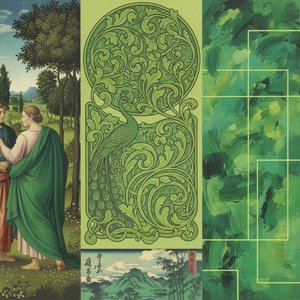
Verdant Visions: Exploring the Symbolism & Aesthetic Impact of Green in Art History
Explore the rich history & symbolism of green in art! Discover iconic paintings, techniques, and how to bring verdant harmony into your home with OriginalUniqueArt's expert guide.