 In echtem Maßstab anzeigen
 Versenden als Grußkarte
 Teilen
 Details anzeigen
 Leitfaden öffnen

 Herunterladen
 Ähnliche Objekte
 Röntgenaufnahme
 Diashow
 Besucherstatistiken
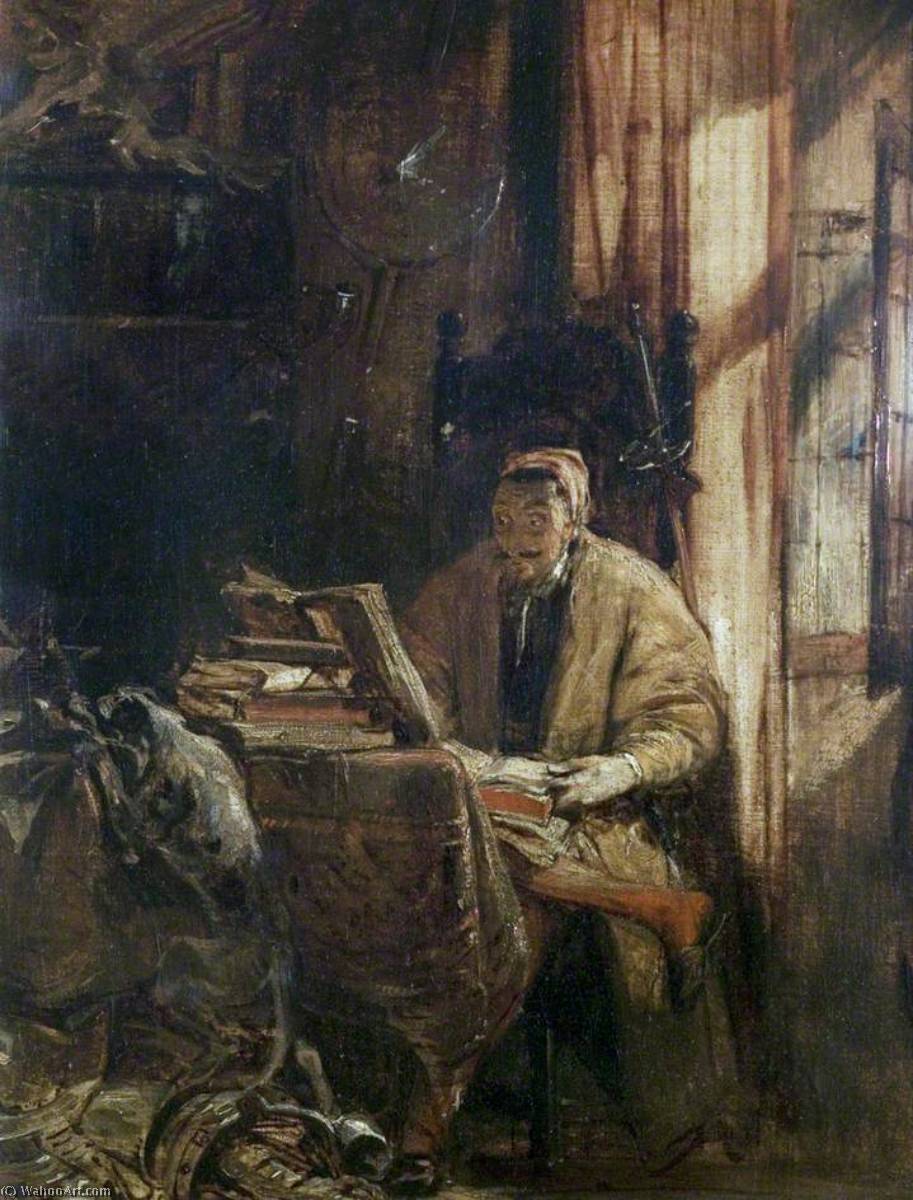
Don Quixote in His Study


 Mehr anzeigen
Handgefertigte Ölreproduktion
Handgemaltes Ölgemälde auf Leinwand in Ihrer Wunschgröße und mit Rahmen, auf Bestellung von unseren Künstlern angefertigt. ( Zum Druck wechseln Zum digitalen Bild wechseln)




P118B $10

P118H $10

P118W $10

P438Z $10

P508JH $12

P508YH $12

P805H $10

P805Z $10

P919BZ $10

P919G $10

P919XJ $10

P959ZH $10

P968JZ $12

W106C $8

W218G $10

W218JH $8

W218Y $10

W307PJ $10

W316G $10

W316PJ $8

W316Y $10

W398PJ $8

W4111J $10

W500HY $15

W500JH $15

W692G $12

W849H $8

W940BG $15

W953PJ $8




Wählen Sie aus unseren vordefinierten Formaten, die den ursprünglichen Proportionen des Kunstwerks entsprechen.

Sie können Ihre eigenen Maße eingeben, um einen bestimmten Rahmen oder Platz auszufüllen. Wenn die gewählte Größe nicht den Proportionen des Originalbildes entspricht, werden wir das Kunstwerk entweder beschneiden oder das Gemälde durch zusätzliche, handgemalte Elemente erweitern. Ein digitales Mockup wird Ihnen zur Genehmigung zugesandt, bevor die Produktion beginnt.
Bitte beachten Sie, dass die Bildschirmvorschau nicht die tatsächliche Beschneidung oder Erweiterung widerspiegelt. Nur das Mockup zeigt die endgültige Komposition exakt an.
Obwohl Sondermaße verfügbar sind, empfehlen wir, eine Größe aus der vordefinierten Liste zu wählen, um die ursprünglichen Proportionen beizubehalten.
Nach der Bestellung wird das OriginalUniqueArt.com-Team dem Kunden Anweisungen per E-Mail zusenden und eine Mockup-Vorschau bereitstellen.
Weltweiter Versand () in nur 3 bis 4 Wochen statt der üblichen 5 Wochen. (25 September). Keine Kompromisse bei der Qualität.

Kostenloser weltweiter Expressversand

Hochwertige Leinenleinwand

Vollständiger Versicherungsschutz beim Versand

Zollgebühren-Rückerstattungsgarantie

Garantie für exakte Farbtreue

100-tägiges Rückgaberecht (nur bei Mängeln)

100% Geld-zurück-Garantie

Angebot für Mengenrabatt
 Die Glasoption ist nur für Größen unter 110 cm verfügbar.

Don Quixote in His Study
Reproduktionsmedium
Format der Reproduktion
-


Gesamtpreis
$ 300
A Portrait of Rustic Grandeur: Unpacking Bonington’s “Don Quixote in His Study”
Richard Parkes Bonington's "Don Quixote in His Study," painted in 1826, isn’t merely a depiction of an elderly man; it’s a carefully constructed tableau brimming with quiet contemplation and the weight of a life lived within the confines of memory and imagination. The painting immediately draws the viewer into a dimly lit interior, dominated by a rich, earthy palette – ochres, browns, and deep reds—that speaks to both the warmth of domesticity and the encroaching shadows of age. Bonington masterfully employs chiaroscuro, a dramatic contrast between light and dark, to sculpt the figure of Don Quixote, lending him an almost sculptural quality while simultaneously emphasizing his vulnerability. The scene is not one of heroic action, but rather of introspective stillness; we are invited to witness a moment of profound solitude.
- Compositional Harmony: The arrangement of objects—the stacked books, the overflowing bags, the ticking clock—creates a sense of controlled chaos, mirroring perhaps the mental landscape of the subject.
- Color Palette: The muted tones evoke a feeling of nostalgia and the passage of time, while the strategic use of red draws attention to the woman’s headscarf, subtly hinting at her character and story.
- Light & Shadow: Bonington's skillful manipulation of light creates depth and drama, highlighting the subject’s face and casting long shadows that suggest both age and a certain melancholy.
The Artist and His Influences: A Bridge Between Romanticism and Tradition
Richard Parkes Bonington stands as a fascinating figure in the transition between the last vestiges of English Romanticism and the burgeoning influences of French Realism. Born in Nottingham, England, in 1802, he spent much of his formative artistic years in France, absorbing the techniques and philosophies of masters like Jean-Auguste Dominique Ingres and, crucially, Eugène Delacroix. Bonington’s style is a unique synthesis of these influences; he retains the Romantic emphasis on light and atmosphere but grounds it in a meticulous observation of form and detail reminiscent of the Old Masters. His early training with François Louis Thomas Francia, who had returned from studying Girtin's watercolors in England, instilled in him a deep appreciation for the delicate handling of color and brushwork that would become hallmarks of his work.
Historical Context:** Bonington’s painting was created during a period of significant artistic change. The Romantic movement was waning, giving way to new approaches to representation. Bonington navigated this shift with remarkable grace, producing works that were both deeply personal and technically sophisticated. His brief but brilliant career is marked by a poignant sense of unrealized potential – he died at the young age of 26 from tuberculosis.Decoding Symbolism: Layers of Meaning in a Simple Scene
Beyond its immediate visual appeal, “Don Quixote in His Study” is rich with symbolic layers. The cluttered room itself represents the accumulated weight of memory and experience—the books, the bags, the clock all speak to a life lived fully, yet perhaps somewhat wistfully. Don Quixote’s posture – slumped slightly, his gaze fixed inward – suggests a man lost in thought, grappling with the remnants of a bygone era. The red headscarf is particularly intriguing; it could symbolize both resilience and vulnerability, hinting at the woman's strength and her own quiet struggles. The painting subtly evokes themes of aging, memory, solitude, and the enduring power of imagination.
A Legacy in Reproduction: Bringing Bonington’s Vision to Life
Reproductions of “Don Quixote in His Study” offer a remarkable opportunity to experience the depth and nuance of Bonington's artistry. The meticulous detail, the evocative lighting, and the subtle symbolism are all faithfully captured in high-quality reproductions. Whether adorning a study or a gallery wall, this painting invites contemplation and offers a glimpse into the mind of a truly exceptional artist. The rich textures and carefully rendered details translate beautifully to canvas, creating a timeless piece that speaks to the enduring power of art to transport us to another time and place.
Biografie des Künstlers
Frühes Leben und Ausbildung
Richard Parkes Bonington, eine bedeutende Figur der britischen Romantik, wurde am 25. Oktober 1802 in Arnold, Nottinghamshire, Großbritannien, geboren. Sein Vater, ebenfalls Richard genannt, war ein vielseitiger Mensch, der als Gefängnisverwalter, Zeichenlehrer und Spitzenmacher arbeitete. Dieser vielfältige Hintergrund beeinflusste wahrscheinlich Boningtons frühe künstlerische Neigungen. https://OriginalUniqueArt.com/@/richardparkesbonington, die Online-Plattform für Kunstliebhaber, bietet eine umfangreiche Sammlung von Boningtons Werken, die seine Meisterschaft in Landschaften und historischen Szenen zeigt.Künstlerische Entwicklung und Einflüsse
Boningtons künstlerischer Weg begann mit der Aquarellmalerei, die ihm sein Vater beibrachte. Bereits im Alter von elf Jahren stellte er auf der Liverpool Academy aus. 1817 zog seine Familie nach Calais, Frankreich, wo er bei François Louis Thomas Francia Unterricht erhielt, der ihn in die englische Aquarelltechnik einführte.- Francias Einfluss ist in Boningtons frühen Werken sichtbar, die durch eine Mischung aus englischen und französischen Stilen gekennzeichnet sind.
- Seine Begegnung mit Eugène Delacroix https://OriginalUniqueArt.com/@/eugenedelacroix, einem französischen Romantikmaler, prägte seinen künstlerischen Ansatz weiter.
- Boningtons Zeit an der École des Beaux-Arts in Paris unter Antoine-Jean, Baron Gros, festigte seine Fähigkeiten.
Bemerkenswerte Werke und Leistungen
Wichtige Gemälde:- Rouen, Normandie, um 1823 (verfügbar auf /de/art/show/art-8xyhdc-de/
- Blick auf die Lagune in der Nähe von Venedig, 1827 (Louvre)
- Karl V. besucht Franz I. nach der Schlacht von Pavia, um 1827
- Goldmedaille beim Pariser Salon im Jahr 1824, zusammen mit John Constable und Anthony Vandyke Copley Fielding.
- Delacroix' Tribut an Boningtons Werk in einem Brief an Théophile Thoré im Jahr 1861, der seine Leichtigkeit des Stils hervorhob.
Vermächtnis und Erinnerung
Boningtons Leben wurde durch Tuberkulose verkürzt, die ihn am 23. September 1828 im Alter von 25 Jahren forderte. Trotz seiner kurzen Karriere hinterließ er einen bleibenden Eindruck auf den britischen Romanticismus.- Eine Statue in der Nottingham School of Art, errichtet von Watson Fothergill.
- Ein Theater und eine Grundschule in seinem Heimatort Arnold, die nach ihm benannt sind.
- Die Wallace Collection beherbergt eine bedeutende Gruppe von 35 Werken, die sowohl seine Landschafts- als auch seine Historiengemälde zeigen.

Richard Parkes Bonington
1802 - 1828 , Vereinigtes Königreich
Eckdaten zum Künstler
- Beeinflusste Künstler: ['Eugène Delacroix']
- Bemerkenswerte Werke:
- Rouen, Normandie
- Blick auf die Lagune bei Venedig
- Karl V. besucht Franz I.
- Geburtsdatum: 25. Oktober 1802
- Geburtsort: Arnold, Vereinigtes Königreich
- Künstlerische Bewegung: Britischer Romantik
- Nationalität: Britisch
- Todatum: 23. September 1828
- Vollständiger Name: Richard Parkes Bonington
- Von Künstlern Beeinflusst:
- François Louis Thomas Francia
- Thomas Girtin
Verwandte Artikel

Öl auf Leinwand: Eine historische und technische Erkundung eines zeitlosen künstlerischen Mediums
Entdecken Sie die faszinierende Welt der Ölmalerei! Von historischen Techniken bis zur modernen Anwendung – wir bieten Expertenwissen, Restaurierungstipps und hochwertige Reproduktionen. Jetzt informieren!
Richard Parkes Bonington: Ein kurzes Leben für die Romantik und die Plein-Air-Malerei
Entdecken Sie das faszinierende Leben und Werk von Richard Parkes Bonington, einem Pionier der Plein-Air-Malerei! Erfahren Sie mehr über seine romantischen Landschaften, seinen Einfluss und wo Sie seine Meisterwerke finden können.

The Enduring Power of Painting: A Historical & Contemporary Exploration of Form and Emotion
Explore the rich history & enduring techniques of oil painting with OriginalUniqueArt. Discover masterpieces, learn about art collecting, and find authentic handmade reproductions crafted by skilled artists.

Das bleibende Erbe der Ölmalerei: Technik, Geschichte und zeitgenössische Praxis
Entdecken Sie die faszinierende Geschichte der Ölmalerei – von den frühen Techniken bis zur modernen Kunst. Expertenwissen, detaillierte Analysen und Inspiration für Sammler & Kunstliebhaber.

The Enduring Legacy of Oil on Canvas: Technique, History & Aesthetic Impact
Explore the rich history & techniques of oil painting – from Renaissance masters to Impressionism. Discover pigments, layering methods, and why this timeless medium endures. Expert insights for artists & art enthusiasts.