 Vorschau anzeigen
 Versenden
 Teilen
 Details anzeigen

 Herunterladen
 Ähnliche Objekte
 Röntgenaufnahme
 Diashow
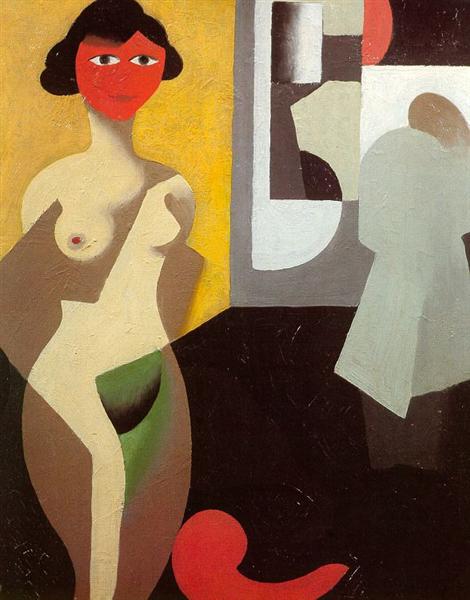
Woman bathing

 Weiterlesen
Giclée / Kunstdruck
Giclée- oder Leinwanddruck in Museumsqualität mit schneller Produktion und flexiblen Veredelungsoptionen. ( Handgemalte Reproduktion bestellen Bild kaufen)




P118B $10

P118H $10

P118W $10

P438Z $10

P508JH $12

P508YH $12

P805H $10

P805Z $10

P919BZ $10

P919G $10

P919XJ $10

P959ZH $10

P968JZ $12

W106C $8

W218G $10

W218JH $8

W218Y $10

W307PJ $10

W316G $10

W316PJ $8

W316Y $10

W398PJ $8

W4111J $10

W500HY $15

W500JH $15

W692G $12

W849H $8

W940BG $15

W953PJ $8




Wählen Sie aus unseren vordefinierten Formaten, die den ursprünglichen Proportionen des Kunstwerks entsprechen.

Sie können Ihre eigenen Maße eingeben, um ein bestimmtes Format oder einen speziellen Platz einzupassen. Wenn das von Ihnen gewählte Format nicht den Proportionen des Originalbildes entspricht, werden wir das Kunstwerk entweder beschneiden oder das Bild mit einem gespiegelten oder einfarbigen Rand erweitern. Ein digitaler Entwurf wird Ihnen zur Genehmigung zugesandt, bevor die Produktion beginnt.
Bitte beachten Sie, dass die Vorschau auf dem Bildschirm nicht den tatsächlichen Zuschnitt oder die Erweiterung widerspiegelt. Nur der Entwurf zeigt die endgültige Komposition präzise an.
Obwohl Sondermaße verfügbar sind, empfehlen wir die Auswahl eines Maßes aus der vordefinierten Liste, um die ursprünglichen Proportionen zu bewahren.
Weltweiter Versand () innerhalb von 2 Wochen statt der üblichen 4/5 Wochen. (18 August)

Kostenloser weltweiter Expressversand

Hochwertige Leinenleinwand

Umfassender Versicherungsschutz beim Versand

Zollgebühren-Rückerstattungsgarantie

Garantie für exakte Farbtreue

60 Tage Rückgaberecht (nur bei Mängeln)

100% Geld-zurück-Garantie

Mengenrabatt verfügbar
 Die Glasoption ist nur für Größen unter 110 cm verfügbar.

Woman bathing
Giclée / Kunstdruck
Format der Reproduktion
-


Gesamtpreis
$ 80
Sammlerstück-Beschreibung
René Magritte’s Enigmatic “Woman Bathing”: A Study in Hidden Realities
Rene Magritte's "Woman Bathing," painted around 1929, is not merely a depiction of a woman enjoying a moment of repose; it’s a carefully constructed puzzle designed to challenge our fundamental assumptions about perception and representation. This deceptively simple black-and-white image, now housed in various collections worldwide, embodies the core tenets of Surrealism – a movement Magritte helped define – by subtly disrupting the familiar relationship between what we see and what truly exists. The painting’s power lies not in overt drama or explicit narrative, but in its quiet insistence on questioning the very nature of reality itself.
The scene unfolds with an almost clinical detachment. A woman, her features partially obscured by a strategically placed red dress, is immersed in a stream. Her posture suggests relaxation and vulnerability, yet there’s an undeniable sense of unease. The background is sparsely populated – two indistinct figures hint at the presence of others, adding to the feeling that we are observing a private, almost staged moment. Magritte masterfully employs a stark monochrome palette, reminiscent of early 20th-century photography and film, further enhancing the painting’s unsettling atmosphere. This deliberate choice strips away any potential distractions, forcing the viewer to confront the image with raw intensity.
The Roots of Surrealism: Trauma and the Unseen
Understanding Magritte's artistic vision requires a glimpse into his personal history. Born René Ghislain Magritte in Lessines, Belgium, in 1898, he experienced a profoundly formative event at the age of thirteen – the suicide of his mother. The image of her body being recovered from the River Sambre, with her dress concealing her face, became a recurring motif throughout his oeuvre. This deeply personal tragedy instilled within him a lifelong fascination with concealment, loss, and the unsettling power of what remains hidden beneath the surface. It’s believed this early trauma fueled his exploration of the subconscious and his deliberate manipulation of visual reality.
Magritte's work is often described as “visual poetry,” prioritizing intellectual engagement over emotional expression. He wasn’t interested in simply replicating the world; he sought to expose its constructed nature, revealing the mechanisms by which we perceive and interpret it. "Woman Bathing" exemplifies this approach perfectly. The red dress, a seemingly minor detail, acts as a powerful symbol of concealment – obscuring the woman's face and suggesting that her true identity is deliberately hidden from view. This echoes his mother’s obscured visage, creating a subtle yet persistent link to his personal history.
Technique and Style: A Masterclass in Illusion
Magritte’s technique is characterized by meticulous detail and an almost photographic realism, despite the painting's surreal subject matter. He employed oil paints on canvas with a precision that belies the dreamlike quality of his work. The smooth gradations of tone, the subtle modeling of form, and the careful rendering of textures create a convincing illusion of depth and space. However, this apparent realism is deliberately undermined by the painting’s overall atmosphere of unease and ambiguity.
The composition itself contributes to the painting's unsettling effect. The woman is positioned slightly off-center, drawing the viewer’s eye across the canvas and creating a sense of imbalance. The lack of clear perspective further enhances this feeling of disorientation. Magritte’s deliberate use of line and form challenges our expectations of how things should look, forcing us to question what we are seeing.
Symbolism and Emotional Resonance: A Question of Perception
"Woman Bathing" is a profoundly ambiguous work, inviting multiple interpretations. The woman herself can be seen as representing vulnerability, innocence, or perhaps even the unknowable depths of the human psyche. The stream symbolizes transition, purification, or simply the flow of time. The red dress, as previously mentioned, represents concealment and the suppression of identity.
Ultimately, Magritte’s masterpiece is not about providing answers but about posing questions. It's a meditation on the nature of perception, the limitations of representation, and the enduring power of the subconscious. A high-quality reproduction of “Woman Bathing” offers a captivating glimpse into the mind of one of the 20th century’s most influential artists – a work that continues to resonate with viewers today, prompting us to reconsider our own understanding of reality.
Über den Künstler
frühes Leben und künstlerische Anfänge
René François Ghislain Magritte, ein renommierter belgischer Surrealist, wurde am 21. November 1898 in Lessines, Provinz Hainaut, Belgien, geboren. Sein frühes Leben ist bisweilen rätselhaft und wenig bekannt. Es ist jedoch dokumentiert, dass er 1910 Zeichenunterricht nahm.Künstlerische Entwicklung und Einflüsse
Magrittes künstlerischer Stil entwickelte sich im Laufe der Jahre erheblich weiter und wurde von verschiedenen Strömungen wie Impressionismus, Futurismus und Kubismus beeinflusst. Seine frühesten Gemälde, die aus etwa 1915 stammen, waren **im Stil des Impressionismus**. Von 1916 bis 1918 studierte er an der Académie Royale des Beaux-Arts in Brüssel unter Constant Montald.Surrealistische Periode und bemerkenswerte Werke
Im Jahr 1926 schuf Magritte seine erste surrealistische Malerei, "Der verlorene Jockey (Le jockey perdu)", das den Beginn seiner Verbindung mit der Surrealistenbewegung markierte. Seine Werke sind durch nachdenkliche Bilder gekennzeichnet, die oft alltägliche Gegenstände in ungewöhnlichen Kontexten darstellen und Betrachter dazu auffordern, ihre Wahrnehmung von Realität zu hinterfragen.- "Les Amants" (1927-1928), eine Reihe von Gemälden mit Personen, deren Gesichter durch Stoffe verhüllt sind, wird vermutet, von der Geschichte des Todes seiner Mutter inspiriert zu sein.
- "Die Liebenden", ein weiteres ikonisches Werk, zeigt ein Paar, das sich küsst, wobei ihre Gesichter von weißen Stoffen bedeckt sind, und lädt den Betrachter ein, über Liebe und Identität nachzudenken. (Verfügbar als handgefertigte Ölgemälde-Reproduktion oder Druck auf Leinwand unter OriginalUniqueArt.com)
Spätere Jahre und Vermächtnis
Magrittes Werke wurden in den Vereinigten Staaten 1936 und erneut in zwei retrospektiven Ausstellungen, eine im Museum of Modern Art im Jahr 1965 und die andere im Metropolitan Museum of Art im Jahr 1992, gezeigt. Er blieb dem politischen Linken verpflichtet, befürwortete aber die künstlerische Autonomie. Bekannte Museen, in denen Magrittes Werke ausgestellt sind:- Musées royaux des beaux-arts de Belgique, Brüssel, Belgien (Entdecken Sie die Meisterwerke der Musées royaux des beaux-aarts de belgique unter OriginalUniqueArt.com)
- Magritte Museum, Teil der Musées royaux des beaux-arts de Belgique, das die weltweit größte Sammlung von Magrittes Werken beherbergt.
Fazit
René Magrittes Vermächtnis als surrealistischer Meister hält an, wobei seine nachdenklichen Bilder weiterhin inspirieren und faszinieren. Seine Werke, die durch ihre einzigartige Mischung aus Gewöhnlichem und Unerwartetem gekennzeichnet sind, gelten als Eckpfeiler der Surrealistenkunst. Mehr über René Magritte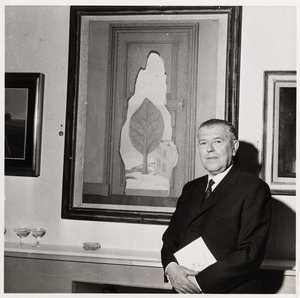
René Magritte
1898 - 1967 , Belgien
Kurzinfos
- Beeinflusste Künstler:
- Impressionismus
- Futurismus
- Kubismus
- Bemerkenswerte Werke:
- Der verlorene Jockey
- Les Amants
- Die menschliche Bedingung
- Zeit erstarrt
- Geburtsdatum: 21. November 1898
- Geburtsort: Lessines, Belgien
- Künstlerischer Stil: Surrealismus
- Nationalität: Belgisch
- Sterbedatum: 1967
- Vollständiger Name: René Magritte
Ähnliche Artikel
René Magritte: Die 25 Meisterwerke des Surrealismus für Ihr Zuhause | OriginalUniqueArt
Entdecken Sie die 25 ikonischsten Gemälde von René Magritte! Tauchen Sie ein in die surreale Welt des belgischen Künstlers – von 'Der verlorene Jockey' bis 'Golconda'. Hochwertige Reproduktionen & Kunst für Ihr Zuhause auf OriginalUniqueArt.com.

Die Top 10 berühmter Gemälde im Reich der dunklen Töne |
Entdecken Sie die Top 10 berühmter Gemälde, beherrscht von dunklen Tönen! Von Caravaggio bis Manet – erfahren Sie die Geschichten hinter Meisterwerken der Kunstgeschichte. Finden Sie Ihre perfekte Reproduktion auf .
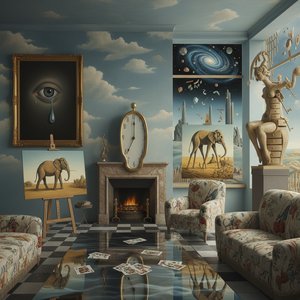
Surrealismus: Die 10 Meisterwerke, die eine Kunstbewegung prägten |
Entdecken Sie die 10 prägendsten Meisterwerke des Surrealismus! Von Dalí bis Magritte – erfahren Sie die Geschichten hinter ikonischen Gemälde und lassen Sie sich von traumhaften Welten inspirieren. Hochwertige Art Reproduktionen auf .
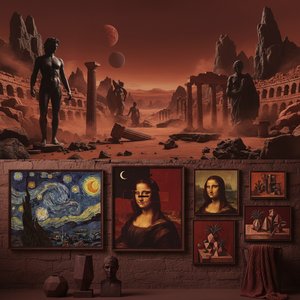
Die Top 10 Gemälde der Kunstgeschichte – Dominiert von tiefem Schwarz
Entdecken Sie die Top 10 Gemälde, die von tiefem Schwarz und dramatischer Atmosphäre geprägt sind. Von Caravaggio bis Manet – Kunstgeschichte erleben & hochwertige Reproduktionen auf finden! Jetzt entdecken.
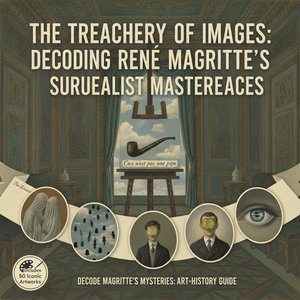
The Treachery of Images: Decoding René Magritte’s Surrealist Philosophy and the Paradox of Representation
Explore the profound mystery of René Magritte’s 'The Treachery of Images.' Dive into an expert analysis of his Surrealist philosophy, the paradox of representation, and how he challenged reality through the interplay of language and visual perception.