In echtem Maßstab anzeigen
 Versenden als Grußkarte
 Teilen
 Details anzeigen
 Leitfaden öffnen

 Herunterladen
 Ähnliche Objekte
 Röntgenaufnahme
 Diashow
 Besucherstatistiken
Der Bankett


 Mehr anzeigen
Die auf dieser Seite dargestellten Kunstwerke sind urheberrechtlich geschützt, was bedeutet, dass wir keine identische Reproduktion rechtmäßig erstellen oder verkaufen dürfen. Dieser Schutz wird durch internationale Abkommen wie die Berner Übereinkunft und durch nationale Gesetze, einschließlich derer, die von den ... festgelegt wurden US-Urheberrecht – Titel 17.
Diese Methode entspricht vollumfänglich den Urheberrechtsbestimmungen, da sie keine Kopie oder Vervielfältigung des geschützten Kunstwerks darstellt. Stattdessen handelt es sich um eine kreative Neuinterpretation – ein neues Gemälde, das vom Original inspiriert, aber nicht identisch mit ihm ist.
Giclée / Kunstdruck
Giclée- oder Leinwanddruck in Museumsqualität mit schneller Produktion und flexiblen Veredelungsoptionen. ( Handgemalte Reproduktion kaufen Zum digitalen Bild wechseln)




P118B €10

P118H €10

P118W €10

P438Z €10

P508JH €12

P508YH €12

P805H €10

P805Z €10

P919BZ €10

P919G €10

P919XJ €10

P959ZH €10

P968JZ €12

W106C €8

W218G €10

W218JH €8

W218Y €10

W307PJ €10

W316G €10

W316PJ €8

W316Y €10

W398PJ €8

W4111J €10

W500HY €15

W500JH €15

W692G €12

W849H €8

W940BG €15

W953PJ €8




Wählen Sie aus unseren vordefinierten Formaten, die den ursprünglichen Proportionen des Kunstwerks entsprechen.

Geben Sie die Breite und die Höhe an, die Sie benötigen, damit der Druck perfekt in Ihren Rahmen oder an Ihre Wand passt. Ein Druck kann nur beschnitten werden und niemals größer als das Originalbild gemacht werden; daher verliert ein Format mit einer anderen Proportion einen Teil des Bildes. Wir senden Ihnen ein digitales Mockup zur Freigabe, bevor wir den Druck ausführen. Das auf dieser Seite gezeigte Bild zeigt nicht den tatsächlichen Beschnitt – dies ist nur im Mockup ersichtlich.
Weltweiter Versand () innerhalb von 2 Wochen statt der üblichen 4/5 Wochen. (23 Oktober)

Kostenloser weltweiter Expressversand

Hochwertige Leinenleinwand

Vollständiger Versicherungsschutz beim Versand

Zollgebühren-Rückerstattungsgarantie

Garantie für exakte Farbtreue

100-tägiges Rückgaberecht (nur bei Mängeln)

100% Geld-zurück-Garantie

Angebot für Mengenrabatt
 Die Glasoption ist nur für Größen unter 110 cm verfügbar.

Der Bankett
Giclée / Kunstdruck
Format der Reproduktion
-


Gesamtpreis
€ 70
René Magritte’s “The Banquet”: A Paradox of Perception
René Magritte's "The Banquet," painted in 1958, isn't merely a landscape; it’s an invitation to question the very nature of reality. This captivating oil on canvas, part of a series exploring the relationship between visibility and invisibility, stands as a cornerstone of Surrealist art – yet, remarkably, Magritte masterfully employs techniques rooted in realism to achieve his profoundly unsettling effect. The painting immediately draws the viewer into a scene that seems familiar at first glance: a stone wall, a vase, and a collection of trees stretching towards a vibrant orange sky. However, a closer look reveals a deliberate disruption, a subtle yet potent paradox that lies at the heart of Magritte’s artistic vision.
The key to understanding “The Banquet” resides in the large red circle dominating the mid-ground – a seemingly arbitrary intrusion upon the established landscape. This isn't simply an accidental blot; it’s a carefully considered element, deeply influenced by the ‘Papier Collé’ technique, a method Magritte frequently utilized. ‘Papier Collé,’ meaning “glued paper” in French, involved pasting pre-cut shapes – often brightly colored – onto a flat surface. In this instance, the circle represents the setting sun, but crucially, it obscures the trees beneath it. This creates an immediate visual tension: the sun, traditionally associated with illumination and warmth, now casts a shadow, effectively hiding part of the natural world. It’s as if reality itself is being deliberately distorted, forcing us to confront the limitations of our perception.
Surrealism and the Illusion of Reality
Magritte's genius lies in his ability to seamlessly blend Surrealist principles with a meticulous attention to detail. While firmly embedded within the Surrealist movement – a group dedicated to exploring the subconscious mind and challenging conventional notions of reality – Magritte’s work never descends into outright fantasy or grotesque imagery. Instead, he employs a deceptively realistic style, using precise brushstrokes and carefully rendered objects to create an atmosphere of unease and ambiguity. The stone wall, the vase, and the trees are depicted with remarkable accuracy, lending them a tangible presence that further emphasizes the strangeness of the central element – the concealing sun.
The painting’s composition is deliberately unsettling. The perspective subtly shifts, drawing our eye towards the red circle and prompting us to question its significance. It's not just a visual anomaly; it represents a fundamental disruption of order, mirroring Magritte’s broader thematic concerns about the hidden realities that lie beneath the surface of everyday life. The choice of materials – the rough texture of the stone wall contrasting with the smooth glaze of the vase – further contributes to this sense of discordance.
Symbolism and the Invisible
“The Banquet” is deeply rooted in Magritte’s recurring theme: the distinction between what is visible and what remains hidden. The obscured trees, rendered partially invisible by the sun's shadow, symbolize the unseen aspects of our world – memories, desires, anxieties, and perhaps even the fundamental mysteries of existence. Magritte wasn’t simply depicting a landscape; he was inviting us to contemplate the limitations of our understanding, suggesting that much remains beyond our immediate grasp.
The title itself, “The Banquet,” adds another layer of complexity. It evokes images of abundance and celebration, yet this sense of festivity is immediately undermined by the painting’s unsettling atmosphere. Is it a banquet for the senses, or a banquet for the mind – one that challenges our assumptions about what we perceive to be real? The ambiguity inherent in the title mirrors the overall effect of the artwork, prompting viewers to actively engage with its meaning and interpret its symbolism.
A Legacy of Intrigue
“The Banquet” is a testament to Magritte’s enduring influence on art. It resides within the prestigious Lindy and Bergman Collection at the Art Institute of Chicago, a fitting home for this enigmatic masterpiece. Its serene setting and vibrant colors belie its profound philosophical implications, making it an exceptional piece that continues to inspire artists and art enthusiasts alike. Reproductions of “The Banquet” offer a remarkable opportunity to bring this captivating work into your own space, inviting you to contemplate the subtle paradoxes of perception and the hidden realities that shape our world – just as Magritte intended.
Fragen & Antworten
Welche Größe sollte ich für den Druck von "Der Bankett" für mein Zimmer wählen?
Für einen Wohnzimmer wird für „Der Bankett“ ein Druckformat von Großformatig empfohlen.
Wie ist "Der Bankett" historisch einzuordnen?
Historisch gesehen ist „Der Bankett“ ein Werk der The Banquet-Strömung aus der umfassenderen Ära der Moderne.
Worum geht es in "Der Bankett"?
Die in "Der Bankett" von René Magritte enthaltenen Themen umfassen surrealism, landscape, sun, trees, red circle, illusion, visibility. Zusammen fassen sie den Gegenstand des Kunstwerks zusammen.
Biografie des Künstlers
frühes Leben und künstlerische Anfänge
René François Ghislain Magritte, ein renommierter belgischer Surrealist, wurde am 21. November 1898 in Lessines, Provinz Hainaut, Belgien, geboren. Sein frühes Leben ist bisweilen rätselhaft und wenig bekannt. Es ist jedoch dokumentiert, dass er 1910 Zeichenunterricht nahm.Künstlerische Entwicklung und Einflüsse
Magrittes künstlerischer Stil entwickelte sich im Laufe der Jahre erheblich weiter und wurde von verschiedenen Strömungen wie Impressionismus, Futurismus und Kubismus beeinflusst. Seine frühesten Gemälde, die aus etwa 1915 stammen, waren **im Stil des Impressionismus**. Von 1916 bis 1918 studierte er an der Académie Royale des Beaux-Arts in Brüssel unter Constant Montald.Surrealistische Periode und bemerkenswerte Werke
Im Jahr 1926 schuf Magritte seine erste surrealistische Malerei, "Der verlorene Jockey (Le jockey perdu)", das den Beginn seiner Verbindung mit der Surrealistenbewegung markierte. Seine Werke sind durch nachdenkliche Bilder gekennzeichnet, die oft alltägliche Gegenstände in ungewöhnlichen Kontexten darstellen und Betrachter dazu auffordern, ihre Wahrnehmung von Realität zu hinterfragen.- "Les Amants" (1927-1928), eine Reihe von Gemälden mit Personen, deren Gesichter durch Stoffe verhüllt sind, wird vermutet, von der Geschichte des Todes seiner Mutter inspiriert zu sein.
- "Die Liebenden", ein weiteres ikonisches Werk, zeigt ein Paar, das sich küsst, wobei ihre Gesichter von weißen Stoffen bedeckt sind, und lädt den Betrachter ein, über Liebe und Identität nachzudenken. (Verfügbar als handgefertigte Ölgemälde-Reproduktion oder Druck auf Leinwand unter OriginalUniqueArt.com)
Spätere Jahre und Vermächtnis
Magrittes Werke wurden in den Vereinigten Staaten 1936 und erneut in zwei retrospektiven Ausstellungen, eine im Museum of Modern Art im Jahr 1965 und die andere im Metropolitan Museum of Art im Jahr 1992, gezeigt. Er blieb dem politischen Linken verpflichtet, befürwortete aber die künstlerische Autonomie. Bekannte Museen, in denen Magrittes Werke ausgestellt sind:- Musées royaux des beaux-arts de Belgique, Brüssel, Belgien (Entdecken Sie die Meisterwerke der Musées royaux des beaux-aarts de belgique unter OriginalUniqueArt.com)
- Magritte Museum, Teil der Musées royaux des beaux-arts de Belgique, das die weltweit größte Sammlung von Magrittes Werken beherbergt.
Fazit
René Magrittes Vermächtnis als surrealistischer Meister hält an, wobei seine nachdenklichen Bilder weiterhin inspirieren und faszinieren. Seine Werke, die durch ihre einzigartige Mischung aus Gewöhnlichem und Unerwartetem gekennzeichnet sind, gelten als Eckpfeiler der Surrealistenkunst. Mehr über René Magritte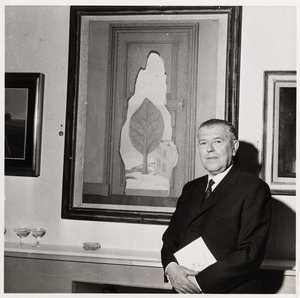
René Magritte
1898 - 1967 , Belgien
Eckdaten zum Künstler
- Beeinflusste Künstler:
- Impressionismus
- Futurismus
- Kubismus
- Bemerkenswerte Werke:
- Der verlorene Jockey
- Les Amants
- Die menschliche Bedingung
- Zeit erstarrt
- Geburtsdatum: 21. November 1898
- Geburtsort: Lessines, Belgien
- Künstlerischer Stil: Surrealismus
- Nationalität: Belgisch
- Sterbedatum: 1967
- Vollständiger Name: René Magritte
Verwandte Artikel
Surrealismus: Die 10 Meisterwerke, die eine Kunstbewegung prägten |
Entdecken Sie die 10 prägendsten Meisterwerke des Surrealismus! Von Dalí bis Magritte – erfahren Sie die Geschichten hinter ikonischen Gemälde und lassen Sie sich von traumhaften Welten inspirieren. Hochwertige Art Reproduktionen auf .

Crimson Threads of Narrative: Exploring Symbolism & Representation in Artworks Featuring the Red Dress
Explore the rich symbolism of the red dress in art history! From ancient power displays to iconic portraits like Cézanne’s 'Madame Cezanne', discover the cultural and artistic significance behind this captivating color. Expert analysis & insights.
Dreamscapes & Disrupted Realities: Exploring Surrealism's Enduring Influence
Explore the fascinating world of Surrealism! Discover its origins, key artists like Dalí & Magritte, and enduring influence on art & culture. Expert insights & high-quality reproductions at OriginalUniqueArt.

Arboreal Echoes: A Historical & Artistic Exploration of Trees in Painting
Explore the rich history of trees in painting! Discover symbolism, Romantic masterpieces by Caspar David Friedrich & beyond. A curated journey for art enthusiasts.
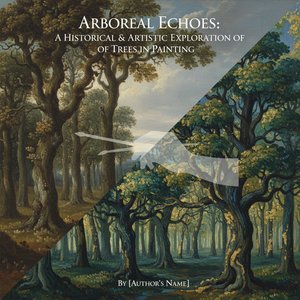
Arboreal Echoes: A Historical & Artistic Exploration of Trees in Painting
Explore the rich history of trees in painting! Discover symbolism, Romantic masterpieces by Caspar David Friedrich & beyond. A curated journey for art enthusiasts.