

 Versenden als Grußkarte
 Teilen
 Details anzeigen
 Leitfaden öffnen

 Herunterladen
 Ähnliche Objekte
 Diashow
 Besucherstatistiken
Inkpot Mirabeau


 Mehr anzeigen
Handgefertigte Ölreproduktion
Handgemaltes Ölgemälde auf Leinwand in Ihrer Wunschgröße und mit Rahmen, auf Bestellung von unseren Künstlern angefertigt. ( Zum Druck wechseln Zum digitalen Bild wechseln)




































Wählen Sie aus unseren vordefinierten Formaten, die den ursprünglichen Proportionen des Kunstwerks entsprechen.

Sie können Ihre eigenen Maße eingeben, um einen bestimmten Rahmen oder Platz auszufüllen. Wenn die gewählte Größe nicht den Proportionen des Originalbildes entspricht, werden wir das Kunstwerk entweder beschneiden oder das Gemälde durch zusätzliche, handgemalte Elemente erweitern. Ein digitales Mockup wird Ihnen zur Genehmigung zugesandt, bevor die Produktion beginnt.
Bitte beachten Sie, dass die Bildschirmvorschau nicht die tatsächliche Beschneidung oder Erweiterung widerspiegelt. Nur das Mockup zeigt die endgültige Komposition exakt an.
Obwohl Sondermaße verfügbar sind, empfehlen wir, eine Größe aus der vordefinierten Liste zu wählen, um die ursprünglichen Proportionen beizubehalten.
Nach der Bestellung wird das OriginalUniqueArt.com-Team dem Kunden Anweisungen per E-Mail zusenden und eine Mockup-Vorschau bereitstellen.
Weltweiter Versand () in nur 3 bis 4 Wochen statt der üblichen 5 Wochen. (26 September). Keine Kompromisse bei der Qualität.

Kostenloser weltweiter Expressversand

Hochwertige Leinenleinwand

Vollständiger Versicherungsschutz beim Versand

Zollgebühren-Rückerstattungsgarantie

Garantie für exakte Farbtreue

100-tägiges Rückgaberecht (nur bei Mängeln)

100% Geld-zurück-Garantie

Angebot für Mengenrabatt
 Die Glasoption ist nur für Größen unter 110 cm verfügbar.

Inkpot Mirabeau
Reproduktionsmedium
Format der Reproduktion
-


Gesamtpreis
$ 300
The Luminous Poetry of Lalique's Inkpot Mirabeau
To gaze upon René Jules Lalique’s Inkpot Mirabeau is to encounter a moment suspended in crystalline time—a delicate dialogue between utility and pure artistry. This exquisite glass sculpture, dating from 1927, transcends the mere function of an inkwell; it stands as a testament to human ingenuity channeled through the ethereal medium of blown and carved glass. The piece immediately captivates with its vertical ascent, a carefully orchestrated stacking of forms that draws the eye upward, mimicking both the graceful curve of a natural form and the stately rhythm of classical design.
The composition itself is a masterclass in controlled elegance. Lalique has assembled three distinct elements: a grounding rectangular base, the central vessel suggestive of an inkpot, and crowning it all, a smaller, more spirited piece adorned with avian motifs. This layered arrangement creates a palpable sense of depth, inviting the viewer to trace the interplay between solid geometry and fluid organic curves. The entire structure seems to breathe light, its translucent nature allowing reflections to dance across its surfaces.
Art Deco Grace Meets Natural Reverence
Stylistically, Inkpot Mirabeau sits perfectly at the confluence of two monumental artistic movements: the lingering romance of Art Nouveau and the streamlined sophistication of Art Deco. While the geometric precision inherent in the base speaks to the machine-age optimism of the 1920s, the incorporation of the bird and floral reliefs anchors it firmly in Lalique’s lifelong devotion to nature. His work never allowed pure structure to dominate; instead, the natural world—the curve of a wing, the unfurling petal—is always given precedence. This synthesis is what makes the piece so enduringly beautiful.
The material itself, clear glass, becomes an active participant in the artwork. Lalique’s mastery allowed him to manipulate this seemingly simple substance into something that appears almost liquid, catching and refracting light with subtle whispers of blue and gray. It is a monochromatic celebration where variation is achieved not through color, but through the sheer brilliance of light passing through expertly carved planes.
Symbolism in Glass: Intellect and Spirit
The subject matter—an inkpot combined with natural ornamentation—carries a rich symbolic weight. The inkpot speaks to the intellectual life, to the written word, to history being recorded. Yet, this function is softened, almost uplifted, by the presence of the bird motif. In art, birds are perennial symbols of freedom, the spirit ascending, and communication. Together, they suggest a beautiful harmony: the marriage of disciplined thought with untamed artistic inspiration. Owning such a piece is to curate an atmosphere that honors both deep contemplation and soaring creativity.
A Touch of Timeless Luxury for Your Interior
For the collector or designer seeking an object that speaks volumes without uttering a word, Inkpot Mirabeau offers unparalleled depth. It possesses the quiet authority of true craftsmanship. Whether placed atop a mahogany mantelpiece, nestled within a curated gallery wall, or serving as a singular focal point in a sophisticated study, its presence elevates any space. Reproducing this piece allows one to bring home not just glass, but a tangible echo of Lalique’s poetic vision—a luminous reminder that the most functional objects can also be profound works of art.
Biografie des Künstlers
Frühes Leben und Ausbildung
René Jules Lalique, ein berühmter französischer Juwelier, Medailleur und Glasdesigner, wurde am 6. April 1860 in Aÿ, Frankreich geboren. Seine frühen Jahre waren geprägt vom Erlernen der Design- und Kunstmethoden, die später seine Karriere prägen sollten. Im Alter von zwei Jahren zog seine Familie in die Vororte von Paris, kehrte aber für Sommerurlaube nach Aÿ zurück, was Laliques naturalistische Glasarbeiten beeinflusste.
Künstlerische Laufbahn
- Nach dem Tod seines Vaters begann Lalique eine Lehre bei dem Goldschmied Louis Aucoc in Paris.
- Später studierte er an der École des Arts Décoratifs und besuchte Abendkurse an der Crystal Palace School of Art Sydenham, London. Diese Auseinandersetzung mit verschiedenen künstlerischen Disziplinen prägte seinen einzigartigen Stil.
- Von 1881 arbeitete Lalique als freiberuflicher Designer für mehrere französische Juwelierfirmen, darunter Cartier und Boucheron.
- Im Jahr 1890 eröffnete er sein eigenes Juweliergeschäft im Opéra-Viertel von Paris, wo er einige seiner berühmtesten Entwürfe schuf.
- Sein Hauptmotiv war die Naturwelt mit Motiven wie Libellen, Orchideen und Pfauen, gefertigt aus einer Kombination von Emaille, Edelsteinen und Halbedelsteinen.
Bedeutende Werke und Vermächtnis
Laliques Kreationen in der Glaskunst sind seine bedeutendsten Werke. Er wurde für seinen Art-Déco-Stil in den 1920er Jahren bekannt. Einige seiner bemerkenswerten Mäzene waren Calouste Sarkis Gulbenkian, der über 140 seiner Arbeiten in Auftrag gab.
- Laliques Werke sind in verschiedenen Museen zu finden, darunter das Musée d'Orsay, das eine umfangreiche Sammlung impressionistischer und postimpressionistischer Meisterwerke beherbergt.
- Seine Tochter Suzanne Lalique war Malerin und Bühnenbildnerin für die Comédie-Française.
- Seine Enkelin Marie Claude-Lalique (geb. 1936) war ebenfalls eine Glasmacherin, die am 14. April 2003 in Fort Myers, Florida verstarb.
Einflüsse und Entwicklung
Laliques Stil wurde stark von der Natur beeinflusst, insbesondere von den detaillierten Formen und Farben von Pflanzen und Tieren. Er brach mit den traditionellen Konventionen der Juwelierkunst, indem er unkonventionelle Materialien wie Horn, Elfenbein und Glas in seine Entwürfe integrierte. Seine frühen Arbeiten zeigten Einflüsse des Jugendstils, während seine späteren Werke den geometrischen Formen und der Eleganz des Art Déco entsprachen.
Tod und Beerdigung
René Lalique starb am 1. oder 5. Mai 1945 in Paris und wurde auf dem Friedhof Père Lachaise in Paris, Frankreich beigesetzt.

René Jules Lalique
1860 - 1945 , Frankreich
Eckdaten zum Künstler
- Bemerkenswerte Werke:
- St. Albert Vase
- Anhänger mit Kette
- Weibliches Gesicht
- 'Cluny' Vase
- Caudebec Vase No. 1020
- Geburtsdatum: 6. April 1860
- Geburtsort: Aÿ, Frankreich
- Künstlerische Richtung: Art Nouveau & Art Déco
- Nationalität: Französisch
- Sterbedatum: 1. oder 5. Mai 1945
- Vollständiger Name: René Jules Lalique
Verwandte Artikel

The Enduring Form: Sculpture Across History, Technique & Emotional Resonance
Explore the rich history of sculpture with OriginalUniqueArt. Discover key techniques, influential artists & investment potential for discerning collectors. Expert insights into valuing and collecting timeless masterpieces.

The Enduring Form: Exploring Themes & Techniques in Sculpture Across Historical Periods
Explore the rich history of sculpture from ancient masterpieces to contemporary innovations. Discover key techniques, influential artists & investment potential for discerning art collectors.

Die 10 legendärsten Bronzestatuen: Meisterwerke, die Kunstgeschichte schrieben | OriginalUniqueArt
Entdecken Sie die 10 legendärsten Bronzestatuen der Kunstgeschichte! Von Rodin bis Michelangelo – erfahren Sie die Geschichten hinter ikonischen Skulpturen und finden Sie hochwertige Reproduktionen für Ihr Zuhause. Jetzt bei OriginalUniqueArt entdecken!

Bronze-Meisterwerke: Die 10 Skulpturen, die Kunstgeschichte schrieben | OriginalUniqueArt
Entdecken Sie die 10 legendärsten Bronze Skulpturen der Kunstgeschichte! Von Michelangelo bis Rodin – erfahren Sie die Geschichten hinter den Meisterwerken und lassen Sie sich von Wanddeko-Ideen inspirieren. Hochwertige Kunstdrucke auf OriginalUniqueArt.com.
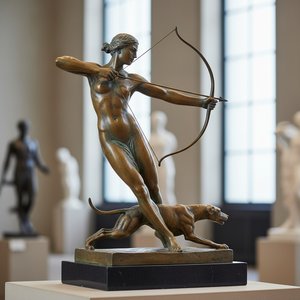
Paul Manship: Eine Neubewertung des Meisters der amerikanischen Art Déco-Skulptur
Entdecken Sie das faszinierende Werk von Paul Manship, dem Meister der amerikanischen Art Déco-Skulptur! Erfahren Sie mehr über seine ikonischen Werke, Einflüsse und sein bleibendes Vermächtnis. Jetzt lesen!


