 Vorschau anzeigen
 Versenden
 Teilen
 Details anzeigen

 Herunterladen
 Ähnliche Objekte
 Röntgenaufnahme
 Diashow
Electricity
 Watercolor
- WallArt
- Fauvism
 1937
1937- Modern
 50.0 x 65.0 cm
 Weiterlesen
Giclée / Kunstdruck
Giclée- oder Leinwanddruck in Museumsqualität mit schneller Produktion und flexiblen Veredelungsoptionen. ( Handgemaltes Gemälde kaufen Bild kaufen)




P118B $10

P118H $10

P118W $10

P438Z $10

P508JH $12

P508YH $12

P805H $10

P805Z $10

P919BZ $10

P919G $10

P919XJ $10

P959ZH $10

P968JZ $12

W106C $8

W218G $10

W218JH $8

W218Y $10

W307PJ $10

W316G $10

W316PJ $8

W316Y $10

W398PJ $8

W4111J $10

W500HY $15

W500JH $15

W692G $12

W849H $8

W940BG $15

W953PJ $8




Wählen Sie aus unseren vordefinierten Formaten, die den ursprünglichen Proportionen des Kunstwerks entsprechen.

Sie können Ihre eigenen Maße eingeben, um ein bestimmtes Format oder einen speziellen Platz einzupassen. Wenn das von Ihnen gewählte Format nicht den Proportionen des Originalbildes entspricht, werden wir das Kunstwerk entweder beschneiden oder das Bild mit einem gespiegelten oder einfarbigen Rand erweitern. Ein digitaler Entwurf wird Ihnen zur Genehmigung zugesandt, bevor die Produktion beginnt.
Bitte beachten Sie, dass die Vorschau auf dem Bildschirm nicht den tatsächlichen Zuschnitt oder die Erweiterung widerspiegelt. Nur der Entwurf zeigt die endgültige Komposition präzise an.
Obwohl Sondermaße verfügbar sind, empfehlen wir die Auswahl eines Maßes aus der vordefinierten Liste, um die ursprünglichen Proportionen zu bewahren.
Weltweiter Versand () innerhalb von 2 Wochen statt der üblichen 4/5 Wochen. (12 August)

Kostenloser weltweiter Expressversand

Hochwertige Leinenleinwand

Umfassender Versicherungsschutz beim Versand

Zollgebühren-Rückerstattungsgarantie

Garantie für exakte Farbtreue

60 Tage Rückgaberecht (nur bei Mängeln)

100% Geld-zurück-Garantie

Mengenrabatt verfügbar
 Die Glasoption ist nur für Größen unter 110 cm verfügbar.

Electricity
Giclée / Kunstdruck
Format der Reproduktion
-


Gesamtpreis
$ 80
Sammlerstück-Beschreibung
A Symphony of Urban Vitality
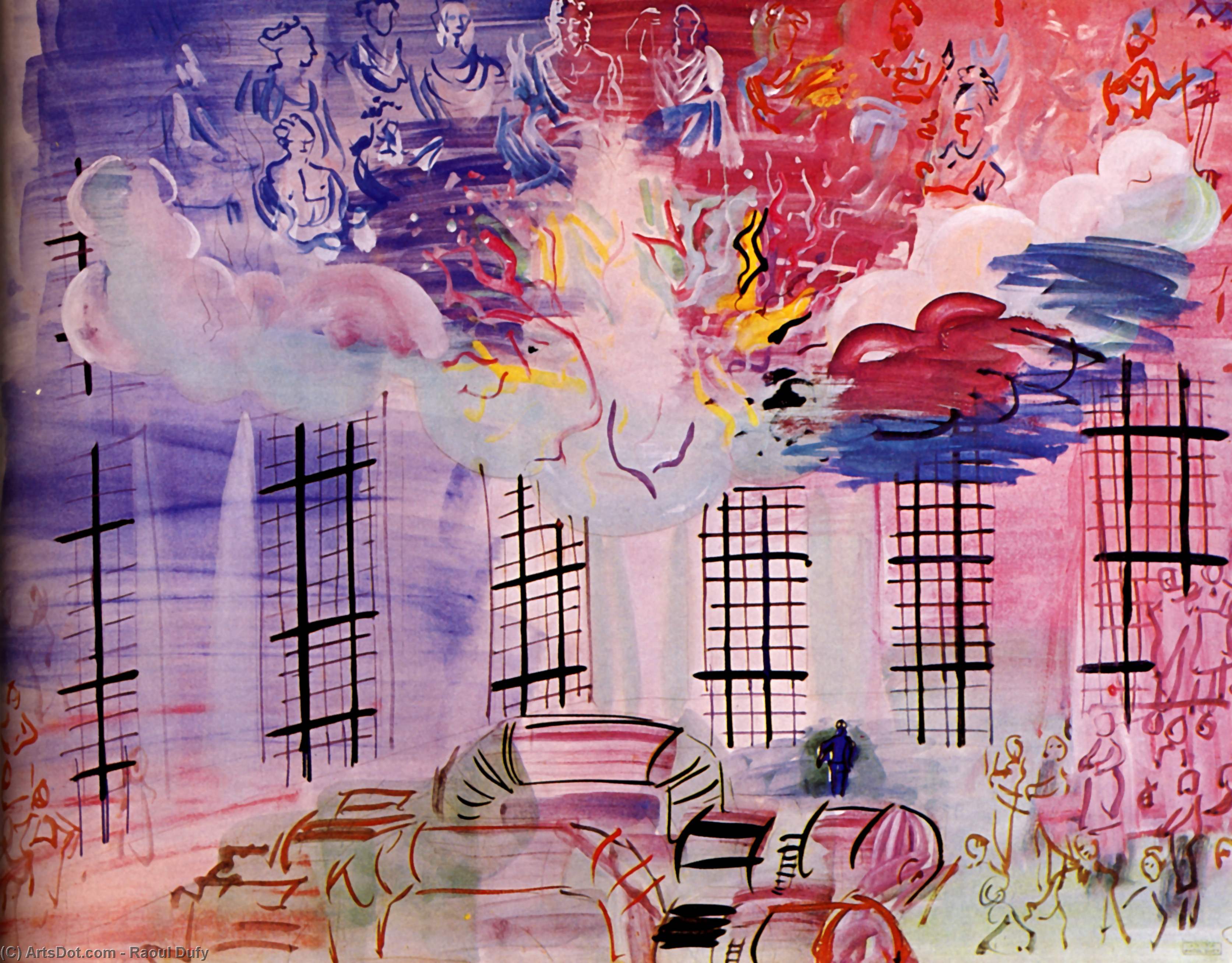
In his 1937 masterpiece, Electricity, Raoul Dufy captures the electric pulse of modern existence through a lens of pure, unadulterated joy. This watercolor serves as more than just a depiction of a cityscape; it is a rhythmic dance of light and movement that celebrates the burgeoning energy of the twentieth-century metropolis. As the eye wanders across the canvas, one encounters a bustling urban landscape where grand architectural structures stand alongside smaller, intimate buildings, all interconnected by the invisible currents of human activity. The scene is alive with the presence of people navigating their daily routines, some pausing near parked vehicles while others move through the streets, creating a sense of continuous, flowing motion that mirrors the very subject of the title.
Dufy’s signature style—a luminous blend of Fauvism and Impressionism—is on full display here. Eschewing heavy, somber outlines for a more fluid and decorative approach, he utilizes the transparency of watercolor to allow light to permeate the composition. The technique is characterized by spontaneous, sweeping brushstrokes that suggest form rather than strictly defining it, allowing the viewer's imagination to fill in the vibrant details of the windows, the silhouettes of pedestrians, and even the subtle suggestion of an umbrella, hinting at a recent or passing rain. This delicate interplay between light and pigment creates a shimmering effect, as if the painting itself is vibrating with the kinetic energy of the city.
Beyond its visual splendor, Electricity carries a profound historical resonance. Created in the late 1930s, a period of immense technological and social transformation, the work reflects the fascination with modern progress and the electrification of urban life. The title serves as a metaphor for both the literal power grids transforming cities and the metaphorical spark of human connection and vitality found within the crowd. For the collector or interior designer, this piece offers an unparalleled opportunity to introduce a sense of movement and optimism into a space. Its bright, airy composition and sophisticated use of color make it a versatile centerpiece, capable of breathing life into a contemporary gallery or adding a touch of French joie de vivre to a refined residential setting.
To possess a reproduction of this work is to invite the spirit of Raoul Dufy into one's home—a spirit that finds beauty in the mundane and magic in the mechanical. It is an invitation to pause amidst the chaos of modern life and find, as Dufy did, the rhythmic, colorful, and deeply human heartbeat that exists within the heart of the city.
Über den Künstler
Frühe Jahre und Ausbildung
Raoul Dufy, ein französischer Fauvist-Maler, wurde am 3. Juni 1877 in Le Havre geboren. Er verließ die Schule im Alter von vierzehn Jahren, um in einer Kaffeeimportfirma zu arbeiten. Im Jahr 1895 begann er mit Abendkursen für Kunst an der École des Beaux-Arts in Le Havre, wo er Raimond Lecourt und Othon Friesz kennenlernte, mit denen er später ein Atelier in Montmartre teilte.Künstlerischer Stil und Einflüsse
Dufy entwickelte einen farbenfrohen, dekorativen Stil, der für Designs von Keramik, Textilien und öffentlichen Gebäuden beliebt wurde. Er wurde von den impressionistischen Landschaftsmalern wie Claude Monet und Camille Pissarro beeinflusst. Seine erste Ausstellung fand 1901 auf der Ausstellung französischer Künstler statt.Wichtige Werke und Kooperationen
- Der Vollbluthengst (45 x 53 cm, naive Kunst / Primitivismus, Öl auf Leinwand) ist ein bemerkenswertes Gemälde von Dufy, das seinen einzigartigen Stil zeigt.
- Im Jahr 1904 arbeitete er mit Albert Marquet in Fécamp an der englischen Kanal (La Manche).
- Dufys Zusammenarbeit mit Henri Matisse's Luxe, Calme et Volupté im Jahr 1905 war eine Offenbarung für den jungen Künstler und lenkte seine Interessen in Richtung Fauvismus.
Auszeichnungen und Vermächtnis
- Im Jahr 1952 erhielt Dufy den Grand Prix für Malerei bei der 26. Biennale von Venedig.
- Seine Werke sind in verschiedenen Museen zu finden, darunter auch in dem Museum Royal Collection (Vereinigtes Königreich), das zu den größten und wichtigsten Kunstsammlungen der Welt gehört.
Gesundheitliche Probleme und Tod
Dufys Gesundheit verschlechterte sich aufgrund von rheumatoider Arthritis, und er verstarb am 23. März 1953 in Forcalquier, Frankreich. Er wurde neben Matisse im Cimiez-Klosterfriedhof in Cimiez, einem Vorort von Nizza, beigesetzt.- Erleben Sie Dufys Kunstwerke und Biografie auf OriginalUniqueArt
- Erfahren Sie mehr über Fauvismus und seinen Einfluss auf die Kunst auf Wikipedia
- Entdecken Sie die Museum Royal Collection (Vereinigtes Königreich) und ihre Bedeutung in der Kunstgeschichte auf OriginalUniqueArt

Raoul Dufy
1877 - 1953 , Frankreich
Kurzinfos
- Beeinflusste Künstler:
- Claude Monet
- Camille Pissarro
- Henri Matisse
- Bemerkenswerte Werke:
- Das Casino
- Die Konsole mit der Fruchtschale rot
- Der Vollbluthengst
- Geburtsdatum: 3. Juni 1877
- Geburtsort: Le Havre, Frankreich
- Künstlerische Bewegung: Fauvismus
- Nationalität: Französisch
- Sterbedatum: 23. März 1953
- Vollständiger Name: Raoul Dufy
- Von Ihm Beeinflusste Kunstrichtungen:
- Fauvismus
- Impressionismus
Ähnliche Artikel

Die 10 legendärsten Aquarellwerke der Kunstgeschichte – Meisterwerke für Ihr Zuhause
Entdecken Sie die 10 legendärsten Aquarellwerke der Kunstgeschichte! Von Turner bis Monet – erleben Sie die Geschichten, Techniken & Farben dieser Meisterwerke. Finden Sie hochwertige Kunstdrucke auf OriginalUniqueArt.com und gestalten Sie Ihr Zuhause mit zeitloser Eleganz.

Ephemeral Visions: Exploring the Artistic Legacy & Contemporary Practice of Watercolor Painting
Explore the captivating world of watercolor painting! Discover its rich history, essential techniques, influential artists & collecting tips. A comprehensive guide for art enthusiasts from OriginalUniqueArt.

Ephemeral Visions: Exploring the Artistic Legacy & Nuances of Watercolor Painting
Explore the captivating world of watercolor painting! Discover its rich history, essential techniques, influential artists & collecting tips from art experts. A comprehensive guide for enthusiasts.

Flüchtige Visionen: Die Geschichte und emotionale Resonanz der Aquarellmalerei
Entdecken Sie die faszinierende Welt der Aquarellmalerei! Von historischen Ursprüngen bis zu modernen Techniken – wir bieten Expertenwissen, Inspiration und Tipps für Anfänger & Fortgeschrittene.

Die zeitlose Anziehungskraft der Aquarellmalerei: Geschichte, Techniken und zeitgenössische Praxis
Entdecken Sie die faszinierende Welt der Aquarellmalerei! Geschichte, Techniken & zeitgenössische Kunst – Expertenwissen von für Kunstliebhaber.