Vorschau anzeigen
 Versenden
 Teilen
 Details anzeigen
 Leitfaden

 Herunterladen
 Ähnliche Objekte
 Röntgenaufnahme
 Diashow
 Statistiken
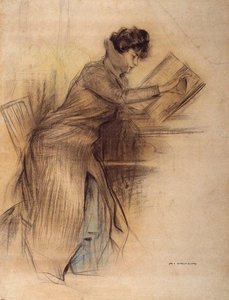
White Lady
 Acrylic On Canvas
- WallArt
- Modernisme
 1891
1891- 19th Century
 55.0 x 35.0 cm
 Cau Ferrat Museum
 Weiterlesen
Handgefertigte Ölreproduktion
Handgemaltes Ölgemälde auf Leinwand in Ihrer Wunschgröße und mit Rahmen, auf Bestellung von unseren Künstlern angefertigt. ( Zum Druck wechseln Zum digitalen Bild wechseln)




P118B €10

P118H €10

P118W €10

P438Z €10

P508JH €12

P508YH €12

P805H €10

P805Z €10

P919BZ €10

P919G €10

P919XJ €10

P959ZH €10

P968JZ €12

W106C €8

W218G €10

W218JH €8

W218Y €10

W307PJ €10

W316G €10

W316PJ €8

W316Y €10

W398PJ €8

W4111J €10

W500HY €15

W500JH €15

W692G €12

W849H €8

W940BG €15

W953PJ €8




Wählen Sie aus unseren vordefinierten Formaten, die den ursprünglichen Proportionen des Kunstwerks entsprechen.

Geben Sie die Breite und die Höhe an, die Sie für Ihren Rahmen oder Ihre Wand benötigen. Da dieses Werk handgemalt ist, kann der Künstler bei einer anderen Form etwas mehr um das Bild herum malen oder etwas abschneiden – Sie entscheiden. Wir senden Ihnen ein digitales Mockup zur Freigabe, bevor mit dem Malen begonnen wird. Das auf dieser Seite gezeigte Bild stellt nicht das tatsächliche Ergebnis dar – dies tut nur das Mockup.
Nach der Bestellung wird das OriginalUniqueArt.com-Team dem Kunden Anweisungen per E-Mail zusenden und eine Mockup-Vorschau bereitstellen.
Weltweiter Versand () in nur 3 bis 4 Wochen statt der üblichen 5 Wochen. (27 Oktober). Keine Kompromisse bei der Qualität.

Kostenloser weltweiter Expressversand

Hochwertige Leinenleinwand

Umfassender Versicherungsschutz beim Versand

Zollgebühren-Rückerstattungsgarantie

Garantie für exakte Farbtreue

100 Tage Rückgaberecht (nur bei Mängeln)

100% Geld-zurück-Garantie

Mengenrabatt verfügbar
 Die Glasoption ist nur für Größen unter 110 cm verfügbar.

White Lady
Art der Reproduktion
Format der Reproduktion
-


Endpreis
€ 264
Ramon Casas i Carbó’s ‘White Lady’: A Portrait of Catalan Modernisme
Ramon Casas i Carbó's “White Lady,” painted in 1891, is more than just a portrait; it’s a delicately rendered window into the heart of Catalan Modernisme. This intimate scene captures a woman seated on a bench, an embodiment of quiet contemplation and understated elegance – a hallmark of Casas’s artistic vision. The painting immediately draws the eye to the subject's serene expression and the soft palette dominated by whites, pinks, and subtle greens, colors that evoke both fragility and resilience, reflecting the spirit of the era.
- Subject & Composition: The central figure, a woman in a flowing white dress with a blush-toned skirt, occupies the foreground with a sense of quiet dignity. Her hands folded demurely in her lap contribute to an atmosphere of stillness and introspection. The inclusion of a nearby chair subtly suggests a moment of respite, inviting the viewer into her private world.
- Technique & Style: Casas masterfully employs Impressionistic techniques, evident in his loose brushstrokes and emphasis on capturing fleeting moments of light and shadow. This approach is particularly noticeable in the rendering of the fabrics – the delicate folds of the dress and the subtle textures of the green plants – adding a remarkable level of realism to the scene.
A Window into Barcelona’s Modernista World
Painted during a pivotal moment in Catalan art history, “White Lady” reflects the burgeoning Modernisme movement that was transforming Barcelona. This period witnessed a rejection of traditional academic styles and an embrace of new influences – notably Impressionism and Japonisme – alongside a fervent desire to express Catalan identity through artistic expression. Casas, as a key figure within this movement, skillfully blended these diverse elements, creating a style uniquely his own.
- Historical Context: 1891 Barcelona was undergoing rapid industrialization and urbanization, yet simultaneously, there was a strong cultural revival focused on Catalan heritage. Casas’s work often depicted scenes of daily life in the city, capturing both its dynamism and its underlying traditions.
- The Artist's Influence: Casas’s connections within the artistic circles of Barcelona – including his friendships with figures like Santiago Rusiñol – further cemented his position as a leading voice of Modernisme.
Symbolism & Emotional Resonance
While seemingly simple in its composition, “White Lady” is rich in symbolic potential. The color white itself often represents purity and innocence, while the woman’s posture suggests vulnerability and contemplation. The green plants introduce a natural element, symbolizing life, growth, and perhaps even hope. The overall effect is one of quiet beauty and emotional depth – inviting viewers to ponder themes of solitude, reflection, and the transient nature of existence.
- Color Palette: The restrained color palette contributes significantly to the painting’s mood, creating a sense of calm and serenity.
- Light & Shadow: Casas's skillful use of light and shadow adds depth and dimension to the portrait, enhancing its realism and emotional impact.
A Timeless Masterpiece – A Perfect Reproduction
This hand-painted reproduction captures every nuance of Casas’s original masterpiece, offering a stunning addition to any art collection or interior space. The meticulous attention to detail, combined with the artist's signature Impressionistic style, ensures that this artwork will continue to captivate and inspire for generations to come. Whether you are an admirer of Modernisme, a collector seeking exceptional pieces, or an interior designer looking to create a sophisticated atmosphere, “White Lady” is a truly timeless investment.
Fragen & Antworten
Welche emotionale Stimmung prägt den Stil der Modernisme-Epoche in „White Lady“?
Die Reflective Ausstrahlung von „White Lady“ wird durch seinen Modernisme-Stil ergänzt.
Was stellt "White Lady" von Ramon Casas I Carbó dar und welche Stimmung vermittelt es?
"White Lady" von Ramon Casas I Carbó verbindet portrait woman, catalan scene, white dress, bench seating, pink skirt, green plants, ramon casas mit einer Ethereal Atmosphäre.
Wie intensiv sind die Farben von "White Lady"?
Die Farben von "White Lady" von Ramon Casas I Carbó bestechen durch eine Subtle Color Sättigung und eine Balanced Intensität.
Künstlerbiografie
Ramon Casas i Carbó: Ein Leben für die Kunst des Modernisme
Ramon Casas i Carbó (Barcelona, 4. Januar 1866 – 1932) war ein bedeutender katalanischer Künstler der Epoche des Modernisme. Sein Werk umfasst Porträts, Genreszenen und Darstellungen des spanischen Lebens, die durch eine einzigartige Mischung aus Realismus und Impressionismus geprägt sind.
Frühes Leben und Ausbildung
Casas wurde in Barcelona geboren, seine Familie stammte aus wohlhabendem Hintergrund. Sein Vater hatte in Matanzas, Kuba, ein Vermögen erworben. Schon früh zeigte Casas künstlerisches Talent. 1877 verließ er die reguläre Schule, um in der Werkstatt von Joan Vicens Kunst zu studieren. Diese Entscheidung markierte den Beginn seiner professionellen Karriere als Künstler. Er erhielt eine solide Grundlage und entwickelte schnell seinen eigenen Stil.
Künstlerische Entwicklung und Hauptwerke
Casas’ frühe Arbeiten zeichneten sich durch Porträts und Karikaturen der katalanischen, spanischen und französischen Elite aus. Seine Werke spiegeln die gesellschaftlichen Trends seiner Zeit wider. Zu seinen wichtigsten Werken zählen:
- Selbstbildnis als Flamenco-Tänzer (1883): Dieses Werk etablierte ihn als aufstrebenden Künstler und verschaffte ihm eine Einladung zur Societé d'artistes françaises.
- Corrida de toros (1884): Eine eindrucksvolle Darstellung einer Stierkampfarena, die seine Fähigkeit demonstriert, lebendige Menschenmassen einzufangen.
- Intérieur du moulin de la galette (1891): Dieses Gemälde zeugt von seiner künstlerischen Reife und brachte ihm eine Medaille bei der Berliner Internationalen Ausstellung ein.
- Portrait of Mr. Domínguez (1899): Ein faszinierendes Bleistiftporträt, das den Modernisme-Stil verkörpert und durch lose Linien und subtile Schattierungen Charakterstärke und Melancholie vermittelt.
Casas’ Stil entwickelte sich im Laufe seiner Karriere weiter. Er experimentierte mit verschiedenen Techniken und Themen, wobei er stets seinen einzigartigen Blick auf die Welt bewahrte.
Einflüsse, Zusammenarbeit und Vermächtnis
Ramon Casas war eng mit anderen Künstlern verbunden, insbesondere mit Santiago Rusiñol, mit dem er 1889 gemeinsam durch Katalonien reiste. Diese Reisen inspirierten ihn zu neuen Werken und erweiterten seinen Horizont. Er wurde Mitglied der Societé d'artistes françaises, was ihm die Möglichkeit gab, seine Werke ohne Jury-Bewertung auszustellen.
Casas’ Werk findet sich heute in bedeutenden Museen wie dem Cau Ferrat Museum (Sitges) und dem Museu d'Art Contemporani (Barcelona). Sein Beitrag zur Kunst des Modernisme ist unbestreitbar. Er gilt als einer der wichtigsten Vertreter dieser Bewegung in Katalonien.
Historische Bedeutung
Ramon Casas i Carbó trug maßgeblich zur Verbreitung und Etablierung des Modernisme bei. Seine Porträts bieten einen faszinierenden Einblick in die Gesellschaft seiner Zeit, während seine Genreszenen das Leben und die Kultur Kataloniens widerspiegeln. Sein Werk beeinflusste nachfolgende Generationen von Künstlern und bleibt bis heute relevant.

Ramon Casas I Carbó
1866 - 1932 , Spanien
Kurzinfos
- Bemerkenswerte Werke:
- Selbstbildnis als Flamenco-Tänzer
- Corrida de Toros
- Intérieur du Moulin de la Galette
- Portrait von Mr. Domínguez
- Einflüsse: ['Joan Vicens']
- Geburtsdatum: 04. Januar 1866
- Geburtsort: Barcelona, Spanien
- Künstlerische Richtung: Modernisme, Realismus
- Nationalität: Spanisch
- Sterbedatum: 1932
- Vollständiger Name: Ramon Casas i Carbó
Ähnliche Artikel

Weiße Meisterwerke: Die Top 10 berühmtesten Gemälde und ihre zeitlose Eleganz
Entdecken Sie die Top 10 berühmter Gemälde, dominiert von Weiß! Von Malewitsch bis Rothko – erfahren Sie Geschichten hinter ikonischen Kunstwerke und lassen Sie sich für Ihre Wohnraumgestaltung inspirieren. Kunstreproduktionen in Museumsqualiät auf

Echoes of Time: Exploring the Enduring Appeal & Historical Context of Vintage Art Prints
Explore the captivating world of vintage art prints! Discover their history, collecting tips & enduring appeal. Expert insights on chromolithography and building a legacy collection with OriginalUniqueArt.

Giclée Prints: Archival Quality & Aesthetic Nuances for the Discerning Collector
Explore the world of giclée prints with OriginalUniqueArt. Learn about archival quality, aesthetic nuances & investment potential. Expert guidance for discerning art collectors seeking museum-quality reproductions and lasting value.
The Enduring Legacy of Printmaking: Techniques, Themes & Artistic Innovation Across Centuries
Explore the rich history of printmaking with OriginalUniqueArt. Discover techniques from intaglio to lithography, learn about collecting valuable prints & find museum-quality reproductions. Expert insights for art enthusiasts and collectors.

The Enduring Legacy of Fine Art Prints: Technique, History & Aesthetic Impact
Explore the rich history & techniques of fine art prints. Discover investment potential, assess authenticity, and learn how to preserve your collection with expert guidance. Trusted insights for discerning collectors.