Vorschau anzeigen
 Versenden
 Teilen
 Details anzeigen
 Leitfaden

 Herunterladen
 Ähnliche Objekte
 Röntgenaufnahme
 Diashow
 Statistiken
Terranuova Madonna
 Öl auf Tafel
- Hochrenaissance
 1505
1505- Renaissance
 86.0 x 86.0 cm
 Weiterlesen
Giclée / Kunstdruck
Giclée- oder Leinwanddruck in Museumsqualität mit schneller Produktion und flexiblen Veredelungsoptionen. ( Handgemalte Reproduktion bestellen Zum digitalen Bild wechseln)




P118B €10

P118H €10

P118W €10

P438Z €10

P508JH €12

P508YH €12

P805H €10

P805Z €10

P919BZ €10

P919G €10

P919XJ €10

P959ZH €10

P968JZ €12

W106C €8

W218G €10

W218JH €8

W218Y €10

W307PJ €10

W316G €10

W316PJ €8

W316Y €10

W398PJ €8

W4111J €10

W500HY €15

W500JH €15

W692G €12

W849H €8

W940BG €15

W953PJ €8




Wählen Sie aus unseren vordefinierten Formaten, die den ursprünglichen Proportionen des Kunstwerks entsprechen.

Geben Sie die benötigte Breite und Höhe an, damit der Druck perfekt in Ihren Rahmen oder an Ihre Wand passt. Ein Druck kann nur beschnitten, aber niemals größer als das Originalbild angefertigt werden; daher verliert ein Format mit anderen Proportionen einen Teil des Bildes. Wir senden Ihnen ein digitales Mockup zur Freigabe, bevor wir den Druck ausführen. Das auf dieser Seite gezeigte Bild zeigt nicht den tatsächlichen Beschnitt – dies ist nur im Mockup ersichtlich.
Weltweiter Versand () innerhalb von 2 Wochen statt der üblichen 4/5 Wochen. (26 Oktober)

Kostenloser weltweiter Expressversand

Hochwertige Leinenleinwand

Umfassender Versicherungsschutz beim Versand

Zollgebühren-Rückerstattungsgarantie

Garantie für exakte Farbtreue

100 Tage Rückgaberecht (nur bei Mängeln)

100% Geld-zurück-Garantie

Mengenrabatt verfügbar
 Die Glasoption ist nur für Größen unter 110 cm verfügbar.

Terranuova Madonna
Giclée / Kunstdruck
Format der Reproduktion
-


Endpreis
€ 70
A Renaissance Vision of Motherhood: The Terranuova Madonna
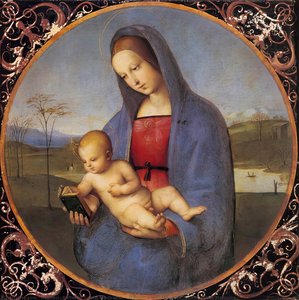
Raphael’s *Terranuova Madonna*, painted in 1505, is a captivating example of High Renaissance artistry. This oil on panel, currently housed at the Staatliche Museen zu Berlin, offers a serene and intimate portrayal of the Virgin Mary surrounded by cherubic figures. The painting's circular format – a *tondo* – was particularly popular during this period, lending itself to domestic settings and devotional practices. It’s a masterpiece that continues to inspire awe and admiration centuries later.Composition and Symbolic Harmony
The composition centers on Mary, gracefully positioned as the focal point. She tenderly holds two infants in her arms, while three additional figures peek from behind, creating a sense of depth and familial warmth. The arrangement isn’t merely aesthetic; it subtly alludes to the Holy Family and the nurturing aspect of motherhood. The tondo format itself symbolizes eternity and divine perfection, reinforcing the sacred nature of the scene. Raphael masterfully employs *chiaroscuro* – the dramatic interplay of light and shadow – to sculpt the figures, highlighting their forms and adding a sense of volume. The meticulously rendered landscape in the background isn’t just decorative; it provides a tranquil setting that mirrors the peacefulness of the central subject matter. This careful balance contributes significantly to the painting's emotional resonance.Artistic Influences & Raphael’s Style
Raphael was deeply influenced by his contemporaries, most notably Leonardo da Vinci. The extreme foreshortening evident in Mary’s hand and the relaxed pose of one Christ Child – legs crossed with a playful air – are clear nods to Leonardo’s innovative techniques. However, Raphael doesn't simply imitate; he synthesizes these influences with his own innate grace and compositional skill. The lush landscape also reflects Northern European artistic traditions that were gaining prominence in Italy at the time. This blending of styles is characteristic of Raphael’s early Florentine period, demonstrating his ability to absorb diverse inspirations and forge a unique artistic voice. He elevated Leonardo's innovations into something even more harmonious and refined.Historical Context & The Renaissance Ideal
Created during the High Renaissance – a period marked by renewed interest in classical art and humanist philosophy – the *Terranuova Madonna* embodies the era’s ideals of beauty, harmony, and proportion. Florence, where Raphael painted this work, was a hotbed of artistic innovation, fostering competition and collaboration among masters. Commissioned for private devotion, paintings like this were intended to inspire contemplation and reverence. Raphael's ability to imbue religious subjects with human emotion made his works particularly appealing to patrons and audiences alike. The painting reflects the broader cultural shift towards valuing human intellect and artistic expression during this transformative period.Emotional Resonance & Lasting Legacy
The *Terranuova Madonna* evokes a sense of profound tenderness, peace, and maternal love. The soft colors, gentle expressions, and harmonious composition create an atmosphere of serenity that invites viewers into the scene. It’s not merely a depiction of religious figures; it's a celebration of family, innocence, and divine grace. As one of several Madonnas by Raphael held in the Staatliche Museen zu Berlin – alongside the *Colonna Madonna* and *Solly Madonna* – this painting stands as a testament to his enduring legacy as a master of Renaissance art.- Ideal for collectors seeking iconic Renaissance works.
- A stunning focal point for interior design, bringing classic elegance to any space.
- An inspiring piece for art enthusiasts and students alike.
The Urbino Renaissance: Raphael’s Early Life and Formation
Raffaello Sanzio da Urbino, known to the world as Raphael, emerged from a remarkably fertile cultural landscape. Born in 1483 within the walls of Urbino, a small but intellectually vibrant city-state in central Italy, his earliest years were steeped in an atmosphere that prized both artistic skill and humanist learning. His father, Giovanni Santi, was not merely a painter employed by Duke Federico da Montefeltro—he was a man deeply engaged with the currents of Renaissance thought, a poet who chronicled the Duke’s life and actively sought out innovative artistic ideas from across Italy and beyond. This immersion in a courtly environment, one that valued refinement and intellectual discourse, profoundly shaped the young Raphael's sensibilities. The loss of his father at age eleven thrust responsibility upon him, but also provided an opportunity to hone his skills within the family workshop, absorbin
Fragen & Antworten
Kann ich eine Ölreproduktion von "Terranuova Madonna" bestellen?
"Terranuova Madonna" ist als eine handgemalte Ölreproduktion auf Leinenleinwand erhältlich. Die Bestellung kann auf der Seite Handgemalte Ölreproduktion in verschiedenen Größen vorgenommen werden.
Welche Art von Kunstwerk ist "Terranuova Madonna" von Raffael?
"Terranuova Madonna" von Raffael wird als wall art klassifiziert. Die Kategorie beschreibt die Art des Kunstwerks, um das es sich beim Original handelt.
Wer hat "Terranuova Madonna" geschaffen und wann?
„Terranuova Madonna“ stammt von Raffael und wird auf 1505 datiert.
Künstlerbiografie
**frühes Leben und Ausbildung**
Raphael (Raffaello Sanzio da Urbino), ein renommierter italienischer Maler und Architekt, wurde zwischen dem 28. März und dem 6. April 1483 in der kleinen, aber kulturell bedeutenden Stadt Urbino geboren. Sein Vater, Giovanni Santi, war Hofmaler des Herzogs und vermittelte Raphael von Anfang an eine frühe Auseinandersetzung mit der künstlerischen Welt. Nach dem Tod seines Vaters im Alter von elf Jahren betrieb Raphael wahrscheinlich die Familienwerkstatt weiter, was seine künstlerische Grundlage festigte.**Künstlerischer Werdegang und Einflüsse**
Raphaels künstlerischer Weg lässt sich in drei verschiedene Phasen einteilen, jede mit einem einzigartigen Stil gekennzeichnet:- Frühe Jahre in Umbrien: Charakterisiert durch den Einfluss seines Vaters und die kulturelle Atmosphäre von Urbino.
- Florentinische Periode (1504-1508): Aufnahme der künstlerischen Traditionen Florenz, die seinen Stil maßgeblich prägte.
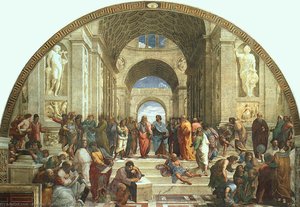
- Römische Periode (1508-1520): Arbeitete für zwei Päpste und ihre Mitarbeiter und schuf einige seiner bekanntesten Werke, darunter die Schule der Athene in der Vatikanische Stanza della Segnatura.
**Bekannte Werke und Vermächtnis**
Einige der bekannten Werke von Raphael sind:- Das Urteil des Salomon (ansicht auf OriginalUniqueArt)
- Die Esterházy-Madonna (ansicht auf OriginalUniqueArt)
- Vatikanische Stanzen - Ansicht der Stanza della Segnatura (ansicht auf OriginalUniqueArt)
- St. Sebastian (ansicht auf OriginalUniqueArt)
- La Donna Velata (ansicht auf OriginalUniqueArt)
**Einfluss und Vermächtnis**
Raphaels Einfluss auf die Kunst ist tiefgreifend, wobei sein Werk ein Eckpfeiler der Hochrenaissance darstellt. Sein ruhiger und harmonischer Stil war ein Vorbild für die neoklassische Malerei, wie von Kunsthistoriker Johann Joachim Winckelmann bemerkt. Trotz des späteren Einflusses von Michelangelos Stil bleibt Raphael einer der verehrtesten Künstler in der Geschichte. ansicht des Profils von Raphael auf OriginalUniqueArt
Raffael
1483 - 1520 , Italien
Kurzinfos
- Beeinflusste Künstler:
- Giovanni Santi
- Pietro Perugino
- Bemerkenswerte Werke:
- Das Urteil des Salomon
- Esterházy-Madonna
- Die Schule der Athener
- St. Sebastian
- La Donna Velata
- Einfluss Auf Kunst: Neoklassische Malerei
- Geburtsdatum: 1483
- Geburtsort: Urbino, Italien
- Künstlerischer Stil: Hochrenaissance
- Nationalität: Italienisch
- Todatum: 1520
- Vollständiger Name: Raffaello Sanzio da Urbino
- Von Künstlern Beeinflusst:
- Leonardo da Vinci
- Michelangelo
Ähnliche Artikel
Oil on Panel: The Ultimate Guide to Bold, High-Impact Texture & Depth
Master the art of impact with our expert guide to oil on panel. Discover how impasto textures and heavy-body pigments create 3D depth and bold visual energy for modern interiors. Elevate your space with high-impact, hand-painted masterpieces designed for maximum aesthetic punch.
Mastering the Surface: A Historical and Technical Guide to the Art of Oil on Panel Painting
Explore the profound history and technical brilliance of oil on panel painting. From Renaissance masters to modern techniques, discover why this rigid support offers unparalleled precision and permanence for fine art lovers and collectors.
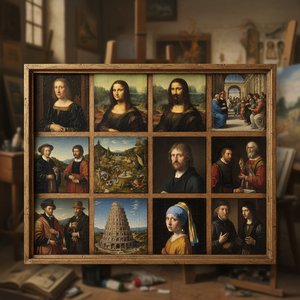
Öl auf Holz: 10 Meisterwerke, die Kunstgeschichte veränderten |
Entdecken Sie die 10 legendärsten Gemälde auf Holz – von Renaissance bis Impressionismus! Erfahren Sie die Geschichten der Künstler & ihre Meisterwerke. Hochwertige Reproduktionen bei .
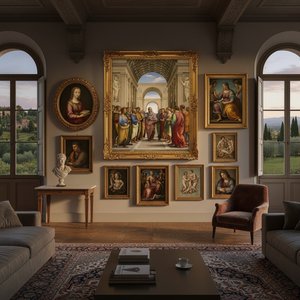
Raphael: Die 25 Meisterwerke des Renaissance-Genies – Kunst für Ihr Zuhause
Entdecken Sie die 25 schönsten Meisterwerke von Raphael! Tauchen Sie ein in die Welt der Renaissance-Kunst, erfahren Sie faszinierende Geschichten und lassen Sie sich von den Farben und Kompositionen inspirieren. Hochwertige Reproduktionen auf OriginalUniqueArt.com.
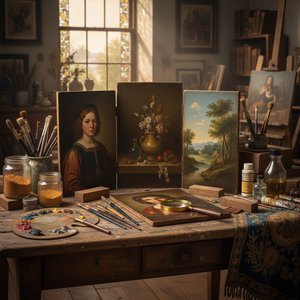
Öl auf Holz: Eine historische Untersuchung von Technik, Trägermaterial und ästhetischer Wirkung
Entdecken Sie die faszinierende Welt der Ölmalerei auf Holz! Expertenwissen zu Technik, Geschichte und Restaurierung von Meisterwerken. Für Kunstliebhaber & Sammler.