In echtem Maßstab anzeigen
 Versenden als Grußkarte
 Teilen
 Details anzeigen
 Leitfaden

 Herunterladen
 Ähnliche Objekte
 Röntgenaufnahme
 Diashow
 Besucherstatistiken
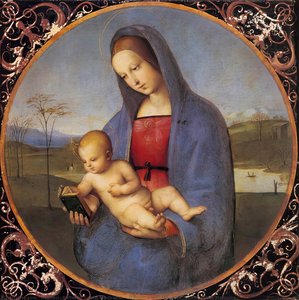
Madonna und Kind Enthronte mit Heiligen


 Mehr anzeigen
Handgefertigte Ölreproduktion
Handgemaltes Ölgemälde auf Leinwand in Ihrer Wunschgröße und mit Rahmen, auf Bestellung von unseren Künstlern angefertigt. ( Zum Druck wechseln Zum digitalen Bild wechseln)




P118B $10

P118H $10

P118W $10

P438Z $10

P508JH $12

P508YH $12

P805H $10

P805Z $10

P919BZ $10

P919G $10

P919XJ $10

P959ZH $10

P968JZ $12

W106C $8

W218G $10

W218JH $8

W218Y $10

W307PJ $10

W316G $10

W316PJ $8

W316Y $10

W398PJ $8

W4111J $10

W500HY $15

W500JH $15

W692G $12

W849H $8

W940BG $15

W953PJ $8




Wählen Sie aus unseren vordefinierten Formaten, die den ursprünglichen Proportionen des Kunstwerks entsprechen.

Sie können Ihre eigenen Maße eingeben, um einen bestimmten Rahmen oder Platz auszufüllen. Wenn die gewählte Größe nicht den Proportionen des Originalbildes entspricht, werden wir das Kunstwerk entweder beschneiden oder das Gemälde durch zusätzliche, handgemalte Elemente erweitern. Ein digitales Mockup wird Ihnen zur Genehmigung zugesandt, bevor die Produktion beginnt.
Bitte beachten Sie, dass die Bildschirmvorschau nicht die tatsächliche Beschneidung oder Erweiterung widerspiegelt. Nur das Mockup zeigt die endgültige Komposition exakt an.
Obwohl Sondermaße verfügbar sind, empfehlen wir, eine Größe aus der vordefinierten Liste zu wählen, um die ursprünglichen Proportionen beizubehalten.
Nach der Bestellung wird das OriginalUniqueArt.com-Team dem Kunden Anweisungen per E-Mail zusenden und eine Mockup-Vorschau bereitstellen.
Weltweiter Versand () in nur 3 bis 4 Wochen statt der üblichen 5 Wochen. (20 September). Keine Kompromisse bei der Qualität.

Kostenloser weltweiter Expressversand

Hochwertige Leinenleinwand

Vollständiger Versicherungsschutz beim Versand

Zollgebühren-Rückerstattungsgarantie

Garantie für exakte Farbtreue

100-tägiges Rückgaberecht (nur bei Mängeln)

100% Geld-zurück-Garantie

Angebot für Mengenrabatt
 Die Glasoption ist nur für Größen unter 110 cm verfügbar.

Madonna und Kind Enthronte mit Heiligen
Reproduktionsmedium
Format der Reproduktion
-


Gesamtpreis
$ 300
Madonna and Child Enthroned with Saints – A Renaissance Masterpiece
The Madonna and Child Enthroned with Saints stands as one of Raphael’s most celebrated achievements, a luminous testament to the artistic ideals of the High Renaissance. Created in 1505 for the Stanza della Segnatura within the Vatican Palace, this tempera on panel painting transcends mere representation; it embodies spiritual contemplation and harmonious beauty—qualities deeply rooted in humanist thought. Its current location at the National Gallery in London offers visitors a privileged glimpse into this extraordinary artwork.Composition and Artistic Style – Balance and Grace
Raphael’s genius lies in his masterful orchestration of visual elements. The central figure—the Virgin Mary—dominates the composition, seated majestically upon a throne adorned with intricate golden detailing, symbolizing divine authority. Surrounding her are six saints, each rendered with meticulous realism yet imbued with an ethereal grace characteristic of Raphael's style. These figures aren’t merely depicted; they are posed in gestures that convey profound emotion and reverence—a deliberate choice reflecting the humanist preoccupation with human dignity and spiritual experience. The artist skillfully employs pyramidal composition, creating stability and visual harmony while directing the viewer’s gaze towards Mary’s serene countenance. Color palettes are muted yet rich, dominated by warm hues of gold and crimson, conveying solemnity and highlighting the sacred nature of the scene.Technique – Tempera on Panel: Precision and Luminosity
Raphael employed tempera paint—known for its durability and luminous quality—on a wooden panel. This technique demanded painstaking precision and patience, allowing Raphael to achieve unparalleled detail in capturing textures and nuances of light. The layering process involved applying thin glazes over underlayers, resulting in an astonishing depth of color and luminosity that continues to captivate viewers centuries later. Unlike oil paint, tempera doesn’t crack or yellow over time, ensuring the painting retains its original splendor for generations to come. This careful consideration of material and method underscores Raphael's commitment to artistic excellence—a hallmark of his era.Historical Context – The Papal Patronage and Renaissance Ideals
The Stanza della Segnatura was commissioned by Pope Julius II as part of a grand project to decorate the Vatican Palace, marking a pivotal moment in papal patronage during the High Renaissance. Raphael’s Madonna and Child Enthroned with Saints embodies the humanist ideals prevalent at the time—a belief in human reason and virtue alongside reverence for divine grace. It reflects the broader artistic movement striving to recapture classical beauty and grandeur while simultaneously exploring profound spiritual themes. The painting stands as a symbol of maternal love, purity, and holiness—concepts central to Christian theology and celebrated throughout Renaissance art.Symbolism – Divine Majesty and Spiritual Reflection
Beyond its aesthetic brilliance, the Madonna and Child Enthroned with Saints is laden with symbolic significance. Mary’s throne represents her regal status as Queen of Heaven, while the saints surrounding her embody various virtues—faith, hope, charity—serving as guides for humanity on their spiritual journey. The golden halo encircling Mary’s head symbolizes divine illumination and holiness, emphasizing her role as intermediary between God and humankind. Raphael's masterful depiction invites contemplation and fosters a sense of awe—a testament to the enduring power of art to inspire faith and elevate the human spirit.Biografie des Künstlers
**frühes Leben und Ausbildung**
Raphael (Raffaello Sanzio da Urbino), ein renommierter italienischer Maler und Architekt, wurde zwischen dem 28. März und dem 6. April 1483 in der kleinen, aber kulturell bedeutenden Stadt Urbino geboren. Sein Vater, Giovanni Santi, war Hofmaler des Herzogs und vermittelte Raphael von Anfang an eine frühe Auseinandersetzung mit der künstlerischen Welt. Nach dem Tod seines Vaters im Alter von elf Jahren betrieb Raphael wahrscheinlich die Familienwerkstatt weiter, was seine künstlerische Grundlage festigte.**Künstlerischer Werdegang und Einflüsse**
Raphaels künstlerischer Weg lässt sich in drei verschiedene Phasen einteilen, jede mit einem einzigartigen Stil gekennzeichnet:- Frühe Jahre in Umbrien: Charakterisiert durch den Einfluss seines Vaters und die kulturelle Atmosphäre von Urbino.
- Florentinische Periode (1504-1508): Aufnahme der künstlerischen Traditionen Florenz, die seinen Stil maßgeblich prägte.
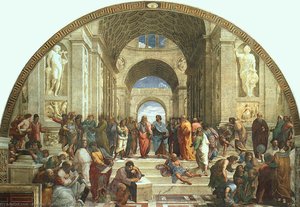
- Römische Periode (1508-1520): Arbeitete für zwei Päpste und ihre Mitarbeiter und schuf einige seiner bekanntesten Werke, darunter die Schule der Athene in der Vatikanische Stanza della Segnatura.
**Bekannte Werke und Vermächtnis**
Einige der bekannten Werke von Raphael sind:- Das Urteil des Salomon (ansicht auf OriginalUniqueArt)
- Die Esterházy-Madonna (ansicht auf OriginalUniqueArt)
- Vatikanische Stanzen - Ansicht der Stanza della Segnatura (ansicht auf OriginalUniqueArt)
- St. Sebastian (ansicht auf OriginalUniqueArt)
- La Donna Velata (ansicht auf OriginalUniqueArt)
**Einfluss und Vermächtnis**
Raphaels Einfluss auf die Kunst ist tiefgreifend, wobei sein Werk ein Eckpfeiler der Hochrenaissance darstellt. Sein ruhiger und harmonischer Stil war ein Vorbild für die neoklassische Malerei, wie von Kunsthistoriker Johann Joachim Winckelmann bemerkt. Trotz des späteren Einflusses von Michelangelos Stil bleibt Raphael einer der verehrtesten Künstler in der Geschichte. ansicht des Profils von Raphael auf OriginalUniqueArt
Raffael
1483 - 1520 , Italien
Eckdaten zum Künstler
- Beeinflusste Künstler:
- Giovanni Santi
- Pietro Perugino
- Bemerkenswerte Werke:
- Das Urteil des Salomon
- Esterházy-Madonna
- Die Schule der Athener
- St. Sebastian
- La Donna Velata
- Einfluss Auf Kunst: Neoklassische Malerei
- Geburtsdatum: 1483
- Geburtsort: Urbino, Italien
- Künstlerischer Stil: Hochrenaissance
- Nationalität: Italienisch
- Todatum: 1520
- Vollständiger Name: Raffaello Sanzio da Urbino
- Von Künstlern Beeinflusst:
- Leonardo da Vinci
- Michelangelo
Verwandte Artikel
Raphael: Die 25 Meisterwerke des Renaissance-Genies – Kunst für Ihr Zuhause
Entdecken Sie die 25 schönsten Meisterwerke von Raphael! Tauchen Sie ein in die Welt der Renaissance-Kunst, erfahren Sie faszinierende Geschichten und lassen Sie sich von den Farben und Kompositionen inspirieren. Hochwertige Reproduktionen auf OriginalUniqueArt.com.
Die 10 Meisterwerke der Hochrenaissance: Kunstgeschichte für Ihr Zuhause |
Entdecken Sie die 10 prägendsten Meisterwerke der Hochrenaissance! Erfahren Sie die Geschichten von Leonardo da Vinci, Michelangelo & Raffael. Finden Sie Ihre perfekte Kunst für Zuhause bei – Museumqualität und exklusive Reproduktionen online entdecken.
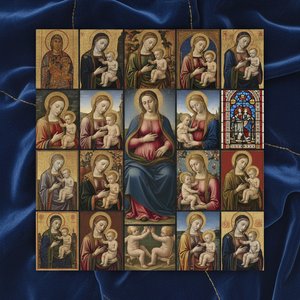
Divine Love: A Curated Guide to the Most Iconic Madonna and Child Masterpieces in Art History
Embark on a sophisticated journey through art history with our curated guide to the most iconic Madonna and Child masterpieces. Discover the profound beauty, theological depth, and enduring legacy of these sacred Renaissance treasures.
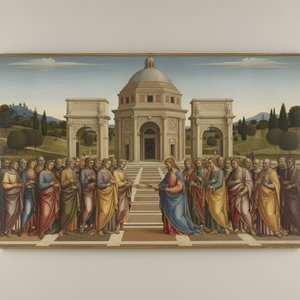
Pietro Perugino: Umbrian Master of Serenity & Precursor to Raphael's High Renaissance
Explore the life & art of Pietro Perugino, a pivotal Renaissance master and Raphael’s influential teacher. Discover his serene compositions, Sistine Chapel frescoes, and lasting legacy with OriginalUniqueArt.
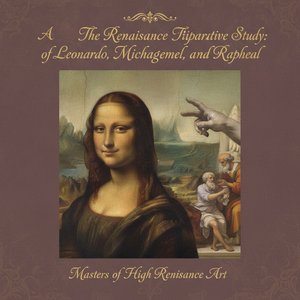
The Renaissance Trinity: A Comparative Study of Leonardo, Michelangelo, and Raphael
Explore the profound genius of the Renaissance Trinity. Delve into a comparative study of Leonardo da Vinci, Michelangelo, and Raphael, uncovering their unique contributions to art history, technique, and the enduring legacy of Italian High Renaissance mastery.