

 Versenden als Grußkarte
 Teilen
 Details anzeigen
 Leitfaden öffnen

 Herunterladen
 Ähnliche Objekte
 Diashow
 Besucherstatistiken
Rape of Proserpine
 Fresco
- Renaissance
 1509
1509- Renaissance
 79.0 x 81.0 cm
 Mehr anzeigen
Erwerben Sie ein hochauflösendes, optimiertes digitales Bild, das der Online-Vorschau weit überlegen ist.
Jede Datei wird von unseren hauseigenen Spezialisten mit modernsten Werkzeugen und fachmännischer manueller Retusche sorgfältig vorbereitet. Wir stellen sicher, dass jedes Bild eine außergewöhnliche Klarheit, präzise Farbgenauigkeit und feinste Details aufweist.
Die endgültige Datei wird innerhalb von 72 Stunden per E-Mail zugestellt und ist für den sofortigen Einsatz in professionellen, redaktionellen und Druckumgebungen optimiert. Es handelt sich um dieselbe Qualität, der führende Designstudios, Verlage und Galerien vertrauen.
Digitales Bild
Laden Sie eine hochauflösende Datei für die persönliche Präsentation, den Druck und kreative Projekte herunter. ( Zum Druck wechseln Handgemalte Reproduktion kaufen)
In jeder Bestellung digitaler Bilder enthalten
Professionelle digitale Bereitstellung, garantiert
Wenn Sie sich für OriginalUniqueArt.com entscheiden, erhalten Sie nicht nur ein Bild – Sie erhalten ein professionell aufbereitetes digitales Kunstwerk, das mit höchster Präzision erstellt und durch eine Zufriedenheitsgarantie abgesichert wird. Hier ist alles, was automatisch mit Ihrer Bestellung geliefert wird:

Schnelle E-Mail-Zustellung
Ihre hochauflösende digitale Bilddatei wird Ihnen innerhalb von 72 Stunden nach der Bestellung per E-Mail zugestellt – bereit zur sofortigen Verwendung.

KI-optimierte digitale Datei
Ihre Kunstwerke werden professionell mithilfe fortschrittlicher KI-Tools und manueller Bearbeitung optimiert, um maximale Detailtreue, Klarheit und Farbgenauigkeit zu gewährleisten.

Kostenloser lebenslanger Neudruckservice
Datei versehentlich gelöscht oder verloren? Keine Sorge – wir senden sie Ihnen jederzeit kostenlos erneut zu.

Keine Einfuhrgebühren – jemals
Genießen Sie Ihr Kunstwerk sofort ohne Zollgebühren, Einfuhrabgaben oder Versandkosten – digitale Downloads sind immer steuerfrei.

Garantierte Farbtreue
Wir garantieren, dass Ihr digitales Bild mithilfe professioneller Werkzeuge und Farbmanagement die Originalfarben so präzise wie möglich wiedergibt.

100-Tage-Zufriedenheitsgarantie
Sollten Sie mit Ihrem digitalen Bild nicht zufrieden sein, werden wir es überarbeiten oder 100% innerhalb von 100 Tagen erstatten – ohne Wenn und Aber.

100% Geld-zurück-Garantie
Nicht zufrieden? Erhalten Sie innerhalb von 100 Tagen nach Erhalt Ihrer digitalen Datei eine vollständige Rückerstattung – ohne Wenn und Aber.

Rabatte bei Großbestellungen
3 Bilder kaufen, 10% sparen – 5 Bilder kaufen, 15% sparen – Ab 10 Bildern 20% sparen. Ideal für kreative Projekte, Galerien und Agenturen.
A Celestial Drama in Fresco
In the delicate, sun-drenched fragments of Pinturicchio’s Rape of Proserpine, we encounter a moment of profound mythological upheaval captured with the exquisite grace of the Italian Renaissance. This fresco, once part of a magnificent ceiling within the Palazzo del Magnifico in Siena, serves as a breathtaking window into a world where the divine and the mortal collide. The scene depicts the harrowing abduction of Proserpine by Pluto, a narrative that vibrates with movement and tension. As the goddess is swept away by a group of men on horseback, the viewer is immediately struck by the dynamic composition; there is a palpable sense of urgency in the way the figures surge across the frame, their forms intertwined in a chaotic yet choreographed dance of power and distress.
The artistry of Pinturicchio lies in his ability to balance the raw emotion of the subject matter with a refined, decorative elegance. While the theme is one of violence and loss, the execution remains remarkably poised. The artist utilizes a vibrant palette that breathes life into the ancient story, using rich pigments to highlight the muscularity of the horses and the flowing drapery of the figures. Small, unexpected details—such as the presence of birds watching from the periphery—add a layer of naturalistic charm to the epic drama, grounding the mythological event in a world that feels both otherworldly and intimately real.
The Legacy of the Golden House
To understand the visual language of this masterpiece, one must look back to the shadows of Imperial Rome. Pinturicchio was an artist deeply enamored with antiquity, and in this work, he draws direct inspiration from the Golden House of Nero. The very structure of the composition, designed to mimic a vaulted ceiling, evokes the grandeur of Roman imperial splendor. By integrating motifs derived from ancient sarcophagi and classical architecture, Pinturicchio bridged the gap between the rediscovered glory of the past and the burgeoning humanism of his own era.
This piece was not merely an isolated creation but part of a larger, cohesive decorative program for Pandolfo Petrucci, the ruler of Siena. The room in which this fresco resided was a triumph of Renaissance luxury, featuring intricate stuccowork and majolica tile floors that complemented the narrative intensity of the walls. For the modern collector or interior designer, owning a reproduction of such a work means bringing more than just an image into a space; it means inviting a piece of historical continuity and architectural prestige into the home.
An Invitation to Timeless Elegance
For those seeking to curate an environment of intellectual depth and aesthetic splendor, the Rape of Proserpine offers unparalleled inspiration. The painting’s ability to command attention through its intricate details and emotional resonance makes it a centerpiece capable of transforming any room. Whether placed in a formal study or a grand living area, the work serves as a conversation starter, evoking the sophisticated tastes of the Italian Renaissance masters.
A high-quality reproduction of this fresco allows the delicate textures of the original stuccowork and the luminous quality of the pigments to be appreciated in a contemporary setting. It is an opportunity to surround oneself with the storytelling power of the 16th century, capturing the essence of Pinturicchio’s unique ability to blend Gothic delicacy with Renaissance strength. In every brushstroke of a faithful reproduction, one finds the enduring spirit of an age that celebrated beauty, myth, and the eternal drama of the human condition.
Fragen & Antworten
Welche Verwendung und welcher Raum werden für "Rape of Proserpine" von Pinturicchio empfohlen?
"Rape of Proserpine" von Pinturicchio wird für Focal empfohlen, idealerweise in einem Restaurant. Verwendung und Raumgestaltung geben gemeinsam Aufschluss darüber, wo eine Reproduktion am besten zur Geltung kommt.
Welche Technik und welche Maße hat "Rape of Proserpine" von Pinturicchio?
Das Originalwerk "Rape of Proserpine" von Pinturicchio ist ein Fresco mit den Maßen 79 x 81 cm. Technik und Größe beziehen sich auf das Originalobjekt.
Wie harmonisch sind die Farben von "Rape of Proserpine" von Pinturicchio?
Die Farben von "Rape of Proserpine" von Pinturicchio zeigen eine Strong Color Unity Harmonie. Harmonie beschreibt, wie die Farben zueinander in Beziehung stehen.
Künstlerbiografie
Bernardino di Betto Pinturicchio: A Renaissance Voice of Umbria
Bernardino di Betto, universally recognized as Pinturicchio – a moniker affectionately bestowed upon him due to his diminutive stature – emerged from Perugia’s artistic crucible in 1454. His life unfolded during the zenith of the High Renaissance, a period characterized by breathtaking innovation and intellectual fervor across Italy; yet Pinturicchio distinguished himself through an approach rooted in refined grace, intricate detail, and a vibrant decorative sensibility—a testament to his exceptional skill in transforming established artistic conventions into something profoundly captivating. Unlike titans like Leonardo da Vinci and Michelangelo who relentlessly pursued anatomical precision and dramatic theatricality, Pinturicchio cultivated a style imbued with subtlety and elegance – a singular achievement that secured him a place among the most revered artists of his time.Early Training and Umbrian Roots
Pinturicchio’s formative years were spent honing his craft under the tutelage of local Perugian masters like Bonfigli and Fiorenzo di Lorenzo, figures who instilled in him the foundational principles of Umbrian painting—a tradition deeply attuned to Gothic influences yet simultaneously embracing emerging Renaissance ideals. This early exposure undoubtedly shaped his artistic sensibilities, fostering a preoccupation with luminous color palettes and delicately rendered drapery – characteristics that would become hallmarks of his distinctive oeuvre. The influence of Perugino, arguably Pinturicchio’s most prominent mentor, is palpable throughout his work, particularly in the Sistine Chapel frescoes where he collaborated alongside luminaries like Botticelli, Ghirlandaio, and Signorelli—a partnership that cemented Umbria's reputation as a cradle of artistic excellence.The Sistine Chapel Collaboration: A Momentous Encounter
Pinturicchio’s involvement in the Sistine Chapel project represents arguably his most celebrated achievement – an undertaking undertaken during the early 16th century under the patronage of Pope Julius II. Alongside Michelangelo, Raphael, and Giulio Romano, Pinturicchio contributed to this monumental endeavor, tasked with adorning a section of the chapel dedicated to Saint Catherine of Alexandria and Saint Jerome—a commission that demanded unparalleled technical virtuosity and artistic imagination. The frescoes themselves are remarkable for their harmonious composition, luminous color harmonies, and masterful depiction of drapery – demonstrating Pinturicchio’s unwavering commitment to upholding Umbrian artistic traditions while simultaneously engaging with the stylistic currents sweeping across Europe.The Borgia Apartments: A Triumph of Decorative Art
Between 1492 and 1494, Pinturicchio achieved another pinnacle of artistic accomplishment by undertaking the decoration of Pope Alexander VI’s Borgia Apartments within the Vatican Palace—a project that showcased his unparalleled ability to synthesize classical motifs with his own distinctive aesthetic vision. Employing innovative techniques like illusionistic painting – a hallmark of Renaissance decorative art – Pinturicchio transformed the opulent spaces into immersive narratives depicting mythological scenes, portraits, and allegorical representations—reflecting the papal court’s ambition and grandeur. The lavish use of gold leaf, vibrant pigments, and meticulous attention to detail solidified Pinturicchio's reputation as one of the foremost artists of his era, securing him a place among the most revered figures in Renaissance art history.Legacy and Enduring Influence
Pinturicchio’s artistic legacy transcends mere stylistic innovation; it embodies an ethos of refined elegance and meticulous craftsmanship—a singular achievement that resonated deeply with subsequent generations of painters who appreciated subtlety and textural richness. His distinctive style – characterized by luminous color palettes, delicately rendered drapery, and masterful illusionistic techniques – continues to inspire artists today, serving as a poignant reminder of Umbria’s contribution to the artistic flowering of the Renaissance. The Piccolomini Library in Siena—completed shortly before his passing in 1513—stands as an enduring testament to Pinturicchio's unwavering dedication to upholding Umbrian artistic traditions – a masterpiece that encapsulates the essence of his artistic genius and secures him a place among the most revered artists of all time.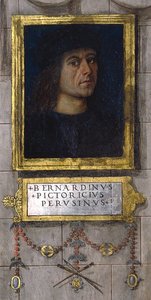
Pinturicchio
1454 - 1513 , Italien
Kurzprofil
- Artistic Movement Or Style: Renaissance
- Artists Or Movements Influenced By This Artist: ['Raphael']
- Artists Who Influenced This Artist:
- Perugino
- Umbrien Schule
- Date Of Birth: 1454 Perugia Italien
- Date Of Death: 1513 Siena Italien
- Full Name: Bernardino di Betto
- Nationality: Italienisch
- Notable Artworks:
- Fresken in der Sixtinischen Kapelle
- Dekoration der Borgia Apartments
- St. Augustinus
- Place Of Birth: Perugia Italien