
() ·
Ein Gemälde, von Hand für Sie geschaffen
Handgefertigte Ölreproduktion
Handgemaltes Ölgemälde auf Leinwand in Ihrer Wunschgröße und mit Rahmen, auf Bestellung von unseren Künstlern angefertigt. ( Zum Druck wechseln Zum digitalen Bild wechseln)
Künstlerbiografie
Erforschen Sie die beeindruckenden Skulpturen von Pietro Tacca (1577-1640), einem Meister der italienischen Barockkunst! Entdecken Sie seine Werke wie 'Der Porcellino' und das Monument für Ferdinand I., geprägt von Eleganz und Dramatik.
 Weiterlesen
ab ·
Kapitel 1
Welche Größe soll es haben?
Wischen Sie, um die Größe zu ändern; das Bild auf der linken Seite zeigt den Rahmen in seiner tatsächlichen Breite. Die Proportionen des Originals bleiben erhalten.
Wählen Sie aus unseren vordefinierten Formaten, die den ursprünglichen Proportionen des Kunstwerks entsprechen.

Geben Sie die Breite und die Höhe an, die Sie für Ihren Rahmen oder Ihre Wand benötigen. Da dieses Werk handgemalt ist, kann der Künstler bei einer anderen Form etwas mehr um das Bild herum malen oder etwas abschneiden – Sie entscheiden. Wir senden Ihnen ein digitales Mockup zur Freigabe, bevor mit dem Malen begonnen wird. Das auf dieser Seite gezeigte Bild stellt nicht das tatsächliche Ergebnis dar – dies tut nur das Mockup.
Kapitel 2
Wie soll es geliefert werden?
Wählen Sie die Kanten der Leinwand aus
Wählen Sie Ihren Rahmen

Weißer Rand €1

verlaufende Kanten €1

Umrandung €1

P118B €10

P118H €10

P118W €10

P438Z €10

P508JH €12

P508YH €12

P805H €10

P805Z €10

P919BZ €10

P919G €10

P919XJ €10

P959ZH €10

P968JZ €12

W106C €8

W218G €10

W218JH €8

W218Y €10

W307PJ €10

W316G €10

W316PJ €8

W316Y €10

W398PJ €8

W4111J €10

W500HY €15

W500JH €15

W692G €12

W849H €8

W940BG €15

W953PJ €8

H24-GOLD €30

H24-SILVER €30

H36-GOLD €45

H36-SILVER €45
Gerahmt
Profil: . Gesamtgröße mit Rahmen: .
Kapitel 3
Wer malt es, und sollte etwas geändert werden?
Nach der Bestellung wird das Team von OriginalUniqueArt.com den Kunden per E-Mail kontaktieren, um Anweisungen einzuholen und eine Vorschau des Entwurfs bereitzustellen
Weltweiter Versand () in nur 3 bis 4 Wochen statt der üblichen 5 Wochen. (10 November). Keine Kompromisse bei der Qualität.
Kapitel 4
Der letzte Schliff
Ein Namensschild, wie im Museum?
Details der gravierten Bronzetafel
This elegant plaque features the artist's name and the title of the artwork, finely engraved for a timeless presentation.
It is made from bronze with a refined, elegant finish. The text is precisely laser-engraved for a sharp and permanent result. Measuring 9x2 cm, the plaque is compact yet easy to read. It's built to be durable and scratch-resistant, offering a professional, museum-quality look. Mounting is simple thanks to the included adhesive backing.
Details zur Acrylglas-Plakette (transparent)
The plaque includes essential engraved details such as the artist's name, the title of the artwork, the date it was created, the type of media used-like oil on canvas or watercolor-a brief description of the piece, and a QR code that links to the complete artwork information.
It is crafted from clear acrylic, offering a sleek, modern appearance. The text is UV-engraved in black to ensure strong visual contrast. With a size of 10x15 cm, it ensures optimal readability. It comes equipped with two metal hooks for secure wall mounting. The plaque is designed to be weather-resistant, making it suitable for various environments, and it includes interactive features that work seamlessly with smartphone scanning.
Details zur schwarzen Acryltafel
This elegant plaque includes engraved information such as the artist's name, the title of the artwork, the date it was created, the type of media used (like oil on canvas or watercolor), a short description of the artwork, and a QR code for quick access to more information.
The plaque itself is made from refined black acrylic with a premium finish. The text is laser-engraved in white for high contrast and readability. Its size is 10x15 cm, designed to be easy to read. It comes with two metal hooks for professional mounting. The design is sleek and fits any interior style. It is also weather-resistant and durable, with built-in digital integration for mobile compatibility.
Ein Schutzlack?
Bis wann benötigen Sie es?
Kapitel 5
Ihr Gemälde, wie von Ihnen bestellt

Slave
Art der Reproduktion
Format der Reproduktion
-

Erstklassige Meisterkünstler
Mehr Detailtiefe, Raffinesse und zusätzliche Produktionszeit
-

Rahmen für Reproduktionen
-
-
Bei Kunstwerken oder Reproduktionen, die an einer Seite größer als 105 cm (ca. 41 Zoll) sind, wird der Rahmen zerlegt als Bausatz geliefert. Diese Methode gewährleistet eine sichere Zustellung und verhindert Schäden während des Transports.
Professionelle Montage erforderlich – dies ist kein DIY-Produkt.
Der Bausatz muss von einem erfahrenen professionellen Rahmenmacher zusammengebaut und die Leinwand gespannt werden. Hierfür werden Holzleim (nicht im Lieferumfang enthalten), eine Leinwandspannzange sowie Klemmen benötigt, um die Keilleisten während des Trocknungsvorgangs rechtwinklig zu halten. Eine unsachgemäße Montage oder eine ungleichmäßige Spannung der Leinwand kann das Kunstwerk dauerhaft beschädigen und ist nicht durch unsere Garantie abgedeckt.
 Bei Kunstwerken oder Reproduktionen, die an einer Seite größer als 105 cm (ca. 41 Zoll) sind, wird der Rahmen zerlegt als Bausatz geliefert. Diese Methode gewährleistet eine sichere Zustellung und verhindert Schäden während des Transports.
Alle Vollholzkomponenten sind enthalten, präzise auf Maß zugeschnitten.
Der Zusammenbau erfolgt mit den mitgelieferten Schrauben sowie Holzkleber für die Eckverbindungen, der nicht im Lieferumfang enthalten ist und vom Rahmenbauer selbst beschafft werden muss.
Professionelles Werkzeug ist erforderlich und nicht im Lieferumfang enthalten: eine Keilrahmenzange (Spannwerkzeug) sowie Klammern, um die Leisten während der Trocknungszeit des Klebers rechtwinklig zu fixieren.
Wichtiger Hinweis:
Für die Eckverbindungen wird Holzleim benötigt, die Leisten müssen mit Zwingen fixiert werden, bis der Leim vollständig getrocknet ist, und das Spannen der Leinwand auf dem fertigen Rahmen erfordert eine Keilrahmen-Zange. Keines dieser Utensilien ist im Set enthalten. Bitte stellen Sie sicher, dass ein erfahrener Rahmenmacher zur Verfügung steht, bevor Sie diese Größe bestellen.

Beschriftung
-
-

Schutzlackierung
Glanzlack (verstärkt die Farben, schützt vor Licht und Feuchtigkeit)
-

Mein Kunstwerk personalisieren
Beispiele für Anpassungsmöglichkeiten: Gesicht durch Kundenfoto ersetzen; Haustier hinzufügen (z. B. Katze durch Hund ersetzen); Versteckte Nachricht im Hintergrund einfügen; Hintergrundlandschaft oder -elemente ändern.
-

Eilt sehr
Weltweiter Versand () in nur 3 bis 4 Wochen statt der üblichen 5 Wochen. (10 November). Keine Kompromisse bei der Qualität.
-
Expressversand
Weltweiter Versand () innerhalb von 5 Wochen. (17 November).
Inklusive Versand
Endpreis
€ 268
Die Glasoption ist nur für Größen unter 110 cm verfügbar.
In jeder Bestellung enthalten
- Kostenloser weltweiter Expressversand
- Hochwertige Leinenleinwand
- Umfassender Versicherungsschutz beim Versand
- Zollgebühren-Rückerstattungsgarantie
- Garantie für exakte Farbtreue
- 100 Tage Rückgaberecht (nur bei Mängeln)
- 100% Geld-zurück-Garantie
- Mengenrabatt verfügbar


 Vorschau anzeigen
 Versenden
 Teilen
 Details anzeigen
 Leitfaden

 Herunterladen
 Ähnliche Objekte
 Röntgenaufnahme
 Diashow
 Fragen & Antworten
 Statistiken
In Zahlen
- 1615das Jahr der Entstehung
- 29Rahmen zur Auswahl
- Standardformate, in ihren eigenen Proportionen
- 5Wochen für die Bemalung und Lieferung
Über das Original


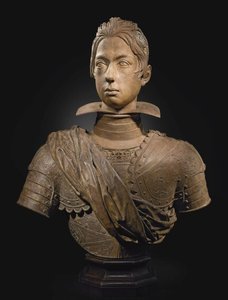
Pietro Tacca
1577 - 1640, Italien
Kurzinfos zu Pietro Tacca
- Artistic Movement Or Style: Barock & Manierismus
- Artists Who Influenced This Artist: ['Giambologna']
- Date Of Birth: 1577
- Full Name: Pietro Tacca
- Nationality: Italienisch
- Notable Artworks:
- Monument des Vier Moorern
- Equestr Monument zu Philipp IV
- Porcellino Florenz
- Place Of Birth: Carrara, Italien
Künstlerbiografie
Das skulpturale Erbe von Pietro Tacca
Im Herzen der Toskana, wo der weiße Marmor aus Carrara auf das goldene Licht von Florenz trifft, entfaltete sich das Leben von Pietro Tacca als eine Brücke zwischen zwei monumentalen Epochen der Kunstgeschichte. Geboren im Jahr 1577, entsprang Tacca einer Linie von Kunsthandwerkern und wurde zu einer prägenden Stimme im Übergang von den eleganten, oft künstlichen Komplexitäten des Manierismus zur tiefgreifende, dramatischen Energie des Barock. Seine Reise war nicht nur von persönlichem Ehrgeiz geprägt, sondern stellte eine tiefgreifende Evolution der Form dar, bei der die kontrollierte Anmut seiner Vorgänger einer neuen, atmenden Realität wich, welche das eigentliche Wesen von Bewegung und Emotion einfing.
Das Fundament für Taccas Genie wurde in der legendären Werkstatt von Giambologna gelegt. Als der junge Bildhauer im Jahr 1592 das Atelier betrat, wurde er weit mehr als nur ein Lehrling; er wurde zum Hüter einer anspruchsvollen ästhetischen Sprache. Unter dem wachsamen Auge Giambolognas meisterte Tacca die komplizierte Kunst des Bronzegusses und das feine Gleichgewicht asymmetrischer Kompositionen. Während seine frühen Werke noch die stilisierte Eleganz und die gelängten Proportionen der manieristischen Tradition bewahrten, regte sich in seinem Schaffen ein wachsender Hunger nach etwas Greifbarerem, Menschlicherem und unendlich Dynamischerem.
Der Medici-Hof und die Bronzemeisterwerke
Nach dem Tod seines Mentors im Jahr 1608 stieg Tacca in die prestigeträchtige Position des Hofbildhauers der Großherzöge von Medici auf. Diese Ernennung war ein transformativer Meilenstein, der ihm die Ressourcen und den monumentalen Maßstab verlieh, die notwendig waren, um Werke von immenser historischer Bedeutung zu schaffen. Als bevorzugter Künstler der florentinischen Elite navigierte er durch die Anforderungen mächtiger Gönner mit einer Geschicklichkeit, die politisches Prestige mit künstlerischer Innovation verband. Seine Fähigkeit, die Pracht der Dynastie der Medici in eine dauerhafte, bronzene Realität zu übersetzen, half dabei, die visuelle Identität von Florenz während dieses goldenen Zeitalters zu definieren.
Einer seiner beständigsten Beiträge zum Stadtbild findet sich vielleicht in seiner Meisterschaft kleinerer Bronzearbeiten, die ein Eigenleben besaßen. Das berühmte Porcellino, ein Bronzeschwein, das zu einer geliebten Ikone der florentinischen Folklore wurde, beispielhaft für seine Fähigkeit, selbst einem einzelnen Motiv Charme und Vitalität einzuhauchen. Über diese charmanten Figuren hinaus demonstrierte Taccas Arbeit an Reiterstatuen – wie etwa die Hommage an Ferdinand I. de' Medici – seine Fähweite für monumentales Geschichtenerzählen, indem er die Macht und Autorität der herrschenden Klasse durch ausladende Gesten und muskuläre Spannung einfing.
Eine Synthese aus Drama und Realismus
Im Laufe von Taccas Karriere wurde der Einfluss des Barockstils immer unverkennbarer. Er bewegte sich weg von den intellektualisierten Rätseln der manieristischen Skulptur hin zu einer direkteren Ansprache der Emotionen des Betrachters. Seine späteren Werke, wie das ergreifende Tarquinius und Lucretia, zeigen eine tiefe Beherrschung von narrativer Spannung und psychologischer Tiefe. In diesen Stücken scheint das Metall seine Starrheit zu verlieren, indem es die Weichheit der Haut und den schweren Fall von Stoff annimmt, wodurch ein Gefühl der Theatralik entsteht, das für seine Zeit revolutionär war.
Die historische Bedeutung von Pietro Tacca liegt genau in dieser Synthese der Stile. Er gab die Lehren Giambolognas nicht einfach auf; vielmehr erweiterte er sie, um einer Welt gerecht zu werden, die nach Realismus und emotionaler Resonanz dürstete. Sein Vermächtnis ist in den Bronze- und Marmorwerken Italiens eingraviert und repräsentiert einen Moment der Zeitgeschichte, in dem die Kunst vom Intellektuellen zum Viszeralen überging und sicherstellte, dass die skulpturalen Traditionen von Florenz noch lange nach seinem Tod im Jahr 1640 voller Leben pulsieren würden.
Ähnliche Artikel
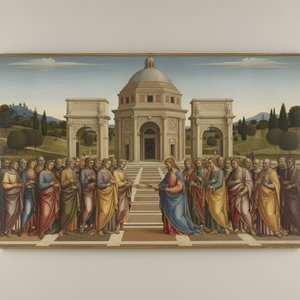
Pietro Perugino: Umbrian Master of Serenity & Precursor to Raphael's High Renaissance
Explore the life & art of Pietro Perugino, a pivotal Renaissance master and Raphael’s influential teacher. Discover his serene compositions, Sistine Chapel frescoes, and lasting legacy with OriginalUniqueArt.
