

 Vorschau anzeigen
 Versenden
 Teilen
 Details anzeigen

 Herunterladen
 Ähnliche Objekte
 Röntgenaufnahme
 Diashow
The Garden
 Oil
Oil- WallArt
- Expressionism
 1914
1914- Modern
 90.0 x 60.0 cm
 Boschi Di Stefano Hausmuseum
 Weiterlesen
Giclée / Kunstdruck
Giclée- oder Leinwanddruck in Museumsqualität mit schneller Produktion und flexiblen Veredelungsoptionen. ( Handgemalte Reproduktion bestellen Bild kaufen)




P118B $10

P118H $10

P118W $10

P438Z $10

P508JH $12

P508YH $12

P805H $10

P805Z $10

P919BZ $10

P919G $10

P919XJ $10

P959ZH $10

P968JZ $12

W106C $8

W218G $10

W218JH $8

W218Y $10

W307PJ $10

W316G $10

W316PJ $8

W316Y $10

W398PJ $8

W4111J $10

W500HY $15

W500JH $15

W692G $12

W849H $8

W940BG $15

W953PJ $8




Wählen Sie aus unseren vordefinierten Formaten, die den ursprünglichen Proportionen des Kunstwerks entsprechen.

Sie können Ihre eigenen Maße eingeben, um ein bestimmtes Format oder einen speziellen Platz einzupassen. Wenn das von Ihnen gewählte Format nicht den Proportionen des Originalbildes entspricht, werden wir das Kunstwerk entweder beschneiden oder das Bild mit einem gespiegelten oder einfarbigen Rand erweitern. Ein digitaler Entwurf wird Ihnen zur Genehmigung zugesandt, bevor die Produktion beginnt.
Bitte beachten Sie, dass die Vorschau auf dem Bildschirm nicht den tatsächlichen Zuschnitt oder die Erweiterung widerspiegelt. Nur der Entwurf zeigt die endgültige Komposition präzise an.
Obwohl Sondermaße verfügbar sind, empfehlen wir die Auswahl eines Maßes aus der vordefinierten Liste, um die ursprünglichen Proportionen zu bewahren.
Weltweiter Versand () innerhalb von 2 Wochen statt der üblichen 4/5 Wochen. (26 August)

Kostenloser weltweiter Expressversand

Hochwertige Leinenleinwand

Umfassender Versicherungsschutz beim Versand

Zollgebühren-Rückerstattungsgarantie

Garantie für exakte Farbtreue

60 Tage Rückgaberecht (nur bei Mängeln)

100% Geld-zurück-Garantie

Mengenrabatt verfügbar
 Die Glasoption ist nur für Größen unter 110 cm verfügbar.

The Garden
Giclée / Kunstdruck
Format der Reproduktion
-


Gesamtpreis
$ 80
Sammlerstück-Beschreibung
A Sanctuary in Brushstrokes: Rediscovering Pietro Marussig’s The Garden
In the quiet corners of art history, certain works possess the singular ability to suspend time, offering a window into a world of profound serenity. The Garden, painted in 1914 by the Italian master Pietro Marussig, is one such masterpiece. At first glance, the viewer is greeted by a lush, verdant sanctuary where nature breathes in rhythmic harmony. The composition is anchored by a majestic palm tree that rises with commanding grace from the center of the canvas, acting as a silent sentinel over a meticulously curated landscape. Surrounding this central figure, a tapestry of smaller trees and delicate potted plants creates a sense of depth and abundance, inviting the eye to wander through layers of foliage and light. The inclusion of a solitary bird, perched delicately upon a branch, injects a fleeting moment of life into the stillness, reminding us that even in moments of deep peace, the pulse of nature remains ever-present.
Marussig’s technique in this work is a masterful dialogue between Divisionism and Expressionism. Influenced by the legendary Italian masters Gaetano Previati and Giovanni Segantini, Marussig employs a sophisticated approach to light and color that transcends mere representation. Rather than flat planes of pigment, the painting utilizes subtle, broken strokes that allow light to shimmer across the leaves and petals, creating an atmospheric vibration known as luminosity. This method breathes life into the greenery, making the garden feel not like a static image, but a living, breathing environment. The interplay of shadow and sun-drenched highlights provides a tactile quality to the flora, where one can almost sense the humidity of the air and the gentle rustle of the breeze through the palms.
Beyond its technical brilliance, The Garden serves as an emotional refuge. Created during a period of significant historical transition in Europe, the painting offers a nostalgic retreat into an idealized pastoral existence. For the collector or the interior designer, this piece represents more than just decoration; it is an infusion of tranquility. The soft, organic textures and the harmonious color palette of deep emeralds, earthy browns, and sun-kissed highlights make it an ideal centerpiece for spaces designed for contemplation and rest. Whether placed in a sunlit morning room or a sophisticated study, this reproduction brings with it the timeless elegance of the Italian Belle Époque, transforming any interior into a curated gallery of peace and botanical splendor.
Über den Künstler
Frühes Leben und Ausbildung
Pietro Marussig, ein italienischer Maler, wurde 1879 in Triest, Italien, geboren. Seine künstlerische Reise begann mit dem Unterricht bei Eugenio Scomparini in seiner Geburtsstadt Triest, wo er von 1898 bis 1918 wirkte. Diese prägende Ära legte das fundamentale Fundament für seinen späteren expressionistischen Stil.Künstlerischer Stil und Einflüsse
Das Werk Marussigs zeichnet sich durch einen repräsentativen expressionistischen Stil aus, der Genreszenen, Veduten und Porträts meisterhaft einfängt. Sein Schaffen war tief verwurzelt in den italienischen Strömungen des Divisionismus und Symbolismus sowie beeinflusst von den wegweisenden Werken von Gaetano Previati und Giovanni Segantini, den führenden Exponenten des Divisionismus.Bemerkenswerte Ausstellungen und Werke
Zu seinen bedeutendsten Schöpfungen zählen: Pietro Marussig: Bambina che legge (91 x 81 cm, Museo del Novecento, Mailand, Italien, Öl) – ein herausragendes Beispiel seines expressionistischen Ausdrucks. Pietro Marussig: Vaso di rose (52 x 47 cm, Museo del Novecento, Mailand, Italien, Öl auf Tafel) – welches seine meisterhafte Handhabung der Licht- und Farbtrennung demonstriert. Ebenso beeindruckend ist Pietro Marussig: La Lettrice (93 x 62 cm, Museo del Novecento, Mailand, Italien, Öl), ein Porträt, das seine Fähigkeit offenbart, das wahre Wesen seiner Motive einzufangen.- Betrachten Sie die Werke von Pietro Marussig bei OriginalUniqueArt
- Erfahren Sie mehr über Pietro Marussig auf Wikipedia
- Entdecken Sie das Museo del Novecento in Mailand, Italien, um weitere Werke von Marussig und andere bedeutende Künstler zu entdecken.
Vermächtnis
Pietro Marussig verstarb 1937 in Mailand und hinterließ ein bleibendes Erbe als eine bedeutende Figur im Übergang vom Divisionismus zum Symbolismus in der italienischen Kunst des frühen 20. Jahrhunderts. Sein Werk wird bis heute für seine einzigartige Verbindung aus expressionistischer Kraft und repräsentativen Genreszenen gefeiert. Wichtige Daten:Geboren: 1879, Triest, Italien
Gestorben: 1937, Mailand, Italien

Pietro Marussig
1879 - 1937 , Italien
Ähnliche Artikel
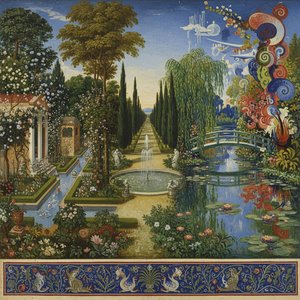
Cultivating Paradise: A Historical & Artistic Exploration of Gardens in Painting
Explore the rich history of gardens in painting! Discover masterpieces from Renaissance to Impressionism & beyond. Learn about symbolism, artists like Monet & Klimt, and find your perfect artwork at OriginalUniqueArt.

Arboreal Echoes: A Historical & Artistic Exploration of Trees in Painting
Explore the rich history of trees in painting! Discover symbolism, Romantic masterpieces by Caspar David Friedrich & beyond. A curated journey for art enthusiasts.
Arboreal Echoes: A Historical & Artistic Exploration of Trees in Painting
Explore the rich history of trees in painting! Discover symbolism, Romantic masterpieces by Caspar David Friedrich & beyond. A curated journey for art enthusiasts.
Claude Monet: Die 25 Meisterwerke des Impressionismus für Ihr Zuhause | OriginalUniqueArt
Entdecken Sie die 25 Meisterwerke von Claude Monet! Tauchen Sie ein in die Welt des Impressionismus, erleben Sie Seerosen, Sonnenaufgänge & Kathedralen. Hochwertige Reproduktionen für Ihr Zuhause – exklusiv auf OriginalUniqueArt.com.
Marianne North: Die 25 schönsten Blumenmalereien der viktorianischen Reisenden | OriginalUniqueArt
Entdecken Sie die 25 schönsten Werke der viktorianischen Blumenmalerin Marianne North! Erleben Sie ihre exotischen Reisebilder & botanischen Illustrationen. Hochwertige Kunst Reproduktionen für Ihr Zuhause auf OriginalUniqueArt.com.

