- Startseite

- Digitales Kunstwerk
- Pietro Longhi
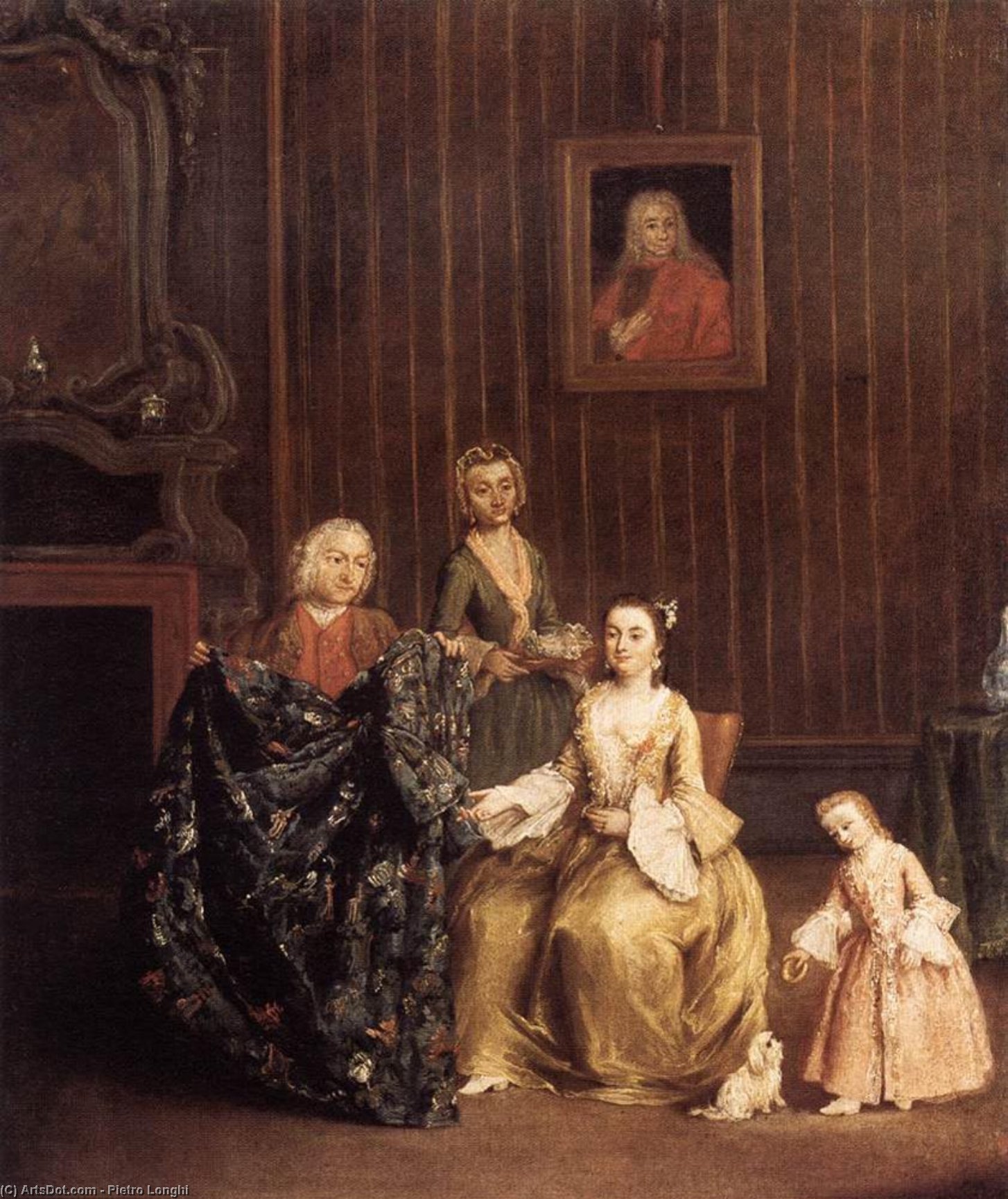
- The Tailor
 Druck bestellen Gemälde kaufen
 Versenden
 Teilen
 Details anzeigen
 Zu Favoriten hinzufügen

 Herunterladen
 Ähnliche Objekte
 Röntgenaufnahme
 Diashow anzeigen
The Tailor


 Weiterlesen
Erwerben Sie ein hochauflösendes, optimiertes digitales Bild, das der Online-Vorschau weit überlegen ist.
Jede Datei wird von unseren hauseigenen Spezialisten mit modernsten Werkzeugen und fachmännischer manueller Retusche sorgfältig vorbereitet. Wir stellen sicher, dass jedes Bild eine außergewöhnliche Klarheit, präzise Farbgenauigkeit und feinste Details aufweist.
Die endgültige Datei wird innerhalb von 72 Stunden per E-Mail zugestellt und ist für den sofortigen Einsatz in professionellen, redaktionellen und Druckumgebungen optimiert. Es handelt sich um dieselbe Qualität, der führende Designstudios, Verlage und Galerien vertrauen.
Digitales Kunstwerk
Laden Sie eine hochauflösende Datei für die persönliche Präsentation, den Druck und kreative Projekte herunter.
In jeder Bestellung digitaler Bilder enthalten
Professionelle digitale Bereitstellung, garantiert
Wenn Sie sich für OriginalUniqueArt.com entscheiden, erhalten Sie nicht nur ein Bild – Sie erhalten ein professionell aufbereitetes digitales Kunstwerk, das mit höchster Präzision erstellt und durch eine Zufriedenheitsgarantie abgesichert wird. Hier ist alles, was automatisch mit Ihrer Bestellung geliefert wird:

Schnelle E-Mail-Zustellung
Ihre hochauflösende digitale Bilddatei wird Ihnen innerhalb von 72 Stunden nach der Bestellung per E-Mail zugestellt – bereit zur sofortigen Verwendung.

KI-optimierte digitale Datei
Ihre Kunstwerke werden professionell mithilfe fortschrittlicher KI-Tools und manueller Bearbeitung optimiert, um maximale Detailtreue, Klarheit und Farbgenauigkeit zu gewährleisten.

Kostenloser lebenslanger erneuter Versand
Datei versehentlich gelöscht oder verloren? Keine Sorge – wir senden sie Ihnen jederzeit kostenlos erneut zu.

Keine Einfuhrgebühren – jemals
Genießen Sie Ihr Kunstwerk sofort ohne Zollgebühren, Einfuhrabgaben oder Versandkosten – digitale Downloads sind immer steuerfrei.

Garantierte Farbtreue
Wir garantieren, dass Ihr digitales Bild die Originalfarben mithilfe professioneller Werkzeuge und Farbmanagement so präzise wie möglich wiedergibt.

60-Tage-Zufriedenheitsgarantie
Sollten Sie mit Ihrem digitalen Bild nicht zufrieden sein, werden wir es überarbeiten oder Ihnen innerhalb von 60 Tagen 100% erstatten – ohne Wenn und Aber.

100% Geld-zurück-Garantie
Nicht zufrieden? Erhalten Sie innerhalb von 60 Tagen nach Erhalt Ihrer digitalen Datei eine vollständige Rückerstattung – ohne Angabe von Gründen.

Rabatte bei Großbestellungen
3 Bilder kaufen, 10% sparen – 5 Bilder kaufen, 15% sparen – Ab 10 Bildern 20% sparen. Ideal für kreative Projekte, Galerien und Agenturen.
Details zum Sammlerstück
A Glimpse into Venetian Life: Pietro Longhi’s “The Tailor”
Pietro Longhi's "The Tailor," painted in 1741, isn’t merely a portrait; it’s a meticulously crafted window into the bustling, sophisticated world of 18th-century Venice. Often dubbed the ‘Venetian Hogarth,’ Longhi possessed a remarkable talent for capturing the everyday dramas and social nuances of his time – a departure from the grand historical narratives favored by many of his contemporaries. This particular work, housed within the Gallerie dell’Accademia in Venice, offers an intimate study of bourgeois society, revealing a keen eye for detail and a subtle, often satirical, commentary on the era's customs and values.
The scene unfolds within a richly appointed interior, characteristic of Rococo design – a style defined by its opulence, elegance, and focus on refined leisure. The composition centers around a family group, presided over by a man presumably engaged in overseeing the work of a tailor. A young girl stands beside him, while a servant attends to their needs. The figures are arranged with a deliberate formality, yet there’s an undeniable sense of relaxed intimacy, suggesting a domestic setting of considerable wealth and status. The linear precision of the architecture – the fireplace, wall paneling, and even the folds of clothing – is balanced by the organic forms of the human figures and the luxurious drapery that dominates the space.
The Art of Venetian Genre Painting
Longhi’s genius lay in his specialization in *genre* paintings—a genre largely pioneered by artists like Giuseppe Maria Crespi. Unlike the idealized portraits or mythological scenes prevalent at the time, Longhi focused on capturing ordinary life: gambling dens, fashionable salons, and the interactions of everyday Venetians. This shift reflected a broader cultural trend – a growing interest in the private sphere and the lives of the middle classes. His work provides invaluable insight into the social customs, fashion trends, and even the gossip of the time, offering a remarkably detailed portrait of Venetian society.
The painting’s technique is a testament to Longhi's mastery of oil paint. Notice the meticulous layering of colors, creating a remarkable sense of texture – from the velvet upholstery to the shimmering fabric of the tailor’s garment. The use of light is particularly effective, casting subtle shadows that add depth and volume to the figures and objects within the scene. The slightly flattened perspective, typical of portraiture during this period, prioritizes clarity of form over strict realism, allowing Longhi to convey a sense of immediacy and engagement.
Symbolism and Social Commentary
Beyond its aesthetic qualities, “The Tailor” is rich in symbolic meaning. The presence of the portrait on the wall – depicting a male ancestor – immediately establishes a lineage of wealth and status. The elaborate clothing worn by the family members signifies their social standing and access to luxury. However, Longhi doesn’t simply present a straightforward celebration of wealth; there's an underlying current of observation and perhaps even gentle critique. The slightly bewildered expression on the young girl’s face, coupled with the servant’s attentive posture, hints at the complexities of social roles and expectations within this privileged household.
The inclusion of the tailor himself is particularly noteworthy. He represents a skilled artisan – a vital part of Venetian society – yet he's presented as somewhat detached from the family's immediate concerns. This subtle positioning suggests a commentary on the relationship between labor, wealth, and social hierarchy. Furthermore, the painting’s numerous faceless figures—often masked—add another layer of intrigue, hinting at the hidden realities and unspoken conversations that likely transpired behind closed doors in this opulent setting.
A Legacy of Venetian Observation
Pietro Longhi's “The Tailor” stands as a quintessential example of Venetian genre painting – a vibrant snapshot of daily life captured with remarkable skill and insight. His work, alongside that of his contemporaries like Canaletto and Guardi, offers an unparalleled glimpse into the social fabric of 18th-century Venice. Longhi’s legacy extends beyond individual masterpieces; he fundamentally shifted the focus of Venetian painting, moving away from grand historical narratives towards a more intimate and nuanced exploration of human experience. Reproductions of this captivating work continue to resonate with art lovers today, offering a timeless reminder of the beauty and complexity of everyday life.
Biografie des Künstlers
Frühes Leben und Ausbildung
Pietro Longhi, ein renommierter venezianischer Maler, wurde am 5. November 1701 in Venedig in der Gemeinde Saint Maria geboren. Er war das erste Kind von Alessandro Falca, einem Silberschmied, und seiner Frau Antonia. Longhi nahm seinen Nachnamen an, als er mit dem Malen begann, anfänglich unterrichtet vom veronesischen Maler Antonio Balestra.Künstlerische Karriere
Longhis frühe Arbeiten umfassten Altäre und religiöse Themen, wobei sein erstes größeres dokumentiertes Werk ein Altarbild für die Kirche San Pellegrino im Jahr 1732 war. Später spezialisierte er sich auf kleinformatige Genremotive, was ihm den Titel „Der venezianische William Hogarth“ einbrachte. Seine galanten Innenansichten spiegeln den Fokus des 18. Jahrhunderts auf das Private und Bürgertum wider.- Longhis Gemälde zeigen oft maskierte Figuren bei verschiedenen Aktivitäten, wie z.B. die Begegnung des Procurators mit seiner Frau, was seine satirische Perspektive zeigt.
- Seine Werke, wie z.B. Entenjäger auf der Lagune, demonstrieren seine Fähigkeit, den Alltag in Venedig einzufangen.
- Longhis zahlreiche Zeichnungen, typischerweise in schwarzem Kreide oder Bleistift mit weißer Kreide auf farbigem Papier, wurden oft für sich selbst angefertigt, nicht als Studien für Gemälde.
Museum und Kunstbewegung
Longhis Werke sind in verschiedenen Museen zu finden, darunter die Pinacoteca Querini Stampalia in Venedig, die seine Szenen aus der Jagd (Caccia) zeigt. Sein Stil ist charakteristisch für die venezianische Malerei-Kunstbewegung, die Farbe über Linie betonte und im Gegensatz zur in Italien vorherrschenden Manierismus stand. Bemerkenswerte Werke:- Der Schneider (Gallerie dell'Accademia, Venedig, Italien)
- Die Taufe (Fondazione Querini Stampalia, Venedig, Italien)
- Der Maler in seinem Atelier (Ca' Zenobio, Venedig, Italien)
Vermächtnis
Pietro Longhi verstarb am 8. Mai 1785 und hinterließ ein Vermächtnis als einer der gefeiertsten Genremaler seiner Zeit. Seine Arbeit wird weiterhin für ihre einzigartige Mischung aus Satire und Alltag bewundert, die einen Einblick in das Venedig des 18. Jahrhunderts bietet. Mehr Werke von Pietro Longhi auf OriginalUniqueArt.com ansehen.
Pietro Longhi
1701 - 1785 , Italien
Kurzinfos
- Bemerkenswerte Werke:
- Der Schneider
- Die Taufe
- Maler in seinem Atelier
- Geburtsdatum: 5. November 1701
- Geburtsort (Stadt, Land): Venedig, Italien
- Künstler, Die Diesen Künstler Beeinflussten: ['Antonio Balestra']
- Künstlerische Bewegung/Stil: Venezianische Malerei
- Nationalität: Italienisch
- Sterbedatum: 8. Mai 1785
- Vollständiger Name: Pietro Longhi

