
 Vorschau anzeigen
 Versenden
 Teilen
 Details anzeigen
 Leitfaden

 Herunterladen
 Ähnliche Objekte
 Röntgenaufnahme
 Diashow
 Fragen & Antworten
 Statistiken
Lute Player


 Weiterlesen
Giclée / Kunstdruck
Giclée- oder Leinwanddruck in Museumsqualität mit schneller Produktion und flexiblen Veredelungsoptionen. ( Handgemalte Reproduktion bestellen Zum digitalen Bild wechseln)




P118B €10

P118H €10

P118W €10

P438Z €10

P508JH €12

P508YH €12

P805H €10

P805Z €10

P919BZ €10

P919G €10

P919XJ €10

P959ZH €10

P968JZ €12

W106C €8

W218G €10

W218JH €8

W218Y €10

W307PJ €10

W316G €10

W316PJ €8

W316Y €10

W398PJ €8

W4111J €10

W500HY €15

W500JH €15

W692G €12

W849H €8

W940BG €15

W953PJ €8




Wählen Sie aus unseren vordefinierten Formaten, die den ursprünglichen Proportionen des Kunstwerks entsprechen.

Geben Sie die benötigte Breite und Höhe an, damit der Druck perfekt in Ihren Rahmen oder an Ihre Wand passt. Ein Druck kann nur beschnitten, aber niemals größer als das Originalbild angefertigt werden; daher verliert ein Format mit anderen Proportionen einen Teil des Bildes. Wir senden Ihnen ein digitales Mockup zur Freigabe, bevor wir den Druck ausführen. Das auf dieser Seite gezeigte Bild zeigt nicht den tatsächlichen Beschnitt – dies ist nur im Mockup ersichtlich.
Weltweiter Versand () innerhalb von 2 Wochen statt der üblichen 4/5 Wochen. (4 November)

Kostenloser weltweiter Expressversand

Hochwertige Leinenleinwand

Umfassender Versicherungsschutz beim Versand

Zollgebühren-Rückerstattungsgarantie

Garantie für exakte Farbtreue

100 Tage Rückgaberecht (nur bei Mängeln)

100% Geld-zurück-Garantie

Mengenrabatt verfügbar
 Die Glasoption ist nur für Größen unter 110 cm verfügbar.

Lute Player
Giclée / Kunstdruck
Format der Reproduktion
-


Endpreis
€ 72
A Portrait of Venetian Life: Pietro Longhi’s “Lute Player”
Pietro Longhi's 1752 drawing, "Lute Player," isn't merely a depiction of a musician; it’s a vibrant snapshot of 18th-century Venice – a city teeming with social intrigue, casual elegance, and the quiet dramas unfolding within its opulent homes. Longhi, often dubbed the “Venetian Hogarth” by art historians like Bernard Berenson, deliberately shifted away from the grand historical narratives favored by his contemporaries, choosing instead to capture the everyday lives of Venetian citizens with a keen eye for detail and a subtle, often satirical, wit. This particular work offers an intimate glimpse into a world of refined leisure, revealing a society preoccupied with fashion, conversation, and the subtle pleasures of urban life.
The drawing’s immediate impact lies in its remarkable realism – a testament to Longhi's meticulous observation and masterful technique. Executed primarily in charcoal and chalk on paper, it showcases a dynamic interplay of hatching and cross-hatching, creating a rich tapestry of textures that mimic the roughness of the medium itself. The artist skillfully employs light and shadow to define the figure’s form, lending him a palpable sense of volume and presence. Notice how the folds of his clothing are rendered with subtle gradations of tone, while the details of his lute – its intricate wood carving and taut strings – are brought to life with remarkable precision. The loose, expressive lines contribute to an overall feeling of immediacy, as if we’ve stumbled upon a candid moment frozen in time.
The Rococo World and Venetian Society
Longhi's work is firmly rooted in the Rococo style, a movement characterized by its emphasis on elegance, ornamentation, and playful subject matter. However, unlike many of his contemporaries who embraced the excesses of the era, Longhi’s depictions retain a grounded sense of realism, avoiding overt theatricality. He focused on capturing the nuances of Venetian bourgeois society – their social rituals, their fashion sensibilities, and their penchant for gossip and entertainment. The scene unfolds within what appears to be a richly furnished room, suggesting a comfortable domestic setting where conversation and music are central activities. The inclusion of figures engaged in various pursuits—playing the lute, conversing animatedly, and observing with detached amusement—reflects the leisurely pace of life enjoyed by the Venetian elite.
Symbolism and Hidden Meanings
Beyond its surface depiction of a social gathering, “Lute Player” is laden with subtle symbolism. The lute itself represents refinement, artistry, and intellectual pursuits – qualities highly valued in 18th-century Venice. The figures’ attire—the elaborate wigs, the luxurious fabrics, and the carefully chosen accessories—are indicative of their status and wealth. However, Longhi doesn't shy away from injecting a touch of irony into his portrayal. Many of the faces are obscured by masks, suggesting a degree of anonymity and perhaps even deception within this seemingly harmonious scene. The presence of figures in the background, partially hidden or indistinct, hints at a world of secrets and intrigue beneath the veneer of polite society.
A Legacy of Venetian Observation
Pietro Longhi’s “Lute Player” stands as a remarkable achievement in Venetian art – a testament to his ability to capture the essence of daily life with wit, precision, and emotional depth. His work offers a unique window into the social fabric of 18th-century Venice, revealing a world of refined leisure, subtle satire, and hidden meanings. Longhi’s legacy extends beyond individual masterpieces; he fundamentally shifted the focus of Venetian painting away from grand historical narratives towards a more intimate and humanistic perspective, establishing himself as one of the city's most insightful chroniclers of its vibrant culture. Reproductions of this captivating drawing continue to resonate with viewers today, offering a timeless glimpse into the heart of Venice.
Fragen & Antworten
Was stellt "Lute Player" dar und welche Atmosphäre vermittelt es?
"Lute Player" von Pietro Longhi verbindet portrait, musician, baroque, venice, drawing, period clothing, leisure, music mit einer Calm Atmosphäre.
Ist die Abbildung von "Lute Player" von Pietro Longhi gemeinfrei?
Die urheberrechtliche Situation für "Lute Player" von Pietro Longhi: Das Werk ist gemeinfrei – das Urheberrecht ist abgelaufen. Dies bestimmt, ob Reproduktionen des Bildes frei erstellt werden dürfen.
Welche Größe sollte ich für den Druck von "Lute Player" für mein Zimmer wählen?
Die ideale Kombination für "Lute Player" von Pietro Longhi: ein Druck im Format Medium für einen Living Room.
Künstlerbiografie
Frühes Leben und Ausbildung
Pietro Longhi, ein renommierter venezianischer Maler, wurde am 5. November 1701 in Venedig in der Gemeinde Saint Maria geboren. Er war das erste Kind von Alessandro Falca, einem Silberschmied, und seiner Frau Antonia. Longhi nahm seinen Nachnamen an, als er mit dem Malen begann, anfänglich unterrichtet vom veronesischen Maler Antonio Balestra.Künstlerische Karriere
Longhis frühe Arbeiten umfassten Altäre und religiöse Themen, wobei sein erstes größeres dokumentiertes Werk ein Altarbild für die Kirche San Pellegrino im Jahr 1732 war. Später spezialisierte er sich auf kleinformatige Genremotive, was ihm den Titel „Der venezianische William Hogarth“ einbrachte. Seine galanten Innenansichten spiegeln den Fokus des 18. Jahrhunderts auf das Private und Bürgertum wider.- Longhis Gemälde zeigen oft maskierte Figuren bei verschiedenen Aktivitäten, wie z.B. die Begegnung des Procurators mit seiner Frau, was seine satirische Perspektive zeigt.
- Seine Werke, wie z.B. Entenjäger auf der Lagune, demonstrieren seine Fähigkeit, den Alltag in Venedig einzufangen.
- Longhis zahlreiche Zeichnungen, typischerweise in schwarzem Kreide oder Bleistift mit weißer Kreide auf farbigem Papier, wurden oft für sich selbst angefertigt, nicht als Studien für Gemälde.
Museum und Kunstbewegung
Longhis Werke sind in verschiedenen Museen zu finden, darunter die Pinacoteca Querini Stampalia in Venedig, die seine Szenen aus der Jagd (Caccia) zeigt. Sein Stil ist charakteristisch für die venezianische Malerei-Kunstbewegung, die Farbe über Linie betonte und im Gegensatz zur in Italien vorherrschenden Manierismus stand. Bemerkenswerte Werke:- Der Schneider (Gallerie dell'Accademia, Venedig, Italien)
- Die Taufe (Fondazione Querini Stampalia, Venedig, Italien)
- Der Maler in seinem Atelier (Ca' Zenobio, Venedig, Italien)
Vermächtnis
Pietro Longhi verstarb am 8. Mai 1785 und hinterließ ein Vermächtnis als einer der gefeiertsten Genremaler seiner Zeit. Seine Arbeit wird weiterhin für ihre einzigartige Mischung aus Satire und Alltag bewundert, die einen Einblick in das Venedig des 18. Jahrhunderts bietet. Mehr Werke von Pietro Longhi auf OriginalUniqueArt.com ansehen.
Pietro Longhi
1701 - 1785 , Italien
Kurzinfos
- Bemerkenswerte Werke:
- Der Schneider
- Die Taufe
- Maler in seinem Atelier
- Geburtsdatum: 5. November 1701
- Geburtsort (Stadt, Land): Venedig, Italien
- Künstler, Die Diesen Künstler Beeinflussten: ['Antonio Balestra']
- Künstlerische Bewegung/Stil: Venezianische Malerei
- Nationalität: Italienisch
- Sterbedatum: 8. Mai 1785
- Vollständiger Name: Pietro Longhi
Ähnliche Artikel

Pietro Longhi's Venetian Scenes: A Study of Rococo Society & Domestic Life
Explore the captivating world of Pietro Longhi's Venetian scenes! Discover insightful analysis of his Rococo masterpieces & social commentary on 18th-century life. Learn about this 'Venetian Hogarth' and his lasting artistic legacy.
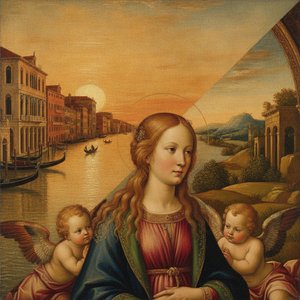
Golden Light & Rich Color: The Timeless Magic of Venetian Renaissance Art
Explore the luminous beauty of Venetian Renaissance art. Discover how masters like Titian used colorito and golden light to redefine painting through texture, emotion, and atmospheric brilliance in a masterclass of historical artistry.
Die 10 Meisterwerke des 18. Jahrhunderts: Kunst für Ihr Zuhause | OriginalUniqueArt
Entdecken Sie die 10 prächtigsten Meisterwerke des 18. Jahrhunderts! Von Rokoko bis Klassizismus – erleben Sie die Kunst von Fragonard, David & Hogarth. Hochwertige Reproduktionen für Ihr Zuhause auf OriginalUniqueArt.com.

Meister des Dramas: Die 25 größten Kunstwerke von Jacopo Tintoretto
Entdecke die 25 Meisterwerke von Tintoretto und seine dramatische Lichtführung. Erlebe die Renaissance auf OriginalUniqueArt.com.

The Nuances of Graphite: Exploring Emotional Depth & Technical Mastery in Pencil Drawing
Explore the captivating world of graphite drawing! Discover its rich history, master essential techniques like chiaroscuro, and learn how artists evoke emotion through this timeless medium. Expert insights for art enthusiasts.


