In echtem Maßstab anzeigen
 Versenden als Grußkarte
 Teilen
 Details anzeigen
 Leitfaden öffnen

 Herunterladen
 Ähnliche Objekte
 Röntgenaufnahme
 Diashow
 Besucherstatistiken
Place de la Concorde


 Mehr anzeigen
Giclée / Kunstdruck
Giclée- oder Leinwanddruck in Museumsqualität mit schneller Produktion und flexiblen Veredelungsoptionen. ( Handgemalte Reproduktion kaufen Zum digitalen Bild wechseln)




P118B €10

P118H €10

P118W €10

P438Z €10

P508JH €12

P508YH €12

P805H €10

P805Z €10

P919BZ €10

P919G €10

P919XJ €10

P959ZH €10

P968JZ €12

W106C €8

W218G €10

W218JH €8

W218Y €10

W307PJ €10

W316G €10

W316PJ €8

W316Y €10

W398PJ €8

W4111J €10

W500HY €15

W500JH €15

W692G €12

W849H €8

W940BG €15

W953PJ €8




Wählen Sie aus unseren vordefinierten Formaten, die den ursprünglichen Proportionen des Kunstwerks entsprechen.

Geben Sie die Breite und die Höhe an, die Sie benötigen, damit der Druck perfekt in Ihren Rahmen oder an Ihre Wand passt. Ein Druck kann nur beschnitten werden und niemals größer als das Originalbild gemacht werden; daher verliert ein Format mit einer anderen Proportion einen Teil des Bildes. Wir senden Ihnen ein digitales Mockup zur Freigabe, bevor wir den Druck ausführen. Das auf dieser Seite gezeigte Bild zeigt nicht den tatsächlichen Beschnitt – dies ist nur im Mockup ersichtlich.
Weltweiter Versand () innerhalb von 2 Wochen statt der üblichen 4/5 Wochen. (24 Oktober)

Kostenloser weltweiter Expressversand

Hochwertige Leinenleinwand

Vollständiger Versicherungsschutz beim Versand

Zollgebühren-Rückerstattungsgarantie

Garantie für exakte Farbtreue

100-tägiges Rückgaberecht (nur bei Mängeln)

100% Geld-zurück-Garantie

Angebot für Mengenrabatt
 Die Glasoption ist nur für Größen unter 110 cm verfügbar.

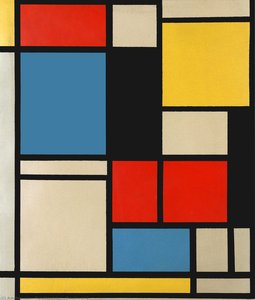
Place de la Concorde
Giclée / Kunstdruck
Format der Reproduktion
-


Gesamtpreis
€ 70
A Symphony of Balance: Deconstructing Mondrian’s ‘Place de la Concorde’
Piet Mondrian’s *Place de la Concorde*, painted between 1938 and 1943, is far more than a geometric arrangement of color and line; it’s a distillation of an artistic philosophy, a visual poem born from a period of profound change and upheaval. While titled after the famed Parisian square, Mondrian doesn't offer a representational depiction. Instead, he presents us with an abstraction that *embodies* the energy and dynamism of modern urban life – a pulsating grid of black lines containing blocks of primary colors—red, yellow, and blue—set against a stark white background. This wasn’t merely about depicting a place; it was about capturing its essence, its underlying structure, and translating it into a universal visual language. The painting's evolution is particularly fascinating. Begun in Paris before Mondrian fled the looming threat of World War II, it continued to be reworked after his arrival in New York City, absorbing the influence of a new environment—a faster pace, bolder energy—resulting in adjustments to line weight and color placement that lend the work an even greater sense of vitality.The Path to Neoplasticism: A Life Dedicated to Abstraction
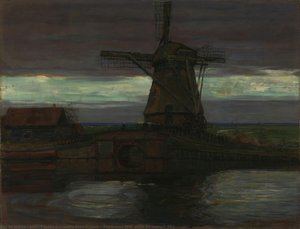
To truly appreciate *Place de la Concorde*, one must understand its place within Mondrian’s artistic journey. Born Pieter Cornelis Mondriaan in 1872, he initially trained as a teacher while simultaneously pursuing his passion for art. His early works were steeped in the traditions of Dutch landscape painting, reflecting the influence of the Hague School and Impressionism. Paintings like *The Red Mill* demonstrate this formative period, showcasing a naturalistic style that gradually gave way to experimentation with Pointillism and Fauvism. However, it was his move to Paris in 1912 that proved pivotal. Immersed in the avant-garde scene and captivated by Cubism, Mondrian began to deconstruct forms, moving away from representational art towards a more abstract vocabulary. This exploration culminated in the development of Neoplasticism – also known as De Stijl – a style predicated on the belief that pure abstraction could express universal harmony. Mondrian believed that through reducing painting to its most fundamental elements—horizontal and vertical lines, primary colors, and black, white, and gray—he could reveal the underlying structure of reality and achieve a spiritual ideal.Decoding the Composition: Beyond Form and Color
The seemingly simple composition of *Place de la Concorde* is deceptively complex. The grid structure isn’t arbitrary; it represents Mondrian’s attempt to create a harmonious balance between opposing forces – horizontal versus vertical, static versus dynamic, individual elements versus the unified whole. The black lines act as boundaries and connectors, defining spaces while simultaneously creating a sense of flow and interconnectedness. The carefully placed blocks of color aren’t merely decorative; they represent specific energies and emotions. Red often symbolizes passion and intensity, blue evokes tranquility and spirituality, and yellow embodies joy and intellect. The white background isn't simply empty space but an essential element that allows the colors to breathe and resonate. It is important to note that Mondrian didn’t view these elements as isolated components but rather as integral parts of a larger, interconnected system—a microcosm of the universe itself. He saw his art not just as aesthetic expression but as a spiritual practice, a means of revealing underlying cosmic truths.A Lasting Legacy: The Enduring Influence of Mondrian
*Place de la Concorde*, and indeed all of Mondrian’s Neoplastic work, has had an immeasurable impact on the course of 20th-century art and design. His reductive aesthetic profoundly influenced movements like Minimalism, Color Field painting, and Abstract Expressionism. Beyond the realm of fine art, his principles have permeated architecture, graphic design, fashion, and interior decoration. The clean lines, geometric forms, and bold color palettes found in Mondrian’s paintings continue to inspire designers seeking a sense of order, clarity, and modern elegance. A reproduction of *Place de la Concorde* isn’t just an acquisition; it’s an invitation to embrace a philosophy—a commitment to simplicity, balance, and the pursuit of universal beauty. It is a statement piece that transcends trends, offering a timeless aesthetic that will continue to resonate for generations to come.- Artist: Piet Mondrian
- Born Year: 1872
- Death Year: 1944
- Birth City: Amersfoort
- Birth Country: Netherlands
- Explore WikiArt.org for detailed information and high-resolution images: Place de la Concorde
- Discover the history of Place de la Concorde and its significance in French Revolution: Wikipedia
- Explore Google Arts & Culture for immersive experiences: Google Arts & Culture
Fragen & Antworten
Wie lässt sich die Stimmung von "Place de la Concorde" von Piët Mondrian beschreiben?
"Place de la Concorde" von Piët Mondrian wird in seiner Stimmung als Serenität beschrieben. Diese Klassifizierung kann dabei helfen, das Werk passend zu einem Ambiente auszuwählen.
Inwiefern lässt sich der Stil von "Place de la Concorde" mit der Epoche seines Schöpfers in Verbindung bringen?
In "Place de la Concorde" von Piët Mondrian trifft die Neoplasticism-Strömung auf die Ära der Moderne.
Gibt es für "Place de la Concorde" eine Augmented-Reality-Vorschau?
"Place de la Concorde" von Piët Mondrian kann mithilfe der AR-Vorschau-Seite des Kunstwerks in Ihrem eigenen Raum mit Augmented Reality auf einem kompatiblen Gerät an Ihrer Wand vorab betrachtet werden.
Biografie des Künstlers
**frühes Leben und Karriere in den Niederlanden (1872–1911)**
pieter cornelis mondriaan, bekannt ab 1911 als piet mondrian, war ein niederländischer Maler und Kunsttheoretiker, geboren am 7. März 1872 in Amersfoort, Niederlande. Er begann seine Karriere als Lehrer an der Grundschule und betrieb gleichzeitig Malerei, zunächst im Stil der Haag School des niederländischen Impressionismus.- Sein frühes Werk, das von naturalistischen Landschaften geprägt ist, kann in Gemälden wie the red mill und trees in moonrise zu sehen ist, die im kunstmuseum den haag ausgestellt wurden.
- Mondrians Suche nach einem persönlichen Stil führte ihn dazu, verschiedene künstlerische Bewegungen zu erkunden, darunter Pointillismus und Fauvismus.
- Seine erste Ausstellung im Jahr 1893 markierte den Beginn seiner produktiven Karriere.
**Die Entwicklung des Stils von Mondrian**
Von figurativ zu abstrakt Mondrians künstlerische Richtung verschob sich hin zu einem zunehmend abstrakten Stil, der in eine nicht-repräsentative Form mündete, die er Neoplasticismus nannte. Diese „reine plastische Kunst“ zielte darauf ab, „universelle Schönheit“ zu schaffen und seinen formalen Wortschatz auf Primärfarben (Rot, Blau und Gelb), Werte (Schwarz, Weiß und Grau) und Richtungen (horizontal und vertikal) zu beschränken.- Beispiele für diesen Stil lassen sich in Gemälden wie composition with yellow patch (46 x 46 cm, Neoplasticismus, Öl auf Leinwand) zu sehen sein.
- Mondrians Werk hatte einen enormen Einfluss auf die Kunst des 20. Jahrhunderts und beeinflusste nicht nur die abstrakte Malerei, sondern auch Design, Architektur und Mode.
**Vermächtnis und Einfluss**
Mondrians Vermächtnis erstreckt sich über sein eigenes Werk hinaus und beeinflusst wichtige Stile und Bewegungen wie Farbflächenmalerei, abstrakten Expressionismus und Minimalismus. Kunsthistoriker stephen bayley stellte fest, dass Mondrian zum Totem für alles geworden ist, was der Modernismus zu sein versuchte.- Entdecken Sie mehr von Mondrians Werk unter OriginalUniqueArt.com.
- Erfahren Sie mehr über die De Stijl-Bewegung und ihren Einfluss auf die moderne Kunst auf wikipedia.
- Entdecken Sie andere einflussreiche Künstler wie vincent van gogh und ihre Auswirkungen auf die Kunstwelt.
**Wichtige Werke und Ausstellungen**
* piet mondrian: apple blossom (Cubismus) (ansicht auf OriginalUniqueArt.com) * piet mondrian: still life with vase of spices ii (Cubismus) (ansicht auf OriginalUniqueArt.com) * piet mondrian: passionflower (73 x 48 cm, Kunstmuseum Den Haag, Postimpressionismus, Aquarell) (ansicht auf OriginalUniqueArt.com)
Piët Mondrian
1872 - 1944 , Niederlande
Eckdaten zum Künstler
- Beeinflusste Künstler:
- Hague School
- Pointillismus
- Fauvismus
- Kubismus
- Bemerkenswerte Werke:
- Komposition mit Rot, Gelb und Blau
- Broadway Boogie Woogie
- Tableau Nr. 2 Komposition V
- Rhythmus der schwarzen Linien
- Geburtsdatum: 7. März 1872
- Geburtsort: Amersfoort, Niederlande
- Künstlerische Bewegung: De Stijl, Neoplasticismus
- Nationalität: Niederländisch
- Sterbedatum: 1944
- Vollständiger Name: Piët Mondriaan
- Von Künstlern Beeinflusst:
- Farbfeldmalerei
- Abstrakter Expressionismus
- Minimalismus
Verwandte Artikel
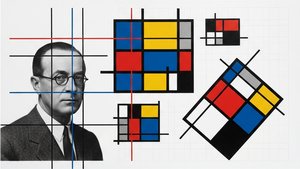
Theo van Doesburg: Pionier des De Stijl und die Evolution des Neo-Plastizismus
Entdecken Sie die faszinierende Welt des De Stijl! Erfahren Sie mehr über Theo van Doesburg, Piet Mondrian und die revolutionäre Ästhetik des Neo-Plastizismus. Expertenwissen & historische Einblicke.
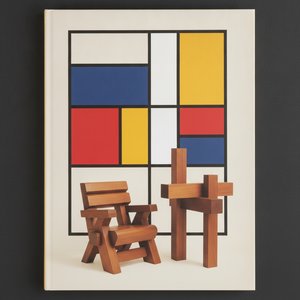
De Stijl: Mastering the Art of Pure Abstraction and Geometric Harmony for the Modern Collector
Explore the profound elegance of De Stijl. Discover how Piet Mondrian and the masters of Neoplasticism utilized geometric harmony and primary colors to redefine modern abstraction. An authoritative guide for the discerning collector seeking timeless, structured beauty.

Geometrische Abstraktion: Die 10 Meisterwerke, die Kunstgeschichte prägten | OriginalUniqueArt.com
Entdecken Sie die 10 Meisterwerke der geometrischen Abstraktion! Von Kandinsky bis Mondrian – erleben Sie die Geschichte, Farben & Formen dieser revolutionären Kunstrichtung. Hochwertige Kunstreproduktionen auf OriginalUniqueArt.com
Beyond Form: Exploring the Philosophical Foundations of Geometric Abstraction
Explore the philosophical roots & artistic evolution of geometric abstraction with OriginalUniqueArt. Discover Mondrian, Malevich, De Stijl & more. Expert insights for collectors and art enthusiasts.
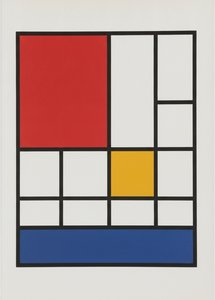
Pure Harmony: Discover the Bold Geometry and Spiritual Order of De Stijl Art
Explore the profound beauty of De Stijl art. Discover how masters like Piet Mondrian used bold geometry and primary colors to seek universal harmony through Neoplasticism. A deep dive into the spiritual order behind the world's most iconic abstract movements.