 Vorschau anzeigen
 Versenden
 Teilen
 Details anzeigen
 Leitfaden

 Herunterladen
 Ähnliche Objekte
 Röntgenaufnahme
 Diashow
 Statistiken
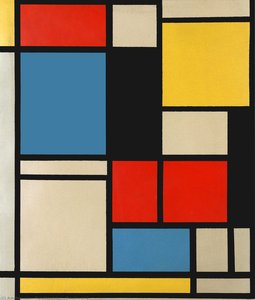
Komposition III blau und gelb


 Weiterlesen
Giclée / Kunstdruck
Giclée- oder Leinwanddruck in Museumsqualität mit schneller Produktion und flexiblen Veredelungsoptionen. ( Handgemalte Reproduktion bestellen Zum digitalen Bild wechseln)




P118B €10

P118H €10

P118W €10

P438Z €10

P508JH €12

P508YH €12

P805H €10

P805Z €10

P919BZ €10

P919G €10

P919XJ €10

P959ZH €10

P968JZ €12

W106C €8

W218G €10

W218JH €8

W218Y €10

W307PJ €10

W316G €10

W316PJ €8

W316Y €10

W398PJ €8

W4111J €10

W500HY €15

W500JH €15

W692G €12

W849H €8

W940BG €15

W953PJ €8




Wählen Sie aus unseren vordefinierten Formaten, die den ursprünglichen Proportionen des Kunstwerks entsprechen.

Geben Sie die benötigte Breite und Höhe an, damit der Druck perfekt in Ihren Rahmen oder an Ihre Wand passt. Ein Druck kann nur beschnitten, aber niemals größer als das Originalbild angefertigt werden; daher verliert ein Format mit anderen Proportionen einen Teil des Bildes. Wir senden Ihnen ein digitales Mockup zur Freigabe, bevor wir den Druck ausführen. Das auf dieser Seite gezeigte Bild zeigt nicht den tatsächlichen Beschnitt – dies ist nur im Mockup ersichtlich.
Weltweiter Versand () innerhalb von 2 Wochen statt der üblichen 4/5 Wochen. (28 Oktober)

Kostenloser weltweiter Expressversand

Hochwertige Leinenleinwand

Umfassender Versicherungsschutz beim Versand

Zollgebühren-Rückerstattungsgarantie

Garantie für exakte Farbtreue

100 Tage Rückgaberecht (nur bei Mängeln)

100% Geld-zurück-Garantie

Mengenrabatt verfügbar
 Die Glasoption ist nur für Größen unter 110 cm verfügbar.

Komposition III blau und gelb
Giclée / Kunstdruck
Format der Reproduktion
-


Endpreis
€ 70
A Symphony of Balance: Deconstructing Piet Mondrian’s Composition III Blue and Yellow
Piet Mondrian's Composition III blue and yellow is not merely a painting; it is a visual manifesto, a distillation of artistic principles that would come to define an era. Emerging from the vibrant currents of early 20th-century abstraction, this work embodies the core tenets of Neoplasticism – a style Mondrian himself championed as a pathway towards universal harmony. The canvas presents a rigorously structured grid of black lines, dividing the space into rectangles filled with primary colors: bold reds, serene blues, and luminous yellows, punctuated by areas of pure white. It’s a deceptively simple arrangement that belies a profound intellectual and spiritual quest.
From Naturalism to Neo-Plasticism: A Journey of Artistic Refinement
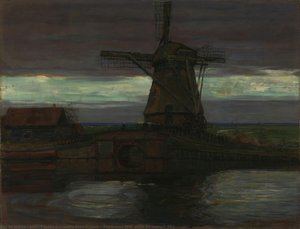
To truly appreciate Composition III blue and yellow, one must understand the artistic evolution of Piet Mondrian. Born in Amersfoort, Netherlands, in 1872, Mondrian initially trained as a teacher while simultaneously pursuing his passion for art. His early works were steeped in naturalism, reflecting the Dutch landscape tradition – windmills, fields, and rivers rendered with Impressionistic brushstrokes. However, this representational phase was merely a stepping stone. A pivotal move to Paris in 1912 exposed him to the radical ideas of Cubism, igniting a period of intense experimentation. Mondrian began deconstructing forms, dismantling traditional perspective, and gradually reducing his palette. This journey led him towards an increasingly abstract aesthetic, culminating in the birth of Neoplasticism around 1917.
The Language of Abstraction: Geometry, Color, and Spiritual Resonance
Neoplasticism, as Mondrian envisioned it, was not simply about creating aesthetically pleasing arrangements. It was a philosophical system aimed at expressing underlying spiritual truths through the purest possible visual language. The horizontal and vertical lines, he believed, represented opposing forces – masculine and feminine, static and dynamic – achieving equilibrium when perfectly balanced. The primary colors were chosen for their inherent energy and clarity, devoid of any emotional or representational baggage. White, representing nothingness, served as a crucial element, allowing the colors to breathe and resonate. In Composition III blue and yellow, these elements coalesce into a harmonious whole, inviting contemplation on themes of order, balance, and the search for universal beauty. The seemingly random placement of colored rectangles is, in fact, meticulously calculated to achieve a dynamic equilibrium, a visual rhythm that captivates the eye and soothes the soul.
A Lasting Legacy: Mondrian’s Influence on Modern Design
The impact of Piet Mondrian extends far beyond the realm of painting. His aesthetic principles have profoundly influenced countless artists, architects, and designers throughout the 20th and 21st centuries. From furniture design to fashion, the clean lines, geometric forms, and primary color palettes characteristic of Neoplasticism continue to inspire contemporary creations. Composition III blue and yellow stands as a testament to Mondrian’s enduring vision – a belief in the power of abstraction to transcend the material world and connect us to something deeper, more universal. Owning a reproduction of this iconic work is not merely acquiring a beautiful object; it's embracing a legacy of artistic innovation and philosophical inquiry.
To understand Mondrian’s masterpiece, consider its genesis in the burgeoning movement of Neo-Plasticism. Rejecting the illusionistic techniques of Impressionism and Post-Impressionism—styles that sought to capture fleeting moments of sensory experience—Mondrian pursued a radically different path. Influenced by thinkers like Rudolf Steiner and Henri Bergson, he believed that art should reflect the underlying structure of reality, mirroring the fundamental forces governing existence.
The composition itself is deceptively simple. At first glance, it appears as a grid of black lines dividing a square canvas into rectangles filled with red, yellow, and blue hues. However, this apparent austerity conceals a complex intellectual framework. Mondrian meticulously calculated the proportions of each rectangle, striving for perfect balance between horizontal and vertical elements—a symbolic representation of masculine and feminine energies.
The color palette is equally deliberate. Mondrian eschewed expressive coloration, opting instead for pure hues devoid of any shading or blending. He reasoned that this approach would eliminate distractions and allow the colors to communicate their essence directly to the viewer’s consciousness—a quest for universal harmony mirroring the cosmos itself.
Furthermore, the placement of the rectangles is not arbitrary but governed by mathematical principles. Mondrian employed a technique known as “dynamic equilibrium,” wherein opposing forces create a state of balance that transcends static stability. This method reflects Mondrian’s conviction that true beauty resides in the harmonious interplay of opposites.
The enduring influence of Composition III blue and yellow can be seen throughout modern design—from minimalist interiors to corporate logos—where its geometric forms and restrained color palette continue to inspire aesthetic sensibilities. It remains a cornerstone of abstract art, embodying Mondrian’s unwavering commitment to simplifying visual language and elevating it to the level of spiritual contemplation.
Fragen & Antworten
Wirken die Farben von "Komposition III blau und gelb" eher kräftig oder sanft?
Die Farbsättigung von „Komposition III blau und gelb“ ist Leuchtend. Die Intensität beschreibt, wie kräftig die Farben wirken.
Welche Druckgröße wird für "Komposition III blau und gelb" von Piët Mondrian empfohlen?
Für "Komposition III blau und gelb" wird ein Druckformat von Großformatig empfohlen. Weitere Größen sind im gleichen Seitenverhältnis verfügbar.
Kann ich "Komposition III blau und gelb" von Piët Mondrian vor der Bestellung in einer Vorschau ansehen?
Eine Vorschau von "Komposition III blau und gelb" von Piët Mondrian finden Sie auf der Vorschau im Raum-Seite des Kunstwerks.
Künstlerbiografie
**frühes Leben und Karriere in den Niederlanden (1872–1911)**
pieter cornelis mondriaan, bekannt ab 1911 als piet mondrian, war ein niederländischer Maler und Kunsttheoretiker, geboren am 7. März 1872 in Amersfoort, Niederlande. Er begann seine Karriere als Lehrer an der Grundschule und betrieb gleichzeitig Malerei, zunächst im Stil der Haag School des niederländischen Impressionismus.- Sein frühes Werk, das von naturalistischen Landschaften geprägt ist, kann in Gemälden wie the red mill und trees in moonrise zu sehen ist, die im kunstmuseum den haag ausgestellt wurden.
- Mondrians Suche nach einem persönlichen Stil führte ihn dazu, verschiedene künstlerische Bewegungen zu erkunden, darunter Pointillismus und Fauvismus.
- Seine erste Ausstellung im Jahr 1893 markierte den Beginn seiner produktiven Karriere.
**Die Entwicklung des Stils von Mondrian**
Von figurativ zu abstrakt Mondrians künstlerische Richtung verschob sich hin zu einem zunehmend abstrakten Stil, der in eine nicht-repräsentative Form mündete, die er Neoplasticismus nannte. Diese „reine plastische Kunst“ zielte darauf ab, „universelle Schönheit“ zu schaffen und seinen formalen Wortschatz auf Primärfarben (Rot, Blau und Gelb), Werte (Schwarz, Weiß und Grau) und Richtungen (horizontal und vertikal) zu beschränken.- Beispiele für diesen Stil lassen sich in Gemälden wie composition with yellow patch (46 x 46 cm, Neoplasticismus, Öl auf Leinwand) zu sehen sein.
- Mondrians Werk hatte einen enormen Einfluss auf die Kunst des 20. Jahrhunderts und beeinflusste nicht nur die abstrakte Malerei, sondern auch Design, Architektur und Mode.
**Vermächtnis und Einfluss**
Mondrians Vermächtnis erstreckt sich über sein eigenes Werk hinaus und beeinflusst wichtige Stile und Bewegungen wie Farbflächenmalerei, abstrakten Expressionismus und Minimalismus. Kunsthistoriker stephen bayley stellte fest, dass Mondrian zum Totem für alles geworden ist, was der Modernismus zu sein versuchte.- Entdecken Sie mehr von Mondrians Werk unter OriginalUniqueArt.com.
- Erfahren Sie mehr über die De Stijl-Bewegung und ihren Einfluss auf die moderne Kunst auf wikipedia.
- Entdecken Sie andere einflussreiche Künstler wie vincent van gogh und ihre Auswirkungen auf die Kunstwelt.
**Wichtige Werke und Ausstellungen**
* piet mondrian: apple blossom (Cubismus) (ansicht auf OriginalUniqueArt.com) * piet mondrian: still life with vase of spices ii (Cubismus) (ansicht auf OriginalUniqueArt.com) * piet mondrian: passionflower (73 x 48 cm, Kunstmuseum Den Haag, Postimpressionismus, Aquarell) (ansicht auf OriginalUniqueArt.com)
Piët Mondrian
1872 - 1944 , Niederlande
Kurzinfos
- Beeinflusste Künstler:
- Hague School
- Pointillismus
- Fauvismus
- Kubismus
- Bemerkenswerte Werke:
- Komposition mit Rot, Gelb und Blau
- Broadway Boogie Woogie
- Tableau Nr. 2 Komposition V
- Rhythmus der schwarzen Linien
- Geburtsdatum: 7. März 1872
- Geburtsort: Amersfoort, Niederlande
- Künstlerische Bewegung: De Stijl, Neoplasticismus
- Nationalität: Niederländisch
- Sterbedatum: 1944
- Vollständiger Name: Piët Mondriaan
- Von Künstlern Beeinflusst:
- Farbfeldmalerei
- Abstrakter Expressionismus
- Minimalismus
Ähnliche Artikel

Geometrische Abstraktion: Die 10 Meisterwerke, die Kunstgeschichte prägten | OriginalUniqueArt.com
Entdecken Sie die 10 Meisterwerke der geometrischen Abstraktion! Von Kandinsky bis Mondrian – erleben Sie die Geschichte, Farben & Formen dieser revolutionären Kunstrichtung. Hochwertige Kunstreproduktionen auf OriginalUniqueArt.com
Piet Mondrian: Dekonstruktion der Realität – Eine Studie zu Neo-Plastizismus und universeller Harmonie
Entdecken Sie die faszinierende Welt von Piet Mondrian und dem Neo-Plastizismus! Analysieren Sie mit uns Rasterkunst, Farbenlehre & den Einfluss auf moderne Kunst. Expertenwissen für Kunstliebhaber.

Beyond Form & Color: Geometric Abstraction's Evolution in 20th/21st Century Art
Explore the evolution of geometric abstraction from Cubism to contemporary art. Discover key artists like Malevich & Mondrian, investment insights, and expert collecting advice at OriginalUniqueArt.

Kandinsky: Die 25 Meisterwerke des Abstrakten – Kunst für Ihr Zuhause | OriginalUniqueArt
Entdecken Sie die 25 bedeutendsten Gemälde von Wassily Kandinsky! Tauchen Sie ein in die Welt der abstrakten Kunst, des Expressionismus und der Farbkomposition. Hochwertige Kunstdrucke & Inspiration für Ihr Zuhause auf OriginalUniqueArt.com.

Die Top 10 Gemälde in Schattierungen von 'Slate Blue': Kunst für Ihr Zuhause
Entdecken Sie die Top 10 Gemälde in faszinierenden 'Slate Blue' Tönen! Von Monet bis Manet – erleben Sie Kunstgeschichte und lassen Sie sich von Meisterwerken inspirieren. Hochwertige Kunstdrucke auf