Baroque
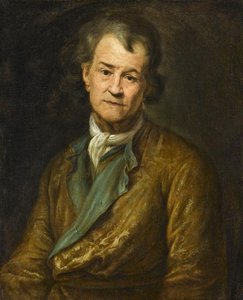
Self portrait Marble (Pierre Puget)
Pierre Puget (1620–1694) schuf Self portrait Marble. Es gehört zur Baroque-Strömung. Es ist aus Stone gefertigt.
- Stone

 Handgemaltes Ölgemälde
 Versenden
 Teilen
 Datenblatt


 Herunterladen
 Ähnliche Objekte
 Diashow
 Fragen & Antworten

 Statistiken
Self portrait Marble im Überblick
- Titel
- Self portrait Marble
- Künstler
- Pierre Puget (1620–1694)
- Geburtsjahr des Künstlers
- Marseille, Frankreich
- Medium
- Stone
- Bewegung
- Baroque
- Epoche
- Early Modern
- Motiv
- portrait, sculpture, elderly, marble, baroque, classicism
Was stellt Self portrait Marble dar?
Identification of the Self portrait Marble
The Self portrait Marble by Pierre Puget presents a quiet confrontation with the passage of time. This work is a photographic reproduction of a sculpted portrait, capturing the likeness of an older man in the stillness of stone. The subject is a bust, focusing on the head and shoulders to anchor the viewer in a singular, unmoving gaze.
In this representation, the artist Pierre Puget turns the chisel toward his own changing features. The sculpture acts as a vessel for human aging and experience, recording the weight of years through the physical presence of the subject. It is a portrait of a man, stripped of movement, existing only in the permanence of his own likeness.
The image holds a steady, frontal view. It captures a moment of stillness that feels heavy and fixed. The stone carries the memory of the face it once held.
Visual Composition and Subject Matter
The composition centers on the head and shoulders of an elderly man, captured in a black and white bust. A simple frontal view meets the eye, stripped of unnecessary distraction. The perspective remains direct, focusing entirely on the subject's presence. Because of the photographic nature of the image, the depth remains limited, pulling the viewer into a shallow space where only the immediate form exists.
Lines define the topography of the face, tracing the paths of wrinkles and the individual strands of hair. These contours map the history of a life through the texture of the skin. Organic shapes dominate the work, following the natural, soft curves of the human head and its features. The light settles into the hollows, emphasizing the physical reality of the subject.
A shallow depth of field isolates the man, blurring the world beyond his immediate silhouette. This focus sharpens the details of the face, making the texture of the sculpture feel tangible. The subject remains still, a quiet study of aging and the weight of experience. The stone holds a steady, silent gaze.
Technique and Material Properties
The original work is a classical sculpture carved from stone, likely marble. This heavy, pale medium captures the weight of the subject's features. The surface is not smooth; instead, the texture appears rough and uneven. Shading and modeling techniques emphasize this tactile quality, pulling light across the ridges of the face and the deep recesses of the hair. Every line is a physical groove in the stone.
This image is a photographic reproduction of that sculpted form. The lens translates the three-dimensional carving into a two-dimensional plane of light and shadow. The technique relies on the interplay of dark and light to define the contours of the head and shoulders. It is a study of how light meets a hard, unyielding surface. The result is a sense of solemnity. The stone holds its stillness.
Hochauflösende Bilder von Self portrait Marble
Gemeinfrei: Der Künstler verstarb im Jahr 1694.
Pierre Puget, Self portrait Marble. Gemeinfreiheit
Fragen zu Self portrait Marble, beantwortet
In welcher Technik wurde "Self portrait Marble" von Pierre Puget ausgeführt?
Das Medium von "Self portrait Marble" von Pierre Puget ist Stone. Die Reproduktionen zielen darauf ab, die Optik dieser Technik wiederzugeben.
Was stellt "Self portrait Marble" dar?
Die Motive von "Self portrait Marble" sind portrait, sculpture, elderly, marble, baroque, classicism, time, memory.
Ist "Self portrait Marble" gemeinfrei?
Die urheberrechtliche Situation für "Self portrait Marble" von Pierre Puget: Das Werk ist gemeinfrei – das Urheberrecht ist abgelaufen. Dies bestimmt, ob Reproduktionen des Bildes frei erstellt werden dürfen.
Wer ist der Künstler hinter "Self portrait Marble"?
"Self portrait Marble" wird Pierre Puget zugeschrieben.
Welcher Kunstrichtung lässt sich "Self portrait Marble" von Pierre Puget zuordnen?
Die mit "Self portrait Marble" von Pierre Puget verbundene Stilrichtung ist Baroque. Diese Klassifizierung ordnet das Werk in den Kontext verwandter Künstler und Kunstwerke ein.
Welcher Phase in der künstlerischen Entwicklung von Pierre Puget lässt sich "Self portrait Marble" zuordnen?
„Self portrait Marble“ entstammt der Mature Period von Pierre Puget. Diese Einordnung setzt das Werk in Bezug zur künstlerischen Entwicklung des Künstlers.
Wie lässt sich der urheberrechtliche Status von "Self portrait Marble" von Pierre Puget erklären?
"Self portrait Marble" von Pierre Puget ist gemeinfrei – das Urheberrecht ist abgelaufen. Die Schutzfrist des Urheberrechts beginnt mit dem Tod des Künstlers im Jahr 1694.
Wie lässt sich "Self portrait Marble" in das Gesamtwerk von Pierre Puget einordnen?
Innerhalb des Gesamtwerks von Pierre Puget steht „Self portrait Marble“ im Stil der Baroque und greift die Themen classical ideals, roman influence, baroque drama, emotional depth, portraiture tradition, realism, ageing, mortality auf.
Welche Stellung nimmt „Self portrait Marble“ unter den wiederkehrenden Motiven von Pierre Puget ein?
"Self portrait Marble" stellt portrait, sculpture, elderly, marble, baroque, classicism, time, memory dar, während die dokumentierten Themen von Pierre Puget classical ideals, roman influence, baroque drama, emotional depth, portraiture tradition, realism, ageing, mortality sind. Ein Vergleich der beiden zeigt, wie das Werk mit den üblichen Sujets des Künstlers in Verbindung steht.
Über den Künstler, Pierre Puget
1620–1694, Frankreich
Pierre Puget
Pierre Puget: Ein Leben zwischen Kunst und Ingenieurwesen Geboren: Marseille, Frankreich (1620) Gestorben: 1694 Frühes Leben und italienische Einflüsse Ausbildung: Puget begann seine Karriere im Alter von vierzehn Jahren mit dem Schnitzen von Verzierungen für in Marseille gebaute Galeeren. Diese frühe Auseinandersetzung mit Handwerkskunst legte den Grundstein für seine späteren künstlerischen Bestrebungen. Reise nach Italien (1640): Auf der Suche nach Möglichkeiten reiste er nach Italien, zunächst nach Livorno und dann nach Florenz. Er verbesserte hier seine Fähigkeiten als Holzschneider und Maler.
Ebenfalls von Pierre Puget
 Die Begegnung des Alexander dem Großen und des Diogenes1671
 Milo von Kroton1671
 Die Begegnung zwischen Alexander dem Großen und Diogenes1671
 Selbstbildnis1668
Essays zu Self portrait Marble
 Ewiger Stein: Die Meisterschaft der Marmorskulptur und ihre historische TiefeErfahren Sie alles über die Lichtwirkung und Technik der Marmorbildhauerei. Entdecken Sie die Tiefe antiker Meisterwerke jetzt.
 Meisterwerke von Hans Baldung Grien: Die Top 25 Kunstwerke des Renaissance-MeistersEntdecken Sie die Top 25 Werke von Hans Baldung Grien. Erforschen Sie die deutsche Renaissance auf OriginalUniqueArt.com. Jetzt die Kollekt…
 Pierre Puget: 25 kraftvolle Skulpturen und Gemälde der französischen BarockzeitEntdecken Sie 25 Ikonen von Pierre Puget und den französischen Barock. Erforschen Sie die gesamte Kollektion auf OriginalUniqueArt.com.