Baroque
Philosopher (Pierre Puget)
Pierre Puget (1620–1694) schuf Philosopher. Es gehört zur Baroque-Strömung. Es ist aus Marble gefertigt. Es befindet sich im Bayerische Staatsgemäldesammlungen in München, Deutschland.

 Handgemaltes Ölgemälde
 Versenden
 Teilen
 Datenblatt


 Herunterladen
 Ähnliche Objekte
 Diashow
 Fragen & Antworten

 Statistiken
Philosopher im Überblick
- Titel
- Philosopher
- Künstler
- Pierre Puget (1620–1694)
- Geburtsjahr des Künstlers
- Marseille, Frankreich
- Medium
- Marble
- Ausstellungsort
- Bayerische Staatsgemäldesammlungen, München, Deutschland
- Bewegung
- Baroque
- Epoche
- Early Modern
- Motiv
- man, bust, marble, beard, face, sculpture
Was stellt Philosopher dar?
The Portrait Bust of a Philosopher
Pierre Puget’s Philosopher presents a marble bust focused on the psychological depth of its subject. The sculpture captures a figure from the chest up, emphasizing a countenance designed to convey wisdom and intense contemplation. Through the careful rendering of facial features, the work moves beyond mere likeness to suggest a state of profound intellectualism.
The subject's expression is defined by a furrowed brow and a slightly downturned mouth. These specific details imbue the figure with a sense of thoughtfulness, bordering on melancholy. This emotional weight provides a human dimension to the classical form, suggesting a mind preoccupied with complex truths.
Composition and Visual Elements
The composition is centered and direct, presenting the bust from the chest up against a dark, near-black background. This high-contrast setting isolates the subject, ensuring the viewer's attention remains fixed upon the form. The face acts as the primary focal point, drawing the eye through a deliberate arrangement of light and shadow.
Lighting is directed from above and slightly to the left, producing a chiaroscuro effect. This technique defines the three-dimensional volume of the marble, casting deep shadows that emphasize the contours of the neck, shoulders, and the folds of the beard. The interplay of light and dark creates a sense of recession and physical depth within the frame.
The subject's expression is characterized by a furrowed brow and a slightly downturned mouth. These features, combined with the organic, curved lines of the facial structure, suggest a state of intense contemplation or melancholy. The tension in the brow provides a psychological weight to the physical presence of the sculpture.
Technique and Material Properties
The sculpture is executed in marble, utilizing subtractive methods to reveal the form from the stone. The process involves the deliberate carving away of material from a solid block to define the anatomical features and the character's contemplative expression.
The artist employs varied surface treatments to create tactile contrast. The smoothness of the marble is used to represent the skin of the face, while more deliberate, rougher textures are applied to the hair and beard. This manipulation of the stone's surface creates a sense of volume and depth through the interplay of light and shadow across the different finishes.
Artistic Style and Influences
The sculpture adheres to a classical tradition, emphasizing realism and idealized representation. It captures the subject through a lens of profound introspection, utilizing a furrowed brow and a slightly downturned mouth to suggest a state of contemplation or melancholy. This focus on the internal life of the subject aligns with a broader sculptural movement that seeks to balance physical accuracy with the expression of human thought.
Puget’s approach to form is characterized by an emphasis on emotion, pathos, and drama. The work reflects the influence of Michelangelo’s powerful, muscular figures, particularly in the way the anatomy and facial features convey a sense of weight and gravity. This intensity is further shaped by the dynamic compositions associated with Bernini, which prioritize movement and theatricality even within the stillness of stone.
The interplay of light and shadow, or chiaroscuro, defines the contours of the face and the deep folds of the beard. This technique heightens the three-dimensional presence of the marble, transforming the static bust into a study of volume and depth. The result is a work that prioritizes the expressive power of the human form over mere decorative imitation.
Related Works by Pierre Puget
Puget’s sculptural output includes several significant commissions for the French court and major collections. His work on the figure of Hercules, currently known as the Hercule gaulois in the Louvre, demonstrates his ability to handle large-scale marble forms. This interest in mythological subjects is further seen in the group Perseus and Andromeda, which was completed in 1684. These works reflect the dramatic intensity and expressive realism characteristic of his approach to the human form.
The artist also engaged with relief sculpture and high-stakes mythological narratives. He produced the bas-relief Alexander and Diogenes, created between about 1671 and 1693. Additionally, his repertoire includes the sculpture Milo of Croton, a work produced between about 1671 and 1684. These pieces illustrate the breadth of his technical skill in both free-standing and relief formats.
In welchem Museum befindet sich Philosopher?
Bayerische Staatsgemäldesammlungen
München, Deutschland
Ein Vermächtnis der Bayerischen Staatsgemäldesammlungen Die in München gelegenen Bayerischen Staatsgemäldesammlungen blicken auf eine bewegte institutionelle Geschichte zurück, die im Jahr 1799 mit der Gründung der Centralgemäldegaleriedirektion ihren Anfang nahm. Dieses Fundament schuf einen Rahmen für die Bewahrung europäischer Kunst, der die kulturelle Landschaft der Stadt bis heute maßgeblich prägt. Die Wurzeln dieser Sammlung reichen weit zurück bis ins 16.


Hochauflösende Bilder von Philosopher
Gemeinfrei: Der Künstler verstarb im Jahr 1694.
Pierre Puget, Philosopher, Bayerische Staatsgemäldesammlungen. Gemeinfreiheit
Fragen zu Philosopher, beantwortet
In welchem Museum befindet sich das Original von „Philosopher“?
Das Originalwerk „Philosopher“ können Sie im Bayerische Staatsgemäldesammlungen, München, Deutschland bewundern.
Welche Technik wurde für "Philosopher" von Pierre Puget verwendet?
Das Medium von "Philosopher" von Pierre Puget ist Marble. Die Reproduktionen zielen darauf ab, die Optik dieser Technik wiederzugeben.
Was stellt "Philosopher" dar?
Die Motive von "Philosopher" sind man, bust, marble, beard, face, sculpture, gray, white.
Ist "Philosopher" gemeinfrei?
"Philosopher" von Pierre Puget ist gemeinfrei – das Urheberrecht ist abgelaufen. Dieser Status bestimmt, wie das Bild des Werkes vervielfältigt werden darf.
Welchem Künstler wird "Philosopher" zugeschrieben?
"Philosopher" wurde von Pierre Puget geschaffen. Die Informationen auf dieser Seite beschreiben das Originalwerk von Pierre Puget.
Welcher Kunstrichtung lässt sich "Philosopher" von Pierre Puget zuordnen?
"Philosopher" von Pierre Puget lässt sich der Strömung des Baroque zuordnen. Diese Stilrichtung bildet den künstlerischen Kontext des Werkes.
Wie lässt sich der urheberrechtliche Status von "Philosopher" von Pierre Puget erklären?
"Philosopher" von Pierre Puget ist gemeinfrei – das Urheberrecht ist abgelaufen. Die Urheberrechtsfristen werden ab dem Todesjahr des Künstlers berechnet, und Pierre Puget verstarb im Jahr 1694.
Befindet sich "Philosopher" im Land seines Schöpfers?
Nein – das Kunstwerk wird im Ausland aufbewahrt. „Philosopher“ befindet sich in Deutschland, während Pierre Puget in Frankreich geboren wurde.
Welche Gemeinsamkeiten weist "Philosopher" mit dem restlichen Werk von Pierre Puget auf?
Innerhalb des Gesamtwerks von Pierre Puget steht „Philosopher“ im Stil der Baroque und greift die Themen pietro da cortona, michelangelo and bernini, baroque dynamism, classical forms, expressive realism auf.
Über den Künstler, Pierre Puget
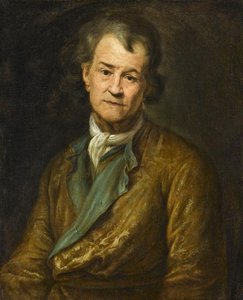
1620–1694, Frankreich
Pierre Puget
Pierre Puget: Ein Leben zwischen Kunst und Ingenieurwesen Geboren: Marseille, Frankreich (1620) Gestorben: 1694 Frühes Leben und italienische Einflüsse Ausbildung: Puget begann seine Karriere im Alter von vierzehn Jahren mit dem Schnitzen von Verzierungen für in Marseille gebaute Galeeren. Diese frühe Auseinandersetzung mit Handwerkskunst legte den Grundstein für seine späteren künstlerischen Bestrebungen. Reise nach Italien (1640): Auf der Suche nach Möglichkeiten reiste er nach Italien, zunächst nach Livorno und dann nach Florenz. Er verbesserte hier seine Fähigkeiten als Holzschneider und Maler.
Ebenfalls von Pierre Puget
 Die Begegnung des Alexander dem Großen und des Diogenes1671
 Milo von Kroton1671
 Die Begegnung zwischen Alexander dem Großen und Diogenes1671
 Selbstbildnis1668
Essays zu Philosopher
 Pierre Puget: 25 bewegende Skulpturen und Gemälde des BarockEntdecken Sie 25 ikonische Werke von Pierre Puget. Erfahren Sie alles über seine Barock-Skulpturen. Jetzt die Kollektion auf OriginalUnique…
 Visual Structure in Portraiture: How Composition and Lighting Define CharacterMaster the art of portraiture through composition and light. Learn how masters define character with expert visual techniques.
 Meisterwerke in München: Die Top 25 Kunstwerke der Bayerischen StaatsgemäldesammlungenEntdecken Sie die Top 25 Meisterwerke der Bayerischen Staatsgemäldesammlungen. Von Rembrandt bis Picasso – jetzt online auf OriginalUniqueA…