In echtem Maßstab anzeigen
 Versenden als Grußkarte
 Teilen
 Details anzeigen
 Leitfaden öffnen

 Herunterladen
 Ähnliche Objekte
 Röntgenaufnahme
 Diashow
 Besucherstatistiken
Untitled (D2X835)
 Acrylic On Canvas
- WallArt
- Neoclassical Romanticism
 1817
1817 216.0 x 142.0 cm
 Metropolitan Museum of Art
 Mehr anzeigen
Handgefertigte Ölreproduktion
Handgemaltes Ölgemälde auf Leinwand in Ihrer Wunschgröße und mit Rahmen, auf Bestellung von unseren Künstlern angefertigt. ( Zum Druck wechseln Zum digitalen Bild wechseln)




P118B €10

P118H €10

P118W €10

P438Z €10

P508JH €12

P508YH €12

P805H €10

P805Z €10

P919BZ €10

P919G €10

P919XJ €10

P959ZH €10

P968JZ €12

W106C €8

W218G €10

W218JH €8

W218Y €10

W307PJ €10

W316G €10

W316PJ €8

W316Y €10

W398PJ €8

W4111J €10

W500HY €15

W500JH €15

W692G €12

W849H €8

W940BG €15

W953PJ €8




Wählen Sie aus unseren vordefinierten Formaten, die den ursprünglichen Proportionen des Kunstwerks entsprechen.

Sie können Ihre eigenen Maße eingeben, um einen bestimmten Rahmen oder Platz auszufüllen. Wenn die gewählte Größe nicht den Proportionen des Originalbildes entspricht, werden wir das Kunstwerk entweder beschneiden oder das Gemälde durch zusätzliche, handgemalte Elemente erweitern. Ein digitales Mockup wird Ihnen zur Genehmigung zugesandt, bevor die Produktion beginnt.
Bitte beachten Sie, dass die Bildschirmvorschau nicht die tatsächliche Beschneidung oder Erweiterung widerspiegelt. Nur das Mockup zeigt die endgültige Komposition exakt an.
Obwohl Sondermaße verfügbar sind, empfehlen wir, eine Größe aus der vordefinierten Liste zu wählen, um die ursprünglichen Proportionen beizubehalten.
Nach der Bestellung wird das OriginalUniqueArt.com-Team dem Kunden Anweisungen per E-Mail zusenden und eine Mockup-Vorschau bereitstellen.
Weltweiter Versand () in nur 3 bis 4 Wochen statt der üblichen 5 Wochen. (10 Oktober). Keine Kompromisse bei der Qualität.

Kostenloser weltweiter Expressversand

Hochwertige Leinenleinwand

Vollständiger Versicherungsschutz beim Versand

Zollgebühren-Rückerstattungsgarantie

Garantie für exakte Farbtreue

100-tägiges Rückgaberecht (nur bei Mängeln)

100% Geld-zurück-Garantie

Angebot für Mengenrabatt
 Die Glasoption ist nur für Größen unter 110 cm verfügbar.

Untitled (D2X835)
Reproduktionsmedium
Format der Reproduktion
-


Gesamtpreis
€ 259
A Portrait of Refined Elegance: Pierre-Paul Prud’hon's “Untitled (D2X835)”
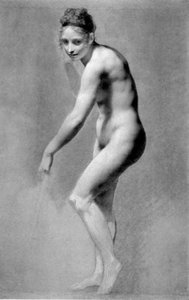
Pierre-Paul Prud’hon’s “Untitled (D2X835),” painted in 1817, offers a captivating glimpse into the world of Parisian society during the early 19th century. More than just a simple portrait, it's a carefully constructed tableau vivant—a staged scene brimming with subtle social commentary and an exquisite mastery of chiaroscuro, a technique that defines Prud’hon’s distinctive style. The painting depicts a gentleman in formal attire – a dark suit, top hat, and crisp tie – positioned beside a chair, creating an immediate sense of quiet contemplation. His clasped hands suggest both formality and perhaps a touch of restrained emotion.
Prud’hon, a pivotal figure bridging the Neoclassical and Romantic movements in French art, was deeply influenced by classical antiquity yet possessed a sensitivity that foreshadowed the emotional intensity of the Romantics. Born in Cluny, he spent formative years in Rome, absorbing the ideals of Greco-Roman sculpture and architecture, which informed his meticulous draftsmanship and his preference for idealized forms. This painting showcases this influence; the gentleman’s posture, attire, and overall composition echo the formality and restraint characteristic of Neoclassical portraiture, while the subtle play of light and shadow—the hallmark of *chiaroscuro*—injects a dramatic depth that hints at the Romantic sensibility he would later embrace.
The Setting: A Window into 19th-Century Domesticity
Beyond the central figure, Prud’hon skillfully employs background elements to enrich the scene and provide context. The presence of several individuals – partially visible in the distance – suggests a gathering or social event, hinting at the importance of hospitality and social interaction within Parisian society. A comfortable couch and another smaller one further contribute to the atmosphere of an affluent home, reflecting the lifestyle of the upper class. Notably, a vase on the left adds a touch of decorative elegance, demonstrating Prud’hon's attention to detail and his understanding of how objects could enhance a scene’s narrative.
The inclusion of these secondary figures isn’t merely decorative; it subtly underscores the social dynamics at play. They are less defined, almost like ghosts in the background, suggesting a hierarchy within the gathering – the central figure commanding attention while others remain peripheral. This layering of detail is characteristic of Prud'hon’s approach, inviting viewers to actively interpret the scene and consider its broader implications.
Symbolism and Emotional Resonance
While the subject matter appears straightforward—a portrait of a gentleman—Prud’hon imbues the painting with layers of symbolic meaning. The man’s posture, the formality of his attire, and the quiet contemplation suggested by his clasped hands invite speculation about his thoughts and feelings. The top hat, a symbol of status and sophistication during this period, further emphasizes his position within society.
Furthermore, Prud'hon’s masterful use of light and shadow—the *chiaroscuro* technique—creates an emotional atmosphere that is both elegant and subtly melancholic. The deep shadows cast upon the background figures and the subtle highlighting of the central figure contribute to a sense of intimacy and introspection. It’s as if we are privy to a private moment, observing a man lost in thought amidst the backdrop of refined domesticity.
A Legacy of Artistic Innovation
"Untitled (D2X835)" stands as a testament to Pierre-Paul Prud’hon's artistic genius and his pivotal role in bridging the gap between Neoclassicism and Romanticism. His meticulous draftsmanship, combined with his innovative use of *chiaroscuro* and his keen eye for detail, produced works that continue to captivate viewers today. OriginalUniqueArt’s hand-painted reproduction faithfully captures the essence of this remarkable painting, offering a stunning addition to any art collection or interior space. The meticulous attention to color, texture, and composition ensures an authentic representation of Prud'hon’s vision, allowing you to experience the beauty and emotional depth of this iconic artwork firsthand.
Fragen & Antworten
Welche Grundfarbe durchzieht "Untitled (D2X835)" von Pierre-Paul Prud'hon?
Ein Ochre to Sepia Farbton durchzieht "Untitled (D2X835)" von Pierre-Paul Prud'hon.
Wer hat "Untitled (D2X835)" erschaffen?
Der Künstler hinter „Untitled (D2X835)“ ist Pierre-Paul Prud'hon. Das Werk ist unter dem Namen von Pierre-Paul Prud'hon katalogisiert.
In welchem Jahr wurde "Untitled (D2X835)" von Pierre-Paul Prud'hon geschaffen?
"Untitled (D2X835)" stammt aus dem Jahr 1817. Dieses Datum ordnet das Werk in die Schaffensperiode von Pierre-Paul Prud'hon sowie in dessen Epoche ein.
Kann ich "Untitled (D2X835)" genauer untersuchen?
Die Röntgenansicht von "Untitled (D2X835)" von Pierre-Paul Prud'hon finden Sie auf der Röntgenaufnahme-Seite des Kunstwerks: eine interaktive Untersuchung des Bildes durch elf optische Schichten.
Gibt es einen Leitfaden für "Untitled (D2X835)" von Pierre-Paul Prud'hon?
Die Leitfaden-Seite von "Untitled (D2X835)" von Pierre-Paul Prud'hon bietet ein druckbares, zweiseitiges Infoblatt: das Kunstwerk mit seiner Identifikationstabelle, eine Zeitstrahl-Einordnung in die Lebensspanne des Künstlers, weitere Werke des Künstlers, die gemessene Farbpalette sowie kopierfertige Zitate in vier verschiedenen Stilen.
Wie alt war Pierre-Paul Prud'hon, als „Untitled (D2X835)“ im Jahr 1817 geschaffen wurde?
Als "Untitled (D2X835)" im Jahr 1817 entstand, war Pierre-Paul Prud'hon – geboren 1758 – 59 Jahre alt.
Was ist die dominierende Farbe von "Untitled (D2X835)" von Pierre-Paul Prud'hon?
Espresso (#3b2e1c) ist die dominierende Farbe von "Untitled (D2X835)" von Pierre-Paul Prud'hon.
Biografie des Künstlers
Pierre-Paul Prud'hon: Ein Leben in der Kunst
- Geboren: Cluny, Frankreich (1758)
- Gestorben: 1823
- Nationalität: Französisch
Pierre-Paul Prud’hon war eine zentrale Figur in der französischen Kunst und überbrückte den Übergang vom Neoklassizismus zur Romantik. Geboren in Cluny, Saône-et-Loire, Frankreich, spiegelt seine künstlerische Reise die sich verändernde ästhetische Landschaft Europas im späten 18. und frühen 19. Jahrhundert wider. Er wird sowohl für seine allegorischen Gemälde als auch für Porträts gefeiert und demonstriert eine Meisterschaft des Chiaroscuro und des Realismus, die das Publikum fesselte und nachfolgende Generationen beeinflusste.
Frühes Leben und Ausbildung
- Provincial Beginnings: Prud’hon erhielt seine anfängliche künstlerische Ausbildung in den französischen Provinzen.
- Dijon-Stipendium: Im Jahr 1774 erlangte er ein städtisches Stipendium, um an der École de Dessin in Dijon zu studieren, was einen bedeutenden Schritt hin zur formalen künstlerischen Bildung darstellte.
- Rom und neoklassische Einflüsse: Er reiste 1784 nach Rom, wo er sich dem Studium klassischer Kunst widmete und insbesondere die Werke von Canova und Correggio bewunderte. Diese Zeit prägte seine frühe Stilrichtung maßgeblich und durchdrang sie mit einem Sinn für Eleganz und idealisierter Form, der für den Neoklassizismus charakteristisch ist.
Künstlerische Karriere und königliche Förderung
- Revolutionäre Allegorien: Prud’hons Werk erlangte während der Französischen Revolution an Bedeutung, wobei er Vignetten, Buchillustrationen und allegorische Gemälde schuf, die mit republikanischen Idealen in Resonanz standen.
- Napoleon's Hofmaler: Sein Talent zog die Aufmerksamkeit von Napoleon Bonaparte auf sich, der ihn beauftragte, Porträts von Joséphine de Beauharnais und Marie-Louise d’Autriche zu malen. Das Porträt von Joséphine stellte sie nicht als Kaiserin dar, sondern als eine fesselnde Frau, was Spekulationen über eine mögliche romantische Beziehung zwischen dem Künstler und der ehemaligen Königin schürte.
- Stile verbinden: Prud'hon navigierte geschickt durch die sich entwickelnden künstlerischen Trends seiner Zeit und integrierte Elemente sowohl des Neoklassizismus als auch der Romantik in seine Arbeit. Während er eine klassische Grundlage in Komposition und Form beibehielt, verlieh er seinen Gemälden emotionale Tiefe und dramatische Beleuchtung, die die Romantik vorwegnahmen.
Hauptwerke und künstlerisches Erbe
- Madame Georges Anthony und ihre beiden Söhne (1796): Ein frühes Beispiel für seine Porträtkünste, das eine raffinierte Eleganz zeigt.
- Die Seele bricht die Fesseln, die sie an die Erde binden (The Soul Breaking the Links Holding it to the Earth): Ein kraftvolles allegorisches Werk, das seine Fähigkeit demonstriert, komplexe Emotionen durch symbolische Bildsprache zu vermitteln.
- Der Traum vom Glück (The Dream of Happiness): Eine ergreifende Erkundung menschlicher Bestrebungen und Wünsche.
- Kreuzigung (1822): Im Auftrag für die Kathedrale St. Etienne in Metz, heute im Louvre untergebracht, gilt diese Arbeit als eine seiner bedeutendsten Leistungen.
- Gerechtigkeit und göttliche Rache verfolgen Verbrechen: Ein monumentales Meisterwerk, das die dramatische Intensität von Géricaults *Die Raft der Medusa* vorwegnimmt.
Einfluss und historische Bedeutung
Prud'hon übte einen beträchtlichen Einfluss auf nachfolgende Generationen französischer Künstler aus. Seine Meisterschaft des Chiaroscuro, seine Fähigkeit, Porträts mit psychologischer Tiefe zu versehen, und seine Synthese von neoklassizistischen und romantischen Stilen machten ihn zu einer hoch angesehenen Figur in der Kunstwelt. Künstler wie Théodore Géricault und Eugène Delacroix erkannten seinen Einfluss an und ließen sich von seinen dramatischen Kompositionen und emotionaler Ausdruckskraft inspirieren. Stendhal, Millet und Baudelaire erkannten ebenfalls Prud'hons künstlerische Verdienste, was seine Position in der französischen Kulturgeschichte weiter festigte.

Pierre-Paul Prud'hon
1758 - 1823 , Frankreich
Eckdaten zum Künstler
- Artistic Movement Or Style: Neoklassizismus & Romantik
- Artists Or Movements Influenced By This Artist:
- Théodore Géricault
- Eugène Delacroix
- Artists Who Influenced This Artist:
- Antonio Canova
- Leonardo da Vinci
- Correggio
- Date Of Birth: 4. April 1758
- Date Of Death: 16. Februar 1823
- Full Name: Pierre-Paul Prud'hon
- Nationality: Französisch
- Notable Artworks:
- Madame Georges Anthony
- Die Seele bricht ihre Bande
- Der Traum vom Glück
- Kreuzigung
- Gerechtigkeit und göttliche Rache
- Place Of Birth: Cluny, Frankreich
Verwandte Artikel

Anne-Louis Girodet: Bridging Neoclassicism & Romanticism with Emotional Truth
Explore the captivating world of Anne-Louis Girodet, a pivotal figure bridging Neoclassicism & Romanticism. Discover his masterpieces and unique artistic vision with OriginalUniqueArt.

Neoclassical Portraiture: The Timeless Elegance of Order, Grace, and Academic Mastery
Explore the refined world of Neoclassical portraiture. Discover the mastery of line, light, and order through an expert exploration of academic art history, from Jacques-Louis David to Jean-Antoine Houdon. Immerse yourself in the timeless elegance of classical realism.
Paul Huet: Capturing the Essence of French Romanticism Through Light and Landscape
Explore the captivating world of Paul Huet (1803-1869), a master of French Romantic landscape painting. Discover his influence on Barbizon & Impressionism, and browse high-quality reproductions at OriginalUniqueArt.
Reason vs. Emotion: The Epic Clash of Neoclassicism and Romanticism in Art History
Explore the profound tension between Neoclassicism's rational order and Romanticism's emotional depth. An expert journey through the masters of art history, from David to Delacroix, perfect for collectors and enthusiasts seeking a deeper understanding of artistic evolution.
Pierre Paul Prud’hon: Zwischen Klassizismus und Romantik – Ein Vorläufer der Moderne
Entdecken Sie das faszinierende Werk von Pierre Paul Prud’hon! Unsere Expertenanalyse beleuchtet den Übergang vom Klassizismus zur Romantik, seine innovativen Techniken und seinen Einfluss auf die Kunstgeschichte. Jetzt lesen!