In echtem Maßstab anzeigen
 Versenden als Grußkarte
 Teilen
 Details anzeigen
 Leitfaden öffnen

 Herunterladen
 Ähnliche Objekte
 Röntgenaufnahme
 Diashow
 Besucherstatistiken
Autumn: The Fruit Pickers
 Oil On Canvas
- WallArt
- Post-Impressionist Style
 1912
1912- Modern
 347.0 x 365.0 cm
 Mehr anzeigen
Handgefertigte Ölreproduktion
Handgemaltes Ölgemälde auf Leinwand in Ihrer Wunschgröße und mit Rahmen, auf Bestellung von unseren Künstlern angefertigt. ( Zum Druck wechseln Zum digitalen Bild wechseln)




P118B €10

P118H €10

P118W €10

P438Z €10

P508JH €12

P508YH €12

P805H €10

P805Z €10

P919BZ €10

P919G €10

P919XJ €10

P959ZH €10

P968JZ €12

W106C €8

W218G €10

W218JH €8

W218Y €10

W307PJ €10

W316G €10

W316PJ €8

W316Y €10

W398PJ €8

W4111J €10

W500HY €15

W500JH €15

W692G €12

W849H €8

W940BG €15

W953PJ €8




Wählen Sie aus unseren vordefinierten Formaten, die den ursprünglichen Proportionen des Kunstwerks entsprechen.

Geben Sie die Breite und die Höhe an, die Sie für Ihren Rahmen oder Ihre Wand benötigen. Da dieses Werk handgemalt ist, kann der Künstler bei einer anderen Form etwas mehr um das Bild herum malen oder etwas abschneiden – Sie entscheiden. Wir senden Ihnen ein digitales Mockup zur Freigabe, bevor mit dem Malen begonnen wird. Das auf dieser Seite gezeigte Bild stellt nicht das tatsächliche Ergebnis dar – dies tut nur das Mockup.
Nach der Bestellung wird das OriginalUniqueArt.com-Team dem Kunden Anweisungen per E-Mail zusenden und eine Mockup-Vorschau bereitstellen.
Weltweiter Versand () in nur 3 bis 4 Wochen statt der üblichen 5 Wochen. (25 Oktober). Keine Kompromisse bei der Qualität.

Kostenloser weltweiter Expressversand

Hochwertige Leinenleinwand

Vollständiger Versicherungsschutz beim Versand

Zollgebühren-Rückerstattungsgarantie

Garantie für exakte Farbtreue

100-tägiges Rückgaberecht (nur bei Mängeln)

100% Geld-zurück-Garantie

Angebot für Mengenrabatt
 Die Glasoption ist nur für Größen unter 110 cm verfügbar.

Autumn: The Fruit Pickers
Reproduktionsmedium
Format der Reproduktion
-


Gesamtpreis
€ 263
A Symphony of Color and Labor: The Luminous World of Pierre Bonnard
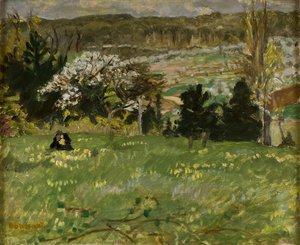
In the heart of a sun-drenched orchard, where the air seems thick with the scent of ripening fruit and the warmth of a fading summer, Pierre Bonnard’s “Autumn: The Fruit Pickers” unfolds as a breathtaking masterwork of Post-Impressionism. Painted in 1912, this canvas is far more than a mere documentation of seasonal harvest; it is an evocative sensory experience that invites the viewer to step into a moment of quiet, rhythmic labor. Bonnard, a founding member of the avant-garde Les Nabis group, possessed a singular ability to transform everyday rural activities into something deeply spiritual and visually hypnotic. As the eye wanders through the composition, it encounters five figures scattered amongst the trees, their movements harmonizing with the natural cycle of decay and rebirth that defines the autumn season.
The painting’s brilliance lies in its masterful manipulation of light and color, a technique that bridges the gap between the fleeting impressions of Monet and the structured emotional depth of the Symbolist movement. Bonnard employs a deliberate blurring of edges, eschewing sharp, photographic outlines in favor of soft, tonal transitions that mimic the way sunlight filters through a canopy of changing leaves. The palette is a vibrant dialogue between warm and cool; brilliant yellows, fiery oranges, and deep reds of the autumn foliage are balanced by subtle, atmospheric blues. This use of complementary colors creates a luminous vibration across the canvas, making the entire scene appear to glow from within, as if the very atmosphere were saturated with golden light.
Texture, Technique, and the Nabis Spirit
To touch the surface of such a work—even through a high-quality reproduction—is to imagine the tactile richness of Bonnard’s impasto technique. The artist applied paint in textured layers, particularly evident in the rugged trunks of the trees and the heavy baskets brimming with the season's bounty. This physical depth does not merely serve a decorative purpose; it actively simulates the dappled, flickering quality of sunlight hitting uneven surfaces. By prioritizing subjective experience over objective realism, Bonnard aligns himself with the Nabis’s rebellion against academic rigidity. For this group of artists, art was meant to transcend mere imitation, aiming instead for a spiritual resonance that captures the inner essence of a subject.
For the discerning collector or interior designer, “Autumn: The Fruit Pickers” offers an unparalleled opportunity to introduce a sense of warmth and historical prestige into a space. The painting’s composition—featuring a balanced arrangement of figures and a distant, nostalgic hint of a car in the background—provides a narrative depth that rewards prolonged contemplation. It is a piece that commands attention through its energy yet maintains a serene, contemplative atmosphere, making it an ideal centerpiece for a room designed for reflection or sophisticated gathering. Owning a reproduction of this caliber allows one to inhabit the same golden, autumnal light that Bonnard so lovingly captured over a century ago, bringing a timeless elegance and a profound connection to the history of modern art into the contemporary home.
Fragen & Antworten
Wann wurde "Autumn: The Fruit Pickers" geschaffen und welcher Stilrichtung lässt es sich zuordnen?
"Autumn: The Fruit Pickers" entstand im Jahr 1912 innerhalb der Post-Impressionist Style-Bewegung.
Welche Farbpalette wird in "Autumn: The Fruit Pickers" von Pierre Bonnard verwendet?
Die Farben von "Autumn: The Fruit Pickers" bilden eine Dark-Palette. Diese Klassifizierung beschreibt die dominierenden Farbfamilien.
Wie kann ich eine digitale Datei von "Autumn: The Fruit Pickers" von Pierre Bonnard erhalten?
Ein digitales Bild von "Autumn: The Fruit Pickers" von Pierre Bonnard kann auf der entsprechenden Digitales Bild-Seite erworben werden: ein hochauflösender digitaler Bild-Download.
Biografie des Künstlers
Frühe Jahre und Karriere
Pierre Bonnard wurde am 3. Oktober 1867 in Fontenay-aux-Roses, im Département Hauts-de-Seine, geboren. Er entstammte einer wohlhabenden Familie; sein Vater war ein hoher Beamter im französischen Kriegsministerium. Bonnard zeigte früh künstlerisches Talent und besuchte zunächst das Lycée Louis-le-Grand und später das Lycée Charlemagne in Vanves. Obwohl er von seinem Vater dazu gedrängt wurde, eine Karriere im Staatsdienst anzutreten, entschied sich Bonnard für die Kunst. Er studierte Jura, um seinen Vater zufriedenzustellen, begann aber gleichzeitig mit dem Studium an der Académie Julian und der École des Beaux-Arts, wo er Freundschaften mit anderen Künstlern wie Édouard Vuillard schloss.Die Nabi-Bewegung und Postimpressionismus
Um 1891 lernte Bonnard Toulouse-Lautrec kennen und begann, seine Werke auf Ausstellungen zu zeigen. Er engagierte sich auch in der Zeitschrift *La Revue Blanche*, für die er Frontispizien entwarf. Bonnard war ein Gründungsmitglied der Nabi-Bewegung (*Les Nabis*), einer Gruppe von Künstlern, die sich gegen den Impressionismus wandten und nach neuen Ausdrucksformen suchten. Die frühen Werke Bonnards zeigen den Einfluss japanischer Holzschnitte und Paul Gauguins. Er entwickelte einen eigenen Stil, der durch eine Vereinfachung der Formen und eine Verwendung flacher Farbflächen gekennzeichnet ist.Intimität und häusliche Szenen
Bonnard bevorzugte es, aus dem Gedächtnis zu malen und nutzte Skizzen als Referenzmaterial. Dies verlieh seinen Bildern eine traumartige Qualität. Er widmete sich vor allem intimen häuslichen Szenen, oft mit seiner Frau Marthe de Meligny als Modell. Diese Darstellung des Alltäglichen und Intimen brachte ihm den Beinamen "Intimisten" ein. Bonnard konzentrierte sich auf die Wiedergabe von Lichtstimmungen und Farbkombinationen, wobei er die Perspektive oft vernachlässigte.Spätere Jahre und künstlerische Entwicklung
In den 1910er Jahren zog Bonnard nach Vernonnet in der Normandie, wo er das Haus "La Roulotte" kaufte. Hier schuf er zahlreiche Gemälde, inspiriert von der Landschaft und dem Garten. Er pflegte eine enge Freundschaft zu Claude Monet, der ebenfalls in Giverny lebte. Bonnards Farbpalette wurde zunehmend intensiver und leuchtender. Nach Monets Tod zog Bonnard nach Le Cannet an der Côte d'Azur, wo er bis zu seinem Tod am 23. Januar 1947 lebte. Er vollendete sein letztes Gemälde, *Die Mandeltraube in Blüte*, nur wenige Tage vor seinem Ableben.Bedeutung und Vermächtnis
Pierre Bonnard gilt als einer der bedeutendsten französischen Maler des frühen 20. Jahrhunderts. Sein Werk zeichnet sich durch eine einzigartige Sensibilität für Farbe und Licht aus. Er trug maßgeblich zur Entwicklung des Postimpressionismus bei und beeinflusste nachfolgende Künstlergenerationen. Bonnards Gemälde sind heute in zahlreichen renommierten Museen weltweit zu sehen, darunter das Musée Marmottan Monet in Paris und das Art Institute of Chicago.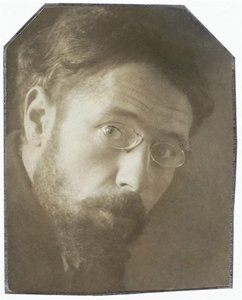
Pierre Bonnard
1867 - 1947 , Frankreich
Eckdaten zum Künstler
- Beeinflusste Künstler/Bewegungen: ['Intimismus']
- Bemerkenswerte Werke:
- Frau in kariertem Kleid (1890)
- Die Mandeltraube in Blüte
- Einflussreiche Künstler:
- Paul Gauguin
- Hokusai
- Geburtsdatum: 03. Oktober 1867
- Geburtsort: Fontenay-aux-Roses, Frankreich
- Künstlerische Bewegung: Postimpressionismus, Nabi
- Nationalität: Französisch
- Sterbedatum: 23. Januar 1947
- Vollständiger Name: Pierre Bonnard
Verwandte Artikel

Impressionismus und Postimpressionismus: Eine vergleichende Analyse
Entdecken Sie die Welt des Impressionismus und Postimpressionismus! Expertenwissen über Künstler wie Monet, Van Gogh & Cézanne. Jetzt lesen!

Postimpressionismus: Die 10 Meisterwerke, die eine Ära prägten –
Entdecken Sie die 10 Meisterwerke des Postimpressionismus! Van Gogh, Cézanne & Co. – ihre Geschichten, Techniken und zeitlose Schönheit. Kunstdrucke in Museumsqualiät auf . Jetzt entdecken!

Jenseits des Impressionismus: Die emotionale Tiefe der postimpressionistischen Malerei
Entdecken Sie die emotionale Tiefe des Postimpressionismus! Analysieren Sie Cézanne, van Gogh, Gauguin & Seurat. Expertenwissen über Kunstgeschichte und Einfluss auf die Moderne.

Paul Cézanne: Die 25 Meisterwerke des Impressionismus | OriginalUniqueArt
Entdecken Sie die 25 Meisterwerke von Paul Cézanne! Tauchen Sie ein in die Welt des Impressionismus und Postimpressionismus. Erfahren Sie mehr über seine Stillleben, Landschaften & berühmten Gemälde – jetzt hochwertige Kunstdrucke auf OriginalUniqueArt.com.

Pierre-Auguste Renoir: Die 25 Meisterwerke des Impressionismus für Ihr Zuhause | OriginalUniqueArt
Entdecken Sie die 25 schönsten Meisterwerke von Pierre-Auguste Renoir! Tauchen Sie ein in die Welt des Impressionismus, erleben Sie berühmte Gemälde wie 'Bal au moulin de la Galette' und finden Sie hochwertige Kunstdrucke für Ihr Zuhause. Jetzt auf OriginalUniqueArt.com!