
 In echtem Maßstab anzeigen
 Versenden als Grußkarte
 Teilen
 Details anzeigen
 Leitfaden öffnen

 Herunterladen
 Ähnliche Objekte
 Röntgenaufnahme
 Diashow
 Besucherstatistiken
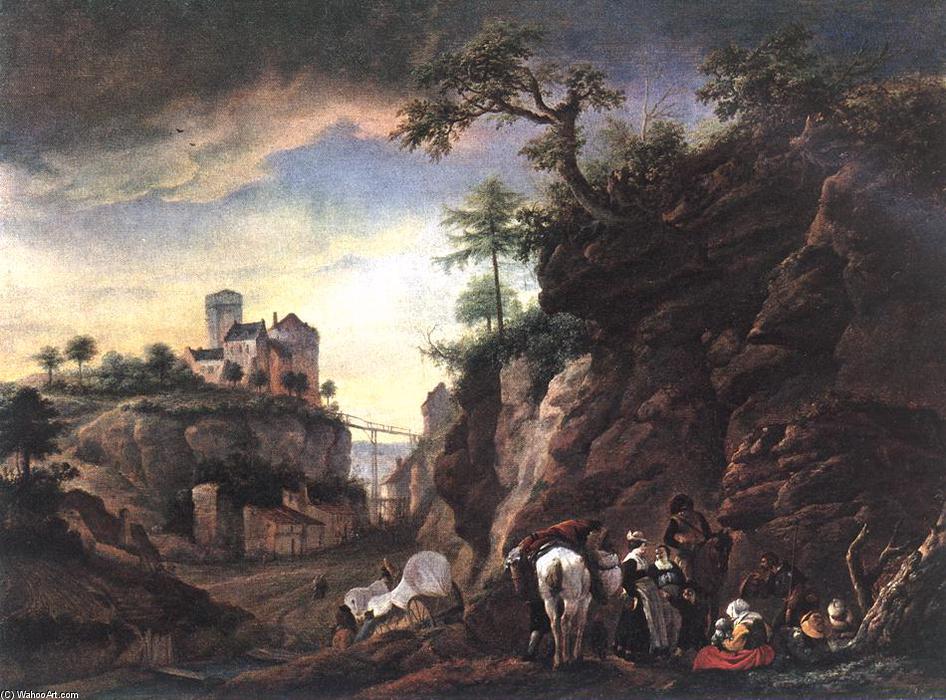
Rocky Landscape with resting Travellers
 Oil On Canvas
- WallArt
- Romanticism
 45.0 x 61.0 cm
 Szépművészeti Múzeum
 Mehr anzeigen
Handgefertigte Ölreproduktion
Handgemaltes Ölgemälde auf Leinwand in Ihrer Wunschgröße und mit Rahmen, auf Bestellung von unseren Künstlern angefertigt. ( Zum Druck wechseln Zum digitalen Bild wechseln)




P118B $10

P118H $10

P118W $10

P438Z $10

P508JH $12

P508YH $12

P805H $10

P805Z $10

P919BZ $10

P919G $10

P919XJ $10

P959ZH $10

P968JZ $12

W106C $8

W218G $10

W218JH $8

W218Y $10

W307PJ $10

W316G $10

W316PJ $8

W316Y $10

W398PJ $8

W4111J $10

W500HY $15

W500JH $15

W692G $12

W849H $8

W940BG $15

W953PJ $8




Wählen Sie aus unseren vordefinierten Formaten, die den ursprünglichen Proportionen des Kunstwerks entsprechen.

Sie können Ihre eigenen Maße eingeben, um einen bestimmten Rahmen oder Platz auszufüllen. Wenn die gewählte Größe nicht den Proportionen des Originalbildes entspricht, werden wir das Kunstwerk entweder beschneiden oder das Gemälde durch zusätzliche, handgemalte Elemente erweitern. Ein digitales Mockup wird Ihnen zur Genehmigung zugesandt, bevor die Produktion beginnt.
Bitte beachten Sie, dass die Bildschirmvorschau nicht die tatsächliche Beschneidung oder Erweiterung widerspiegelt. Nur das Mockup zeigt die endgültige Komposition exakt an.
Obwohl Sondermaße verfügbar sind, empfehlen wir, eine Größe aus der vordefinierten Liste zu wählen, um die ursprünglichen Proportionen beizubehalten.
Nach der Bestellung wird das OriginalUniqueArt.com-Team dem Kunden Anweisungen per E-Mail zusenden und eine Mockup-Vorschau bereitstellen.
Weltweiter Versand () in nur 3 bis 4 Wochen statt der üblichen 5 Wochen. (27 September). Keine Kompromisse bei der Qualität.

Kostenloser weltweiter Expressversand

Hochwertige Leinenleinwand

Vollständiger Versicherungsschutz beim Versand

Zollgebühren-Rückerstattungsgarantie

Garantie für exakte Farbtreue

100-tägiges Rückgaberecht (nur bei Mängeln)

100% Geld-zurück-Garantie

Angebot für Mengenrabatt
 Die Glasoption ist nur für Größen unter 110 cm verfügbar.

Rocky Landscape with resting Travellers
Reproduktionsmedium
Format der Reproduktion
-


Gesamtpreis
$ 300
A Dramatic Vista: Philips Wouwerman’s “Rocky Landscape with Resting Travellers”
Philips Wouwerman's "Rocky Landscape with Resting Travellers" is more than just a depiction of a rugged vista; it’s a carefully constructed tableau brimming with narrative potential and imbued with the spirit of the Dutch Golden Age. Painted circa 1650-1660, during the artist’s most prolific period, this oil on canvas work transports us to a remote corner of Europe – perhaps the foothills of the Alps or the rolling hills of Italy – where a small group of travelers pauses for respite amidst a dramatic and somewhat melancholic scene. The painting immediately commands attention with its masterful use of atmospheric perspective, creating an illusion of immense depth and drawing the eye into the heart of the composition: a crumbling castle perched precariously atop a distant hill, partially obscured by swirling clouds. The foreground is dominated by a group of figures – a small party of travelers, their horses, and a scattering of luggage – suggesting a journey’s end or perhaps simply a moment of temporary rest. Their postures are subtly expressive; some appear weary, others contemplative, hinting at the hardships endured during their travels. The arrangement of these figures within the pyramidal structure of the composition—with the castle as its apex—creates a powerful sense of scale and draws the viewer upwards, emphasizing the grandeur of the landscape and the ambition of human endeavor. Wouwerman’s skill lies not just in rendering the details of the scene – the rough texture of the rocks, the worn saddles on the horses, the folds of the travelers' clothing – but also in conveying a palpable sense of atmosphere: a cool, slightly somber mood that speaks to both the beauty and the inherent dangers of the natural world.The Romantic Spirit and Baroque Techniques
Wouwerman’s work firmly resides within the broader context of 17th-century Dutch painting, yet it transcends simple categorization. While influenced by the prevailing trends of the time – particularly the burgeoning interest in landscape as a subject matter – he developed a distinctly individual style that leans heavily into the Romantic sensibility. This is evident in his dramatic use of light and shadow, his emphasis on emotional expression, and his willingness to depict scenes of hardship and vulnerability alongside moments of beauty. The painting’s palette is restrained, dominated by earthy tones—ochres, browns, and grays—that contribute to the overall sense of realism and ruggedness. However, these muted colors are punctuated by flashes of brighter hues – the red of a cloak, the blue of the sky – which serve to heighten the drama and draw attention to key elements within the composition. Technically, Wouwerman demonstrates a mastery of oil painting techniques. The brushstrokes are visible and textured, particularly in the depiction of the rock formations and the cloudy sky, creating a sense of immediacy and physicality. He skillfully employs *sfumato*, a technique borrowed from Renaissance masters, to soften edges and create a hazy atmosphere, further enhancing the illusion of distance. The artist’s attention to detail is remarkable; one can almost feel the rough texture of the stone beneath their fingertips and hear the wind whistling through the trees.Symbolism and Narrative Potential
Beyond its purely visual appeal, “Rocky Landscape with Resting Travellers” is rich in symbolic meaning. The crumbling castle, a frequent motif in Wouwerman’s work, can be interpreted as a representation of human ambition, mortality, or perhaps even the fleeting nature of power. The travelers themselves may symbolize humanity's constant quest for knowledge, wealth, and spiritual fulfillment – a journey fraught with challenges and uncertainties. The bridge spanning the chasm below adds another layer of complexity to the scene, suggesting both connection and separation, hope and despair. Interestingly, the painting’s narrative potential is open to interpretation. While it could be viewed as a straightforward depiction of travelers seeking shelter after a long journey, it also evokes a sense of foreboding and loss. The somber atmosphere, combined with the ruined castle and the weary expressions of the figures, suggests that this respite may be temporary or even illusory. The painting invites viewers to project their own interpretations onto the scene, transforming it into a mirror reflecting their own experiences and emotions.A Legacy of Dramatic Landscapes
Philips Wouwerman’s “Rocky Landscape with Resting Travellers” stands as a testament to his artistic skill and his ability to capture the essence of the Dutch Golden Age. It is a painting that rewards careful observation, inviting viewers to lose themselves in its dramatic landscape and contemplate its rich symbolism. Reproductions of this captivating work offer a window into a bygone era, transporting us to a world of rugged beauty, human resilience, and enduring mystery. Its timeless appeal continues to resonate with art lovers today, solidifying Wouwerman’s place as one of the most important painters of his time.Biografie des Künstlers
Philips Wouwerman: Ein Leben im Goldenen Zeitalter der Niederlande
- Geboren: Haarlem, Niederlande (1619)
- Gestorben: 1668
Philips Wouwerman (getauft am 24. Mai 1619 – gestorben am 19. Mai 1668) war ein äußerst produktiver und vielseitiger niederländischer Maler, der für seine Darstellungen von Jagdszenen, Landschaftsbildern und Schlachtenszenen bekannt ist. Er gilt als eine bedeutende Figur in der künstlerischen Landschaft des Goldenen Zeitalters der Niederlande.
Frühes Leben und Ausbildung
Geboren in Haarlem, Niederlande, war Philips Wouwerman der Sohn von Pouwels Joostsz Wouwerman, ebenfalls ein Maler, wenn auch weniger bekannt als sein Sohn. Einzelheiten über seine frühe künstlerische Ausbildung sind etwas spärlich. Es wird jedoch vermutet, dass er unter Frans Hals (1581/85–1666) studierte, einem prominenten hannoverschen Porträtisten. Obwohl Hals’ unverwechselbarer Stil Wouwermans spätere Arbeit nicht stark beeinflusste, erwies sich die grundlegende Ausbildung wahrscheinlich als unschätzbar wertvoll. Zu Beginn seiner Karriere wurde Wouwerman von der *Bamboccianti*-Tradition beeinflusst, insbesondere durch die Werke von Pieter van Laer (1592/99–nach 1642), und übernahm deren Fokus auf das Alltagsleben und Genreszenen.
Künstlerische Entwicklung und Stil
- Frühe Einflüsse: Imitierend die *Bamboccianti*-Maler, zeichneten sich Wouwermans frühe Werke durch Darstellungen des täglichen Lebens aus.
- Entwicklungsstil (um 1640er Jahre): Es entwickelte sich ein charakteristisches kompositorisches Element – eine diagonale Hanglage oft begleitet von einem Baum als Repoussoir (ein Gerät zur Erzeugung von Tiefe). Figuren, häufig begleitet von Pferden, bevölkerten diese Szenen.
- Reife Periode (ca. 1650-1660): Wouwerman entwickelte seinen individuellen Stil und erweiterte sein Themenspektrum erheblich. Er malte Genreszenen, Landschaften mit Reisenden, Kavalleriegefechte, Militärlager und festliche Versammlungen von Bauern.
- Meisterschaft des Pferdes: Wouwerman wird besonders für seine außergewöhnliche Fähigkeit gefeiert, Pferde verschiedener Rassen in dynamischer Bewegung darzustellen. Kunsthistoriker Frederik J. Duparc nannte ihn berühmt "zweifellos der erfolgreichste und talentierteste niederländische 17. Jahrhundert-Maler von Pferden."
- Charakteristische Merkmale: Seine Gemälde zeichnen sich durch gedämpfte Farben, eine kühle Atmosphäre und sorgfältige Liebe zum Detail aus und schaffen so geistreiche und anekdotenhafte Erzählungen in seinen Szenen. Er kombinierte oft imaginäre südliche Landschaften mit einer unverwechselbar niederländischen Atmosphäre.
Wichtige Errungenschaften und Vermächtnis
Wouwermans Werke wurden zu Lebzeiten hoch geschätzt und erlangten im 18. Jahrhundert weitere Popularität. Seine Gemälde fanden ihren Weg in prominente Sammlungen in ganz Europa, darunter die der Fürstenhäuser in Dresden und St. Petersburg, was eine weit verbreitete Bewunderung für seine Kunst zeugte.
- Produktivität: Wouwerman war bemerkenswert produktiv; frühe Kataloge listeten rund 800 ihm zugeschriebene Werke auf, später über 1200. Ein neueres Werkverzeichnis (Schumacher, 2006) identifiziert etwa 570 authentische Werke und räumt den zahlreichen Nachahmern und Imitatoren Rechnung, die in seinem Stil arbeiteten.
- Künstlerfamilie: Seine Brüder Jan (1629–1666) und Pieter (1623–1682) waren ebenfalls Maler, die oft zunächst Philips zugeschrieben wurden. Obwohl Pieters Arbeit deutlich Philips’ Einfluss widerspiegelte, entwickelte er einen eigenen Stil. Jan wurde als ein autonomerer Landschaftsmaler anerkannt.
- Einfluss auf spätere Künstler: Wouwermans Stil beeinflusste zahlreiche Künstler, darunter Jan van Huchtenburgh (1647–1733), die Brüder Jan Frans und Joseph van Bredael (1688–1739) und Carel van Falens (1683–1733).
- Zunftmitgliedschaft & bürgerliches Engagement: Er war Mitglied der Haarlemer Zunft St. Lukas und bekleidete mehrere offizielle Positionen innerhalb dieser. Abseits seiner künstlerischen Bestrebungen arbeitete Wouwerman auch als Verwalter in Haarlem, was sein Engagement im öffentlichen Leben widerspiegelt.
Historische Bedeutung
Philips Wouwermans Beitrag zum Goldenen Zeitalter der Niederlande liegt in seiner Fähigkeit, eine breite Palette von Szenen – von belebten Marktplätzen und Jagdausflügen bis hin zu dramatischen Schlachtfeldern und ruhigen Landschaften – mit bemerkenswerter Detailtreue und Dynamik einzufangen. Seine Meisterschaft in der Darstellung von Pferden, kombiniert mit seinem scharfen Auge für anekdotenhafte Erzählungen, festigte seine Position als einer der gefeiertsten und einflussreichsten Maler seiner Zeit. Eine Retrospektive in Kassel und Den Haag (2009/2010) unterstrich weiter sein bleibendes Vermächtnis.

Philips Wouwermans
1619 - 1668 , Niederlande
Eckdaten zum Künstler
- Beeinflusste Künstler:
- Jan van Huchtenburgh
- Jan Frans van Bredael
- Joseph van Bredael
- Carel van Falens
- Bemerkenswerte Werke:
- Zwei Pferde
- Zwei Reiter bei einem Zigeilager
- Dünenlandschaft mit Posten
- Pferdemarkt in der Nähe eines Lagers
- Pferdepon bei Stein
- Geburtsdatum: 24. Mai 1619
- Geburtsort: Haarlem, Niederlande
- Künstlerische Bewegung: Niederländisches Goldene Zeitalter
- Künstlerische Einflüsse:
- Pieter van Laer
- Frans Hals
- Jan Wijnants
- Nationalität: Niederländisch
- Sterbedatum: 19. Mai 1668
- Vollständiger Name: Philips Wouwerman
Verwandte Artikel
Nicolaes Berchem und das Goldene Zeitalter: Pastoralismus, Idealisierung & Künstlerische Innovation
Entdecken Sie die faszinierende Welt von Nicolaes Berchem und das Goldene Zeitalter der niederländischen Landschaftsmalerei. Expertenanalyse, Hintergrundinformationen & künstlerische Innovationen.
Charles Leickert: Capturing the Dutch Golden Age Light – A Comprehensive Study of Technique, Context, and Legacy
Explore the captivating winter landscapes of Charles Leickert, a master of Dutch Golden Age light & atmosphere. Discover his techniques, symbolism, and lasting legacy – a comprehensive study for art enthusiasts and collectors.

Golden Light & Dutch Skies: The Timeless Magic of Dutch Golden Age Landscapes
Discover the breathtaking beauty of Dutch Golden Age landscapes. Explore the mastery of light, chiaroscuro, and 17th-century realism through an expert art history lens, celebrating the enduring legacy of the Dutch Masters for discerning collectors and art lovers.

Die 10 Meisterwerke des Goldenen Zeitalters der niederländischen Malerei |
Entdecken Sie die 10 Meisterwerke des Niederländischen Goldenen Zeitalters! Von Rembrandt bis Vermeer – erleben Sie Kunstgeschichte, Techniken & Emotionen. Hochwertige Gemäldereproduktionen für Ihr Zuhause auf .

Golden Light & Dutch Skies: Bringing the Magic of Dutch Golden Age Landscapes into Your Home
Transform your home with the breathtaking light of Dutch Golden Age landscapes. Discover how hand-painted oil reproductions of masterworks like Ruisdael and Vermeer bring timeless elegance, atmosphere, and soulful texture to modern interiors. Elevate your space with museum-quality art.


