
 Vorschau anzeigen
 Versenden
 Teilen
 Details anzeigen
 Leitfaden

 Herunterladen
 Ähnliche Objekte
 Röntgenaufnahme
 Diashow
 Fragen & Antworten
 Statistiken
Shipwreck

- 58.0 x 81.0 cm


 Weiterlesen
Giclée / Kunstdruck
Giclée- oder Leinwanddruck in Museumsqualität mit schneller Produktion und flexiblen Veredelungsoptionen. ( Handgemalte Reproduktion bestellen Zum digitalen Bild wechseln)




P118B €10

P118H €10

P118W €10

P438Z €10

P508JH €12

P508YH €12

P805H €10

P805Z €10

P919BZ €10

P919G €10

P919XJ €10

P959ZH €10

P968JZ €12

W106C €8

W218G €10

W218JH €8

W218Y €10

W307PJ €10

W316G €10

W316PJ €8

W316Y €10

W398PJ €8

W4111J €10

W500HY €15

W500JH €15

W692G €12

W849H €8

W940BG €15

W953PJ €8




Wählen Sie aus unseren vordefinierten Formaten, die den ursprünglichen Proportionen des Kunstwerks entsprechen.

Geben Sie die benötigte Breite und Höhe an, damit der Druck perfekt in Ihren Rahmen oder an Ihre Wand passt. Ein Druck kann nur beschnitten, aber niemals größer als das Originalbild angefertigt werden; daher verliert ein Format mit anderen Proportionen einen Teil des Bildes. Wir senden Ihnen ein digitales Mockup zur Freigabe, bevor wir den Druck ausführen. Das auf dieser Seite gezeigte Bild zeigt nicht den tatsächlichen Beschnitt – dies ist nur im Mockup ersichtlich.
Weltweiter Versand () innerhalb von 2 Wochen statt der üblichen 4/5 Wochen. (6 November)

Kostenloser weltweiter Expressversand

Hochwertige Leinenleinwand

Umfassender Versicherungsschutz beim Versand

Zollgebühren-Rückerstattungsgarantie

Garantie für exakte Farbtreue

100 Tage Rückgaberecht (nur bei Mängeln)

100% Geld-zurück-Garantie

Mengenrabatt verfügbar
 Die Glasoption ist nur für Größen unter 110 cm verfügbar.

Shipwreck
Giclée / Kunstdruck
Format der Reproduktion
-


Endpreis
€ 72
A Tempestuous Vision: Philip James de Loutherbourg’s “Shipwreck”
Philip James de Loutherbourg's "Shipwreck," painted in 1793, isn’t merely a depiction of maritime disaster; it’s a visceral exploration of human vulnerability against the overwhelming power of nature. This dramatic landscape, now housed within the Southampton City Art Gallery, transcends simple realism to become a potent allegory for survival, desperation, and the precariousness of existence – themes that resonated deeply with the burgeoning Romantic movement of the late 18th century.
The painting immediately commands attention through its turbulent composition. A colossal wave, rendered in thick, swirling brushstrokes of indigo, ochre, and grey, dominates the scene, threatening to engulf a shattered vessel – the remnants of a once-proud ship now reduced to splintered wood and clinging figures. Loutherbourg masterfully employs chiaroscuro, utilizing stark contrasts between light and shadow to heighten the drama and emphasize the immediate threat. The dark, brooding sky, pregnant with impending storm, mirrors the despair etched on the faces of those struggling for survival amidst the wreckage.
The Baroque Influence & Dramatic Lighting
While firmly rooted in the Romantic sensibility, "Shipwreck" reveals a clear debt to the Baroque tradition, particularly in its theatrical use of light and shadow. Loutherbourg, who had trained under Charles-André van Loo, inherited a penchant for dramatic effects – a skill he honed not only as a painter but also as a stage designer for London’s Drury Lane Theatre. This influence is evident in the painting's heightened emotional intensity and its carefully orchestrated composition, designed to draw the viewer directly into the heart of the scene.
The figures themselves are illuminated from the left, casting long, dramatic shadows that accentuate their vulnerability and heighten the sense of urgency. Loutherbourg’s technique is particularly noteworthy in his rendering of water – not as a smooth, reflective surface, but as a chaotic, dynamic force, teeming with movement and energy. The artist's attention to detail extends to the depiction of the ship itself, meticulously rendered with a sense of both grandeur and impending doom. The use of layered textures—the rough splintered wood, the slickness of the waves, the ragged clothing of the survivors—adds considerable depth and realism to the scene.
Symbolism & The Romantic Spirit
Beyond its immediate depiction of a shipwreck, “Shipwreck” is rich in symbolic meaning. The storm represents not just a natural event but also the unpredictable forces that govern human life – fate, adversity, and the limitations of control. The survivors, huddled together on the rocks, embody the resilience of the human spirit in the face of overwhelming odds. Their desperate struggle for survival speaks to our shared vulnerability and our innate desire to endure.
The inclusion of bandits attacking the lifeboat adds another layer of complexity, suggesting a broader theme of exploitation and injustice. It’s a subtle but powerful commentary on the darker aspects of human nature – the willingness to prey upon the weak in times of crisis. This painting perfectly encapsulates the Romantic spirit's fascination with both the sublime beauty and terrifying power of the natural world, alongside its exploration of profound emotional experiences.
A Legacy of Dramatic Art
Philip James de Loutherbourg’s “Shipwreck” stands as a testament to his artistic versatility and his ability to capture the drama and intensity of human experience. It's a work that continues to resonate with viewers today, prompting reflection on our own vulnerabilities and our capacity for both despair and resilience. The painting’s enduring appeal lies in its masterful composition, its evocative use of light and shadow, and its profound exploration of timeless themes – all rendered with the skill and passion characteristic of a true Romantic artist.
Fragen & Antworten
Wie schafft "Shipwreck" das Gleichgewicht zwischen Hell und Dunkel?
Die aufgezeichneten Werte für "Shipwreck" von Philip James de Loutherbourg sind: deep_shadow Helligkeit, Dark Luminanz.
Welche Maße hat das Originalwerk "Shipwreck"?
Das Originalwerk "Shipwreck" hat die Maße 58 x 81 cm. Die Originalmaße dienen als hilfreiche Orientierungshilfe bei der Wahl der Reproduktionsgröße.
In welcher Phase der Karriere von Philip James de Loutherbourg lässt sich „Shipwreck“ angesichts seines Entstehungsdatums einordnen?
"Shipwreck", entstanden im Jahr 1767, stammt aus der Mature Period von Philip James de Loutherbourg.
Künstlerbiografie
Frühes Leben und Ausbildung
- Geboren: Straßburg, Frankreich (1740)
- Gestorben: 1812
- Philip James de Loutherbourg, auch bekannt als Philip Jacques de Loutherbourg, war ein französisch-britischer Maler.
- Er begann seine künstlerische Ausbildung in jungen Jahren und wurde schnell für sein Können im Malen bekannt.
- Er wurde 1781 Mitglied der Royal Academy.
- Sein Vater war ein Graveur und Miniaturist, was seinen frühen Zugang zur Kunst beeinflusste.
- Ursprünglich für den Dienst bestimmt, lehnte er diesen Weg ab, um das Malen zu verfolgen.
- Er studierte bei Charles-André van Loo und Francesco Giuseppe Casanova in Paris.
Bemerkenswerte Werke und künstlerischer Stil
- Lord Howes Aktion, oder der glorreiche Erste Juni: Gedenken britischer Marine Siege (1795).
- Die Zerstörung der Armada: Zeigte sein Können bei der Darstellung dramatischer Szenen.
- Coalbrookdale bei Nacht: Betonte sein Interesse an der Industriellen Revolution.
- Reiter und Rinder in einem Gewitter: Eine dramatische Darstellung der Naturgewalt (1780).
- Landschaft mit Kühen und Figuren Ein Sturm kommt auf: Eine atemberaubende pastorale Szene, wiedergegeben im Ölmalerei-Stil (1781).
- Seine Gemälde zeigten oft historische, marine und Landschaftsmotive.
- Er war bekannt für seine dramatischen Kompositionen und Liebe zum Detail.
- Loutherbourgs Stil wird mit dem Romantik verbunden, wobei Emotionen und Erhabenheit betont werden.
Das Eidophusikon und theatralische Innovationen
- 1789 verließ Loutherbourg vorübergehend die Malerei, um sich der Alchemie und dem Übernatürlichen zu widmen.
- Er traf Alessandro di Cagliostro und reiste mit ihm, bevor Cagliostro verurteilt wurde.
- Loutherbourg erfand das Eidophusikon, ein mechanisches Theater, das bemalte Kulissen mit Lichteffekten und beweglichen Figuren kombinierte.
- Das Eidophusikon war eine bedeutende Innovation im Theatertheaterdesign und in der Unterhaltung.
- Er entwarf aufwendige Bühnenbilder für Londoner Theater, darunter Drury Lane, was seine einfallsreichen Fähigkeiten demonstrierte.
Spätere Karriere und Vermächtnis
- Loutherbourg kehrte nach seiner Beteiligung an Cagliostro zur Malerei zurück.
- Seine späteren Werke umfassten historische Gemälde und biblische Themen.
- Er veröffentlichte zwei Sammlungen von Radierungen: Picturesque Scenery of Great Britain (1801) und The Romantic and Picturesque Scenery of England and Wales (1805).
- Seine Werke sind in Museen auf der ganzen Welt zu finden, darunter das National Maritime Museum und das British Museum.
- Loutherbourgs Einfluss erstreckte sich auf spätere Künstler wie J.M.W. Turner.
- Er wird für seine Beiträge sowohl zur Malerei als auch zum Theatertheaterdesign in Erinnerung behalten.
Historische Bedeutung
- Loutherbourg spielte eine bedeutende Rolle bei der Entwicklung der britischen Romantik.
- Seine Marinegemälde halfen, Darstellungen maritimer Ereignisse zu popularisieren.
- Das Eidophusikon demonstrierte seinen innovativen Geist und trug zur Weiterentwicklung der Theatertechnologie bei.
- Er schloss die Lücke zwischen Malerei, Theatertheaterdesign und wissenschaftlicher Erkundung.
- Loutherbourgs Vermächtnis liegt in seiner Fähigkeit, künstlerisches Können mit technologischer Innovation und einer Faszination für die Naturwelt zu verbinden.

Philip James de Loutherbourg
1740 - 1812 , Frankreich
Kurzinfos
- Beeinflusste Künstler:
- Charles-André van Loo
- Francesco Giuseppe Casanova
- Bemerkenswerte Werke:
- Lord Howes Aktion (1795)
- Zerstörung der Armada
- Coalbrookdale bei Nacht
- Geburtsdatum: 31. Oktober 1740
- Geburtsort: Straßburg, Frankreich
- Künstlerische Richtung: Romantik
- Nationalität: Britisch-Französisch
- Sterbedatum: 11. März 1812
- Vollständiger Name: Philip James de Loutherbourg
- Von Künstlern Beeinflusst: ['J.M.W. Turner']
Ähnliche Artikel
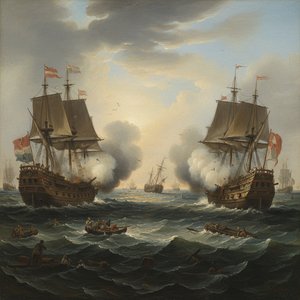
Masterpieces of Maritime Warfare: The Artistry and Intensity of Naval Combat in Historical Painting
Explore the dramatic intensity of naval combat through art history. From Romanticism to classical maritime masterpieces, discover how legendary painters captured the chaos, light, and heroism of sea battles in breathtaking oil paintings.

Über uns
Entdecken Sie unsere Geschichte! Wir bringen Weltklasse-Kunst in Ihr Leben durch fachkundige Auswahl, individuelle Kreationen und kostenlose Vorschauen. Seit dem Jahr 2000 von Privatpersonen und Unternehmen geschätzt.

Willem van de Velde der Ältere: Meister der Seemalererei und Chronist des Niederländischen Goldenen Zeitalters
Entdecken Sie das Werk von Willem van de Velde der Ältere, dem Meister der Seemalerei des Niederländischen Goldenen Zeitalters. Erfahren Sie mehr über sein Leben, seine Techniken und seinen Einfluss auf die Kunstgeschichte – jetzt bei OriginalUniqueArt!

Philip James de Loutherbourg: Romantic Visions of Maritime Life & the Sublime
Explore the dramatic naval scenes & landscapes of Philip James de Loutherbourg (1740-1812), a key figure in Romantic painting. Discover his legacy, theatrical innovations & iconic works like 'The Battle of the Nile' at OriginalUniqueArt.

Meister der Schatten: Die 25 eindrucksvollsten Kunstwerke von Francisco Goya
Erleben Sie Goyas Meisterwerke von Romantik bis Schatten. Entdecken Sie alle Klassiker auf OriginalUniqueArt.com.


