In echtem Maßstab anzeigen
 Versenden als Grußkarte
 Teilen
 Details anzeigen
 Leitfaden öffnen

 Herunterladen
 Ähnliche Objekte
 Röntgenaufnahme
 Diashow
 Besucherstatistiken
The Bonaventure Pine
 Acrylic On Canvas
- WallArt
- Neo-Impressionist Pointillism
 1893
1893- 19th Century
 81.0 x 65.0 cm
 Mehr anzeigen
Handgefertigte Ölreproduktion
Handgemaltes Ölgemälde auf Leinwand in Ihrer Wunschgröße und mit Rahmen, auf Bestellung von unseren Künstlern angefertigt. ( Zum Druck wechseln Zum digitalen Bild wechseln)




P118B €10

P118H €10

P118W €10

P438Z €10

P508JH €12

P508YH €12

P805H €10

P805Z €10

P919BZ €10

P919G €10

P919XJ €10

P959ZH €10

P968JZ €12

W106C €8

W218G €10

W218JH €8

W218Y €10

W307PJ €10

W316G €10

W316PJ €8

W316Y €10

W398PJ €8

W4111J €10

W500HY €15

W500JH €15

W692G €12

W849H €8

W940BG €15

W953PJ €8




Wählen Sie aus unseren vordefinierten Formaten, die den ursprünglichen Proportionen des Kunstwerks entsprechen.

Geben Sie die Breite und die Höhe an, die Sie für Ihren Rahmen oder Ihre Wand benötigen. Da dieses Werk handgemalt ist, kann der Künstler bei einer anderen Form etwas mehr um das Bild herum malen oder etwas abschneiden – Sie entscheiden. Wir senden Ihnen ein digitales Mockup zur Freigabe, bevor mit dem Malen begonnen wird. Das auf dieser Seite gezeigte Bild stellt nicht das tatsächliche Ergebnis dar – dies tut nur das Mockup.
Nach der Bestellung wird das OriginalUniqueArt.com-Team dem Kunden Anweisungen per E-Mail zusenden und eine Mockup-Vorschau bereitstellen.
Weltweiter Versand () in nur 3 bis 4 Wochen statt der üblichen 5 Wochen. (23 Oktober). Keine Kompromisse bei der Qualität.

Kostenloser weltweiter Expressversand

Hochwertige Leinenleinwand

Vollständiger Versicherungsschutz beim Versand

Zollgebühren-Rückerstattungsgarantie

Garantie für exakte Farbtreue

100-tägiges Rückgaberecht (nur bei Mängeln)

100% Geld-zurück-Garantie

Angebot für Mengenrabatt
 Die Glasoption ist nur für Größen unter 110 cm verfügbar.

The Bonaventure Pine
Reproduktionsmedium
Format der Reproduktion
-


Gesamtpreis
€ 263
Paul Signac's *The Bonaventure Pine*: A Symphony of Light and Color
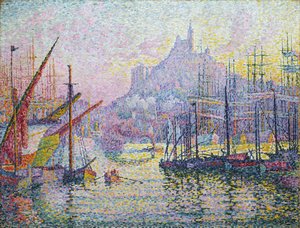
Paul Signac’s 1893 painting, *The Bonaventure Pine*, is more than just a depiction of a Provençal landscape; it’s a meticulously constructed exploration of light, color, and the burgeoning scientific understanding of vision that defined his pivotal role in the development of Neo-Impressionism. This captivating work, measuring 81 x 65 cm, immediately draws the viewer into a world where the very essence of nature is rendered through a revolutionary technique – Pointillism. The scene itself presents a majestic pine tree, its vibrant green foliage and azure branches dominating the composition, standing proudly amidst a tranquil field and distant mountains. Boats dot the water’s surface, adding a sense of scale and inviting the eye to wander across the textured canvas.
The Birth of Pointillism
Signac's artistic journey was profoundly shaped by his collaboration with Georges Seurat. Together, they sought to move beyond the fleeting effects of Impressionism and establish a more systematic approach to painting. Pointillism, born from this partnership, involved applying tiny, distinct dots of pure color – primarily complementary hues – side-by-side. This technique, rather than blending colors on the palette or in the viewer’s eye, relies entirely on optical mixing. When viewed from a distance, these individual dots coalesce to create an astonishingly luminous and vibrant effect, mimicking the way the human eye perceives color. *The Bonaventure Pine* exemplifies this mastery; observe how Signac builds depth and form through carefully placed points of red, blue, green, and yellow, creating a shimmering surface that seems to vibrate with light.
Symbolism and the Provençal Landscape
The choice of subject – the *Bonaventure Pine* – is significant. This iconic tree, located in Saint-Tropez, was already imbued with local legend; it was said to have been planted by a young sailor who, upon returning home after years at sea, had vowed to dedicate his life to the woman he loved. The painting thus transcends a simple landscape depiction and becomes a meditation on themes of longing, perseverance, and the enduring power of nature. The inclusion of boats further reinforces this connection to maritime history and the human desire for exploration and adventure. The distant mountains provide a sense of grandeur and timelessness, anchoring the scene within the broader context of the Provençal countryside.
Emotional Impact and Artistic Legacy
*The Bonaventure Pine* possesses an undeniable emotional resonance. Signac’s masterful use of color evokes a feeling of serenity and tranquility, while the meticulous detail invites close observation. This painting represents a crucial moment in modern art history – a bold experiment that challenged conventional notions of representation and paved the way for subsequent developments in abstract expressionism. Its enduring appeal lies not only in its technical brilliance but also in its ability to capture the beauty and wonder of the natural world through a uniquely innovative artistic lens. This reproduction offers an exceptional opportunity to experience Signac’s revolutionary vision firsthand.
Fragen & Antworten
Wie treffen Bewegung und Epoche in "The Bonaventure Pine" von Paul Signac aufeinander?
"The Bonaventure Pine" gehört der Neo-Impressionist Pointillism-Strömung an, und sein Schöpfer war in der Ära der – 19. Jahrhundert tätig.
Ist "The Bonaventure Pine" von Paul Signac ein Gemälde, eine Zeichnung oder ein Druck?
"The Bonaventure Pine" ist ein Werk der Art WallArt.
Wie stark ist der Kontrast in "The Bonaventure Pine" von Paul Signac?
Der Hell-Dunkel-Kontrast von „The Bonaventure Pine“ wird mit Statement angegeben. Der Kontrast beschreibt, wie stark sich helle und dunkle Bereiche voneinander unterscheiden.
Biografie des Künstlers
Frühe Jahre und Ausbildung
Paul Victor Jules Signac, ein französischer Neo-Impressionistischer Maler, wurde am 11. November 1863 in Paris geboren. Ursprünglich absolvierte er eine Ausbildung zum Architekten, entschied sich aber im Alter von 18 Jahren für die Malerei. Dieser Entschluss wurde durch eine Ausstellung der Werke von Claude Monet beeinflusst.Künstlerischer Stil und Einflüsse
Signacs Stil zeichnete sich durch die Verwendung kleiner Punkte reiner Farbe aus, die er nebeneinander stellte, um ein Gefühl für Tiefe und Licht zu erzeugen. Diese Technik, bekannt als Pointillismus, wurde in Zusammenarbeit mit Georges Seurat entwickelt. Signacs Arbeit wurde auch von seinen Reisen entlang der europäischen Küste beeinflusst, wo er die Schönheit von Hafenstädten in Aquarellen festhielt.Wichtige Werke und Verbindungen
* Boulevard de Clichy (1886): Ein postimpressionistisches Werk, das Signacs akribischen Stil zeigt. * Der rote Bojen, Saint-Tropez (1895): Ein lebhaftes marines Gemälde mit einer rot-orangenen Boje vor blauem Hintergrund. * Gründungsmitglied der Société des Artistes Indépendants, die jährliche Ausstellungen organisierte, die Trends in der frühen 20. Jahrhundert Kunst prägten.Vermächtnis und Einfluss
Signacs Arbeit hatte einen tiefgreifenden Einfluss auf die Entwicklung des Fauvismus und beeinflusste Künstler wie Henri Matisse und André Derain. Als Präsident der Société des Artistes Indépendants unterstützte Signac jüngere Künstler und stellte kontroverse Werke von den Fauves und Kubisten aus.- Erleben Sie Paul Signacs „Boulevard de Clichy 1886“ – eine ruhige Pointillist-Winterszene in Paris. Bewundern Sie seine kühle Farbpalette und zeitlose Schönheit. Hochwertige Reproduktionen erhältlich.
- Entdecken Sie Paul Signacs „Der Kiefernbaum in Saint-Tropez“, ein lebendiger Neo-Impressionistischer Meisterwerk! Erkunden Sie Pointillismus, mediterrane Schönheit und zeitlose Anziehungskraft. Perfekt für Kunstliebhaber und Sammler.
- Entdecken Sie Paul Signacs 'Frühstück (Die Speisekammer)' – ein lebendiger Neo-Impressionistischer Meisterwerk! Erkunden Sie Pointillismus, Belle Époque Charme und zeitlose Schönheit. Perfekt für Kunstsammler.
- Erleben Sie Signacs 'Der Leuchtturm, Saint-Tropez'! Dieses lebendige Postimpressionistenwerk fängt die Schönheit der französischen Küste mit dem schimmernden Licht und den Farben des Pointillismus ein.
- Entdecken Sie Gustav Klimts 'Schloss Kammer am Attersee'! Eine friedliche Symbolistische Landschaft mit leuchtenden Farben und geometrischen Mustern. Besorgen Sie sich heute eine handgemalte Ölmalerei Reproduktion!
Wichtige Daten
* 11. November 1863: Geburt in Paris * 1884: Mitbegründung der Société des Artistes Indépendants * 15. August 1935: Verstarb im Alter von 71 Jahren. Erleben Sie das künstlerische Genie von Paul Signac durch seine fesselnden Werke, die auf OriginalUniqueArt.com erkundet werden können.
Paul Signac
1863 - 1935 , Frankreich
Eckdaten zum Künstler
- Beeinflusste Künstler:
- Henri Matisse
- André Derain
- Bemerkenswerte Werke:
- Boulevard de Clichy (1886)
- Der rote Boje, Saint-Tropez
- Frühstück (Die Speisekammer)
- Einflussreiche Kunstrichtung: Fauvismus
- Geburtsdatum: 11. November 1863
- Geburtsort: Paris, Frankreich
- Künstlerische Bewegung: Neo-Impressionismus
- Nationalität: Französisch
- Sterbedatum: 15. August 1935
- Vollständiger Name: Paul Signac
Verwandte Artikel

Paul Signac: Pointillismus, Politik und die Suche nach Harmonie in der modernen Kunst
Entdecken Sie Paul Signacs revolutionären Pointillismus! Erfahren Sie mehr über die wissenschaftlichen Grundlagen, politischen Engagements und das künstlerische Vermächtnis dieses Meisters des Neo-Impressionismus. Jetzt lesen!
The Science of Light: How Seurat and Signac Revolutionized Color with Pointillism
Explore the scientific brilliance of Seurat and Signac. Discover how Pointillism revolutionized color through optical mixing and light, offering a profound look into the Neo-Impressionist movement for true art connoisseurs and collectors.
Paul Klee: Die 25 Meisterwerke des Abstrakten – Kunst für Ihr Zuhause | OriginalUniqueArt
Entdecken Sie die 25 Meisterwerke von Paul Klee! Tauchen Sie ein in seine abstrakte Welt, voller Expressionismus und Bauhaus-Einflüsse. Hochwertige Kunst für Ihr Zuhause – jetzt bei OriginalUniqueArt entdecken!
Die Präzision des Lichts: Seurats und Signacs wissenschaftliche Revolution der Farbwahrnehmung
Erfahren Sie alles über die wissenschaftliche Revolution von Seurat und Signac. Entdecken Sie die Magie des Pointillismus jetzt!

Paul Cézanne: Die 25 Meisterwerke des Impressionismus | OriginalUniqueArt
Entdecken Sie die 25 Meisterwerke von Paul Cézanne! Tauchen Sie ein in die Welt des Impressionismus und Postimpressionismus. Erfahren Sie mehr über seine Stillleben, Landschaften & berühmten Gemälde – jetzt hochwertige Kunstdrucke auf OriginalUniqueArt.com.