Vorschau anzeigen
 Versenden
 Teilen
 Details anzeigen
 Leitfaden

 Herunterladen
 Ähnliche Objekte
 Röntgenaufnahme
 Diashow
 Fragen & Antworten
 Statistiken
Little Hope

- 46.0 x 52.0 cm


 Weiterlesen
Giclée / Kunstdruck
Giclée- oder Leinwanddruck in Museumsqualität mit schneller Produktion und flexiblen Veredelungsoptionen. ( Handgemalte Reproduktion bestellen Zum digitalen Bild wechseln)




P118B €10

P118H €10

P118W €10

P438Z €10

P508JH €12

P508YH €12

P805H €10

P805Z €10

P919BZ €10

P919G €10

P919XJ €10

P959ZH €10

P968JZ €12

W106C €8

W218G €10

W218JH €8

W218Y €10

W307PJ €10

W316G €10

W316PJ €8

W316Y €10

W398PJ €8

W4111J €10

W500HY €15

W500JH €15

W692G €12

W849H €8

W940BG €15

W953PJ €8




Wählen Sie aus unseren vordefinierten Formaten, die den ursprünglichen Proportionen des Kunstwerks entsprechen.

Geben Sie die benötigte Breite und Höhe an, damit der Druck perfekt in Ihren Rahmen oder an Ihre Wand passt. Ein Druck kann nur beschnitten, aber niemals größer als das Originalbild angefertigt werden; daher verliert ein Format mit anderen Proportionen einen Teil des Bildes. Wir senden Ihnen ein digitales Mockup zur Freigabe, bevor wir den Druck ausführen. Das auf dieser Seite gezeigte Bild zeigt nicht den tatsächlichen Beschnitt – dies ist nur im Mockup ersichtlich.
Weltweiter Versand () innerhalb von 2 Wochen statt der üblichen 4/5 Wochen. (8 November)

Kostenloser weltweiter Expressversand

Hochwertige Leinenleinwand

Umfassender Versicherungsschutz beim Versand

Zollgebühren-Rückerstattungsgarantie

Garantie für exakte Farbtreue

100 Tage Rückgaberecht (nur bei Mängeln)

100% Geld-zurück-Garantie

Mengenrabatt verfügbar
 Die Glasoption ist nur für Größen unter 110 cm verfügbar.

Little Hope
Giclée / Kunstdruck
Format der Reproduktion
-


Endpreis
€ 72
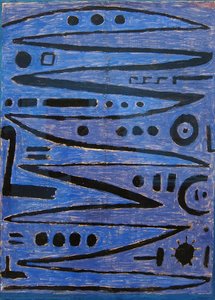
A Fragment of Hope Amidst Uncertainty
- Subject Matter: The painting depicts a solitary human face rendered in an abstracted form against a serene blue backdrop. This deliberate simplification prioritizes emotional resonance over precise anatomical detail, inviting viewers to contemplate the essence of human experience.
- Style: Klee’s work embodies the spirit of Surrealism and Expressionism simultaneously. While retaining elements of Cubist fragmentation—particularly evident in the geometric shapes subtly interwoven within the face—the overall aesthetic leans towards lyrical abstraction, characteristic of his mature style. It's a visual language that eschews literal representation for conveying feeling.
- Technique: Executed in watercolor on paper, “Little Hope” showcases Klee’s masterful control over color and texture. Watercolor pigments blend seamlessly to create luminous washes and delicate gradations, capturing the ethereal quality of light and atmosphere. The artist employs a technique known as ‘masking,’ strategically covering portions of the paper with adhesive tape to ensure consistent pigment distribution and achieve precise tonal harmonies.
- Historical Context: Created in 1938 during the tumultuous period of World War II, “Little Hope” reflects the anxieties and aspirations of its time. Klee’s artistic output during this era was marked by a preoccupation with themes of fragility, resilience, and spiritual contemplation—responses to the pervasive fear of destruction that gripped Europe.
- Symbolism: The blue hue dominating the background is not merely decorative; it symbolizes tranquility and introspection – a deliberate counterpoint to the external pressures of war. Furthermore, the distorted face itself can be interpreted as representing vulnerability and inner turmoil, yet simultaneously conveying an unwavering spirit of hope—a subtle affirmation of human perseverance in the face of adversity.
Exploring Klee’s Artistic Vision
Paul Klee's artistic philosophy revolved around a belief that art should transcend mere imitation of nature. Instead, he sought to capture inner states and emotions through visual symbols—a method deeply rooted in Jungian psychology and influenced by Eastern philosophies. His approach championed spontaneity and intuition, rejecting rigid academic conventions in favor of embracing chance and experimentation.Watercolor’s Delicate Embrace
The choice of watercolor as the medium was crucial to Klee's artistic intent. Watercolor pigments possess remarkable transparency and luminosity—qualities that allowed him to achieve breathtaking effects of color and light. Unlike oil paints, which require layering and blending over extended periods, watercolor dries quickly, permitting artists to capture fleeting impressions and imbue their canvases with immediacy.A Legacy of Emotional Resonance
“Little Hope” stands as a testament to Klee’s enduring legacy—a painting that continues to captivate viewers with its understated beauty and profound psychological depth. Its evocative imagery speaks to universal themes of human emotion, reminding us that even amidst darkness and uncertainty, the possibility of solace and renewal persists.Fragen & Antworten
Wie lässt sich "Little Hope" in das Gesamtwerk von Paul Klee einordnen?
"Little Hope" gehört zu Paul Klees Werk der Abstract Expressionism-Epoche, dessen dokumentierte Themen unter anderem expressionist roots, swiss identity, emotional depth, geometric abstraction, klee legacy umfassen.
Wer hat "Little Hope" geschaffen?
"Little Hope" wird Paul Klee zugeschrieben.
Welche Größe sollte ich für den Druck von "Little Hope" für mein Zimmer wählen?
Für einen Living Room ist die empfohlene Druckgröße von "Little Hope" von Paul Klee Large.
Künstlerbiografie
Paul Klee: Ein Leben in Farbe und Form
Frühes Leben und Ausbildung
- Paul Klee wurde am 18. Dezember 1879 in Münchenbuchsee, Schweiz, geboren.
- Sein Vater war Musiklehrer deutscher Herkunft, seine Mutter eine Schweizer Sängerin, was ihm schon früh eine Wertschätzung für die Künste vermittelte.
- Klee begann zunächst mit dem Zeichnen, gab diese jedoch schließlich auf zugunsten expressiverer Formen auf.
- Er studierte von 1898 bis 1901 an der Akademie der Bildenden Künste in München.
Künstlerische Entwicklung und Einflüsse
- In seinen frühen Werken waren Einflüsse des Jugendstils und Symbolismus zu sehen, aber er begann schnell, seinen einzigartigen Stil zu entwickeln.
- Eine entscheidende Reise nach Tunesien im Jahr 1914 hatte einen tiefgreifenden Einfluss auf seine Verwendung von Farbe und Abstraktion – das Licht und die Atmosphäre inspirierten eine Verschiebung hin zu kräftigeren Farbschemata.
- Er war stark von Bewegungen wie Expressionismus, Kubismus und Surrealismus beeinflusst, obwohl er sich nie vollständig mit einer einzelnen davon identifizierte.
- Sein Interesse an Musik informierte seinen künstlerischen Ansatz stark, indem er oft Malerei als Komponieren musikalischer Stücke verglich.
Die Bauhaus-Jahre und darüber hinaus
- Von 1931 bis 1933 lehrte Klee an der einflussreichen Bauhaus-Schule für Kunst, Design und Architektur neben Wassily Kandinsky.
- Diese Zeit war geprägt von einer Blüte seiner abstrakten Werke, in denen er sich mit Farbtheorie und formalen Beziehungen auseinandersetzte.
- Mit dem Aufstieg des Nationalsozialismus in Deutschland wurde Klee 1933 aufgrund seiner „degenerierten“ Kunst aus der Bauhaus entlassen.
- Er kehrte nach die Schweiz zurück und setzte seine Arbeit als Maler fort, sein Gesundheitszustand verschlechterte sich jedoch während dieser Zeit.
Wichtige Themen und künstlerischer Stil
- Klees Werk ist durch eine spielerische, aber tiefgründige Erforschung von Farbe, Linie und Form gekennzeichnet.
- Er verwendete oft kindliche Bilder und verspielte Kompositionen, die mit symbolischen Bedeutungen aufgeladen waren.
- Wiederkehrende Themen sind Gärten, Landschaften, Porträts und abstrakte Anordnungen.
- Seine „Paul Klee Notizen“, veröffentlicht posthum, enthüllen seine umfangreichen theoretischen Untersuchungen zu Farbe und Design.
Vermächtnis und historische Bedeutung
- Paul Klee starb am 29. Juni 1940 in Muralto, Schweiz.
- Er gilt als einer der wichtigsten Künstler des 20. Jahrhunderts, der die Lücke zwischen figurativer und abstrakter Kunst schloss.
- Seine innovative Verwendung von Farbe und seine theoretischen Schriften inspirieren bis heute Künstler und Designer.
- Klees Werk wird weltweit von Sammlern und Museen begehrt, wodurch er einen festen Platz in der modernen Kunstgeschichte einnimmt.

Paul Klee
1879 - 1940 , Schweiz
Kurzinfos
- Bemerkenswerte Werke:
- Hamamet (1914)
- Rotgrün und Violett-Gelbe Rhythmen
- Wolken über Bor (1940)
- Geschwister (1930)
- Geburtsdatum: 18. Dezember 1879
- Geburtsort: Münchenbuchsee, Schweiz
- Künstlerische Richtung: Expressionismus, Kubismus, Surrealismus
- Nationalität: Schweizer-Deutscher Künstler
- Todatum: 29. Juni 1940
- Vollständiger Name: Paul Klee
Ähnliche Artikel

Meister der Abstraktion: Die 25 wichtigsten Kunstwerke von Paul Klee
Entdecken Sie die 25 Meisterwerke von Paul Klee und die Magie des Bauhaus. Erleben Sie Klee-Reproduktionen auf OriginalUniqueArt.com.

Die 10 legendärsten Aquarellwerke der Kunstgeschichte – Meisterwerke für Ihr Zuhause
Entdecken Sie die 10 legendärsten Aquarellwerke der Kunstgeschichte! Von Turner bis Monet – erleben Sie die Geschichten, Techniken & Farben dieser Meisterwerke. Finden Sie hochwertige Kunstdrucke auf OriginalUniqueArt.com und gestalten Sie Ihr Zuhause mit zeitloser Eleganz.

Die Top 10 Gemälde in Schattierungen von 'Slate Blue': Kunst für Ihr Zuhause
Entdecken Sie die Top 10 Gemälde in faszinierenden 'Slate Blue' Tönen! Von Monet bis Manet – erleben Sie Kunstgeschichte und lassen Sie sich von Meisterwerken inspirieren. Hochwertige Kunstdrucke auf

Abstrakter Expressionismus: Die 10 Meisterwerke, die eine Kunstbewegung prägten |
Entdecken Sie die 10 Meisterwerke des Abstrakten Expressionismus! Von Jackson Pollock bis Mark Rothko – erfahren Sie die Geschichten hinter ikonischen Gemälde und finden Sie hochwertige Reproduktionen für Ihr Zuhause. Jetzt bei entdecken!

Meister der Abstraktion: Die 25 ikonischsten Werke von Wassily Kandinsky
Entdecken Sie die 25 Meisterwerke Kandinskys und die Magie der Abstraktion. Erleben Sie die volle Sammlung auf OriginalUniqueArt.com.