Vorschau anzeigen
 Versenden
 Teilen
 Details anzeigen

 Herunterladen
 Ähnliche Objekte
 Röntgenaufnahme
 Diashow
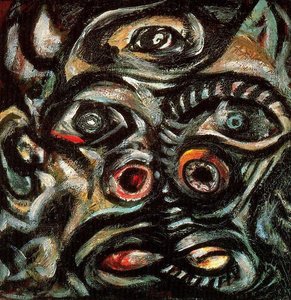
Lucifer
 Acrylic On Canvas
- WallArt
- Abstract Expressionism
 1947
1947- Modern
 268.0 x 104.0 cm
 Weiterlesen
Giclée / Kunstdruck
Giclée- oder Leinwanddruck in Museumsqualität mit schneller Produktion und flexiblen Veredelungsoptionen. ( Handgemalte Reproduktion bestellen Bild kaufen)




P118B $10

P118H $10

P118W $10

P438Z $10

P508JH $12

P508YH $12

P805H $10

P805Z $10

P919BZ $10

P919G $10

P919XJ $10

P959ZH $10

P968JZ $12

W106C $8

W218G $10

W218JH $8

W218Y $10

W307PJ $10

W316G $10

W316PJ $8

W316Y $10

W398PJ $8

W4111J $10

W500HY $15

W500JH $15

W692G $12

W849H $8

W940BG $15

W953PJ $8




Wählen Sie aus unseren vordefinierten Formaten, die den ursprünglichen Proportionen des Kunstwerks entsprechen.

Sie können Ihre eigenen Maße eingeben, um ein bestimmtes Format oder einen speziellen Platz einzupassen. Wenn das von Ihnen gewählte Format nicht den Proportionen des Originalbildes entspricht, werden wir das Kunstwerk entweder beschneiden oder das Bild mit einem gespiegelten oder einfarbigen Rand erweitern. Ein digitaler Entwurf wird Ihnen zur Genehmigung zugesandt, bevor die Produktion beginnt.
Bitte beachten Sie, dass die Vorschau auf dem Bildschirm nicht den tatsächlichen Zuschnitt oder die Erweiterung widerspiegelt. Nur der Entwurf zeigt die endgültige Komposition präzise an.
Obwohl Sondermaße verfügbar sind, empfehlen wir die Auswahl eines Maßes aus der vordefinierten Liste, um die ursprünglichen Proportionen zu bewahren.
Weltweiter Versand () innerhalb von 2 Wochen statt der üblichen 4/5 Wochen. (5 September)

Kostenloser weltweiter Expressversand

Hochwertige Leinenleinwand

Umfassender Versicherungsschutz beim Versand

Zollgebühren-Rückerstattungsgarantie

Garantie für exakte Farbtreue

60 Tage Rückgaberecht (nur bei Mängeln)

100% Geld-zurück-Garantie

Mengenrabatt verfügbar
 Die Glasoption ist nur für Größen unter 110 cm verfügbar.

Lucifer
Giclée / Kunstdruck
Format der Reproduktion
-


Gesamtpreis
$ 80
A Descent into Chaos: Exploring Jackson Pollock's "Lucifer"
Jackson Pollock’s “Lucifer,” painted in 1947, isn’t merely a painting; it’s an immersion. Measuring a substantial 268 x 104 cm, this work embodies the raw energy and profound emotionality of Abstract Expressionism at its zenith. The canvas explodes with a carefully orchestrated dance of black and white, a visual storm rendered through Pollock's revolutionary drip technique – a method he perfected to capture not just form, but the very essence of movement and feeling. Close inspection reveals an intricate network of layered textures, each drop and splatter contributing to a composition that feels both chaotic and meticulously controlled.
- Technique: Pollock’s “all-over” technique is central to "Lucifer's" impact. He abandoned traditional brushes, opting instead for sticks, knives, and even syringes to fling paint directly onto the canvas, creating a dense tapestry of overlapping marks.
- Color Palette: The stark contrast between black and white amplifies the painting’s dynamism, forcing the viewer to confront the interplay of light and shadow within its complex structure.
- Scale: The large format of "Lucifer" envelops the observer, drawing them into the heart of Pollock's creative process.
The Genesis of a Vision: Early Influences and Artistic Context
Pollock’s artistic journey began with a restless spirit shaped by his upbringing in Cody, Wyoming – a landscape that instilled within him a deep appreciation for natural forces and the rhythms of the West. His early exposure to Native American art, particularly through his father's surveying work, subtly informed his later explorations of composition and spiritual resonance. This influence is not overt imitation but rather a foundational layer contributing to the painting’s underlying power. Pollock’s formal training at the Art Students League under Thomas Hart Benton, a key figure in the Regionalist movement, further solidified his understanding of dynamic composition – a skill he then radically transformed through his own innovative approach. “Lucifer” stands as a testament to this evolution, building upon established principles while forging entirely new pathways for artistic expression.
Decoding the Symbolism: Layers of Interpretation
"Lucifer" resists easy interpretation, deliberately eschewing representational imagery in favor of abstract forms and textures. The interwoven patterns can be seen as symbolic representations of inner turmoil, spiritual struggle, or perhaps simply a visual manifestation of the artist’s subconscious. Some scholars suggest that the dominant black and white hues symbolize duality – light versus darkness, order versus chaos – reflecting the core themes explored by Abstract Expressionism. The seemingly random arrangement of shapes and forms actually possesses a carefully constructed dynamism, inviting viewers to engage in their own personal interpretations.
A Legacy of Innovation: "Lucifer" within the Art Historical Landscape
“Lucifer” is inextricably linked to the broader context of Abstract Expressionism, a movement that sought to liberate art from traditional constraints and explore the depths of human emotion. Works by Clyfford Still, with their similarly monumental scale and abstract forms, share conceptual affinities. Furthermore, the influence of Wassily Kandinsky’s exploration of geometric shapes and vibrant colors can be detected in Pollock's approach. Currently held within the Peggy Guggenheim Collection in Venice, "Lucifer" remains a pivotal work in Pollock’s oeuvre and a cornerstone of modern art history – a testament to his revolutionary vision and enduring impact.
Über den Künstler
Frühes Leben und die Keime der Innovation
Paul Jackson Pollock, geboren 1912 in Cody, Wyoming, war von Beginn an ein rastloser Geist. Sein frühes Leben war geprägt von häufigen Ortswechseln, da sein Vater als Landvermesser in den weiten Landschaften des amerikanischen Westens arbeitete. Diese wandernde Existenz vermittelte dem jungen Pollock eine tiefe Verbindung zur natürlichen Welt und machte ihn mit vielfältigen Kulturen vertraut – insbesondere durch Begegnungen mit der Kunst der amerikanischen Ureinwohner während jener Vermessungsreisen, Eindrücke, die seine künstlerische Vision im späteren Leben subtil durchdringen sollten. Obwohl er indigene Stile nie explizit imitierte, hinterließen die rohe Energie und die spirituelle Resonanz dieser frühen Erfahrungen zweifellos ihre Spuren.
Pollocks formale künstlerische Ausbildung begann an der Manual Arts High School in Los Angeles, gefolgt von Studien an der Art Students League in New York unter der Anleitung von Thomas Hart Benton. Benton, eine prominente Figur der Regionalismus-Bewegung, legte Wert auf rhythmische Komposition und narrative Themen, die im amerikanischen Leben verwurzelt waren. Während Pollock diese Lektionen anfangs verinnerlichte, neigte seine angeborene Veranlagung zu abstrakteren Erkundungen. Er wurde auch tief von mexikanischen Muralisten wie José Clemente Orozco beeinflusst, deren kraftvolle Darstellungen des sozialen Kampfes bei ihm tiefen Widerhall fanden. Diese frühen Einflüsse legten ein Fundament, doch es war die aufstrebende Welt des Surrealismus, die Pollocks künstlerisches Potenzial wahrhaftig entfesselte.
Die Geburtsstunde des Action Painting und eine revolutionäre Technik
In den 1930er Jahren experimentierte Pollock mit verschiedenen Techniken und suchte nach Alternativen zum traditionellen Pinselstrich. Er begann, Farbe zu gießen, und erforschte deren Fließfähigkeit und unvorhersehbare Natur. Um das Jahr 1947 jedoch erfuhr seine künstlerische Laufbahn eine radikale Transformation. Indem er die Stafflei gänzlich aufgab, legte Pollock die Leinwände direkt auf den Boden und initiierte das, was als seine „Drip-Technik“ bekannt werden sollte. Er begann, Farbe von oben auf die Leinwand zu tropfen, zu spritzen und zu schleudern, wodurch er einen dynamischen Tanz zwischen Künstler, Medium und Oberfläche orchestrierte.
Dabei ging es nicht bloß um das Auftragen von Farbe; es ging darum, den Akt des Erschaffens selbst zu verkörpern. Pollocks Leinwände wurden zu Arenen physischen Ausdrucks, die die Unmittelbarkeit seiner Gesten und Emotionen einfingen. Die resultierenden Gemälde zeichnen sich durch ihre „All-over“-Komposition aus – ein Mangel an zentralem Fokus, der den Betrachter dazu einlädt, die gesamte Oberfläche als ein einheitliches Energiefeld zu erkunden. Komplexe Netzwerke aus Linien und Farben verflechten sich und schaffen eine visuelle Komplexität, die zugleich fesselnd und herausfordernd ist. Er verwendete unkonventionelle Werkzeuge – Stöcke, Messer, sogar Spritzen –, um die Farbe auf unvorhersehbare Weise zu manipulieren, was die spontane Natur seines Prozesses weiter unterstrich.
Dieser innovative Ansatz positionierte Pollock als zentrale Figur der aufstrebenden Abstrakten Expressionismus-Bewegung, die im New York der Nachkriegszeit entstand. Der Abstrakte Expressionismus priorisierte die spontane Geste, das monumentale Format und die nicht-gegenständliche Bildsprache und spiegelte einen breiteren kulturellen Wandel weg von traditionellen künstlerischen Konventionen wider. Auch seine Ehe mit der Mitkünstlerin Lee Krasner war entscheidend; sie bot ihm unerschütterliche emotionale Unterstützung und förderte aktiv seine künstlerische Entwicklung, da sie das bahnbrechende Wesen seiner Arbeit erkannte.
Ikonische Werke und ein bleibendes Vermächtnis
Pollocks berühmteste Werke – wie Number 1, 1950 (Lavender Mist), One: Number 31, 1950, Blue Poles: Number 11, 1952 und Convergence – sind Zeugnisse seiner revolutionären Technik. Diese Gemälde sind nicht einfach nur Bilder; sie sind Aufzeichnungen einer Performance, durchdrungen von der physischen Präsenz und emotionalen Intensität des Künstlers. Die dynamische Energie, die von diesen Leinwänden ausgeht, ist greifbar und zieht den Betrachter in eine Welt reiner Abstraktion.
Sein Stil transzendiert reine Ästhetik; er ist eine Untersuchung des Prozesses über das Produkt. Pollock suchte danach, die Unmittelbarkeit seiner Handlungen und Emotionen auf der Leinwand festzuhalten, indem er traditionelle Vorstellungen von Komposition und Repräsentation ablehnte. Er vertiefte sich in die Jungsche Psychologie und erforschte Archetypen sowie das Unterbewusste in seiner Kunst, um universelle Symbole und Urkräfte anzuzapfen.
Pollocks Einfluss auf die Kunstgeschichte ist unermesslich. Er veränderte grundlegend die Art und Weise, wie Künstler der Malerei entgegentraten, indem er sich von staffeleibasierten Methoden befreite und einen performativeren Ansatz wählte. Sein Werk half dabei, die Position New Yorks als globales Zentrum der modernen Kunst zu festigen und verlagerte den Fokus weg von der europäischen Dominanz. Sein Einfluss zeigt sich in den Werken unzähliger nachfolgender Künstler, einschließlich jener, die mit der Color Field Painting-Bewegung und späteren Formen des Abstrakten Expressionismus verbunden sind.
Obwohl er anfangs auf gemischte Kritiken stieß – einige Kritiker taten sein Werk als chaotisch oder handwerklich unzulänglich ab – wuchs Pollocks Ruf nach seinem frühen Tod im Jahr 1956 im Alter von 44 Jahren stetig an. Heute wird er universell als einer der bedeutendsten und einflussreichsten Künstler des 20. Jahrhunderts anerkannt – ein Visionär, der es wagte, Konventionen herauszufordern und die Grenzen des künstlerischen Ausdrucks neu zu definieren. Seine innovativen Techniken und sein expressiver Stil inspirieren und provozieren bis heute und sichern ihm ein unvergängliches Vermächtnis für kommende Generationen.

Jackson Pollock
1912 - 1956 , Vereinigte Staaten von Amerika
Kurzinfos
- Artistic Movement Or Style: Abstrakt Expressionismus
- Artists Who Influenced This Artist:
- José Clemente Orozco
- Thomas Hart Benton
- Date Of Birth: Januar 28, 1912
- Date Of Death: August 11, 1956
- Full Name: Paul Jackson Pollock
- Nationality: Amerikanisch
- Notable Artworks:
- Number 1, 1950 (Lavender Mist)
- One: Number 31, 1950
- Blue Poles: Number 11, 1952
- Convergence
- Place Of Birth: Cody, USA
Ähnliche Artikel

Abstrakter Expressionismus: Die 10 Meisterwerke, die eine Kunstbewegung prägten |
Entdecken Sie die 10 Meisterwerke des Abstrakten Expressionismus! Von Jackson Pollock bis Mark Rothko – erfahren Sie die Geschichten hinter ikonischen Gemälde und finden Sie hochwertige Reproduktionen für Ihr Zuhause. Jetzt bei entdecken!

Kandinsky: Die 25 Meisterwerke des Abstrakten – Kunst für Ihr Zuhause | OriginalUniqueArt
Entdecken Sie die 25 bedeutendsten Gemälde von Wassily Kandinsky! Tauchen Sie ein in die Welt der abstrakten Kunst, des Expressionismus und der Farbkomposition. Hochwertige Kunstdrucke & Inspiration für Ihr Zuhause auf OriginalUniqueArt.com.
Beyond Representation: Exploring the Emotional Landscape of Abstract Expressionism
Explore the profound emotional world of Abstract Expressionism with OriginalUniqueArt. Discover key artists like Pollock & Rothko, learn about collecting, and find museum-quality reproductions to inspire your space.
Jackson Pollock: Ein radikaler Aufbruch und das Erbe des Abstrakten Expressionismus
Entdecken Sie Jackson Pollocks revolutionäres Werk und das Erbe des Abstrakten Expressionismus. Expertenanalyse, Hintergrundinformationen & Investitionstipps für Kunstsammler.
Beyond the Lines: Mastering the High-Impact World of Contemporary Abstraction
Master the high-impact world of contemporary abstraction. Discover how bold colors, textures, and modern movements like Abstract Expressionism can transform your space with premium, high-energy art curated for the design-conscious professional.