Vorschau anzeigen
 Versenden
 Teilen
 Details anzeigen

 Herunterladen
 Ähnliche Objekte
 Röntgenaufnahme
 Diashow
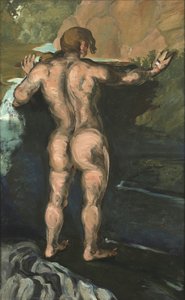
Selbstporträt (Puskin)


 Weiterlesen
Giclée / Kunstdruck
Giclée- oder Leinwanddruck in Museumsqualität mit schneller Produktion und flexiblen Veredelungsoptionen. ( Handgemalte Reproduktion bestellen Bild kaufen)




P118B $10

P118H $10

P118W $10

P438Z $10

P508JH $12

P508YH $12

P805H $10

P805Z $10

P919BZ $10

P919G $10

P919XJ $10

P959ZH $10

P968JZ $12

W106C $8

W218G $10

W218JH $8

W218Y $10

W307PJ $10

W316G $10

W316PJ $8

W316Y $10

W398PJ $8

W4111J $10

W500HY $15

W500JH $15

W692G $12

W849H $8

W940BG $15

W953PJ $8




Wählen Sie aus unseren vordefinierten Formaten, die den ursprünglichen Proportionen des Kunstwerks entsprechen.

Sie können Ihre eigenen Maße eingeben, um ein bestimmtes Format oder einen speziellen Platz einzupassen. Wenn das von Ihnen gewählte Format nicht den Proportionen des Originalbildes entspricht, werden wir das Kunstwerk entweder beschneiden oder das Bild mit einem gespiegelten oder einfarbigen Rand erweitern. Ein digitaler Entwurf wird Ihnen zur Genehmigung zugesandt, bevor die Produktion beginnt.
Bitte beachten Sie, dass die Vorschau auf dem Bildschirm nicht den tatsächlichen Zuschnitt oder die Erweiterung widerspiegelt. Nur der Entwurf zeigt die endgültige Komposition präzise an.
Obwohl Sondermaße verfügbar sind, empfehlen wir die Auswahl eines Maßes aus der vordefinierten Liste, um die ursprünglichen Proportionen zu bewahren.
Weltweiter Versand () innerhalb von 2 Wochen statt der üblichen 4/5 Wochen. (22 August)

Kostenloser weltweiter Expressversand

Hochwertige Leinenleinwand

Umfassender Versicherungsschutz beim Versand

Zollgebühren-Rückerstattungsgarantie

Garantie für exakte Farbtreue

60 Tage Rückgaberecht (nur bei Mängeln)

100% Geld-zurück-Garantie

Mengenrabatt verfügbar
 Die Glasoption ist nur für Größen unter 110 cm verfügbar.

Selbstporträt (Puskin)
Giclée / Kunstdruck
Format der Reproduktion
-


Gesamtpreis
$ 80
Sammlerstück-Beschreibung
Paul Cézanne’s Selbstporträt (Puskin): A Window into the Soul
Paul Cézanne’s Selbstporträt (Self-Portrait), painted around 1880, isn't merely a likeness; it’s a profound meditation on selfhood, observation, and the very nature of seeing. This intimate work, housed within the Puschkin Museum in Moscow, offers a rare glimpse into the artist’s evolving artistic philosophy – a bridge between the fleeting impressions of Impressionism and the structured explorations that would define Post-Impressionism and ultimately, modern art itself. It's a painting that invites contemplation, demanding not just visual appreciation but also an engagement with Cézanne’s revolutionary approach to representation.
Cézanne was at a pivotal moment in his career when he created this self-portrait. Having distanced himself from the Impressionist circle, he was embarking on a deeply personal and experimental journey. The painting reflects this shift – it's less concerned with capturing an immediate snapshot of reality and more focused on distilling the essence of the subject, reducing it to its fundamental geometric forms. Notice how the background, a simple, almost austere wallpaper pattern, isn’t merely decorative; it actively shapes the composition, providing a framework for Cézanne’s carefully constructed image. The repetition of the wallpaper's motifs – triangles and diamonds – subtly echoes within the portrait itself, creating a visual harmony that speaks to the artist’s desire to integrate his subject with its environment.
The Language of Color and Form
Cézanne’s technique is immediately striking. He employs a deliberate use of color, moving beyond the purely optical observations of Impressionism towards a more expressive palette. The muted tones – ochres, blues, and greens – are not applied in delicate washes but rather built up through short, broken brushstrokes. These strokes aren't blended; they retain their individual character, creating a textured surface that vibrates with energy. This technique, known as *cloisonnism*, is reminiscent of medieval enamelwork, where distinct areas of color are separated by outlines – a deliberate choice that emphasizes the forms within the painting.
The portrait’s composition is equally innovative. Cézanne doesn't attempt to render the face with photographic accuracy. Instead, he simplifies it, reducing it to its essential shapes and planes. The bald spot on his head, for instance, isn’t delicately shaded; it’s presented as a distinct area of color, contributing to the overall geometric structure of the image. The careful modeling of light and shadow – particularly in the rendering of the face – creates a sense of volume and depth, suggesting that Cézanne is not simply depicting a surface but exploring the underlying structure of form.
Symbolism and Introspection
Beyond its formal innovations, the Selbstporträt is imbued with a palpable sense of introspection. Cézanne’s gaze is direct, yet distant – it seems to penetrate the viewer while simultaneously remaining detached. The slight furrow in his brow, the subtle tension around his eyes, and the carefully controlled expression all convey a feeling of quiet contemplation. Some art historians interpret this portrait as a reflection on the artist's own creative process—a visual representation of the act of seeing itself. The painting’s stillness invites us to consider our own relationship with observation and the subjective nature of perception.
A Legacy of Innovation
Cézanne’s Selbstporträt is a crucial work in understanding the transition from Impressionism to modern art. His emphasis on form, color, and personal expression paved the way for artists like Picasso and Matisse, who would build upon his innovations to create their own groundbreaking styles. It's a testament to Cézanne’s profound impact—a painting that continues to challenge and inspire viewers over a century after its creation. A high-quality reproduction allows us to appreciate not only the beauty of this remarkable work but also the revolutionary spirit that lies at its heart.
Über den Künstler
frühes Leben und Einflüsse
Paul Cézanne, ein französischer Post-Impressionist-Maler, wurde am 19. Januar 1839 in Aix-en-Provence, Frankreich, geboren. Sein frühes Leben war geprägt von einer starken Verbindung zu seiner Familie’s Bankgeschäft, das ihm finanzielle Sicherheit verschaffte. Dies ermöglichte es ihm, sich ohne finanziellen Druck auf seine künstlerischen Bestrebungen zu konzentrieren. Les Nabis, Neo-Impressionismus und Symbolismus beeinflussten Cézannes frühe Arbeit, die sich durch seinen Schwerpunkt auf geometrische Formen und eine reduzierte Farbpalette auszeichnete. Sein Interesse an den Werken von Paul Gauguin und Georges Seurat festigte seinen Post-Impressionismusstil.Künstlerischer Stil und Techniken
Cézannes innovative Verwendung von Farbflächen und kleinen, sich wiederholenden Pinselstrichen schuf komplexe Felder, die seine intensive Beschäftigung mit den Motiven widerspiegelten. Sein oft explorativer Ansatz in der Kunst führte zur Entwicklung einer neuen bildlichen Sprache, die die zugrunde liegende Struktur von Objekten in einer Komposition betonte.- Schlüsselmerkmale:
- Geometrische Formen und Facetten
- Reduzierte Farbpalette
- Betonung der konstruktiven Essenz der physischen Welt
- Mehrere Perspektiven und Simultaneität
- Einflussreiche Werke:
- The Pond at Jas de Bouffan (1880)
- Portrait of Emile Zola (1866)
- Wald (1892)
- Museen mit Cézannes Werken:
- Musée Marmottan Monet in Paris, Frankreich
- The Museum of Fine Arts in Houston, Vereinigte Staaten
Vermächtnis und Einfluss
Cézannes bahnbrechende Arbeit im Post-Impressionismus ebnete den Weg für verschiedene Avantgarde-Bewegungen, darunter Kubismus, Fauvismus und Surrealismus. Sein Einfluss ist in den Werken von Pablo Picasso, Henri Matisse und Georges Braque zu sehen. Cézannes Vermächtnis inspiriert weiterhin Künstler und Kunstinteressierte gleichermaßen und festigt seinen Platz als eine zentrale Figur in der Geschichte der modernen Kunst.- Verwandte Kunstbewegungen:
- Betrachten Sie Cézannes Werke:
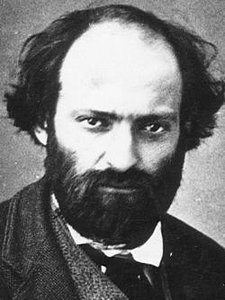
Paul Cézanne
1839 - 1906 , Frankreich
Kurzinfos
- Beeinflusste Künstler:
- Paul Gauguin
- Georges Seurat
- Bemerkenswerte Werke:
- Der Teich in Jas de Bouffan
- Porträt von Émile Zola
- Wald
- Mont Sainte-Victoire
- Geburtsdatum: 19. Januar 1839
- Geburtsort: Aix-en-Provence, Frankreich
- Künstlerische Bewegung: Postimpressionismus
- Nationalität: Französisch
- Sterbedatum: 1906
- Vollständiger Name: Paul Cézanne
- Von Ihm Beeinflusste Künstler:
- Pablo Picasso
- Henri Matisse
- Georges Braque
Ähnliche Artikel

Paul Cézanne: Die 25 Meisterwerke des Impressionismus | OriginalUniqueArt
Entdecken Sie die 25 Meisterwerke von Paul Cézanne! Tauchen Sie ein in die Welt des Impressionismus und Postimpressionismus. Erfahren Sie mehr über seine Stillleben, Landschaften & berühmten Gemälde – jetzt hochwertige Kunstdrucke auf OriginalUniqueArt.com.
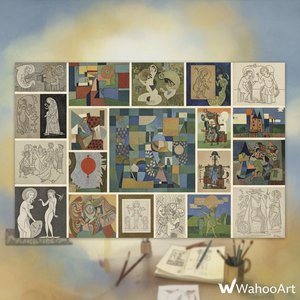
Paul Klee: Die 25 Meisterwerke des Abstrakten – Kunst für Ihr Zuhause | OriginalUniqueArt
Entdecken Sie die 25 Meisterwerke von Paul Klee! Tauchen Sie ein in seine abstrakte Welt, voller Expressionismus und Bauhaus-Einflüsse. Hochwertige Kunst für Ihr Zuhause – jetzt bei OriginalUniqueArt entdecken!
Reflecting the Self: A History of Portraiture & Psychological Insight
Explore the fascinating history of self-portraiture from Renaissance masters like Dürer & Rembrandt to modern interpretations. Discover the psychological insights and artistic techniques behind these iconic works. Expert analysis for art enthusiasts.

The Echo of Self: Reflectivity as a Core Theme in Art History & Contemporary Practice
Explore the rich history of self-representation in art, from Renaissance masters to modern innovators. Discover how artists use portraiture to reveal identity, emotion & the depths of the human psyche. Expert insights for collectors.
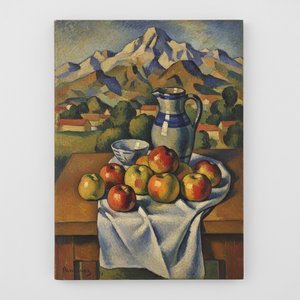
Mastering Form: A Definitive Guide to the Structural Genius of Paul Cézanne
Explore the structural genius of Paul Cézanne. Discover how his mastery of geometric form and color bridged Impressionism and Cubism in this definitive guide for art enthusiasts and collectors.