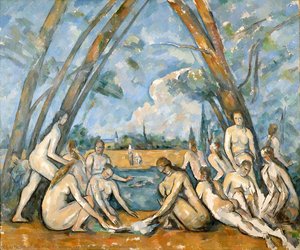
Vorschau anzeigen
 Versenden
 Teilen
 Details anzeigen
 Leitfaden

 Herunterladen
 Ähnliche Objekte
 Röntgenaufnahme
 Diashow
 Q&A
Q&A Statistiken
Portrait of a Man

- 81.0 x 66.0 cm


 Weiterlesen
Giclée / Kunstdruck
Giclée- oder Leinwanddruck in Museumsqualität mit schneller Produktion und flexiblen Veredelungsoptionen. ( Handgemalte Reproduktion bestellen Zum digitalen Bild wechseln)




P118B €10

P118H €10

P118W €10

P438Z €10

P508JH €12

P508YH €12

P805H €10

P805Z €10

P919BZ €10

P919G €10

P919XJ €10

P959ZH €10

P968JZ €12

W106C €8

W218G €10

W218JH €8

W218Y €10

W307PJ €10

W316G €10

W316PJ €8

W316Y €10

W398PJ €8

W4111J €10

W500HY €15

W500JH €15

W692G €12

W849H €8

W940BG €15

W953PJ €8




Wählen Sie aus unseren vordefinierten Formaten, die den ursprünglichen Proportionen des Kunstwerks entsprechen.

Geben Sie die benötigte Breite und Höhe an, damit der Druck perfekt in Ihren Rahmen oder an Ihre Wand passt. Ein Druck kann nur beschnitten, aber niemals größer als das Originalbild angefertigt werden; daher verliert ein Format mit anderen Proportionen einen Teil des Bildes. Wir senden Ihnen ein digitales Mockup zur Freigabe, bevor wir den Druck ausführen. Das auf dieser Seite gezeigte Bild zeigt nicht den tatsächlichen Beschnitt – dies ist nur im Mockup ersichtlich.
Weltweiter Versand () innerhalb von 2 Wochen statt der üblichen 4/5 Wochen. (1 November)

Kostenloser weltweiter Expressversand

Hochwertige Leinenleinwand

Umfassender Versicherungsschutz beim Versand

Zollgebühren-Rückerstattungsgarantie

Garantie für exakte Farbtreue

100 Tage Rückgaberecht (nur bei Mängeln)

100% Geld-zurück-Garantie

Mengenrabatt verfügbar
 Die Glasoption ist nur für Größen unter 110 cm verfügbar.

Portrait of a Man
Giclée / Kunstdruck
Format der Reproduktion
-


Endpreis
€ 71
Paul Cézanne’s “Portrait of a Man”: A Bridge Between Worlds
Paul Cézanne's "Portrait of a Man," painted around 1866, isn’t merely a depiction of an individual; it’s a pivotal moment in the evolution of modern art. This intimate study, housed within a muted palette and characterized by Cézanne’s revolutionary brushwork, represents a fascinating intersection between the lingering echoes of Romanticism and the nascent explorations of Impressionism and Cubism that would soon reshape the artistic landscape. The painting immediately draws the viewer in with its subject's direct gaze – an intensity born not just from physical features but also from a palpable sense of contemplation. He is a man of quiet dignity, his beard suggesting both age and wisdom, while his slightly downturned eyes hint at a depth of thought rarely captured so powerfully in portraiture of the era.
Cézanne’s technique here is strikingly innovative for its time. Departing from the meticulous detail favored by academic painting, he employs loose, expressive brushstrokes – not to obscure, but to build up layers of color and form. These aren't blended smoothly; instead, they retain a visible texture, creating a dynamic surface that seems to vibrate with energy. He utilizes planes of color rather than attempting to perfectly replicate the illusion of three-dimensionality, anticipating the geometric abstraction that would become central to Cubism. Notice how he breaks down the man’s shirt into distinct blocks of color, and how the background wall is rendered as a series of parallel lines – a deliberate simplification designed to convey structure and form over mere representation.
The Romantic Roots and Emerging Modernity
While firmly rooted in the traditions of portraiture, “Portrait of a Man” reveals a subtle tension between its Romantic sensibilities and the burgeoning modernism that Cézanne was quietly pioneering. The subject’s contemplative pose, reminiscent of classic depictions of philosophical figures, speaks to the Romantic emphasis on introspection and emotional depth. However, Cézanne's handling of light and color, his rejection of traditional perspective, and his focus on underlying structure mark a decisive shift away from the idealized beauty and narrative storytelling characteristic of Romanticism. He’s not simply painting a man; he’s investigating the very nature of seeing – how we perceive form, space, and color.
The historical context surrounding this work is crucial to understanding its significance. Cézanne was living in a period of rapid social and intellectual change. The rise of photography challenged the traditional role of painting as a means of accurate representation, while scientific discoveries about optics and perception were influencing artists’ thinking. Cézanne responded to these challenges by rejecting photographic realism and embracing a more subjective approach to artmaking. He sought to capture not just what he *saw*, but how he *felt* about what he saw – a deeply personal and intensely expressive vision.
Symbolism and the Essence of Humanity
Beyond its technical innovations, “Portrait of a Man” is rich in symbolic meaning. The man’s gaze invites us to engage with him on an emotional level, suggesting a shared understanding or perhaps even a silent dialogue. His slightly furrowed brow and thoughtful expression convey a sense of inner complexity – he's not simply presenting himself; he’s revealing something of his soul. The muted color palette contributes to this atmosphere of quiet contemplation, creating a space for reflection and introspection. The simplicity of the setting—a plain wall—further emphasizes the subject’s presence, drawing our attention entirely to his face and demeanor.
A Legacy of Innovation
Cézanne's influence on subsequent generations of artists is undeniable. He served as a crucial bridge between Impressionism and Cubism, paving the way for radical new approaches to artmaking. Artists like Matisse and Picasso themselves acknowledged Cézanne’s profound impact, recognizing him as “the father of us all.” His emphasis on structure, form, and color—his willingness to break with tradition in pursuit of a more truthful representation of reality—continues to inspire artists today. Reproductions of "Portrait of a Man" offer a tangible connection to this revolutionary artist and his enduring legacy – a testament to the power of art to capture not just likeness, but also the essence of humanity.
Fragen & Antworten
Welche Farbe dominiert in "Portrait of a Man" von Paul Cézanne?
Die dominante Farbe von "Portrait of a Man" von Paul Cézanne ist Schwarz (#22120e).
Sind die Farben von "Portrait of a Man" von Paul Cézanne gesättigt oder gedämpft?
Die Farben von "Portrait of a Man" von Paul Cézanne weisen eine Dezente Farbsättigung Sättigung auf. Die Sättigung beschreibt, wie lebhaft oder gedämpft die Farben sind.
Ist "Portrait of a Man" von Paul Cézanne im Hoch-, Quer- oder Quadratformat angeordnet?
"Portrait of a Man" von Paul Cézanne ist eine Komposition im Hochformat-Format. Die Proportionen sollten vor der Wahl der Druckgröße überprüft werden.
Künstlerbiografie
frühes Leben und Einflüsse
Paul Cézanne, ein französischer Post-Impressionist-Maler, wurde am 19. Januar 1839 in Aix-en-Provence, Frankreich, geboren. Sein frühes Leben war geprägt von einer starken Verbindung zu seiner Familie’s Bankgeschäft, das ihm finanzielle Sicherheit verschaffte. Dies ermöglichte es ihm, sich ohne finanziellen Druck auf seine künstlerischen Bestrebungen zu konzentrieren. Les Nabis, Neo-Impressionismus und Symbolismus beeinflussten Cézannes frühe Arbeit, die sich durch seinen Schwerpunkt auf geometrische Formen und eine reduzierte Farbpalette auszeichnete. Sein Interesse an den Werken von Paul Gauguin und Georges Seurat festigte seinen Post-Impressionismusstil.Künstlerischer Stil und Techniken
Cézannes innovative Verwendung von Farbflächen und kleinen, sich wiederholenden Pinselstrichen schuf komplexe Felder, die seine intensive Beschäftigung mit den Motiven widerspiegelten. Sein oft explorativer Ansatz in der Kunst führte zur Entwicklung einer neuen bildlichen Sprache, die die zugrunde liegende Struktur von Objekten in einer Komposition betonte.- Schlüsselmerkmale:
- Geometrische Formen und Facetten
- Reduzierte Farbpalette
- Betonung der konstruktiven Essenz der physischen Welt
- Mehrere Perspektiven und Simultaneität
- Einflussreiche Werke:
- The Pond at Jas de Bouffan (1880)
- Portrait of Emile Zola (1866)
- Wald (1892)
- Museen mit Cézannes Werken:
- Musée Marmottan Monet in Paris, Frankreich
- The Museum of Fine Arts in Houston, Vereinigte Staaten
Vermächtnis und Einfluss
Cézannes bahnbrechende Arbeit im Post-Impressionismus ebnete den Weg für verschiedene Avantgarde-Bewegungen, darunter Kubismus, Fauvismus und Surrealismus. Sein Einfluss ist in den Werken von Pablo Picasso, Henri Matisse und Georges Braque zu sehen. Cézannes Vermächtnis inspiriert weiterhin Künstler und Kunstinteressierte gleichermaßen und festigt seinen Platz als eine zentrale Figur in der Geschichte der modernen Kunst.- Verwandte Kunstbewegungen:
- Betrachten Sie Cézannes Werke:
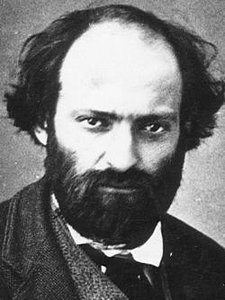
Paul Cézanne
1839 - 1906 , Frankreich
Kurzinfos
- Beeinflusste Künstler:
- Paul Gauguin
- Georges Seurat
- Bemerkenswerte Werke:
- Der Teich in Jas de Bouffan
- Porträt von Émile Zola
- Wald
- Mont Sainte-Victoire
- Geburtsdatum: 19. Januar 1839
- Geburtsort: Aix-en-Provence, Frankreich
- Künstlerische Bewegung: Postimpressionismus
- Nationalität: Französisch
- Sterbedatum: 1906
- Vollständiger Name: Paul Cézanne
- Von Ihm Beeinflusste Künstler:
- Pablo Picasso
- Henri Matisse
- Georges Braque
Ähnliche Artikel

Impressionismus Meisterwerke: Die Top 10 Kunstwerke für Ihr Zuhause | OriginalUniqueArt
Entdecken Sie die Top 10 Meisterwerke des Impressionismus! Von Monet bis Renoir – erfahren Sie die Geschichten hinter berühmten Gemälden, Techniken & Farben. Hochwertige Kunstdrucke auf OriginalUniqueArt.com.

Meister der Abstraktion: Die 25 wichtigsten Kunstwerke von Paul Klee
Entdecken Sie die 25 Meisterwerke von Paul Klee und die Magie des Bauhaus. Erleben Sie Klee-Reproduktionen auf OriginalUniqueArt.com.

Die 25 besten Gemälde von Paul Cézanne: Meisterwerke der Form
Entdecken Sie die 25 Meisterwerke von Paul Cézanne und den Postimpressionismus. Alle Klassiker auf OriginalUniqueArt.com online erleben.
Beyond Impressionism: Exploring Emotional Depth & Formal Innovation in Post-Impressionist Art
Explore the profound emotional depth & formal innovations of Post-Impressionism with our expert guide. Discover Cézanne, Van Gogh, Gauguin & more. Learn about art history, collecting, and investing in this pivotal movement.

Jenseits des Impressionismus: Die emotionale Tiefe der postimpressionistischen Malerei
Entdecken Sie die emotionale Tiefe des Postimpressionismus! Analysieren Sie Cézanne, van Gogh, Gauguin & Seurat. Expertenwissen über Kunstgeschichte und Einfluss auf die Moderne.