Vorschau anzeigen
 Versenden
 Teilen
 Details anzeigen

 Herunterladen
 Ähnliche Objekte
 Röntgenaufnahme
 Diashow
Onkel Dominique


 Weiterlesen
Giclée / Kunstdruck
Giclée- oder Leinwanddruck in Museumsqualität mit schneller Produktion und flexiblen Veredelungsoptionen. ( Handgemalte Reproduktion bestellen Bild kaufen)




P118B $10

P118H $10

P118W $10

P438Z $10

P508JH $12

P508YH $12

P805H $10

P805Z $10

P919BZ $10

P919G $10

P919XJ $10

P959ZH $10

P968JZ $12

W106C $8

W218G $10

W218JH $8

W218Y $10

W307PJ $10

W316G $10

W316PJ $8

W316Y $10

W398PJ $8

W4111J $10

W500HY $15

W500JH $15

W692G $12

W849H $8

W940BG $15

W953PJ $8




Wählen Sie aus unseren vordefinierten Formaten, die den ursprünglichen Proportionen des Kunstwerks entsprechen.

Sie können Ihre eigenen Maße eingeben, um ein bestimmtes Format oder einen speziellen Platz einzupassen. Wenn das von Ihnen gewählte Format nicht den Proportionen des Originalbildes entspricht, werden wir das Kunstwerk entweder beschneiden oder das Bild mit einem gespiegelten oder einfarbigen Rand erweitern. Ein digitaler Entwurf wird Ihnen zur Genehmigung zugesandt, bevor die Produktion beginnt.
Bitte beachten Sie, dass die Vorschau auf dem Bildschirm nicht den tatsächlichen Zuschnitt oder die Erweiterung widerspiegelt. Nur der Entwurf zeigt die endgültige Komposition präzise an.
Obwohl Sondermaße verfügbar sind, empfehlen wir die Auswahl eines Maßes aus der vordefinierten Liste, um die ursprünglichen Proportionen zu bewahren.
Weltweiter Versand () innerhalb von 2 Wochen statt der üblichen 4/5 Wochen. (16 August)

Kostenloser weltweiter Expressversand

Hochwertige Leinenleinwand

Umfassender Versicherungsschutz beim Versand

Zollgebühren-Rückerstattungsgarantie

Garantie für exakte Farbtreue

60 Tage Rückgaberecht (nur bei Mängeln)

100% Geld-zurück-Garantie

Mengenrabatt verfügbar
 Die Glasoption ist nur für Größen unter 110 cm verfügbar.

Onkel Dominique
Giclée / Kunstdruck
Format der Reproduktion
-


Gesamtpreis
$ 80
Sammlerstück-Beschreibung
Uncle Dominique (also known as Man in a Cotton Hat) – Ein Schlüssel zum frühen Cézanne
Paul Cézanne’s Uncle Dominique (also known as Man in a Cotton Hat), painted around 1866, stands as an arresting testament to Cézanne’s formative years and his pioneering exploration of artistic innovation. Housed at the Metropolitan Museum of Art in New York, United States, this oil on canvas offers invaluable insight into Cézanne’s burgeoning artistic vision and marks a crucial step away from Impressionism toward the revolutionary aesthetics of Cubism.The Subject: Antoine Dominique Sauveur Aubert – Ein Familienmitglied im Fokus
Uncle Dominique, or Antoine Dominique Sauveur Aubert, was Cézanne’s maternal uncle—a figure deeply embedded in his personal life and subsequently reflected in his art. During the autumn of 1866, Cézanne embarked on a series of portraits capturing Aubert in various costumes, demonstrating an early fascination with portraying individuals within specific contexts. The painting depicts Aubert wearing a simple cotton cap and positioned against a muted beige wall—a deliberate choice that prioritizes form over elaborate ornamentation. This understated composition underscores Cézanne’s belief that “the artist must look carefully” – a principle that would become central to his artistic philosophy.Die Kunstliche Bedeutung: Eine Abkehr von Traditionen
This portrait series represents a pivotal moment in Cézanne's artistic development, signaling a decisive departure from the conventions of academic painting prevalent at the time. Unlike many artists of his era who adhered rigidly to established techniques, Cézanne embraced a radically new approach characterized by thick impasto—the application of paint with a palette knife—creating textured surfaces that convey palpable energy and dynamism. This technique was influenced by Emile Zola’s advocacy for artistic authenticity and challenged the prevailing aesthetic standards of Parisian society. Cézanne's rejection of academic formalism foreshadowed the stylistic breakthroughs of subsequent movements, establishing him as a forerunner of modern art.Historischer Kontext und Einfluss: Die Zeitgeist der Moderne
Cézanne’s work during this period was profoundly shaped by the intellectual currents circulating in Paris—particularly Zola’s critique of artistic pretension and his championing of realism. Cézanne's exploration of form and color aligns with the broader artistic landscape of the mid-1860s, where Impressionists like Édouard Manet were pushing boundaries and questioning accepted norms. The painting serves as a subtle commentary on social types—a preoccupation that would continue throughout Cézanne’s oeuvre—reflecting his desire to capture not merely appearances but also underlying psychological truths.Emotionale Wirkung und Aktualität: Ein Werk für die Ewigkeit
- Farbe und Struktur: Cézanne's masterful use of color – predominantly muted reds, blues and yellows – creates a harmonious yet subtly unsettling atmosphere. The textured surface achieved through impasto emphasizes the materiality of the canvas and invites contemplation on the interplay between light and shadow.
- Symbolismus: The cotton cap symbolizes simplicity and humility—a deliberate contrast to the grandeur of academic portraiture. Cézanne’s focus on capturing Aubert's essence speaks to a broader humanist impulse, reflecting his belief in portraying individuals with dignity and compassion.
- Vorläufer des Kubismus: The flattened planes of color and geometric simplification evident in Uncle Dominique foreshadow the revolutionary stylistic innovations of Cubism—a movement that would redefine artistic representation and profoundly influence subsequent generations of artists.
Über den Künstler
frühes Leben und Einflüsse
Paul Cézanne, ein französischer Post-Impressionist-Maler, wurde am 19. Januar 1839 in Aix-en-Provence, Frankreich, geboren. Sein frühes Leben war geprägt von einer starken Verbindung zu seiner Familie’s Bankgeschäft, das ihm finanzielle Sicherheit verschaffte. Dies ermöglichte es ihm, sich ohne finanziellen Druck auf seine künstlerischen Bestrebungen zu konzentrieren. Les Nabis, Neo-Impressionismus und Symbolismus beeinflussten Cézannes frühe Arbeit, die sich durch seinen Schwerpunkt auf geometrische Formen und eine reduzierte Farbpalette auszeichnete. Sein Interesse an den Werken von Paul Gauguin und Georges Seurat festigte seinen Post-Impressionismusstil.Künstlerischer Stil und Techniken
Cézannes innovative Verwendung von Farbflächen und kleinen, sich wiederholenden Pinselstrichen schuf komplexe Felder, die seine intensive Beschäftigung mit den Motiven widerspiegelten. Sein oft explorativer Ansatz in der Kunst führte zur Entwicklung einer neuen bildlichen Sprache, die die zugrunde liegende Struktur von Objekten in einer Komposition betonte.- Schlüsselmerkmale:
- Geometrische Formen und Facetten
- Reduzierte Farbpalette
- Betonung der konstruktiven Essenz der physischen Welt
- Mehrere Perspektiven und Simultaneität
- Einflussreiche Werke:
- The Pond at Jas de Bouffan (1880)
- Portrait of Emile Zola (1866)
- Wald (1892)
- Museen mit Cézannes Werken:
- Musée Marmottan Monet in Paris, Frankreich
- The Museum of Fine Arts in Houston, Vereinigte Staaten
Vermächtnis und Einfluss
Cézannes bahnbrechende Arbeit im Post-Impressionismus ebnete den Weg für verschiedene Avantgarde-Bewegungen, darunter Kubismus, Fauvismus und Surrealismus. Sein Einfluss ist in den Werken von Pablo Picasso, Henri Matisse und Georges Braque zu sehen. Cézannes Vermächtnis inspiriert weiterhin Künstler und Kunstinteressierte gleichermaßen und festigt seinen Platz als eine zentrale Figur in der Geschichte der modernen Kunst.- Verwandte Kunstbewegungen:
- Betrachten Sie Cézannes Werke:
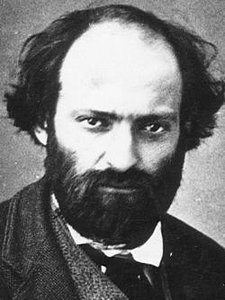
Paul Cézanne
1839 - 1906 , Frankreich
Kurzinfos
- Beeinflusste Künstler:
- Paul Gauguin
- Georges Seurat
- Bemerkenswerte Werke:
- Der Teich in Jas de Bouffan
- Porträt von Émile Zola
- Wald
- Mont Sainte-Victoire
- Geburtsdatum: 19. Januar 1839
- Geburtsort: Aix-en-Provence, Frankreich
- Künstlerische Bewegung: Postimpressionismus
- Nationalität: Französisch
- Sterbedatum: 1906
- Vollständiger Name: Paul Cézanne
- Von Ihm Beeinflusste Künstler:
- Pablo Picasso
- Henri Matisse
- Georges Braque
Ähnliche Artikel

Paul Cézanne: Die 25 Meisterwerke des Impressionismus | OriginalUniqueArt
Entdecken Sie die 25 Meisterwerke von Paul Cézanne! Tauchen Sie ein in die Welt des Impressionismus und Postimpressionismus. Erfahren Sie mehr über seine Stillleben, Landschaften & berühmten Gemälde – jetzt hochwertige Kunstdrucke auf OriginalUniqueArt.com.
Paul Klee: Die 25 Meisterwerke des Abstrakten – Kunst für Ihr Zuhause | OriginalUniqueArt
Entdecken Sie die 25 Meisterwerke von Paul Klee! Tauchen Sie ein in seine abstrakte Welt, voller Expressionismus und Bauhaus-Einflüsse. Hochwertige Kunst für Ihr Zuhause – jetzt bei OriginalUniqueArt entdecken!

Jenseits des Impressionismus: Die emotionale Tiefe der postimpressionistischen Malerei
Entdecken Sie die emotionale Tiefe des Postimpressionismus! Analysieren Sie Cézanne, van Gogh, Gauguin & Seurat. Expertenwissen über Kunstgeschichte und Einfluss auf die Moderne.
Beyond Impressionism: Exploring Emotional Depth & Formal Innovation in Post-Impressionist Art
Explore the profound emotional depth & formal innovations of Post-Impressionism with our expert guide. Discover Cézanne, Van Gogh, Gauguin & more. Learn about art history, collecting, and investing in this pivotal movement.

Impressionismus Meisterwerke: Die Top 10 Kunstwerke für Ihr Zuhause | OriginalUniqueArt
Entdecken Sie die Top 10 Meisterwerke des Impressionismus! Von Monet bis Renoir – erfahren Sie die Geschichten hinter berühmten Gemälden, Techniken & Farben. Hochwertige Kunstdrucke auf OriginalUniqueArt.com.