

 Vorschau anzeigen
 Versenden
 Teilen
 Details anzeigen

 Herunterladen
 Ähnliche Objekte
 Röntgenaufnahme
 Diashow
Madame Cezanne in the Conservatory


 Weiterlesen
Erwerben Sie ein hochauflösendes, optimiertes digitales Bild, das der Online-Vorschau weit überlegen ist.
Jede Datei wird von unseren hauseigenen Spezialisten mit modernsten Werkzeugen und fachmännischer manueller Retusche sorgfältig vorbereitet. Wir stellen sicher, dass jedes Bild eine außergewöhnliche Klarheit, präzise Farbgenauigkeit und feinste Details aufweist.
Die endgültige Datei wird innerhalb von 72 Stunden per E-Mail zugestellt und ist für den sofortigen Einsatz in professionellen, redaktionellen und Druckumgebungen optimiert. Es handelt sich um dieselbe Qualität, der führende Designstudios, Verlage und Galerien vertrauen.
Digitales Bild
Laden Sie eine hochauflösende Datei für die persönliche Präsentation, den Druck und kreative Projekte herunter. ( Druck bestellen Handgemalte Reproduktion bestellen)
In jeder Bestellung digitaler Bilder enthalten
Professionelle digitale Bereitstellung, garantiert
Wenn Sie sich für OriginalUniqueArt.com entscheiden, erhalten Sie nicht nur ein Bild – Sie erhalten ein professionell aufbereitetes digitales Kunstwerk, das mit höchster Präzision erstellt und durch eine Zufriedenheitsgarantie abgesichert wird. Hier ist alles, was automatisch mit Ihrer Bestellung geliefert wird:

Schnelle E-Mail-Zustellung
Ihre hochauflösende digitale Bilddatei wird Ihnen innerhalb von 72 Stunden nach der Bestellung per E-Mail zugestellt – bereit zur sofortigen Verwendung.

KI-optimierte digitale Datei
Ihre Kunstwerke werden professionell mithilfe fortschrittlicher KI-Tools und manueller Bearbeitung optimiert, um maximale Detailtreue, Klarheit und Farbgenauigkeit zu gewährleisten.

Lebenslanger kostenloser Neudruckservice
Datei versehentlich gelöscht oder verloren? Keine Sorge – wir senden sie Ihnen jederzeit kostenlos erneut zu.

Keine Einfuhrgebühren – jemals
Genießen Sie Ihr Kunstwerk sofort ohne Zollgebühren, Einfuhrabgaben oder Versandkosten – digitale Downloads sind immer steuerfrei.

Garantierte Farbtreue
Wir garantieren, dass Ihr digitales Bild mithilfe professioneller Werkzeuge und Farbmanagement die Originalfarben so präzise wie möglich wiedergibt.

60-Tage-Zufriedenheitsgarantie
Sollten Sie mit Ihrem digitalen Bild nicht zufrieden sein, werden wir es überarbeiten oder Ihnen innerhalb von 60 Tagen 100% erstatten – ohne Wenn und Aber.

100% Geld-zurück-Garantie
Nicht zufrieden? Erhalten Sie innerhalb von 60 Tagen nach Erhalt Ihrer digitalen Datei eine vollständige Rückerstattung – ohne Angabe von Gründen.

Rabatte bei Großbestellungen
3 Bilder kaufen, 10% sparen – 5 Bilder kaufen, 15% sparen – Ab 10 Bildern 20% sparen. Ideal für kreative Projekte, Galerien und Agenturen.
Details zum Sammlerstück
Madame Cézanne (Hortense Fiquet, 1850–1922) in the Conservatory
Paul Cézanne's *Madame Cézanne in the Conservatory*, painted in 1890, stands as a cornerstone of Post-Impressionism and embodies Cézanne’s revolutionary approach to artistic representation. Housed at the Metropolitan Museum of Art, this painting transcends mere visual depiction; it delves into the complexities of domestic life and explores the profound influence of Cézanne's stylistic innovations on subsequent generations of artists.The Subject: A Portrait Rooted in Domestic Tranquility
At first glance, we encounter Hortense Fiquet, Cézanne’s wife, seated gracefully within a conservatory brimming with lush greenery. This deliberate setting—a space shielded from the outside world and imbued with natural beauty—is not simply a backdrop; it's a carefully considered element that speaks to themes of intimacy, contemplation, and the quiet rhythms of daily life. Hortense’s posture exudes composure, her gaze directed slightly downward, conveying a sense of thoughtful reflection rather than outward engagement – an expression Cézanne sought to capture with remarkable sensitivity.Deconstructing Form: Cézanne's Pioneering Technique
Cézanne fundamentally challenged the Impressionist preoccupation with fleeting optical sensations. Instead, he pursued an understanding of the underlying structure of his subjects—a quest that resulted in a technique characterized by bold brushstrokes and geometric simplification. Observe how Cézanne builds up form through distinct patches of color, eschewing blending to preserve textural detail. This approach—revolutionary for its time—allows him to convey solidity and volume while simultaneously hinting at the artist’s intellectual engagement with his subject matter. The compositional structure itself is pyramidal, mirroring Cézanne's fascination with mathematical precision and reflecting a desire to represent nature in an idealized form.Post-Impressionism: Bridging Eras
*Madame Cézanne in the Conservatory* firmly establishes Cézanne as a pivotal figure bridging Impressionism and Cubism. Like Monet and Renoir, Cézanne embraced color—particularly muted greens and browns—to convey mood and atmosphere. However, unlike his predecessors, he rejected the illusionistic rendering of light and perspective favored by Impressionists, prioritizing instead the exploration of form and structure. This stylistic shift paved the way for movements like Cubism, spearheaded by Picasso and Georges Braque, which would dismantle traditional representation altogether. Cézanne’s influence extends far beyond these artistic breakthroughs; his approach to painting continues to inspire artists today who seek to convey emotion and intellect simultaneously.Symbolism & Emotional Resonance
The conservatory itself is rich in symbolic significance. Its abundance of plant life—particularly the tree dominating the composition—represents growth, vitality, and a connection to the natural world – themes frequently explored by Cézanne throughout his oeuvre. Yet, the enclosed space also subtly suggests confinement or perhaps even isolation, mirroring the complexities inherent in domestic relationships. The subdued color palette contributes to an overall atmosphere of quiet introspection, inviting contemplation on themes of beauty, stillness, and personal experience. Consider the juxtaposition between Hortense’s dark dress and the vibrant greenery—a visual motif that underscores Cézanne's desire to portray not just what he saw but also how he felt about his subject.A Lasting Legacy: Influence & Inspiration
Paul Cézanne’s legacy transcends stylistic innovation; it resides in his unwavering commitment to artistic exploration and his profound impact on the trajectory of modern art. *Madame Cézanne in the Conservatory* remains a testament to Cézanne's genius—a painting that continues to captivate viewers with its understated elegance and intellectual depth. For those seeking to infuse their spaces with artistic sophistication, a reproduction of this masterpiece offers not only aesthetic pleasure but also a connection to one of the most influential figures in the history of art.- Ideal for: Collectors appreciating Post-Impressionism, interior designers seeking sophisticated artwork, and art enthusiasts desiring a piece with historical significance.
- Color Palette: Dominated by muted greens, browns, blacks, and subtle yellows – creating a calming yet engaging atmosphere.
- Style: Post-Impressionism, characterized by bold brushstrokes, geometric forms, and subjective representation.
A Revolutionary Vision: The Life and Art of Paul Cézanne
Paul Cézanne, born in Aix-en-Provence in 1839, stands as a monumental figure bridging the gap between the fleeting impressions of Impressionism and the fragmented forms of Cubism. His journey was not one of immediate acclaim; rather, it was a slow burn of artistic exploration, marked by periods of self-doubt and critical dismissal, ultimately culminating in a legacy that would irrevocably alter the course of modern art. Born to a prosperous family – his father initially a hatmaker who later became a banker – Cézanne enjoyed a financial security unusual for aspiring artists, allowing him the freedom to dedicate himself to his passion without the immediate pressures of commercial success. Though initially steered towards a legal career by his father’s ambitions, the pull of artistic expression proved too strong, and he eventually abandoned law to pursue painting, a decision that wouBiografie des Künstlers
frühes Leben und Einflüsse
Paul Cézanne, ein französischer Post-Impressionist-Maler, wurde am 19. Januar 1839 in Aix-en-Provence, Frankreich, geboren. Sein frühes Leben war geprägt von einer starken Verbindung zu seiner Familie’s Bankgeschäft, das ihm finanzielle Sicherheit verschaffte. Dies ermöglichte es ihm, sich ohne finanziellen Druck auf seine künstlerischen Bestrebungen zu konzentrieren. Les Nabis, Neo-Impressionismus und Symbolismus beeinflussten Cézannes frühe Arbeit, die sich durch seinen Schwerpunkt auf geometrische Formen und eine reduzierte Farbpalette auszeichnete. Sein Interesse an den Werken von Paul Gauguin und Georges Seurat festigte seinen Post-Impressionismusstil.Künstlerischer Stil und Techniken
Cézannes innovative Verwendung von Farbflächen und kleinen, sich wiederholenden Pinselstrichen schuf komplexe Felder, die seine intensive Beschäftigung mit den Motiven widerspiegelten. Sein oft explorativer Ansatz in der Kunst führte zur Entwicklung einer neuen bildlichen Sprache, die die zugrunde liegende Struktur von Objekten in einer Komposition betonte.- Schlüsselmerkmale:
- Geometrische Formen und Facetten
- Reduzierte Farbpalette
- Betonung der konstruktiven Essenz der physischen Welt
- Mehrere Perspektiven und Simultaneität
- Einflussreiche Werke:
- The Pond at Jas de Bouffan (1880)
- Portrait of Emile Zola (1866)
- Wald (1892)
- Museen mit Cézannes Werken:
- Musée Marmottan Monet in Paris, Frankreich
- The Museum of Fine Arts in Houston, Vereinigte Staaten
Vermächtnis und Einfluss
Cézannes bahnbrechende Arbeit im Post-Impressionismus ebnete den Weg für verschiedene Avantgarde-Bewegungen, darunter Kubismus, Fauvismus und Surrealismus. Sein Einfluss ist in den Werken von Pablo Picasso, Henri Matisse und Georges Braque zu sehen. Cézannes Vermächtnis inspiriert weiterhin Künstler und Kunstinteressierte gleichermaßen und festigt seinen Platz als eine zentrale Figur in der Geschichte der modernen Kunst.- Verwandte Kunstbewegungen:
- Betrachten Sie Cézannes Werke:
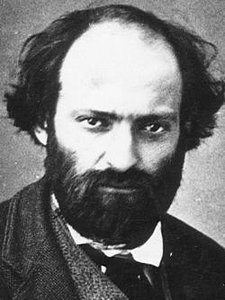
Paul Cézanne
1839 - 1906 , Frankreich
Kurzinfos
- Beeinflusste Künstler:
- Paul Gauguin
- Georges Seurat
- Bemerkenswerte Werke:
- Der Teich in Jas de Bouffan
- Porträt von Émile Zola
- Wald
- Mont Sainte-Victoire
- Geburtsdatum: 19. Januar 1839
- Geburtsort: Aix-en-Provence, Frankreich
- Künstlerische Bewegung: Postimpressionismus
- Nationalität: Französisch
- Sterbedatum: 1906
- Vollständiger Name: Paul Cézanne
- Von Ihm Beeinflusste Künstler:
- Pablo Picasso
- Henri Matisse
- Georges Braque

