Vorschau anzeigen
 Versenden
 Teilen
 Details anzeigen
 Leitfaden

 Herunterladen
 Ähnliche Objekte
 Röntgenaufnahme
 Diashow
 Fragen & Antworten
 Statistiken
Harlequin

- 92.0 x 65.0 cm


 Weiterlesen
Giclée / Kunstdruck
Giclée- oder Leinwanddruck in Museumsqualität mit schneller Produktion und flexiblen Veredelungsoptionen. ( Handgemalte Reproduktion bestellen Zum digitalen Bild wechseln)




P118B €10

P118H €10

P118W €10

P438Z €10

P508JH €12

P508YH €12

P805H €10

P805Z €10

P919BZ €10

P919G €10

P919XJ €10

P959ZH €10

P968JZ €12

W106C €8

W218G €10

W218JH €8

W218Y €10

W307PJ €10

W316G €10

W316PJ €8

W316Y €10

W398PJ €8

W4111J €10

W500HY €15

W500JH €15

W692G €12

W849H €8

W940BG €15

W953PJ €8




Wählen Sie aus unseren vordefinierten Formaten, die den ursprünglichen Proportionen des Kunstwerks entsprechen.

Geben Sie die benötigte Breite und Höhe an, damit der Druck perfekt in Ihren Rahmen oder an Ihre Wand passt. Ein Druck kann nur beschnitten, aber niemals größer als das Originalbild angefertigt werden; daher verliert ein Format mit anderen Proportionen einen Teil des Bildes. Wir senden Ihnen ein digitales Mockup zur Freigabe, bevor wir den Druck ausführen. Das auf dieser Seite gezeigte Bild zeigt nicht den tatsächlichen Beschnitt – dies ist nur im Mockup ersichtlich.
Weltweiter Versand () innerhalb von 2 Wochen statt der üblichen 4/5 Wochen. (8 November)

Kostenloser weltweiter Expressversand

Hochwertige Leinenleinwand

Umfassender Versicherungsschutz beim Versand

Zollgebühren-Rückerstattungsgarantie

Garantie für exakte Farbtreue

100 Tage Rückgaberecht (nur bei Mängeln)

100% Geld-zurück-Garantie

Mengenrabatt verfügbar
 Die Glasoption ist nur für Größen unter 110 cm verfügbar.

Harlequin
Giclée / Kunstdruck
Format der Reproduktion
-


Endpreis
€ 72
Paul Cézanne’s ‘Harlequin’: A Dance Between Reality and Illusion
Paul Cézanne's “Harlequin,” painted in 1890, isn’t merely a depiction of the iconic Commedia dell’arte character; it’s a profound exploration of form, color, and the very nature of perception. This oil on canvas, measuring 92 x 65 cm, transcends simple representation, inviting us into Cézanne's meticulously constructed world where reality and illusion intertwine with breathtaking elegance. The painting immediately captivates with its vibrant yet restrained palette – a bold red and black checkered costume juxtaposed against the cool blue of the background wall – a deliberate choice that anchors the figure within a carefully considered space.
Cézanne’s genius lies in his ability to dismantle traditional perspective, a hallmark of Post-Impressionism. He doesn't simply portray Harlequin as he appears; instead, he analyzes him geometrically, breaking down the form into fundamental shapes – cubes, cylinders, and cones – that he then reassembles on the canvas. This process, evident in the sharp angles and flattened planes, anticipates the radical innovations of Cubism. The sword held aloft isn’t a symbol of aggression but rather an element contributing to the overall structure of the composition, echoing the lines and forms around it. Notice how Cézanne subtly suggests movement through the positioning of the figure and the implied trajectory of his gaze.
- Post-Impressionism: A pivotal art movement that emerged in the late 19th century, characterized by its emphasis on distortion and exaggeration, moving beyond Impressionism’s focus on capturing fleeting moments.
- Color Theory: Cézanne masterfully employs color to create depth and atmosphere. The red and black of Harlequin's costume are not merely decorative; they establish a strong visual anchor against the blue background, drawing the eye and creating a sense of spatial recession.
- Geometric Abstraction: Cézanne’s approach anticipates Cubism by reducing objects to their essential geometric forms, paving the way for 20th-century abstraction.
The Symbolism of Harlequin
Harlequin, a figure deeply rooted in Italian theatre tradition, embodies wit, mischief, and a certain playful rebellion. He’s more than just a jester; he represents a challenge to social norms, often acting as a mediator between the established order and the marginalized. Cézanne's choice of this character speaks to his own desire to break free from academic constraints and explore new ways of seeing and representing the world. The mask worn by Harlequin in this particular painting adds another layer of complexity, suggesting an anonymity beneath the surface, a detachment from individual identity.
The inclusion of the sword isn’t simply a theatrical prop; it symbolizes power, but also a potential for conflict. It hints at the underlying tensions within the Commedia dell'arte world – the constant negotiation between order and chaos, authority and rebellion. Cézanne’s deliberate simplification of the sword’s form further emphasizes this symbolic weight, transforming it into an abstract element contributing to the overall composition.
A Bridge Between Worlds: Cézanne’s Legacy
Paul Cézanne's “Harlequin” stands as a crucial link between Impressionism and Cubism. His innovative use of color, form, and perspective profoundly influenced generations of artists, including Picasso and Matisse, who would later build upon his groundbreaking techniques. The painting demonstrates Cézanne’s relentless pursuit of a more fundamental understanding of art – not merely to imitate nature but to capture its underlying essence.
Consider the influence of works like “Pierrot and Harlequin (Mardi Gras)” and “Mardi Gras,” both exploring similar themes within Cézanne's evolving style. These paintings, alongside his still lifes such as "Peaches, Pears and Grapes," reveal a consistent dedication to analyzing form and color, pushing the boundaries of artistic representation. The painting’s presence in the Museu de História e Artes do Estado do Rio de Janeiro, along with other works by Cézanne, underscores its significance within the broader context of art history.
Hand-Painted Reproductions: Bringing Cézanne to Life
OriginalUniqueArt offers meticulously crafted hand-painted reproductions of “Harlequin,” ensuring that you experience the full richness and depth of this iconic masterpiece. Our skilled artists utilize high-quality pigments and traditional oil painting techniques, faithfully recreating Cézanne’s distinctive style – the bold colors, the geometric forms, and the subtle interplay of light and shadow. These reproductions are not simply copies; they are new works of art in their own right, capturing the spirit and emotion of the original while offering a timeless addition to your collection or interior space.
Explore our selection of “Harlequin” reproductions today and bring this captivating work of art into your home. For more information on Paul Cézanne’s life and artistic journey, please visit /de/art/list/ or Wikipedia.org.
Fragen & Antworten
Welche Atmosphäre würde eine Reproduktion von "Harlequin" von Paul Cézanne in einen Raum bringen?
Die Edel und klassisch Atmosphäre von "Harlequin" von Paul Cézanne passt perfekt zu dem empfohlenen Ort: einem Wohnbereich.
Mit welcher Technik wurde "Harlequin" erstellt?
Paul Cézanne verwendete die Technik der Öl auf Leinwand für „Harlequin“. Die Technik bestimmt die materielle Beschaffenheit des Originalwerks.
Welcher künstlerischen Strömung ist "Harlequin" von Paul Cézanne zuzuordnen?
„Harlequin“ ist ein Werk der Post-Impressionism. Die Stilrichtung gibt die künstlerische Tradition an, der das Werk angehört.
Künstlerbiografie
frühes Leben und Einflüsse
Paul Cézanne, ein französischer Post-Impressionist-Maler, wurde am 19. Januar 1839 in Aix-en-Provence, Frankreich, geboren. Sein frühes Leben war geprägt von einer starken Verbindung zu seiner Familie’s Bankgeschäft, das ihm finanzielle Sicherheit verschaffte. Dies ermöglichte es ihm, sich ohne finanziellen Druck auf seine künstlerischen Bestrebungen zu konzentrieren. Les Nabis, Neo-Impressionismus und Symbolismus beeinflussten Cézannes frühe Arbeit, die sich durch seinen Schwerpunkt auf geometrische Formen und eine reduzierte Farbpalette auszeichnete. Sein Interesse an den Werken von Paul Gauguin und Georges Seurat festigte seinen Post-Impressionismusstil.Künstlerischer Stil und Techniken
Cézannes innovative Verwendung von Farbflächen und kleinen, sich wiederholenden Pinselstrichen schuf komplexe Felder, die seine intensive Beschäftigung mit den Motiven widerspiegelten. Sein oft explorativer Ansatz in der Kunst führte zur Entwicklung einer neuen bildlichen Sprache, die die zugrunde liegende Struktur von Objekten in einer Komposition betonte.- Schlüsselmerkmale:
- Geometrische Formen und Facetten
- Reduzierte Farbpalette
- Betonung der konstruktiven Essenz der physischen Welt
- Mehrere Perspektiven und Simultaneität
- Einflussreiche Werke:
- The Pond at Jas de Bouffan (1880)
- Portrait of Emile Zola (1866)
- Wald (1892)
- Museen mit Cézannes Werken:
- Musée Marmottan Monet in Paris, Frankreich
- The Museum of Fine Arts in Houston, Vereinigte Staaten
Vermächtnis und Einfluss
Cézannes bahnbrechende Arbeit im Post-Impressionismus ebnete den Weg für verschiedene Avantgarde-Bewegungen, darunter Kubismus, Fauvismus und Surrealismus. Sein Einfluss ist in den Werken von Pablo Picasso, Henri Matisse und Georges Braque zu sehen. Cézannes Vermächtnis inspiriert weiterhin Künstler und Kunstinteressierte gleichermaßen und festigt seinen Platz als eine zentrale Figur in der Geschichte der modernen Kunst.- Verwandte Kunstbewegungen:
- Betrachten Sie Cézannes Werke:
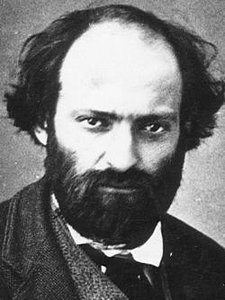
Paul Cézanne
1839 - 1906 , Frankreich
Kurzinfos
- Beeinflusste Künstler:
- Paul Gauguin
- Georges Seurat
- Bemerkenswerte Werke:
- Der Teich in Jas de Bouffan
- Porträt von Émile Zola
- Wald
- Mont Sainte-Victoire
- Geburtsdatum: 19. Januar 1839
- Geburtsort: Aix-en-Provence, Frankreich
- Künstlerische Bewegung: Postimpressionismus
- Nationalität: Französisch
- Sterbedatum: 1906
- Vollständiger Name: Paul Cézanne
- Von Ihm Beeinflusste Künstler:
- Pablo Picasso
- Henri Matisse
- Georges Braque
Ähnliche Artikel

Erté und die Ästhetik des Art Déco: Die meisterhafte Linie des Mode-Ikonens
Erleben Sie die meisterhafte Ästhetik von Erté und dem Art Déco. Entdecken Sie jetzt das Erbe dieses Mode-Ikonens.

The Gilded Age Reimagined: Exploring the Aesthetic Principles & Enduring Legacy of Art Deco
Explore the captivating world of Art Deco! Discover its origins, defining features, cultural impact & enduring legacy. Expert insights for collectors and design enthusiasts. Shop handmade reproductions at OriginalUniqueArt.
Art Deco Unveiled: The Glamour and Geometry of a Timeless Era
Discover the breathtaking allure of Art Deco. Explore the era's iconic geometry, legendary designers like Erté, and timeless glamour. Perfect for discerning collectors seeking to infuse their spaces with sophisticated modernist elegance and historical prestige.

Die 25 besten Gemälde von Paul Cézanne: Meisterwerke der Form
Entdecken Sie die 25 Meisterwerke von Paul Cézanne und den Postimpressionismus. Alle Klassiker auf OriginalUniqueArt.com online erleben.

The Gleaming Geometry of Desire: Exploring Art Deco's Enduring Influence on Visual Culture
Explore the captivating world of Art Deco! Discover its history, key characteristics, enduring influence on design & collecting with expert insights from OriginalUniqueArt.com.