Vorschau anzeigen
 Versenden
 Teilen
 Details anzeigen
 Leitfaden

 Herunterladen
 Ähnliche Objekte
 Röntgenaufnahme
 Diashow
 Q&A
Q&A Statistiken
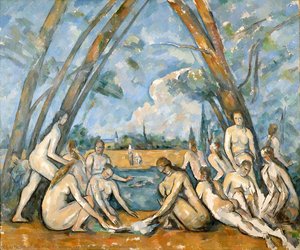
Eine Kurve auf der Straße
 Ölfarbe
- Wandkunst
- Post-Impressionism
 1882
1882- – 19. Jahrhundert
 60.0 x 75.0 cm
 Museum of Fine Arts
 Weiterlesen
Handgefertigte Ölreproduktion
Handgemaltes Ölgemälde auf Leinwand in Ihrer Wunschgröße und mit Rahmen, auf Bestellung von unseren Künstlern angefertigt. ( Zum Druck wechseln Zum digitalen Bild wechseln)




P118B €10

P118H €10

P118W €10

P438Z €10

P508JH €12

P508YH €12

P805H €10

P805Z €10

P919BZ €10

P919G €10

P919XJ €10

P959ZH €10

P968JZ €12

W106C €8

W218G €10

W218JH €8

W218Y €10

W307PJ €10

W316G €10

W316PJ €8

W316Y €10

W398PJ €8

W4111J €10

W500HY €15

W500JH €15

W692G €12

W849H €8

W940BG €15

W953PJ €8




Wählen Sie aus unseren vordefinierten Formaten, die den ursprünglichen Proportionen des Kunstwerks entsprechen.

Geben Sie die Breite und die Höhe an, die Sie für Ihren Rahmen oder Ihre Wand benötigen. Da dieses Werk handgemalt ist, kann der Künstler bei einer anderen Form etwas mehr um das Bild herum malen oder etwas abschneiden – Sie entscheiden. Wir senden Ihnen ein digitales Mockup zur Freigabe, bevor mit dem Malen begonnen wird. Das auf dieser Seite gezeigte Bild stellt nicht das tatsächliche Ergebnis dar – dies tut nur das Mockup.
Nach der Bestellung wird das OriginalUniqueArt.com-Team dem Kunden Anweisungen per E-Mail zusenden und eine Mockup-Vorschau bereitstellen.
Weltweiter Versand () in nur 3 bis 4 Wochen statt der üblichen 5 Wochen. (28 Oktober). Keine Kompromisse bei der Qualität.

Kostenloser weltweiter Expressversand

Hochwertige Leinenleinwand

Umfassender Versicherungsschutz beim Versand

Zollgebühren-Rückerstattungsgarantie

Garantie für exakte Farbtreue

100 Tage Rückgaberecht (nur bei Mängeln)

100% Geld-zurück-Garantie

Mengenrabatt verfügbar
 Die Glasoption ist nur für Größen unter 110 cm verfügbar.

Eine Kurve auf der Straße
Art der Reproduktion
Format der Reproduktion
-


Endpreis
€ 264
A Turn in the Road: Cézanne's Revolutionary Vision of Rural Tranquility
Paul Cézanne’s *A Turn in the Road* – painted in 1882 – isn’t merely a depiction of a country lane; it’s a profound exploration of perception, form, and the very essence of seeing. This captivating oil painting, now available as a meticulously hand-painted reproduction from OriginalUniqueArt.com, invites us into a world where the familiar landscape is transformed through Cézanne's unique artistic lens. The scene unfolds on a gently sloping hillside, offering an elevated perspective that immediately establishes a sense of depth and spatial complexity – a hallmark of Cézanne’s revolutionary approach to painting. A winding road, rendered with confident brushstrokes, draws the eye into the distance, while the surrounding trees and modest houses evoke a feeling of serene rural life, untouched by the bustle of modern existence. More than just a landscape, *A Turn in the Road* is a meditation on how we perceive reality, a deliberate challenge to traditional artistic conventions.Cézanne’s genius lay not in replicating nature faithfully, but in distilling its underlying structure and essence onto canvas. Notice the careful arrangement of planes – broad, flat areas of color that seem to float independently within the composition. This technique, developed through years of painstaking observation and experimentation, creates a sense of solidity and weight, as if Cézanne is building his scene from geometric blocks. The small, broken brushstrokes, almost invisible to the casual observer, contribute to this effect, layering colors and forms in a way that suggests both movement and stillness simultaneously. Cézanne’s method was radically different from Impressionism, which sought to capture fleeting moments of light and color—rather, he aimed to represent what he *felt* about what he saw. This is powerfully evident in the way he manipulates perspective – subtly distorting familiar forms to create a more dynamic and emotionally resonant image. The road doesn't lead directly into the distance as one might expect; instead, it curves and bends, inviting us to linger and contemplate the scene.
Looking deeper into *A Turn in the Road*, we can trace Cézanne’s artistic journey. His early works were undeniably influenced by Romanticism and Realism, evident in his earlier murals at Jas de Bouffan, where he meticulously documented the details of nature. However, a pivotal shift occurred as he engaged with Impressionist principles, particularly their focus on capturing fleeting moments of light and color. Yet, Cézanne didn’t simply adopt Impressionism; he pushed its boundaries, seeking to represent not just what he *saw*, but how he *felt* about what he saw. This is powerfully evident in the way he manipulates perspective – subtly distorting familiar forms to create a more dynamic and emotionally resonant image. The road doesn't lead directly into the distance as one might expect; instead, it curves and bends, inviting us to linger and contemplate the scene.
The painting’s historical context is equally fascinating. Cézanne initially faced considerable criticism for his unconventional style, with many contemporary critics dismissing his work as incomprehensible. It wasn't until the late 1890s, thanks to the support of fellow artists like Camille Pissarro and the discerning eye of art dealer Ambroise Vollard, that Cézanne’s genius began to be recognized. The first solo exhibition of his work in Vollard’s Paris gallery in 1895 marked a turning point, establishing him as a leading figure in the burgeoning avant-garde movement. His influence on subsequent generations of artists – including Henri Matisse and Pablo Picasso, who famously declared him “the father of us all” – is undeniable. Cézanne’s innovative approach to perspective and his emphasis on the underlying structure of objects paved the way for movements like Cubism, demonstrating a profound and lasting impact on the course of modern art.
Beyond its artistic merits, *A Turn in the Road* possesses a powerful emotional resonance. There’s a sense of tranquility and contemplation that pervades the scene – an invitation to slow down, breathe deeply, and appreciate the simple beauty of the natural world. The painting speaks to our longing for connection with nature, for escape from the pressures of modern life, and for a deeper understanding of ourselves and our place in the universe. A hand-painted reproduction from OriginalUniqueArt.com allows you to bring this timeless masterpiece into your own home, transforming any space into a sanctuary of artistic inspiration.
About Paul Cézanne: A Pioneer of Modern Art
Paul Cézanne (1839–1906) stands as a pivotal figure in the transition from late 19th-century Impressionism to early 20th-century Cubism. Born in Aix-en-Provence, France, into a family with strong financial backing thanks to his father’s banking career, Cézanne enjoyed a freedom to pursue his artistic passions without immediate economic constraints. Though initially inclined towards law, he ultimately dedicated himself entirely to art, shaping a revolutionary style that would profoundly influence generations of artists. His early influences included Romanticism and the Barbizon school, characterized by their focus on landscape painting and meticulous observation of nature. However, Cézanne’s artistic journey took an unexpected turn as he engaged with Impressionist principles, particularly their exploration of light and color. Yet, rather than simply adopting Impressionism, he pushed its boundaries, seeking to represent not just what he *saw*, but how he *felt* about what he saw – a characteristic that would define his unique style.Cézanne’s artistic development was marked by intense experimentation with form and perspective. He meticulously studied the works of artists like Paul Gauguin and Georges Seurat, analyzing their approaches to color and composition. He developed a distinctive technique involving the use of planes of color and small brushstrokes, creating a sense of solidity and weight that challenged traditional notions of representation. This approach was not merely stylistic; it reflected Cézanne’s deep belief in the underlying structure of objects and his desire to capture their essence rather than simply their appearance.
His early works, such as murals at Jas de Bouffan, demonstrate a meticulous attention to detail and a fascination with capturing the nuances of light and shadow. However, it was through his later paintings – including *A Turn in the Road* – that Cézanne truly established his unique artistic vision. He deliberately distorted familiar forms, creating a sense of spatial ambiguity and inviting viewers to actively engage with the painting. This innovative approach, combined with his masterful use of color and brushwork, cemented Cézanne’s place as one of the most influential artists of the modern era.
Explore Related Works by Paul Cézanne
- A Turn in the Road: A quintessential example of Cézanne’s exploration of form and perspective, capturing rural tranquility with remarkable depth and spatial complexity.
- Orchard in Pontoise: Another iconic work showcasing Cézanne’s masterful use of color and his ability to capture the essence of a rural landscape.
- A Turn on the Road at Roche-Ruyon: A similar theme of rural landscapes with a focus on geometric forms and spatial relationships.
Discover More About Paul Cézanne
For a deeper understanding of Paul Cézanne’s life, artistic influences, and legacy, visit Paul Cézanne at OriginalUniqueArt. You may also find valuable insights on Wikipedia: Paul Cézanne.
Fragen & Antworten
Kann ich eine Ölreproduktion von "Eine Kurve auf der Straße" bestellen?
"Eine Kurve auf der Straße" ist als eine handgemalte Ölreproduktion auf Leinenleinwand erhältlich. Die Bestellung kann auf der Seite Handgemalte Ölreproduktion in verschiedenen Größen vorgenommen werden.
Wer hat "Eine Kurve auf der Straße" geschaffen und in welchem Stil ist es gehalten?
Paul Cézanne schuf „Eine Kurve auf der Straße“ im Rahmen der Post-Impressionism-Bewegung.
Welchen Stellenwert nimmt "Eine Kurve auf der Straße" innerhalb der Post-Impressionism ein?
"Eine Kurve auf der Straße" wird im Katalog als Ikonisch unter den Werken der Post-Impressionism geführt.
Künstlerbiografie
frühes Leben und Einflüsse
Paul Cézanne, ein französischer Post-Impressionist-Maler, wurde am 19. Januar 1839 in Aix-en-Provence, Frankreich, geboren. Sein frühes Leben war geprägt von einer starken Verbindung zu seiner Familie’s Bankgeschäft, das ihm finanzielle Sicherheit verschaffte. Dies ermöglichte es ihm, sich ohne finanziellen Druck auf seine künstlerischen Bestrebungen zu konzentrieren. Les Nabis, Neo-Impressionismus und Symbolismus beeinflussten Cézannes frühe Arbeit, die sich durch seinen Schwerpunkt auf geometrische Formen und eine reduzierte Farbpalette auszeichnete. Sein Interesse an den Werken von Paul Gauguin und Georges Seurat festigte seinen Post-Impressionismusstil.Künstlerischer Stil und Techniken
Cézannes innovative Verwendung von Farbflächen und kleinen, sich wiederholenden Pinselstrichen schuf komplexe Felder, die seine intensive Beschäftigung mit den Motiven widerspiegelten. Sein oft explorativer Ansatz in der Kunst führte zur Entwicklung einer neuen bildlichen Sprache, die die zugrunde liegende Struktur von Objekten in einer Komposition betonte.- Schlüsselmerkmale:
- Geometrische Formen und Facetten
- Reduzierte Farbpalette
- Betonung der konstruktiven Essenz der physischen Welt
- Mehrere Perspektiven und Simultaneität
- Einflussreiche Werke:
- The Pond at Jas de Bouffan (1880)
- Portrait of Emile Zola (1866)
- Wald (1892)
- Museen mit Cézannes Werken:
- Musée Marmottan Monet in Paris, Frankreich
- The Museum of Fine Arts in Houston, Vereinigte Staaten
Vermächtnis und Einfluss
Cézannes bahnbrechende Arbeit im Post-Impressionismus ebnete den Weg für verschiedene Avantgarde-Bewegungen, darunter Kubismus, Fauvismus und Surrealismus. Sein Einfluss ist in den Werken von Pablo Picasso, Henri Matisse und Georges Braque zu sehen. Cézannes Vermächtnis inspiriert weiterhin Künstler und Kunstinteressierte gleichermaßen und festigt seinen Platz als eine zentrale Figur in der Geschichte der modernen Kunst.- Verwandte Kunstbewegungen:
- Betrachten Sie Cézannes Werke:
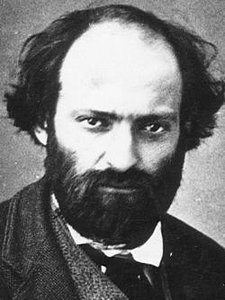
Paul Cézanne
1839 - 1906 , Frankreich
Kurzinfos
- Beeinflusste Künstler:
- Paul Gauguin
- Georges Seurat
- Bemerkenswerte Werke:
- Der Teich in Jas de Bouffan
- Porträt von Émile Zola
- Wald
- Mont Sainte-Victoire
- Geburtsdatum: 19. Januar 1839
- Geburtsort: Aix-en-Provence, Frankreich
- Künstlerische Bewegung: Postimpressionismus
- Nationalität: Französisch
- Sterbedatum: 1906
- Vollständiger Name: Paul Cézanne
- Von Ihm Beeinflusste Künstler:
- Pablo Picasso
- Henri Matisse
- Georges Braque
Ähnliche Artikel

Paul Cézanne: Die 25 Meisterwerke des Impressionismus | OriginalUniqueArt
Entdecken Sie die 25 Meisterwerke von Paul Cézanne! Tauchen Sie ein in die Welt des Impressionismus und Postimpressionismus. Erfahren Sie mehr über seine Stillleben, Landschaften & berühmten Gemälde – jetzt hochwertige Kunstdrucke auf OriginalUniqueArt.com.
Jenseits des Impressionismus: Die emotionale Tiefe der postimpressionistischen Malerei
Entdecken Sie die emotionale Tiefe des Postimpressionismus! Analysieren Sie Cézanne, van Gogh, Gauguin & Seurat. Expertenwissen über Kunstgeschichte und Einfluss auf die Moderne.
Beyond Impressionism: Exploring Emotional Depth & Formal Innovation in Post-Impressionist Art
Explore the profound emotional depth & formal innovations of Post-Impressionism with our expert guide. Discover Cézanne, Van Gogh, Gauguin & more. Learn about art history, collecting, and investing in this pivotal movement.

Impressionismus Meisterwerke: Die Top 10 Kunstwerke für Ihr Zuhause | OriginalUniqueArt
Entdecken Sie die Top 10 Meisterwerke des Impressionismus! Von Monet bis Renoir – erfahren Sie die Geschichten hinter berühmten Gemälden, Techniken & Farben. Hochwertige Kunstdrucke auf OriginalUniqueArt.com.
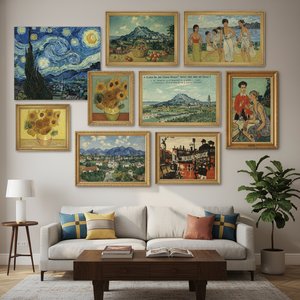
Postimpressionismus: Die 10 Meisterwerke, die eine Ära prägten –
Entdecken Sie die 10 Meisterwerke des Postimpressionismus! Van Gogh, Cézanne & Co. – ihre Geschichten, Techniken und zeitlose Schönheit. Kunstdrucke in Museumsqualiät auf . Jetzt entdecken!