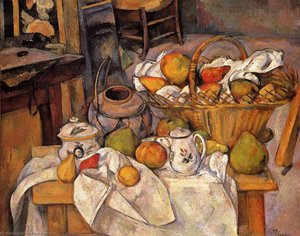
Vorschau anzeigen
 Versenden
 Teilen
 Details anzeigen

 Herunterladen
 Ähnliche Objekte
 Röntgenaufnahme
 Diashow
Ecke der Scheune


 Weiterlesen
Handgefertigte Ölreproduktion
Handgemaltes Ölgemälde auf Leinwand in Ihrer Wunschgröße und mit Rahmen, auf Bestellung von unseren Künstlern angefertigt. ( Zum Druck wechseln Zum Bild wechseln)




P118B $10

P118H $10

P118W $10

P438Z $10

P508JH $12

P508YH $12

P805H $10

P805Z $10

P919BZ $10

P919G $10

P919XJ $10

P959ZH $10

P968JZ $12

W106C $8

W218G $10

W218JH $8

W218Y $10

W307PJ $10

W316G $10

W316PJ $8

W316Y $10

W398PJ $8

W4111J $10

W500HY $15

W500JH $15

W692G $12

W849H $8

W940BG $15

W953PJ $8




Wählen Sie aus unseren vordefinierten Formaten, die den ursprünglichen Proportionen des Kunstwerks entsprechen.

Sie können Ihre eigenen Maße eingeben, um einen bestimmten Rahmen oder Platz auszufüllen. Wenn die gewählte Größe nicht den Proportionen des Originalbildes entspricht, werden wir das Kunstwerk entweder beschneiden oder das Gemälde durch zusätzliche, handgemalte Elemente erweitern. Ein digitales Mockup wird Ihnen zur Genehmigung zugesandt, bevor die Produktion beginnt.
Bitte beachten Sie, dass die Bildschirmvorschau nicht die tatsächliche Beschneidung oder Erweiterung widerspiegelt. Nur das Mockup zeigt die endgültige Komposition exakt an.
Obwohl Sondermaße verfügbar sind, empfehlen wir, eine Größe aus der vordefinierten Liste zu wählen, um die ursprünglichen Proportionen beizubehalten.
Nach der Bestellung wird das OriginalUniqueArt.com-Team dem Kunden Anweisungen per E-Mail zusenden und eine Mockup-Vorschau bereitstellen.
Weltweiter Versand () in nur 3 bis 4 Wochen statt der üblichen 5 Wochen. (9 August). Keine Kompromisse bei der Qualität.

Kostenloser weltweiter Expressversand

Hochwertige Leinenleinwand

Umfassender Versicherungsschutz beim Versand

Zollgebühren-Rückerstattungsgarantie

Garantie für exakte Farbtreue

60 Tage Rückgaberecht (nur bei Mängeln)

100% Geld-zurück-Garantie

Mengenrabatt verfügbar
 Die Glasoption ist nur für Größen unter 110 cm verfügbar.

Ecke der Scheune
Art der Reproduktion
Format der Reproduktion
-


Gesamtpreis
$ 300
Beschreibung des Kunstwerks
Paul Cézanne’s “Corner of the Quarry”: A Window into Provençal Light
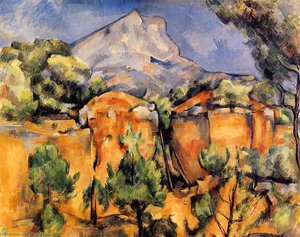
Paul Cézanne's "Corner of the Quarry" – a painting completed in 1900 and now residing within the esteemed Barnes Foundation in Philadelphia – is far more than a simple landscape depiction. It represents a pivotal moment in art history, a bridge between the fleeting impressions of Impressionism and the groundbreaking geometric explorations that would define Cubism. This work isn’t merely about capturing a scene; it's about distilling the essence of nature itself, revealing its underlying structure through a masterful manipulation of color, form, and light. Cézanne, deeply rooted in the Provençal countryside, sought to capture not just what he saw, but how he *felt* looking at the world around him – a profound shift from the objective observation championed by earlier movements.
The painting immediately draws the viewer into a rugged, almost primordial landscape. A rocky hillside dominates the composition, punctuated by scattered trees that seem to emerge directly from the canvas. The foreground is dominated by a substantial boulder, its rough texture and imposing presence anchoring the scene. Notice how Cézanne doesn’t attempt to render every detail with photographic precision; instead, he employs bold, expressive brushstrokes – thick impasto applied with a deliberate energy – to suggest volume and depth. These strokes aren't meant to mimic reality but rather to convey the *experience* of perceiving it. The color palette is equally significant: muted greens, browns, and ochres dominate, creating a sense of tranquility and timelessness, yet punctuated by vibrant bursts of blue and purple that capture the shifting light of the Provençal sky.
The Post-Impressionist Revolution
Cézanne’s approach to painting was revolutionary. He deliberately moved away from the Impressionists' focus on capturing transient effects of light and color, instead prioritizing the underlying geometric forms of objects. This is particularly evident in "Corner of the Quarry," where he breaks down the landscape into a series of interlocking planes and angles. The trees aren’t rendered as delicate, flowing shapes; they are constructed from simplified, almost architectural blocks. This technique wasn't entirely new – Cézanne had been studying the works of Renaissance masters like Michelangelo and Donatello, particularly their use of perspective and spatial relationships – but he adapted these principles to his own artistic vision.
Crucially, Cézanne’s work profoundly influenced Pablo Picasso and Georges Braque, the pioneers of Cubism. Their subsequent explorations of fragmented forms and multiple perspectives were directly inspired by Cézanne's radical approach to representation. The Barnes Foundation itself holds a significant collection of Cézanne’s paintings, including “Mont Sainte-Victoire,” which further demonstrates his fascination with capturing the essence of a single subject from various viewpoints – a concept that would become central to Cubist theory. The influence extends beyond painting; Cézanne's emphasis on structure and form paved the way for developments in sculpture and architecture as well.
Symbolism and Emotional Resonance
Beyond its formal innovations, "Corner of the Quarry" possesses a subtle yet powerful symbolic resonance. The quarry itself – a place of extraction and transformation – can be interpreted as representing the artist’s own process of extracting meaning from nature and transforming it into art. The rugged landscape evokes a sense of solitude and contemplation, inviting the viewer to lose themselves in the beauty and simplicity of the natural world. Cézanne wasn't simply painting a view; he was conveying an emotional response – a feeling of connection to the earth and a deep appreciation for its enduring power.
The painting’s quiet intensity speaks to a deeper yearning, a desire to find stability and permanence in a rapidly changing world. Cézanne’s work suggests that true beauty lies not in fleeting impressions but in the solid foundations of form and structure. Today, reproductions of “Corner of the Quarry” offer a remarkable opportunity to experience this timeless masterpiece firsthand, bringing its evocative atmosphere into any space – whether as a focal point for conversation or a source of quiet contemplation.
OriginalUniqueArt’s Hand-Painted Reproductions
At OriginalUniqueArt.com, we are dedicated to preserving the legacy of Paul Cézanne and making his work accessible to art lovers worldwide. Our hand-painted reproductions of “Corner of the Quarry” are meticulously crafted by skilled artists who painstakingly recreate every detail of the original painting, using only the finest pigments and archival materials. Each reproduction is a unique work of art in its own right, capturing not just the visual appearance but also the emotional essence of Cézanne’s masterpiece. Explore our selection of high-quality reproductions at Paul Cézanne: Corner of the Quarry and bring a touch of Provençal light into your home.
Über den Künstler
frühes Leben und Einflüsse
Paul Cézanne, ein französischer Post-Impressionist-Maler, wurde am 19. Januar 1839 in Aix-en-Provence, Frankreich, geboren. Sein frühes Leben war geprägt von einer starken Verbindung zu seiner Familie’s Bankgeschäft, das ihm finanzielle Sicherheit verschaffte. Dies ermöglichte es ihm, sich ohne finanziellen Druck auf seine künstlerischen Bestrebungen zu konzentrieren. Les Nabis, Neo-Impressionismus und Symbolismus beeinflussten Cézannes frühe Arbeit, die sich durch seinen Schwerpunkt auf geometrische Formen und eine reduzierte Farbpalette auszeichnete. Sein Interesse an den Werken von Paul Gauguin und Georges Seurat festigte seinen Post-Impressionismusstil.Künstlerischer Stil und Techniken
Cézannes innovative Verwendung von Farbflächen und kleinen, sich wiederholenden Pinselstrichen schuf komplexe Felder, die seine intensive Beschäftigung mit den Motiven widerspiegelten. Sein oft explorativer Ansatz in der Kunst führte zur Entwicklung einer neuen bildlichen Sprache, die die zugrunde liegende Struktur von Objekten in einer Komposition betonte.- Schlüsselmerkmale:
- Geometrische Formen und Facetten
- Reduzierte Farbpalette
- Betonung der konstruktiven Essenz der physischen Welt
- Mehrere Perspektiven und Simultaneität
- Einflussreiche Werke:
- The Pond at Jas de Bouffan (1880)
- Portrait of Emile Zola (1866)
- Wald (1892)
- Museen mit Cézannes Werken:
- Musée Marmottan Monet in Paris, Frankreich
- The Museum of Fine Arts in Houston, Vereinigte Staaten
Vermächtnis und Einfluss
Cézannes bahnbrechende Arbeit im Post-Impressionismus ebnete den Weg für verschiedene Avantgarde-Bewegungen, darunter Kubismus, Fauvismus und Surrealismus. Sein Einfluss ist in den Werken von Pablo Picasso, Henri Matisse und Georges Braque zu sehen. Cézannes Vermächtnis inspiriert weiterhin Künstler und Kunstinteressierte gleichermaßen und festigt seinen Platz als eine zentrale Figur in der Geschichte der modernen Kunst.- Verwandte Kunstbewegungen:
- Betrachten Sie Cézannes Werke:
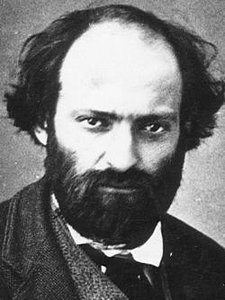
Paul Cézanne
1839 - 1906 , Frankreich
Kurzinfos
- Beeinflusste Künstler:
- Paul Gauguin
- Georges Seurat
- Bemerkenswerte Werke:
- Der Teich in Jas de Bouffan
- Porträt von Émile Zola
- Wald
- Mont Sainte-Victoire
- Geburtsdatum: 19. Januar 1839
- Geburtsort: Aix-en-Provence, Frankreich
- Künstlerische Bewegung: Postimpressionismus
- Nationalität: Französisch
- Sterbedatum: 1906
- Vollständiger Name: Paul Cézanne
- Von Ihm Beeinflusste Künstler:
- Pablo Picasso
- Henri Matisse
- Georges Braque
Ähnliche Artikel

Paul Cézanne: Die 25 Meisterwerke des Impressionismus | OriginalUniqueArt
Entdecken Sie die 25 Meisterwerke von Paul Cézanne! Tauchen Sie ein in die Welt des Impressionismus und Postimpressionismus. Erfahren Sie mehr über seine Stillleben, Landschaften & berühmten Gemälde – jetzt hochwertige Kunstdrucke auf OriginalUniqueArt.com.

Paul Klee: Die 25 Meisterwerke des Abstrakten – Kunst für Ihr Zuhause | OriginalUniqueArt
Entdecken Sie die 25 Meisterwerke von Paul Klee! Tauchen Sie ein in seine abstrakte Welt, voller Expressionismus und Bauhaus-Einflüsse. Hochwertige Kunst für Ihr Zuhause – jetzt bei OriginalUniqueArt entdecken!
Jenseits des Impressionismus: Die emotionale Tiefe der postimpressionistischen Malerei
Entdecken Sie die emotionale Tiefe des Postimpressionismus! Analysieren Sie Cézanne, van Gogh, Gauguin & Seurat. Expertenwissen über Kunstgeschichte und Einfluss auf die Moderne.
Beyond Impressionism: Exploring Emotional Depth & Formal Innovation in Post-Impressionist Art
Explore the profound emotional depth & formal innovations of Post-Impressionism with our expert guide. Discover Cézanne, Van Gogh, Gauguin & more. Learn about art history, collecting, and investing in this pivotal movement.

Impressionismus Meisterwerke: Die Top 10 Kunstwerke für Ihr Zuhause | OriginalUniqueArt
Entdecken Sie die Top 10 Meisterwerke des Impressionismus! Von Monet bis Renoir – erfahren Sie die Geschichten hinter berühmten Gemälden, Techniken & Farben. Hochwertige Kunstdrucke auf OriginalUniqueArt.com.