Vorschau anzeigen
 Versenden
 Teilen
 Details anzeigen

 Herunterladen
 Ähnliche Objekte
 Röntgenaufnahme
 Diashow
 Statistiken
Die Quelle


 Weiterlesen
Giclée / Kunstdruck
Giclée- oder Leinwanddruck in Museumsqualität mit schneller Produktion und flexiblen Veredelungsoptionen. ( Handgemalte Reproduktion bestellen Zum digitalen Bild wechseln)




P118B $10

P118H $10

P118W $10

P438Z $10

P508JH $12

P508YH $12

P805H $10

P805Z $10

P919BZ $10

P919G $10

P919XJ $10

P959ZH $10

P968JZ $12

W106C $8

W218G $10

W218JH $8

W218Y $10

W307PJ $10

W316G $10

W316PJ $8

W316Y $10

W398PJ $8

W4111J $10

W500HY $15

W500JH $15

W692G $12

W849H $8

W940BG $15

W953PJ $8




Wählen Sie aus unseren vordefinierten Formaten, die den ursprünglichen Proportionen des Kunstwerks entsprechen.

Sie können Ihre eigenen Maße eingeben, um ein bestimmtes Format oder einen speziellen Platz einzupassen. Wenn das von Ihnen gewählte Format nicht den Proportionen des Originalbildes entspricht, werden wir das Kunstwerk entweder beschneiden oder das Bild mit einem gespiegelten oder einfarbigen Rand erweitern. Ein digitaler Entwurf wird Ihnen zur Genehmigung zugesandt, bevor die Produktion beginnt.
Bitte beachten Sie, dass die Vorschau auf dem Bildschirm nicht den tatsächlichen Zuschnitt oder die Erweiterung widerspiegelt. Nur der Entwurf zeigt die endgültige Komposition präzise an.
Obwohl Sondermaße verfügbar sind, empfehlen wir die Auswahl eines Maßes aus der vordefinierten Liste, um die ursprünglichen Proportionen zu bewahren.
Weltweiter Versand () innerhalb von 2 Wochen statt der üblichen 4/5 Wochen. (13 September)

Kostenloser weltweiter Expressversand

Hochwertige Leinenleinwand

Umfassender Versicherungsschutz beim Versand

Zollgebühren-Rückerstattungsgarantie

Garantie für exakte Farbtreue

100-Tage-Rückgaberecht (nur bei Mängeln)

100% Geld-zurück-Garantie

Mengenrabatt verfügbar
 Die Glasoption ist nur für Größen unter 110 cm verfügbar.

Die Quelle
Giclée / Kunstdruck
Format der Reproduktion
-


Gesamtpreis
$ 80
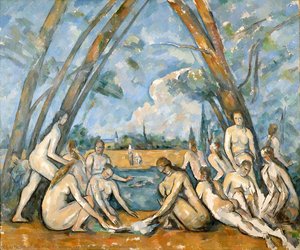
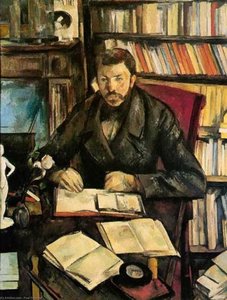
The Fountain by Paul Cézanne: A Pioneering Vision of Form and Color
Paul Cézanne’s The Fountain stands as a cornerstone of Post-Impressionism, marking a decisive break from the fleeting impressions favored by Monet and Renoir. Created in 1877 during Cézanne’s formative years, this oil on canvas masterpiece isn't merely a depiction of everyday life; it’s an exploration of fundamental artistic principles that would profoundly influence subsequent movements like Cubism and Fauvism. Examining its stylistic elements reveals Cézanne’s unwavering commitment to capturing the essence of his subjects through geometric abstraction and nuanced color palettes—a radical departure from Impressionist aesthetics.Style and Composition: Embracing Structure Over Illusion
Cézanne's artistic philosophy centered on reconstructing visual perception rather than faithfully reproducing it. Unlike Impressionists who sought to capture momentary effects of light, Cézanne prioritized underlying structure and form. The Fountain exemplifies this approach brilliantly. The artist employs simplified geometric shapes—circles, squares, and triangles—to create a sense of depth and perspective that transcends traditional linear representation. This deliberate flattening of space isn’t an absence of realism but rather a conscious decision to emphasize the essential visual elements of the scene: the solidity of the trees, the stillness of the water, and the presence of figures engaged in quiet contemplation. The muted earthy tones—ochres, browns, greens—dominate the palette, reflecting Cézanne’s fascination with tonal variations and his desire to convey mood rather than precise color accuracy.Historical Context: Challenging Artistic Conventions
The late 1870s witnessed a burgeoning artistic debate regarding the future of painting. Impressionists had championed spontaneity and optical perception, rejecting academic conventions that prioritized meticulous detail and idealized beauty. Cézanne responded by questioning these assumptions, arguing for a more rigorous approach to representation—one rooted in scientific observation and informed by Cézanne’s own geometric explorations. His work was initially met with skepticism and ridicule from critics who deemed it crude and lacking in finesse. However, Cézanne’s unwavering conviction in his vision gradually gained acceptance among fellow artists and collectors, establishing him as a pivotal figure in the transition to modern art. The influence of Cézanne extended far beyond his immediate peers; artists like Picasso and Matisse acknowledged his pioneering role in reshaping artistic language.Symbolism and Emotional Resonance: Beyond Mere Appearance
The Fountain transcends its visual surface to convey a deeper emotional resonance. Cézanne’s deliberate simplification of form isn't merely stylistic; it serves as a conduit for expressing ideas about permanence and transformation—themes central to Cézanne’s broader artistic concerns. The stillness of the water, combined with the presence of figures observing it, suggests contemplation and acceptance of the natural order. Furthermore, Cézanne’s use of color contributes to the painting's atmosphere, evoking a sense of tranquility and understated beauty. As a genre painting capturing a commonplace scene—a fountain in a rural landscape—The Fountain embodies Cézanne’s belief that art could communicate profound truths about human experience without resorting to elaborate ornamentation or theatrical gestures.Legacy and Influence: Shaping the Course of Modern Art
Cézanne’s groundbreaking techniques—particularly his use of geometric abstraction and tonal modulation—laid the groundwork for movements like Cubism and Fauvism, which revolutionized artistic representation in the early 20th century. The Musée Paul Valéry in Sète houses a significant collection of Cézanne’s works, offering visitors an opportunity to immerse themselves in the artist’s oeuvre and appreciate his enduring impact on art history. You can find more information about the museum’s collection at OriginalUniqueArt.com. To explore Cézanne’s artistic journey further, visit Wikipedia: Wikipedia. And for a detailed examination of the painting itself, consult this WikiArt page: WikiArt.org. Photo Description: The painting is a post-impressionist piece by Paul Cézanne titled "The Fountain." The scene features a group of people standing around a fountain in the middle of a field. There are at least five individuals visible in the image, with some closer to the foreground and others further back. In addition to the people, there is a dog present in the painting, located near the center-left side of the scene. The fountain itself can be seen towards the middle of the field, surrounded by the group of people. A bench is also visible on the left side of the image, providing a place for the people to sit and enjoy the surroundings. Size: Unknown Date: Unknown ARTIST INFORMATION: ================== Artist: Paul Cézanne Birth Year: 1839 Death Year: 1906 Birth City: Aix-en-Provence Birth Country: France Biography:A Revolutionary Vision: The Life and Art of Paul Cézanne
Paul Cézanne, born in Aix-en-Provence in 1839, stands as a monumental figure bridging the gap between the fleeting impressions of Impressionism and the fragmented forms of Cubism. His journey was not one of immediate acclaim; rather, it was a slow burn of artistic exploration, marked by periods of self-doubt and critical dismissal, ultimately culminating in a legacy that would irrevocably alter the course of modern art. Born to a prosperous family – his father initially a hatmaker who later became a banker – Cézanne enjoyed a financial security unusual for aspiring artists, allowing him the freedom to dedicate himself to his passion without the immediate pressures of commercial success. Though initially steered towards a legal career by his father’s ambitions, the pull of artistic expression proved too strong, and he eventually abandoned law to pursue painting, a decision that wouÜber den Künstler
frühes Leben und Einflüsse
Paul Cézanne, ein französischer Post-Impressionist-Maler, wurde am 19. Januar 1839 in Aix-en-Provence, Frankreich, geboren. Sein frühes Leben war geprägt von einer starken Verbindung zu seiner Familie’s Bankgeschäft, das ihm finanzielle Sicherheit verschaffte. Dies ermöglichte es ihm, sich ohne finanziellen Druck auf seine künstlerischen Bestrebungen zu konzentrieren. Les Nabis, Neo-Impressionismus und Symbolismus beeinflussten Cézannes frühe Arbeit, die sich durch seinen Schwerpunkt auf geometrische Formen und eine reduzierte Farbpalette auszeichnete. Sein Interesse an den Werken von Paul Gauguin und Georges Seurat festigte seinen Post-Impressionismusstil.Künstlerischer Stil und Techniken
Cézannes innovative Verwendung von Farbflächen und kleinen, sich wiederholenden Pinselstrichen schuf komplexe Felder, die seine intensive Beschäftigung mit den Motiven widerspiegelten. Sein oft explorativer Ansatz in der Kunst führte zur Entwicklung einer neuen bildlichen Sprache, die die zugrunde liegende Struktur von Objekten in einer Komposition betonte.- Schlüsselmerkmale:
- Geometrische Formen und Facetten
- Reduzierte Farbpalette
- Betonung der konstruktiven Essenz der physischen Welt
- Mehrere Perspektiven und Simultaneität
- Einflussreiche Werke:
- The Pond at Jas de Bouffan (1880)
- Portrait of Emile Zola (1866)
- Wald (1892)
- Museen mit Cézannes Werken:
- Musée Marmottan Monet in Paris, Frankreich
- The Museum of Fine Arts in Houston, Vereinigte Staaten
Vermächtnis und Einfluss
Cézannes bahnbrechende Arbeit im Post-Impressionismus ebnete den Weg für verschiedene Avantgarde-Bewegungen, darunter Kubismus, Fauvismus und Surrealismus. Sein Einfluss ist in den Werken von Pablo Picasso, Henri Matisse und Georges Braque zu sehen. Cézannes Vermächtnis inspiriert weiterhin Künstler und Kunstinteressierte gleichermaßen und festigt seinen Platz als eine zentrale Figur in der Geschichte der modernen Kunst.- Verwandte Kunstbewegungen:
- Betrachten Sie Cézannes Werke:
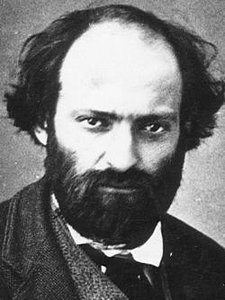
Paul Cézanne
1839 - 1906 , Frankreich
Kurzinfos
- Beeinflusste Künstler:
- Paul Gauguin
- Georges Seurat
- Bemerkenswerte Werke:
- Der Teich in Jas de Bouffan
- Porträt von Émile Zola
- Wald
- Mont Sainte-Victoire
- Geburtsdatum: 19. Januar 1839
- Geburtsort: Aix-en-Provence, Frankreich
- Künstlerische Bewegung: Postimpressionismus
- Nationalität: Französisch
- Sterbedatum: 1906
- Vollständiger Name: Paul Cézanne
- Von Ihm Beeinflusste Künstler:
- Pablo Picasso
- Henri Matisse
- Georges Braque
Ähnliche Artikel

Impressionistische Landschaften: Die 10 Meisterwerke, die eine Epoche prägten | OriginalUniqueArt
Entdecken Sie die 10 Meisterwerke des Impressionismus! Von Monet bis Renoir – erleben Sie die Geschichte, Technik und zeitlose Schönheit ikonischer Landschaftsbilder. Hochwertige Kunstdrucke auf OriginalUniqueArt.com. Jetzt entdecken!
Jenseits des Impressionismus: Die emotionale Tiefe der postimpressionistischen Malerei
Entdecken Sie die emotionale Tiefe des Postimpressionismus! Analysieren Sie Cézanne, van Gogh, Gauguin & Seurat. Expertenwissen über Kunstgeschichte und Einfluss auf die Moderne.

Paul Klee: Die 25 Meisterwerke des Abstrakten – Kunst für Ihr Zuhause | OriginalUniqueArt
Entdecken Sie die 25 Meisterwerke von Paul Klee! Tauchen Sie ein in seine abstrakte Welt, voller Expressionismus und Bauhaus-Einflüsse. Hochwertige Kunst für Ihr Zuhause – jetzt bei OriginalUniqueArt entdecken!

Paul Cézanne: Die 25 Meisterwerke des Impressionismus | OriginalUniqueArt
Entdecken Sie die 25 Meisterwerke von Paul Cézanne! Tauchen Sie ein in die Welt des Impressionismus und Postimpressionismus. Erfahren Sie mehr über seine Stillleben, Landschaften & berühmten Gemälde – jetzt hochwertige Kunstdrucke auf OriginalUniqueArt.com.
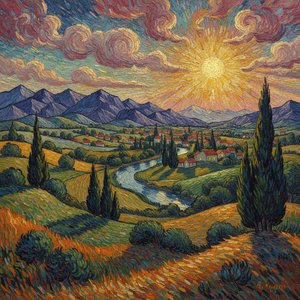
Beyond Impressionism: The Emotional Depth and Vibrant Evolution of Post-Impressionist Landscapes
Explore the profound evolution of Post-Impressionist landscapes. From Van Gogh's emotional brushwork to Cézanne's structural mastery, discover how these visionaries redefined art history through color and form in this expert guide for fine art enthusiasts.