Vorschau anzeigen
 Versenden
 Teilen
 Details anzeigen
 Leitfaden

 Herunterladen
 Ähnliche Objekte
 Röntgenaufnahme
 Diashow
 Q&A
Q&A Statistiken
Der Aquädukt und die Schleuse


 Weiterlesen
Giclée / Kunstdruck
Giclée- oder Leinwanddruck in Museumsqualität mit schneller Produktion und flexiblen Veredelungsoptionen. ( Handgemalte Reproduktion bestellen Zum digitalen Bild wechseln)




P118B €10

P118H €10

P118W €10

P438Z €10

P508JH €12

P508YH €12

P805H €10

P805Z €10

P919BZ €10

P919G €10

P919XJ €10

P959ZH €10

P968JZ €12

W106C €8

W218G €10

W218JH €8

W218Y €10

W307PJ €10

W316G €10

W316PJ €8

W316Y €10

W398PJ €8

W4111J €10

W500HY €15

W500JH €15

W692G €12

W849H €8

W940BG €15

W953PJ €8




Wählen Sie aus unseren vordefinierten Formaten, die den ursprünglichen Proportionen des Kunstwerks entsprechen.

Geben Sie die benötigte Breite und Höhe an, damit der Druck perfekt in Ihren Rahmen oder an Ihre Wand passt. Ein Druck kann nur beschnitten, aber niemals größer als das Originalbild angefertigt werden; daher verliert ein Format mit anderen Proportionen einen Teil des Bildes. Wir senden Ihnen ein digitales Mockup zur Freigabe, bevor wir den Druck ausführen. Das auf dieser Seite gezeigte Bild zeigt nicht den tatsächlichen Beschnitt – dies ist nur im Mockup ersichtlich.
Weltweiter Versand () innerhalb von 2 Wochen statt der üblichen 4/5 Wochen. (2 November)

Kostenloser weltweiter Expressversand

Hochwertige Leinenleinwand

Umfassender Versicherungsschutz beim Versand

Zollgebühren-Rückerstattungsgarantie

Garantie für exakte Farbtreue

100 Tage Rückgaberecht (nur bei Mängeln)

100% Geld-zurück-Garantie

Mengenrabatt verfügbar
 Die Glasoption ist nur für Größen unter 110 cm verfügbar.

Der Aquädukt und die Schleuse
Giclée / Kunstdruck
Format der Reproduktion
-


Endpreis
€ 71
Paul Cézanne’s “The Aqueduct and Lock”: A Bridge Between Worlds
Paul Cézanne's "The Aqueduct and Lock" – painted in 1890 – isn’t merely a landscape; it’s a carefully constructed meditation on perception, structure, and the relationship between nature and human intervention. This captivating work, housed within the collections of private collectors, offers a profound glimpse into Cézanne's revolutionary approach to painting, one that would irrevocably alter the course of modern art. It represents a pivotal moment in his artistic journey, bridging the gap between the fleeting impressions of Impressionism and the nascent explorations of Cubism that were brewing on the horizon.
The scene itself is deceptively simple: an aqueduct gracefully spanning a waterway, leading to a lock – a vital component of the River Lee Navigation. Nestled within this tranquil setting are trees, their forms rendered with a deliberate solidity and geometric precision. Yet, it’s not the literal depiction that commands attention but rather Cézanne's masterful manipulation of light, color, and form. He abandons the Impressionist pursuit of capturing fleeting moments of reflected light, instead focusing on the underlying structure of the scene – the angles of the aqueduct, the planes of the trees, the curves of the water. This emphasis on geometric forms is a key characteristic of Cézanne’s style, foreshadowing the fragmented perspectives that would become central to Cubism.
The Language of Structure
Cézanne's technique in "The Aqueduct and Lock" is remarkably deliberate. He employs a broken brushstroke – short, distinct marks applied with varying pressures – to build up layers of color and texture. These strokes aren’t blended smoothly; instead, they retain their individual character, creating a sense of visual vibration and dynamism. The colors are muted and earthy, dominated by greens, browns, and blues, evoking the atmosphere of a late autumn day. Notice how he uses parallel lines to define the edges of objects, subtly suggesting depth and perspective without relying on traditional vanishing points. This approach challenges the conventional rules of academic painting, prioritizing the artist’s subjective experience of the scene over strict adherence to realistic representation.
The inclusion of figures – a few individuals standing near the aqueduct – adds a human element to the landscape, yet they are rendered with minimal detail and treated as secondary elements. Cézanne isn't interested in portraying these figures realistically; rather, he uses them to anchor the composition and provide a sense of scale. The two birds soaring above the bridge introduce an element of movement and lightness, subtly counterbalancing the solidity of the aqueduct and trees.
A Bridge to Modernity
"The Aqueduct and Lock" is more than just a beautiful landscape; it’s a manifesto for a new way of seeing. Cézanne's work profoundly influenced generations of artists, including Pablo Picasso and Georges Braque, who built upon his explorations of form and perspective. His emphasis on geometric abstraction paved the way for Cubism, while his use of color and texture anticipated developments in Fauvism and Expressionism. It’s a testament to Cézanne's vision that he was initially met with skepticism and criticism during his lifetime, yet his influence continues to resonate powerfully today.
Consider the painting as a visual puzzle – a challenge to our accustomed ways of perceiving the world. Cézanne invites us to look beyond the surface appearance of things and to appreciate the underlying structure that gives them form and meaning. “The Aqueduct and Lock” is, therefore, not simply a depiction of a river scene; it’s an invitation to engage in a profound dialogue with art itself – a conversation that continues to captivate and inspire viewers over a century later.
Collecting the Essence
Reproductions of “The Aqueduct and Lock” offer a remarkable opportunity to bring this seminal work into your home or office. OriginalUniqueArt’s hand-painted reproductions meticulously capture the nuances of Cézanne's brushwork, color palette, and compositional choices, ensuring that you experience the painting’s full emotional impact. Each reproduction is created with the utmost care and attention to detail, using archival-quality materials to guarantee its longevity. Whether you are an art enthusiast, a collector, or simply seeking a piece of timeless beauty, a hand-painted reproduction of “The Aqueduct and Lock” is a treasured addition to any collection – a tangible link to one of the most influential artists in modern history.
Fragen & Antworten
Welche Farbe sticht in "Der Aquädukt und die Schleuse" am meisten hervor?
Die dominante Farbe von "Der Aquädukt und die Schleuse" von Paul Cézanne ist Espresso (#44421c).
Aus welchen Materialien besteht "Der Aquädukt und die Schleuse" und in welchem Stil ist es gehalten?
In "Der Aquädukt und die Schleuse" trifft die Acryl auf Leinwand-Technik auf die Post-Impressionism-Strömung.
Für welche Verwendung wird "Der Aquädukt und die Schleuse" von Paul Cézanne empfohlen?
Eine Reproduktion von "Der Aquädukt und die Schleuse" von Paul Cézanne wird für Statement-Piece empfohlen. Dieser Vorschlag ergibt sich aus dem Motiv, der Stimmung und den Farben des Werkes.
Künstlerbiografie
frühes Leben und Einflüsse
Paul Cézanne, ein französischer Post-Impressionist-Maler, wurde am 19. Januar 1839 in Aix-en-Provence, Frankreich, geboren. Sein frühes Leben war geprägt von einer starken Verbindung zu seiner Familie’s Bankgeschäft, das ihm finanzielle Sicherheit verschaffte. Dies ermöglichte es ihm, sich ohne finanziellen Druck auf seine künstlerischen Bestrebungen zu konzentrieren. Les Nabis, Neo-Impressionismus und Symbolismus beeinflussten Cézannes frühe Arbeit, die sich durch seinen Schwerpunkt auf geometrische Formen und eine reduzierte Farbpalette auszeichnete. Sein Interesse an den Werken von Paul Gauguin und Georges Seurat festigte seinen Post-Impressionismusstil.Künstlerischer Stil und Techniken
Cézannes innovative Verwendung von Farbflächen und kleinen, sich wiederholenden Pinselstrichen schuf komplexe Felder, die seine intensive Beschäftigung mit den Motiven widerspiegelten. Sein oft explorativer Ansatz in der Kunst führte zur Entwicklung einer neuen bildlichen Sprache, die die zugrunde liegende Struktur von Objekten in einer Komposition betonte.- Schlüsselmerkmale:
- Geometrische Formen und Facetten
- Reduzierte Farbpalette
- Betonung der konstruktiven Essenz der physischen Welt
- Mehrere Perspektiven und Simultaneität
- Einflussreiche Werke:
- The Pond at Jas de Bouffan (1880)
- Portrait of Emile Zola (1866)
- Wald (1892)
- Museen mit Cézannes Werken:
- Musée Marmottan Monet in Paris, Frankreich
- The Museum of Fine Arts in Houston, Vereinigte Staaten
Vermächtnis und Einfluss
Cézannes bahnbrechende Arbeit im Post-Impressionismus ebnete den Weg für verschiedene Avantgarde-Bewegungen, darunter Kubismus, Fauvismus und Surrealismus. Sein Einfluss ist in den Werken von Pablo Picasso, Henri Matisse und Georges Braque zu sehen. Cézannes Vermächtnis inspiriert weiterhin Künstler und Kunstinteressierte gleichermaßen und festigt seinen Platz als eine zentrale Figur in der Geschichte der modernen Kunst.- Verwandte Kunstbewegungen:
- Betrachten Sie Cézannes Werke:
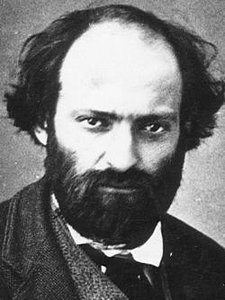
Paul Cézanne
1839 - 1906 , Frankreich
Kurzinfos
- Beeinflusste Künstler:
- Paul Gauguin
- Georges Seurat
- Bemerkenswerte Werke:
- Der Teich in Jas de Bouffan
- Porträt von Émile Zola
- Wald
- Mont Sainte-Victoire
- Geburtsdatum: 19. Januar 1839
- Geburtsort: Aix-en-Provence, Frankreich
- Künstlerische Bewegung: Postimpressionismus
- Nationalität: Französisch
- Sterbedatum: 1906
- Vollständiger Name: Paul Cézanne
- Von Ihm Beeinflusste Künstler:
- Pablo Picasso
- Henri Matisse
- Georges Braque
Ähnliche Artikel

Die 25 besten Gemälde von Paul Cézanne: Meisterwerke der Form
Entdecken Sie die 25 Meisterwerke von Paul Cézanne und den Postimpressionismus. Alle Klassiker auf OriginalUniqueArt.com online erleben.
Jenseits des Impressionismus: Die emotionale Tiefe der postimpressionistischen Malerei
Entdecken Sie die emotionale Tiefe des Postimpressionismus! Analysieren Sie Cézanne, van Gogh, Gauguin & Seurat. Expertenwissen über Kunstgeschichte und Einfluss auf die Moderne.

Impressionismus Meisterwerke: Die Top 10 Kunstwerke für Ihr Zuhause | OriginalUniqueArt
Entdecken Sie die Top 10 Meisterwerke des Impressionismus! Von Monet bis Renoir – erfahren Sie die Geschichten hinter berühmten Gemälden, Techniken & Farben. Hochwertige Kunstdrucke auf OriginalUniqueArt.com.

Die 25 besten Kunstwerke von John Constable: Meisterwerke der englischen Landschaft
Entdecken Sie die 25 besten Werke von John Constable. Erleben Sie englische Romantik auf OriginalUniqueArt.com. Jetzt Meisterwerke online entdecken!

Impressionistische Landschaften: Die 10 Meisterwerke, die eine Epoche prägten | OriginalUniqueArt
Entdecken Sie die 10 Meisterwerke des Impressionismus! Von Monet bis Renoir – erleben Sie die Geschichte, Technik und zeitlose Schönheit ikonischer Landschaftsbilder. Hochwertige Kunstdrucke auf OriginalUniqueArt.com. Jetzt entdecken!