In echtem Maßstab anzeigen
 Versenden als Grußkarte
 Teilen
 Details anzeigen
 Leitfaden öffnen

 Herunterladen
 Ähnliche Objekte
 Röntgenaufnahme
 Diashow
 Besucherstatistiken
Das Haus von Père Lacroix in Auvers
 Öl auf Leinwand
- Wandkunst
- Post-Impressionism
 1873
1873- Moderne
 61.0 x 51.0 cm
 National Gallery of Art
 Mehr anzeigen
Giclée / Kunstdruck
Giclée- oder Leinwanddruck in Museumsqualität mit schneller Produktion und flexiblen Veredelungsoptionen. ( Handgemalte Reproduktion kaufen Zum digitalen Bild wechseln)




P118B $10

P118H $10

P118W $10

P438Z $10

P508JH $12

P508YH $12

P805H $10

P805Z $10

P919BZ $10

P919G $10

P919XJ $10

P959ZH $10

P968JZ $12

W106C $8

W218G $10

W218JH $8

W218Y $10

W307PJ $10

W316G $10

W316PJ $8

W316Y $10

W398PJ $8

W4111J $10

W500HY $15

W500JH $15

W692G $12

W849H $8

W940BG $15

W953PJ $8




Wählen Sie aus unseren vordefinierten Formaten, die den ursprünglichen Proportionen des Kunstwerks entsprechen.

Sie können Ihre eigenen Maße eingeben, um ein bestimmtes Format oder einen speziellen Platz einzupassen. Wenn das von Ihnen gewählte Format nicht den Proportionen des Originalbildes entspricht, werden wir das Kunstwerk entweder beschneiden oder das Bild mit einem gespiegelten oder einfarbigen Rand erweitern. Ein digitaler Entwurf wird Ihnen zur Genehmigung zugesandt, bevor die Produktion beginnt.
Bitte beachten Sie, dass die Vorschau auf dem Bildschirm nicht den tatsächlichen Zuschnitt oder die Erweiterung widerspiegelt. Nur der Entwurf zeigt die endgültige Komposition präzise an.
Obwohl Sondermaße verfügbar sind, empfehlen wir die Auswahl eines Maßes aus der vordefinierten Liste, um die ursprünglichen Proportionen zu bewahren.
Weltweiter Versand () innerhalb von 2 Wochen statt der üblichen 4/5 Wochen. (25 September)

Kostenloser weltweiter Expressversand

Hochwertige Leinenleinwand

Vollständiger Versicherungsschutz beim Versand

Zollgebühren-Rückerstattungsgarantie

Garantie für exakte Farbtreue

100-tägiges Rückgaberecht (nur bei Mängeln)

100% Geld-zurück-Garantie

Angebot für Mengenrabatt
 Die Glasoption ist nur für Größen unter 110 cm verfügbar.

Das Haus von Père Lacroix in Auvers
Giclée / Kunstdruck
Format der Reproduktion
-


Gesamtpreis
$ 80
Die Maison du Père Lacroix in Auvers
Paul Cézanne’s “La Maison du Père Lacroix” – “The House of Père Lacroix” – stands as an emblem of Post-Impressionism and a cornerstone in understanding Cézanne's revolutionary approach to painting. Completed in 1873, this serene landscape captures the essence of Auvers-sur-Oise, a village that served as inspiration for Cézanne during his final years and profoundly influenced his artistic vision. Measuring 61 x 50 cm (approximately 24 x 19.7 inches), it resides in the National Gallery of Art in Washington D.C., where its quiet beauty continues to captivate visitors.Composition and Style: A Geometric Harmony
The painting’s composition is strikingly deliberate, prioritizing geometric forms over traditional perspectival representation. Cézanne eschewed the Impressionist obsession with capturing fleeting moments of light and color, opting instead for a structured framework that emphasizes underlying structure. The dominant element is undoubtedly the red-roofed house – a simplified cube—which anchors the scene and serves as a focal point. Surrounding it are towering trees rendered in fragmented planes of green and brown, creating a dynamic interplay between solidity and movement. Cézanne’s brushstrokes are thick, expressive, and deliberately uneven, conveying texture and capturing the materiality of the landscape with remarkable accuracy. This technique foreshadowed Cubism and cemented Cézanne's position as a precursor to modern art.Symbolism and Emotional Resonance
Beyond its formal innovations, “La Maison du Père Lacroix” carries symbolic weight. The house itself represents stability and permanence amidst the transient beauty of nature—a theme recurrent throughout Cézanne’s oeuvre. The trees symbolize life force and growth, mirroring Cézanne's own artistic quest for a deeper understanding of the natural world. Critics have noted that Cézanne deliberately avoided depicting human figures, focusing instead on capturing the essence of place itself – an approach that reflects his belief in art as contemplation rather than mere representation. The painting evokes feelings of tranquility and solitude, inviting viewers to immerse themselves in Cézanne’s masterful depiction of Auvers-sur-Oise's landscape.Historical Context: Influenced by Impressionism
Cézanne’s work emerged from the vibrant artistic milieu of Paris during the Impressionist era. However, he swiftly distanced himself from Impressionistic conventions, recognizing their limitations in conveying the complexities of visual perception. Cézanne was deeply affected by the Impressionists' exploration of color and light—particularly Monet and Pissarro—but he sought to transcend mere optical illusion, striving instead for a more profound engagement with form and structure. The painting’s genesis coincided with Cézanne’s time spent in Auvers-sur-Oise, where he was drawn to the village's picturesque scenery and its connection to the artistic spirit of the period. This location served as a catalyst for Cézanne’s stylistic evolution, propelling him toward his groundbreaking explorations of Cubism.Relevance to Modern Art: A Legacy of Innovation
“La Maison du Père Lacroix” represents a pivotal moment in art history—a decisive break from Impressionistic idealism and the birth of a new artistic language. Cézanne's influence extended far beyond his own lifetime, inspiring artists like Picasso and Matisse who embraced geometric abstraction and challenged traditional notions of representation. His unwavering commitment to exploring fundamental visual principles paved the way for subsequent movements in modern art, securing his place as one of the most influential painters of the twentieth century. Experience the beauty of “La Maison du Père Lacroix” through OriginalUniqueArt.com’s exquisite reproductions.Biografie des Künstlers
frühes Leben und Einflüsse
Paul Cézanne, ein französischer Post-Impressionist-Maler, wurde am 19. Januar 1839 in Aix-en-Provence, Frankreich, geboren. Sein frühes Leben war geprägt von einer starken Verbindung zu seiner Familie’s Bankgeschäft, das ihm finanzielle Sicherheit verschaffte. Dies ermöglichte es ihm, sich ohne finanziellen Druck auf seine künstlerischen Bestrebungen zu konzentrieren. Les Nabis, Neo-Impressionismus und Symbolismus beeinflussten Cézannes frühe Arbeit, die sich durch seinen Schwerpunkt auf geometrische Formen und eine reduzierte Farbpalette auszeichnete. Sein Interesse an den Werken von Paul Gauguin und Georges Seurat festigte seinen Post-Impressionismusstil.Künstlerischer Stil und Techniken
Cézannes innovative Verwendung von Farbflächen und kleinen, sich wiederholenden Pinselstrichen schuf komplexe Felder, die seine intensive Beschäftigung mit den Motiven widerspiegelten. Sein oft explorativer Ansatz in der Kunst führte zur Entwicklung einer neuen bildlichen Sprache, die die zugrunde liegende Struktur von Objekten in einer Komposition betonte.- Schlüsselmerkmale:
- Geometrische Formen und Facetten
- Reduzierte Farbpalette
- Betonung der konstruktiven Essenz der physischen Welt
- Mehrere Perspektiven und Simultaneität
- Einflussreiche Werke:
- The Pond at Jas de Bouffan (1880)
- Portrait of Emile Zola (1866)
- Wald (1892)
- Museen mit Cézannes Werken:
- Musée Marmottan Monet in Paris, Frankreich
- The Museum of Fine Arts in Houston, Vereinigte Staaten
Vermächtnis und Einfluss
Cézannes bahnbrechende Arbeit im Post-Impressionismus ebnete den Weg für verschiedene Avantgarde-Bewegungen, darunter Kubismus, Fauvismus und Surrealismus. Sein Einfluss ist in den Werken von Pablo Picasso, Henri Matisse und Georges Braque zu sehen. Cézannes Vermächtnis inspiriert weiterhin Künstler und Kunstinteressierte gleichermaßen und festigt seinen Platz als eine zentrale Figur in der Geschichte der modernen Kunst.- Verwandte Kunstbewegungen:
- Betrachten Sie Cézannes Werke:
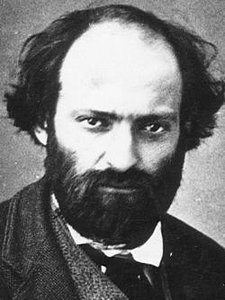
Paul Cézanne
1839 - 1906 , Frankreich
Eckdaten zum Künstler
- Beeinflusste Künstler:
- Paul Gauguin
- Georges Seurat
- Bemerkenswerte Werke:
- Der Teich in Jas de Bouffan
- Porträt von Émile Zola
- Wald
- Mont Sainte-Victoire
- Geburtsdatum: 19. Januar 1839
- Geburtsort: Aix-en-Provence, Frankreich
- Künstlerische Bewegung: Postimpressionismus
- Nationalität: Französisch
- Sterbedatum: 1906
- Vollständiger Name: Paul Cézanne
- Von Ihm Beeinflusste Künstler:
- Pablo Picasso
- Henri Matisse
- Georges Braque
Verwandte Artikel

Paul Cézanne: Die 25 Meisterwerke des Impressionismus | OriginalUniqueArt
Entdecken Sie die 25 Meisterwerke von Paul Cézanne! Tauchen Sie ein in die Welt des Impressionismus und Postimpressionismus. Erfahren Sie mehr über seine Stillleben, Landschaften & berühmten Gemälde – jetzt hochwertige Kunstdrucke auf OriginalUniqueArt.com.

Geometrische Abstraktion: Die 10 Meisterwerke, die Kunstgeschichte prägten | OriginalUniqueArt.com
Entdecken Sie die 10 Meisterwerke der geometrischen Abstraktion! Von Kandinsky bis Mondrian – erleben Sie die Geschichte, Farben & Formen dieser revolutionären Kunstrichtung. Hochwertige Kunstreproduktionen auf OriginalUniqueArt.com
Fernand Léger: Die 25 Meisterwerke des Kubismus für Ihr Zuhause | OriginalUniqueArt
Entdecken Sie die 25 Meisterwerke von Fernand Léger! Tauchen Sie ein in die Welt des Kubismus, Tubismus & der Avantgarde. Hochwertige Kunstreproduktionen für Ihr Zuhause – jetzt auf OriginalUniqueArt.com!
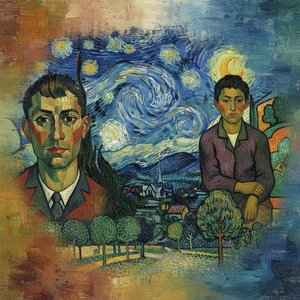
Beyond Impressionism: Exploring Emotional Depth & Formal Innovation in Post-Impressionist Art
Explore the profound emotional depth & formal innovations of Post-Impressionism with our expert guide. Discover Cézanne, Van Gogh, Gauguin & more. Learn about art history, collecting, and investing in this pivotal movement.
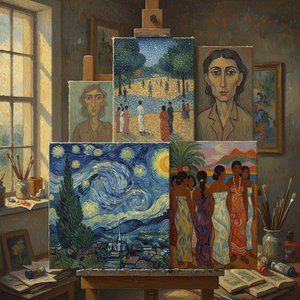
Jenseits des Impressionismus: Die emotionale Tiefe der postimpressionistischen Malerei
Entdecken Sie die emotionale Tiefe des Postimpressionismus! Analysieren Sie Cézanne, van Gogh, Gauguin & Seurat. Expertenwissen über Kunstgeschichte und Einfluss auf die Moderne.