Post-Impressionism · 1890
Boy Resting (Paul Cézanne, 1890)
Paul Cézanne (1839–1906) schuf Boy Resting. Es stammt aus dem Jahr 1890. Es gehört zur Post-Impressionism-Strömung. Es ist aus Öl auf Leinwand gefertigt. Es befindet sich im Hammer Museum in Los Angeles, Vereinigte Staaten von Amerika.
- 1890
- Öl auf Leinwand
- Hammer Museum, Los Angeles

 Vorschau anzeigen

 Handgemaltes Ölgemälde
 Versenden
 Teilen
 Datenblatt


 Herunterladen
 Ähnliche Objekte
 Röntgenaufnahme
 Diashow
 Fragen & Antworten

 Statistiken
Boy Resting im Überblick
- Titel
- Boy Resting
- Künstler
- Paul Cézanne (1839–1906)
- Geburtsjahr des Künstlers
- Aix-en-Provence, Frankreich
- Datum
- 1890
- Medium
- Öl auf Leinwand
- Ausstellungsort
- Hammer Museum, Los Angeles, Vereinigte Staaten von Amerika
- Bewegung
- Post-Impressionism
- Epoche
- Moderne
- Motiv
- landscape, boy, resting, trees, water, emotion
Was stellt Boy Resting dar?
Paul Cézanne: A Pioneer of Modern Art
Paul Cézanne (1839–1906) stands as an undeniable cornerstone of the artistic landscape transitioning from Impressionism to Cubism, marking a pivotal moment in European art history. His unwavering dedication to exploring new visual languages and challenging conventional academic standards cemented his legacy as “the father of us all,” earning him admiration from artists like Henri Matisse and Pablo Picasso.
Born in Aix-en-Provence, Cézanne’s early artistic influences stemmed from Romanticism and the Barbizon school, where he absorbed the grandeur of landscapes and the expressive power of tonal painting. However, it was his encounter with Impressionist painters—particularly Claude Monet and Camille Pissarro—that fundamentally reshaped his approach to art. Unlike Impressionists who sought to capture fleeting moments of light and color, Cézanne focused on conveying underlying structure and form, prioritizing geometric shapes and planar surfaces.
“Boy Resting,” created in 1890, exemplifies this distinctive style perfectly. The painting depicts a young boy seated outdoors, his head bowed in contemplation—a posture that speaks volumes about Cézanne’s fascination with human psychology and his desire to depict inner states alongside external appearances.
- Composition: Cézanne employed a revolutionary technique known as “picto-métrique,” which involved dissecting objects into geometric planes and reconstructing them on the canvas. This approach departs dramatically from traditional perspective, creating an illusion of depth that feels more organic and psychologically resonant than merely optical.
- Color Palette: Cézanne’s color choices are subdued yet deliberate, favoring earthy tones—ochres, browns, greens—that harmonize with the natural environment depicted in the painting. He utilized color not to reproduce reality faithfully but rather to convey mood and emotion, prioritizing tonal relationships over vibrant hues.
- Brushwork: Cézanne’s characteristic brushstrokes are visible and textured, contributing significantly to the painting's expressive quality. These repetitive strokes build up layers of pigment, creating a palpable sense of physicality and capturing the essence of the subject matter.
The historical context surrounding “Boy Resting” is equally important. Cézanne’s work initially faced considerable criticism from Parisian art critics who deemed it incomprehensible and lacking in aesthetic merit. Yet, fellow artists recognized his genius early on—particularly Camille Pissarro and Ambroise Vollard—who championed his artistic vision and secured him a prominent place within the burgeoning avant-garde movement.
“Boy Resting” continues to captivate viewers today with its serene atmosphere and profound contemplation of human experience. Cézanne’s unwavering commitment to exploring new modes of representation solidified his position as one of the most influential artists of the twentieth century, inspiring generations of painters and shaping the trajectory of modern art.
In welchem Museum befindet sich Boy Resting?
Hammer Museum
Los Angeles, Vereinigte Staaten von Amerika
Ein Refugium der Visionen: Das beständige Erbe des Hammer Museums Eingebettet in das pulsierende Herz von Los Angeles, am 10899 Wilshire Boulevard, steht das Hammer Museum – ein Ort, der weit mehr ist als nur eine Galerie für Kunst; es ist ein dynamischer Schmelztiegel, in dem Geschichte, zeitgenössischer Ausdruck und Gemeinschaft zusammenfließen. Gegründet im Jahr 1990 von dem visionären Unternehmer Armand Hammer, ursprünglich als Schauplatz für seine außergewöhnliche persönliche Sammlung europäischer Meister, hat das Museum eine bemerkenswerte Transformation durchlaufen. Es entwickelte sich zu einer unerschütterlich unabhängigen Institution, die sich der Förderung des Dialogs und der Erweiterung der Grenzen künstlerischen Verständnisses verschrieben hat.


Hochauflösende Bilder von Boy Resting

Gemeinfrei: Der Künstler verstarb im Jahr 1906.
Andere Formate, Ausschnitte und Zitierhinweise →Paul Cézanne, Boy Resting (1890), Hammer Museum. Gemeinfreiheit
Fragen zu Boy Resting, beantwortet
In welchem Museum befindet sich das Original von „Boy Resting“?
Das Original von "Boy Resting" von Paul Cézanne befindet sich im Hammer Museum, Los Angeles, Vereinigte Staaten von Amerika. Eine Reproduktion ermöglicht es, das Werk zu Hause auszustellen.
In welchem Jahr wurde "Boy Resting" von Paul Cézanne geschaffen?
"Boy Resting" von Paul Cézanne entstand im Jahr 1890.
In welcher Technik wurde "Boy Resting" von Paul Cézanne ausgeführt?
"Boy Resting" wurde in Öl auf Leinwand ausgeführt.
Welche Motive sind in "Boy Resting" von Paul Cézanne zu sehen?
Die Themen in "Boy Resting" von Paul Cézanne umfassen landscape, boy, resting, trees, water, emotion, contemplation und fassen gemeinsam den Gegenstand des Kunstwerks zusammen.
Ist die Abbildung von "Boy Resting" von Paul Cézanne gemeinfrei?
"Boy Resting" von Paul Cézanne ist gemeinfrei – das Urheberrecht ist abgelaufen. Dieser Status bestimmt, wie das Bild des Werkes vervielfältigt werden darf.
Wer ist der Künstler hinter "Boy Resting"?
"Boy Resting" wird Paul Cézanne zugeschrieben.
Zu welcher Stilrichtung gehört "Boy Resting"?
Die mit "Boy Resting" von Paul Cézanne verbundene Stilrichtung ist Post-Impressionism. Diese Klassifizierung ordnet das Werk in den Kontext verwandter Künstler und Kunstwerke ein.
Aus welcher Schaffensperiode von Paul Cézanne stammt "Boy Resting"?
"Boy Resting" repräsentiert die Mature Period von Paul Cézanne.
Wie alt war Paul Cézanne, als „Boy Resting“ im Jahr 1890 geschaffen wurde?
Als "Boy Resting" im Jahr 1890 entstand, war Paul Cézanne – geboren 1839 – 51 Jahre alt.
Über den Künstler, Paul Cézanne
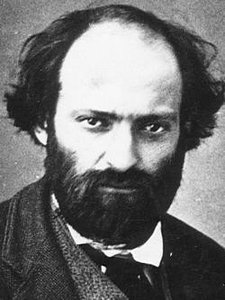
1839–1906, Frankreich
Paul Cézanne
Das frühe Leben von Paul Cézanne Am 19. Januar 1839, in der Rue de l'Opéra 28 in Aix-en-Provence geboren, trat Paul Cézanne in eine Welt eingewobener gesellschaftlicher Ordnung ein. Sein Vater, Louis-Auguste Cézanne, war ein Mann von bedeutendem lokalem Ansehen, der die Bankiergesellschaft Banque Cézanne et Cabassol mitbegründet hatte. Diese finanzielle Stabilität schuf eine sichere Kulisse für die Familie, zu der Paul und seine beiden jüngeren Schwestern Marie und Rose gehörten.
Ebenfalls von Paul Cézanne
 Die KartenSpieler1893
 Mont Sainte-Victoire Seen from the Bibemus Quarry1897
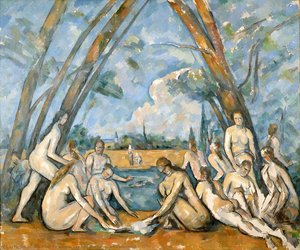 Große Bäder (Philadelphia)1905
 Korb mit Äpfeln1895
Essays zu Boy Resting
 25 Meisterwerke von Paul Cézanne: Die Revolution der modernen KunstEntdecken Sie die 25 bedeutendsten Meisterwerke von Paul Cézanne. Erleben Sie die Brücke zwischen Impressionismus und Kubismus durch faszin…
 Französische Post-ImpressionistenEntdecken Sie Cézanne, Gauguin und mehr. Erleben Sie Meisterwerke des Post-Impressionismus auf OriginalUniqueArt.com. Jetzt die Kollektion …
 Struktur und Bruch: Wie die visuelle Revolution von Cézanne zum Kubismus die moderne Kunst neu definierteErfahren Sie alles über den Wandel vom Kubismus zur Moderne durch Cézanne und Picasso. Jetzt die Kunstrevolution entdecken!