Zum Druck wechseln
 Weiterlesen







































 Bei Kunstwerken oder Reproduktionen, die an einer Seite größer als 105 cm (ca. 41 Zoll) sind, wird der Rahmen zerlegt als Bausatz geliefert. Diese Methode gewährleistet eine sichere Zustellung und verhindert Schäden während des Transports.


The Painting and Its Artist
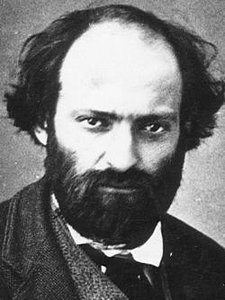
Paul Cézanne, a French painter, is renowned for his pivotal role in the transition from 19th-century Impressionism to early 20th-century Cubism. His work, characterized by repetitive brushstrokes and an emphasis on structure, laid the groundwork for avant-garde movements. “Flowers in a Blue Vase,” created in 1875, is one of his notable works that exemplify his unique style. It’s more than just a depiction of flowers; it's a distillation of Cézanne’s obsession with capturing the essence of form and solidity—a radical departure from Impressionism’s fleeting impressions of light. The painting embodies Cézanne’s meticulous observation of nature combined with an intellectual understanding of its underlying geometric principles.Artistic Style and Technique
This painting is a quintessential example of Post-Impressionism, a movement that emerged as a reaction against the naturalistic depiction of light and color in Impressionist art. Cézanne’s use of planes of color and small brushstrokes creates complex fields, giving the painting a dynamic and expressive quality. Unlike Impressionists who sought to reproduce what they saw exactly, Cézanne actively reshaped his subject matter, simplifying it into basic geometric forms—cylinders, cones, and cubes—to convey its fundamental structure. This technique is evident in the vase itself, which appears to be constructed from overlapping planes of blue and ochre, rather than simply reflecting light. The brushstrokes are deliberately visible, contributing to the painting’s textural richness and conveying Cézanne's unwavering commitment to capturing the materiality of his subject.Historical Context
In 1875, when “Flowers in a Blue Vase” was painted, Cézanne was still developing his style. His early works were influenced by Romanticism and Realism, but he soon moved towards a more innovative approach. He was deeply affected by the Impressionist painters who preceded him—particularly Monet and Renoir—but Cézanne refused to accept their aesthetic limitations. The painting reflects his intense study of subjects and his emphasis on the underlying structure of objects. It’s considered a cornerstone of Post-Impressionism, marking a decisive step away from Impressionistic idealism toward a more assertive exploration of form and color.Reception and Legacy
Initially, Cézanne's work was met with incomprehension and ridicule. Critics dismissed it as clumsy and lacking in finesse, arguing that it betrayed Cézanne’s disregard for traditional artistic conventions. However, fellow artists like Camille Pissarro and art dealer Ambroise Vollard recognized his genius. They championed his vision of art—a vision rooted in observation but driven by intellectual curiosity—and defended him against the scorn of mainstream critics. The first solo exhibition of his works in 1895 at Vollard’s gallery marked a turning point in his career, attracting considerable attention and establishing Cézanne as a leading figure in the burgeoning avant-garde movement. Both Henri Matisse and Pablo Picasso acknowledged Cézanne as “the father of us all,” recognizing his profound influence on their own artistic development. His work continues to inspire artists today, demonstrating that beauty can be found not only in capturing fleeting moments but also in revealing the enduring essence of form and substance.Current Location and Significance
“Flowers in a Blue Vase” is housed at the The State Hermitage Museum in Russia, a testament to its enduring importance. This painting, alongside others by Cézanne—such as “Still Life with Curtain and Flowered Pitcher”—represents a pivotal moment in art history, signaling the birth of Cubism and fundamentally altering the course of modern artistic expression. For those interested in exploring more of Cézanne’s works, Paul Cézanne: Flowers in a Blue Vase and Paul Cézanne: Still Life with Curtain and Flowered Pitcher are available at OriginalUniqueArt. These hand-made oil painting reproductions offer a unique opportunity to own a piece of art history.- Post-Impressionism Art Movement: A predominantly French movement that developed roughly between 1886 and 1905, characterized by a reaction against Impressionists’ concern for the naturalistic depiction of light and color. Learn more about Post-Impressionism.
- Paul Cézanne's Biography: A French painter who introduced new modes of representation and influenced avant-garde artistic movements. Read more about Paul Cézanne on Wikipedia.
- History of Art: The history of art focuses on objects made by humans for various purposes, with a primary emphasis on their aesthetic visual form. Explore the History of Art on Wikipedia.
This article provides an in-depth look at “Flowers in a Blue Vase” by Paul Cézanne, highlighting its significance within the Post-Impressionist movement and its enduring influence on modern art.
Fragen & Antworten
Wie verbinden sich Medium und Bewegung in "Blumen in einer Vase"?
In "Blumen in einer Vase" trifft die Öl auf Leinwand-Technik auf die Post-Impressionism-Strömung.
In welcher Technik wurde "Blumen in einer Vase" von Paul Cézanne ausgeführt?
Das Medium von "Blumen in einer Vase" von Paul Cézanne ist Öl auf Leinwand. Die Reproduktionen zielen darauf ab, die Optik dieser Technik wiederzugeben.
Wirken die Farben von "Blumen in einer Vase" eher kräftig oder sanft?
Die Farben in "Blumen in einer Vase" von Paul Cézanne besitzen eine Leuchtend Intensität.
 Vorschau anzeigen
 Versenden
 Teilen
 Details anzeigen
 Leitfaden

 Herunterladen
 Ähnliche Objekte
 Röntgenaufnahme
 Diashow
 Fragen & Antworten
 Statistiken