 Zum Druck wechseln
 Weiterlesen







































 Bei Kunstwerken oder Reproduktionen, die an einer Seite größer als 105 cm (ca. 41 Zoll) sind, wird der Rahmen zerlegt als Bausatz geliefert. Diese Methode gewährleistet eine sichere Zustellung und verhindert Schäden während des Transports.


Paul Cézanne’s “View of Auvers-sur-Oise”: A Bridge Between Worlds
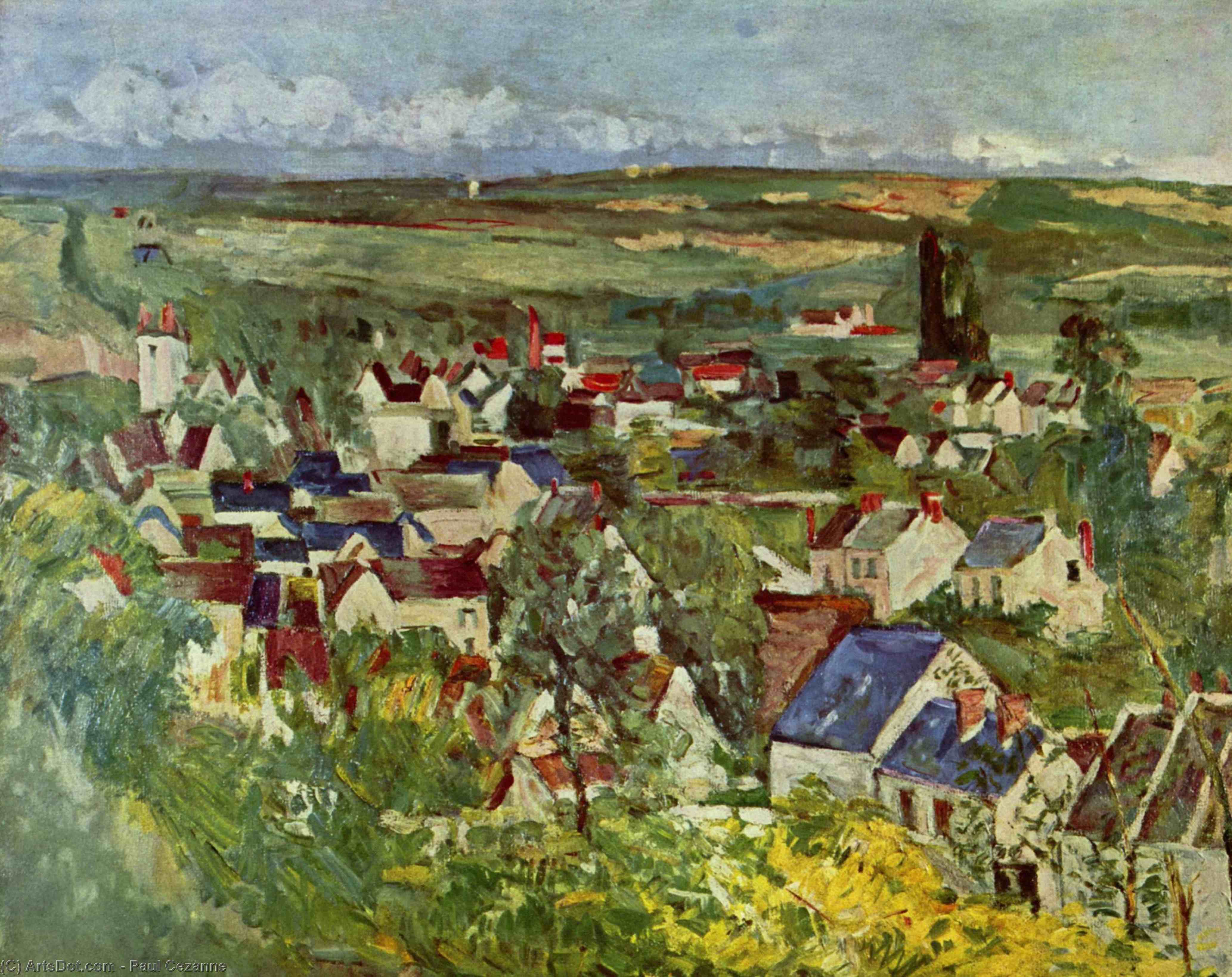
Paul Cézanne's "View of Auvers-sur-Oise," painted in 1879–80, isn't merely a landscape; it’s a pivotal moment in the evolution of art. This oil on canvas, measuring 46 x 55 centimeters, offers a glimpse into Cézanne’s burgeoning vision – a world where observation and subjective experience intertwine to create something profoundly new. Situated near his beloved village of Auvers-sur-Oise, just outside Paris, the painting captures a serene scene of rolling hills, scattered houses, and a hazy blue sky, yet it's far from a simple depiction of reality. Instead, Cézanne uses this landscape as a laboratory for exploring form, color, and the very nature of perception – laying the groundwork for what would become Cubism and profoundly influencing generations of artists to come.
Cézanne’s early artistic influences were diverse, drawing from both the romantic traditions of his upbringing in Provence and the burgeoning Impressionist movement. He initially studied at the École des Beaux-Arts in Paris, adhering to academic standards of realism and perspective. However, he quickly grew dissatisfied with this rigid approach, seeking a way to capture not just what he *saw*, but how he *felt* about what he saw. The works of artists like Jean-Baptiste Millet, whose realistic depictions of rural life resonated with Cézanne’s own connection to the land, and the bold color palettes of Vincent van Gogh and Paul Gauguin, who were experimenting with expressive brushstrokes and symbolic imagery, proved crucial in shaping his evolving style. It's important to note that Cézanne was not simply reacting against Impressionism; he was building upon its foundations while simultaneously dismantling them, forging a new path entirely.
Deconstructing Reality: Technique and Composition
What immediately strikes the viewer is Cézanne’s deliberate manipulation of perspective. He abandons traditional linear perspective in favor of a more intuitive approach, creating an illusion of depth through the layering of shapes and colors. The houses are not rendered with meticulous detail but rather as simplified geometric forms – rectangles, squares, and triangles – that seem to float within the landscape. This fragmentation of form is echoed in his brushstrokes, which are short, broken, and deliberately uneven, contributing to a sense of dynamism and movement. The artist’s use of color is equally significant; he employs a muted palette of blues, greens, yellows, and browns, creating a harmonious yet subtly unsettling atmosphere. The hazy quality of the sky suggests distance and atmospheric perspective, while the warm tones of the houses create a sense of intimacy and warmth.
The placement of the solitary figure in the center of the painting adds another layer of complexity to the composition. While its identity remains ambiguous, this small human presence serves as a point of reference for the viewer, inviting us to contemplate our own relationship with the landscape. It’s not a dramatic or heroic figure; rather, it's a quiet observer, seemingly absorbed in the beauty and tranquility of the scene. This subtle inclusion suggests that Cézanne was interested in exploring the intersection between human experience and the natural world – a theme that would become increasingly central to his work.
Post-Impressionism: A New Language for Art
"View of Auvers-sur-Oise" stands as a cornerstone of Post-Impressionism, a movement characterized by its rejection of Impressionist concerns about capturing fleeting moments of light and color. Instead, Post-Impressionist artists like Cézanne focused on the underlying structure of objects, exploring their formal qualities – shape, line, and color – in ways that were both innovative and emotionally resonant. Cézanne’s work paved the way for movements such as Cubism, which further deconstructed reality into geometric forms, and Expressionism, which prioritized emotional expression over objective representation.
The painting's legacy extends far beyond its artistic merits. Cézanne’s insistence on seeing and representing the world in his own unique way challenged conventional notions of beauty and truth, opening up new possibilities for artistic expression. His influence can be seen in the work of countless artists who followed, including Pablo Picasso, Henri Matisse, and Georges Braque – all of whom acknowledged Cézanne as a pivotal figure in the development of modern art. His exploration of form and color continues to inspire artists today, demonstrating the enduring power of his vision.
Reproductions: Bringing Cézanne’s Vision Home
At OriginalUniqueArt, we are proud to offer meticulously crafted oil painting reproductions of “View of Auvers-sur-Oise,” ensuring that the essence and beauty of this iconic artwork can be enjoyed in your own home. Our team of skilled artists utilizes traditional techniques and high-quality materials to faithfully recreate Cézanne’s distinctive style, capturing the subtle nuances of color, texture, and form. Each reproduction is a testament to our commitment to preserving artistic heritage while making art accessible to all. Consider commissioning a reproduction – a beautiful addition to any interior space, and a tangible connection to one of the most influential artists in modern history.
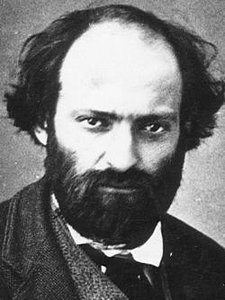
- Paul Cézanne: A pioneering French Post-Impressionist artist.
- “View of Auvers-sur-Oise”: Painted in 1879–80, an oil on canvas measuring 46 x 55 centimeters.
- Paul Cézanne: View of Auvers-sur-Oise
- Post-Impressionism Art Movement: Emerged as a reaction against Impressionists’ concern for the naturalistic depiction of light and color.
Explore our collection today and bring the timeless beauty of Cézanne's "View of Auvers-sur-Oise" into your world.
Fragen & Antworten
Kann ich eine Röntgenaufnahme von "Ansicht von Auvers-sur-Oise" von Paul Cézanne sehen?
Die Röntgenblick-Seite von "Ansicht von Auvers-sur-Oise" von Paul Cézanne ist ein interaktiver Viewer, der es Ihnen ermöglicht, durch elf optische Schichten des Kunstwerks zu gleiten, einschließlich einer Ansicht im Röntgenstil.
Unter welchen Pseudonymen oder Alternativnamen ist Paul Cézanne bekannt?
Paul Cézanne ist auch unter dem Namen Paul Cezanne bekannt.
Welche Emotion vermittelt das Werk der Paul Cézanne „Ansicht von Auvers-sur-Oise“?
Die Beschaulich Ausstrahlung von „Ansicht von Auvers-sur-Oise“ wird durch seinen Paul Cézanne-Stil ergänzt.
 Vorschau anzeigen
 Versenden
 Teilen
 Details anzeigen
 Leitfaden

 Herunterladen
 Ähnliche Objekte
 Röntgenaufnahme
 Diashow
 Fragen & Antworten
 Statistiken